In today’s construction and industrial landscape, choosing the right sealant can be the difference between long-lasting performance and frequent maintenance headaches. One product category that has gained significant traction in recent years is MS Polymer hybrid sealant—a next-generation solution combining the best features of traditional sealants while minimizing common drawbacks.
In this guide, we’ll explore what MS Polymer sealants are, how they work, where they excel, and why they’ve become an essential tool for professionals and builders worldwide.
1. Introduction: The Evolution of Sealants
Sealants have been used for decades to protect buildings, vehicles, and assemblies from air and water infiltration, to cushion mechanical movements, and to bond different substrates together. Historically, the most common types were silicone and polyurethane sealants. Each had its strengths: silicone offered excellent flexibility and weather resistance, while polyurethane provided strong adhesion and paintability.
However, each also had limitations:
- Silicones: Poor paintability and potential staining issues on porous substrates.
- Polyurethanes: Can release CO₂ bubbles during curing, leading to voids; often have higher VOCs and can be sensitive to moisture during application.
MS Polymer (also called Hybrid Polymer or Silyl Modified Polymer) sealants were developed to overcome these issues by merging the best traits of both chemistries into a single, high-performance product.
2. What Is MS Polymer (Hybrid) Sealant?
At its core, an MS Polymer sealant is a moisture-curing one-component hybrid polymer that combines characteristics of silicone and polyurethane sealants without many of their downsides. It’s typically formulated from modified silane terminated polymers (often silane-modified polyethers or silane-modified polymers) that crosslink in the presence of atmospheric moisture to form a durable, elastic rubber-like material.
Unlike traditional silicone sealants, MS polymers do not contain isocyanates or solvents, which means they are safer to use, emit fewer volatile organic compounds (VOCs), and generally do not shrink or blister during curing.
MS Polymer sealants are often marketed as hybrid sealants because they blend features traditionally associated with silicone and polyurethane products, resulting in a versatile and robust sealing solution.
3. How MS Polymer Sealants Work — The Chemistry Behind the Performance

Moisture-Cure Mechanism
MS Polymer sealants cure not through heat or UV directly, but through moisture in the air. The silane end groups in the polymer react with water molecules, forming silanol groups. These silanol groups then condense and form a highly crosslinked siloxane network, resulting in a flexible, elastomeric seal.
This type of curing offers several advantages:
- Controlled and uniform curing even in challenging ambient conditions
- Adherence to damp surfaces, which traditional polyurethanes often struggle with
- Minimal emission of VOCs, improving on-site safety and regulatory compliance
4. Key Properties and Advantages
Here’s what sets MS Polymer (hybrid) sealants apart from other sealing technologies:
High Elasticity and Movement Accommodation
MS Polymer sealants remain flexible after curing, enabling them to absorb dynamic movement in joints caused by thermal expansion and contraction or vibration — a critical feature for façades, joints, and machinery components.
Excellent Weather and UV Resistance
Thanks to their hybrid silane chemistry, these sealants resist UV degradation, weathering, and ozone, making them suitable for both interior and exterior applications.
Strong Adhesion to Diverse Substrates
MS Polymers bond strongly to a wide range of materials, including metal, glass, concrete, stone, PVC, and wood — often without the need for a primer.
No Isocyanates or Solvents
Traditional polyurethane sealants often contain isocyanates, which can react with moisture to release CO₂ and cause bubbles or voids. MS Polymer sealants eliminate this risk, leading to cleaner curing and better structural integrity.
Low VOC, Low Odor, and Eco-Friendly
These hybrid sealants typically have very low VOC content and produce minimal odor, aligning with green building standards and improving workplace conditions.
Paintability and Finish
Unlike silicone sealants, MS Polymer sealants are generally paintable with water-based paints, facilitating aesthetic integration with surrounding materials.
No Shrinkage and Non-Staining
Due to their solvent-free nature, MS Polymer sealants exhibit virtually no shrinkage as they cure and do not cause staining or fluid streaking on adjacent surfaces — a common drawback of many silicone sealants.
5. Typical Applications
The versatility of MS Polymer sealants has made them popular across a broad range of industries:
Construction & Building
- Sealing façade joints and expansion gaps
- Window and door perimeter sealing
- Roofing and gutter sealing
- Façade cladding panels
Industrial & Automotive
- Bonding and sealing in vehicle assembly
- RV and marine sealing applications
- HVAC ductwork sealing
General Assembly & Maintenance
- Sealing joints between dissimilar materials
- Structural bonding of metal, glass, and composites
- Decorative sealing behind stone and tile
Their ability to bond to slightly damp substrates expands their usefulness on sites where ideal conditions aren’t guaranteed.
6. How to Use MS Polymer Sealant
Using MS Polymer sealant correctly ensures optimal performance:
- Surface Preparation: Clean the surface of dirt, oil, and loose debris
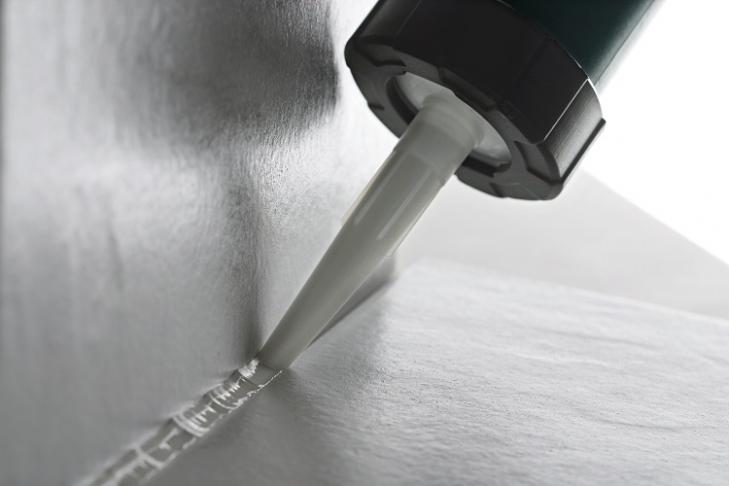
- Apply with a Caulking Gun: Compatible with standard sealant guns
- Tool the Joint: Smooth the bead within the working time
- Curing: Allow moisture in the air to trigger curing — typical skin times range from 10–30 minutes, with full cure in several days depending on thickness and humidity
Because MS polymers are one-component and moisture-curing, they are easier to apply than multi-component adhesives that require mixing or precise ratios.
7. Choosing the Right MS Polymer Sealant
Not all MS Polymer sealants are created equal. When selecting one for your project:
- Check temperature and movement specifications
- Look for certifications or compliance with local building codes
- Consider substrate compatibility
- Evaluate paintability requirements
- Verify curing and temperature ranges
Experienced suppliers can also customize formulations to meet specific performance needs.
8. MS Polymer vs Traditional Sealants — A Quick Comparison
| Feature | Silicone | Polyurethane | MS Polymer Hybrid |
| Flexibility | Excellent | Good | Excellent |
| Paintability | Poor | Good | Excellent |
| UV Resistance | Very Good | Moderate | Very Good |
| VOCs/Odor | Varies | Higher | Low |
| Shrinkage | Minimal | Possible | None |
| Wet-Surface Bonding | Poor | Moderate | Good |
| Primer Required | Often | Usually | Not always |
While silicone and polyurethane still have a place in specific applications, MS Polymer structures offer a balanced performance portfolio, minimizing compromises while broadening usability.
9. Conclusion
MS Polymer (hybrid) sealants represent a significant step forward in sealing technology. By combining elements of traditional silicone and polyurethane chemistries while eliminating many associated drawbacks, they deliver superior adhesion, elasticity, weather resistance, and eco-friendly performance. Whether you’re sealing critical construction joints, bonding industrial components, or seeking a reliable all-around sealant for mixed materials, MS Polymer sealants are among the most versatile and reliable choices available today.
To fully leverage their capabilities, always match the product’s technical specifications to your project’s requirements and consult experienced suppliers like HakTak for the ideal solution.
10. Frequently Asked Questions (FAQs)
What does “MS” stand for in MS Polymer sealant?
Answer:MS stands for Modified Silane, referring to the silane-terminated polymer chemistry used in the sealant’s base.
Can MS Polymer sealant be painted?
Answer: Yes — MS Polymer sealants are generally paintable with common water-based paints after curing.
Does MS Polymer sealant need a primer?
Answer: In many cases, primer is not required, depending on the substrate and specific product formulation.
Is MS Polymer sealant suitable for outdoor use?
Answer: Yes — it offers excellent durability, weather resistance, and UV stability for outdoor applications.
Can MS Polymer sealant adhere to wet surfaces?
Answer: Yes — because it cures via moisture contact, MS Polymer can adhere even to slightly damp substrates.