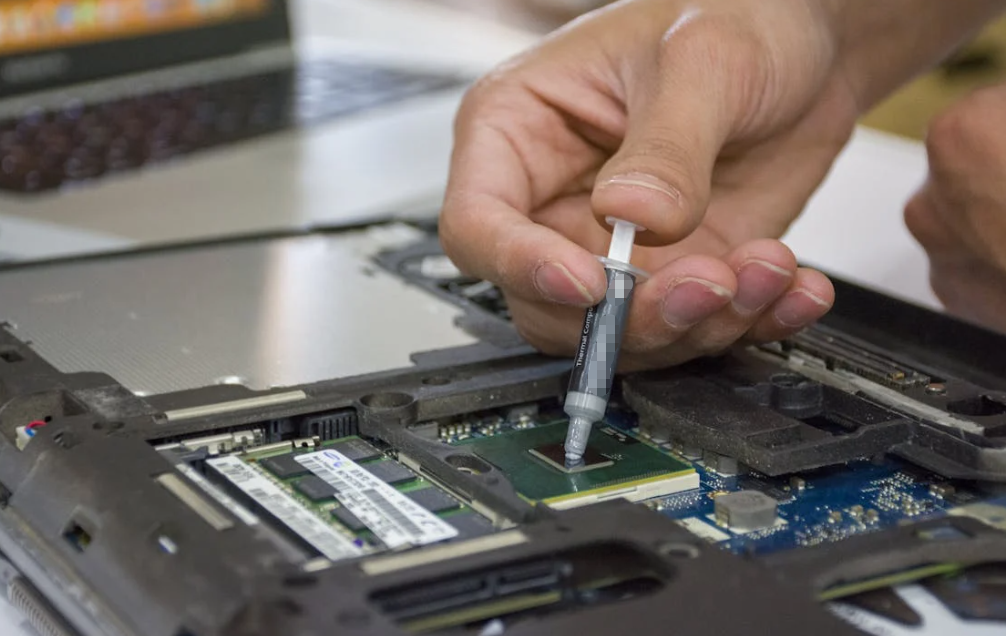
Inverter systems don’t forgive thermal mistakes. They run hot, often continuously, and when heat isn’t managed properly, efficiency drops, components degrade, and failure creeps in quietly—until it isn’t quiet anymore.

Thermal paste (also called thermal grease or TIM—thermal interface material) sits in a deceptively small space between power devices like IGBTs and their heat sinks. Yet, that thin layer can decide whether your inverter runs for 10 years… or fails in two.
This guide breaks down how to choose the right thermal paste for inverter applications—practically, not theoretically—based on real engineering constraints, field conditions, and material science.
Understanding the Role of Thermal Paste in Inverters
Before choosing anything, it’s worth grounding one fact: thermal paste is not a primary conductor of heat—it’s a gap filler.
Even polished metal surfaces (IGBT modules, aluminum heat sinks) contain microscopic imperfections. These trap air, and air is a poor thermal conductor. Thermal paste fills those gaps, improving heat transfer efficiency by reducing thermal resistance.
In inverter systems, this matters because:
- IGBTs and MOSFETs generate significant heat during switching
- Heat density is high and localized
- Poor heat transfer leads to rapid temperature rise
Typical inverter losses can reach 75–125W in a 5kW system, meaning continuous heat must be efficiently dissipated.
Why Thermal Paste Selection Matters More in Inverters
Thermal paste selection for CPUs is forgiving. For inverters? Not so much.

Here’s why:
High Power Density
Inverters operate with concentrated heat sources like IGBTs, which can reach up to 175°C rated temperatures.
Continuous Operation
Unlike intermittent electronics, inverters often run 24/7 (solar, EV, industrial drives).
Harsh Environments
Outdoor solar inverters deal with:
- UV exposure
- Temperature cycling
- Dust and humidity
Safety Requirements
High-voltage systems demand:
- Electrical insulation
- Long-term stability
A poor paste choice doesn’t just reduce performance—it risks system failure or safety hazards.
Key Factors When Choosing Thermal Paste for Inverters

Let’s get into the real decision-making criteria.
Thermal Conductivity (W/m·K)
This is the headline metric—but not the whole story.
- Standard range: 1.5–5 W/m·K
- High-performance range: 6–12 W/m·K
For inverter applications:
- Low-power inverters → 3–5 W/m·K is often sufficient
- High-power / industrial → 6 W/m·K or higher recommended
But here’s the nuance:
Even the best paste is far less conductive than metals like aluminum (~237 W/m·K) or copper (~401 W/m·K).
👉 Translation: The goal is not to rely on paste for conduction, but to minimize resistance.
Thermal Resistance (More Important Than You Think)
Engineers often obsess over conductivity—but thermal resistance is what actually determines performance.
It depends on:
- Paste thickness
- Contact pressure
- Surface flatness
A thinner, well-applied paste layer often outperforms a “better” paste applied poorly.
Operating Temperature Range
Inverters run hot. Your paste must survive it.
Look for:
- Continuous operating temp: ≥150°C
- Peak tolerance: ≥200°C
This is especially critical for:
- Solar inverters (roof-mounted)
- EV inverters
- Industrial drives
If the paste dries out or pumps out under heat cycling, performance collapses.
Long-Term Stability (Pump-Out & Dry-Out Resistance)
This is where many pastes fail in real-world inverter use.
Pump-out effect: Thermal cycling causes paste to migrate away from the interface.
Dry-out: Carrier oils evaporate over time, leaving poor contact.
Choose:
- Silicone-based or synthetic oil-based pastes
- Anti-drying formulations
- Phase-change materials (for advanced use)
Electrical Insulation (Critical for Safety)
Inverters operate at high voltages. Your thermal paste must:
- Be electrically non-conductive
- Have high dielectric strength
Some metal-based pastes (e.g., silver-heavy) may offer high thermal conductivity—but can introduce electrical risks.
👉 In inverter design, safety > marginal conductivity gains
Viscosity and Application Behavior
In production environments (OEM/ODM), this matters more than you’d expect.
Good inverter paste should:
- Spread easily under pressure
- Maintain position (no bleeding)
- Support automated dispensing
Too thick → poor contact
Too thin → migration and instability
Compatibility with Heat Sink Design
Thermal paste doesn’t work in isolation.
Inverter cooling relies on:
- Aluminum heat sinks (common due to cost/performance balance)
- Forced air or natural convection systems
- Sometimes liquid cooling plates for high-density systems
Your paste must match:
- Surface roughness
- Mounting pressure
- Cooling method
Types of Thermal Paste for Inverters
Not all thermal pastes are created equal. Here’s how they stack up:
Silicone-Based Thermal Paste
Pros:
- Stable over wide temperatures
- Good electrical insulation
- Cost-effective
Cons:
- Moderate thermal conductivity
👉 Best for: General inverter applications
Metal-Filled Thermal Paste
Pros:
- High thermal conductivity
Cons:
- Potential electrical conductivity
- Higher cost
👉 Best for: Controlled industrial environments (with insulation precautions)
Ceramic-Based Thermal Paste
Pros:
- Electrically insulating
- Good thermal performance
- Stable
👉 Best for: High-voltage inverter systems
Phase-Change Materials (PCM)
Pros:
- Solid at room temp, liquid at operating temp
- Excellent gap filling
Cons:
- Higher cost
- Application complexity
👉 Best for: High-end or compact inverter systems
Thermal Paste vs Thermal Pads in Inverters
A common question: why not use thermal pads?
Thermal Paste:
- Better for uneven surfaces
- Lower thermal resistance
- Ideal for IGBT modules
Thermal Pads:
- Easier installation
- Cleaner handling
- Slightly higher thermal resistance
In high-performance inverter systems, paste is usually preferred due to superior interface contact.
Practical Selection Guide (Quick Reference)
| Application Type | Recommended Thermal Conductivity | Notes |
| Small inverter (<1kW) | 3–5 W/m·K | Cost-effective solution |
| Solar inverter (outdoor) | 5–8 W/m·K | Prioritize durability |
| Industrial inverter | 6–10 W/m·K | High reliability needed |
| EV / high-density | 8–12 W/m·K | Consider advanced materials |
Common Mistakes to Avoid
Let’s keep this real—these are mistakes seen in actual projects:
Choosing Based Only on W/m·K
Higher isn’t always better. Poor application cancels benefits.
Applying Too Much Paste
More paste = more resistance.
👉 The ideal layer is thin and uniform.
Ignoring Environmental Conditions
Outdoor inverter? You need UV and aging resistance—not just conductivity.
Using Electrically Conductive Paste Without Safeguards
This can cause catastrophic failure.
Overlooking Mechanical Design
Even the best paste fails with:
- Uneven mounting pressure
- Poor surface finish
A Real-World Perspective (What Engineers Actually Prioritize)
In practice, engineers don’t chase the highest spec sheet number.
They prioritize:
- Reliability over years
- Stability under thermal cycling
- Safety (electrical insulation)
- Consistent manufacturing performance
Thermal paste is a system-level decision, not a standalone product choice.
Conclusion
Choosing thermal paste for inverters isn’t about picking the “highest conductivity” option—it’s about balancing performance, reliability, and safety under real operating conditions.
A good thermal paste should:
- Efficiently reduce thermal resistance
- Withstand high temperatures and aging
- Maintain stable performance over time
- Provide electrical insulation
- Match your inverter’s mechanical and thermal design
In the end, the best paste is the one that quietly does its job—year after year—without ever becoming the weak link in your system.
FAQs
What thermal conductivity is best for inverter thermal paste?
For most inverters, 5–8 W/m·K is a solid range; high-power systems may require 8–12 W/m·K.
Can I use CPU thermal paste for inverters?
Not recommended. Inverters require higher temperature stability and long-term reliability.
Is higher thermal conductivity always better?
No. Application quality and thermal resistance matter just as much.
How thick should thermal paste be applied?
As thin as possible while fully covering the surface—just enough to eliminate air gaps.
Thermal paste or thermal pad for inverters?
Thermal paste is generally better for high-performance inverter applications due to lower thermal resistance.