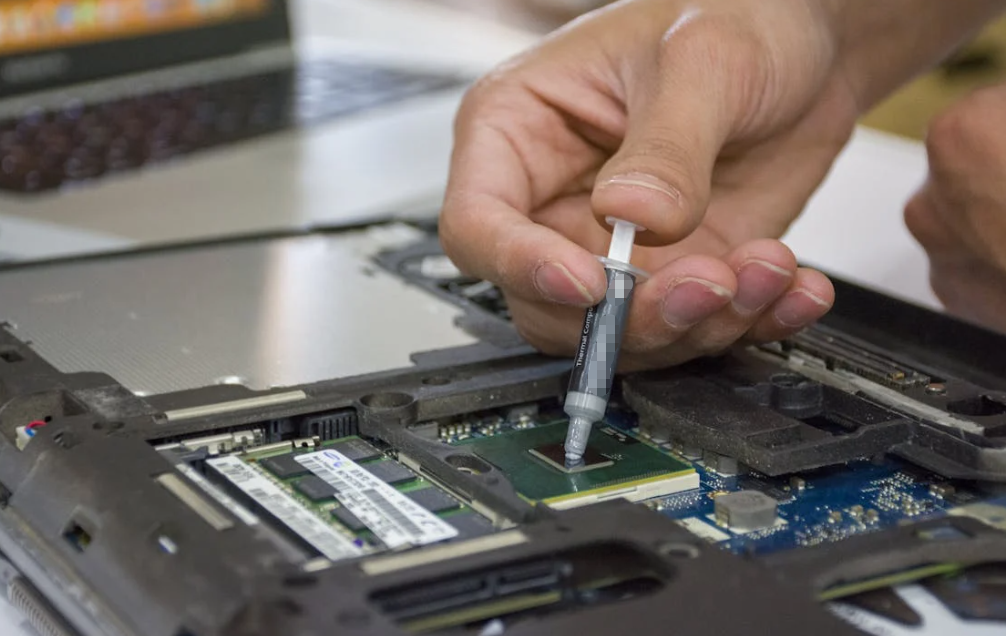
LED lighting looks deceptively simple—compact chips, sleek housings, long lifespans. But behind that clean design sits a constant battle against heat. And in that battle, thermal paste—often ignored, barely visible, and only microns thick—quietly decides whether your LED lasts 50,000 hours… or fails prematurely.

If you’ve ever seen an LED fixture dim too soon, discolor, or outright burn out, there’s a good chance the issue wasn’t the chip—it was the thermal interface.
This guide breaks down how to choose the right thermal paste for LED lighting applications, from small bulbs to industrial high-bay systems, with practical insights grounded in real engineering data.
Understanding the Role of Thermal Paste in LED Systems
Before choosing anything, it’s worth grounding ourselves in what thermal paste actually does.
Thermal paste (also called thermal interface material or TIM) is designed to fill microscopic air gaps between the LED module and the heatsink. Air, despite being invisible, is a terrible heat conductor—around 0.026 W/m·K—while thermal paste can reach several W/m·K or more .
Even polished metal surfaces are uneven at a microscopic level. Without paste, those tiny gaps trap air and create thermal bottlenecks. With paste, heat flows smoothly from the LED junction to the heatsink.
And that matters—a lot.
A small increase in junction temperature can drastically shorten LED lifespan. Industry rules of thumb suggest that every 10°C rise can significantly accelerate degradation .
Why Thermal Paste Selection Matters More for LEDs
Unlike traditional lighting, LEDs don’t dissipate heat through radiation—they rely heavily on conduction. Nearly all excess energy turns into heat that must be physically transferred away .
This creates three realities:
- Heat is concentrated in a tiny area (high power density)
- Cooling paths are limited (chip → PCB → heatsink)
- Any inefficiency compounds quickly
That’s why the thermal interface layer is critical. If it fails—even slightly—you get:
- Hotspots at the junction
- Faster lumen decay
- Color shift over time
- Premature failure
In fact, field observations show that thermal interface degradation—not heatsink failure—is a common root cause of LED system breakdowns .
Key Factors When Choosing Thermal Paste for LED Lights
Thermal Conductivity (W/m·K)
Let’s start with the obvious—but also the most misunderstood metric.
Thermal conductivity indicates how efficiently heat moves through the paste. Higher is generally better—but only to a point.
Typical guidelines:
| LED Power Level | Recommended Thermal Conductivity |
| < 5W | ≥ 2 W/m·K |
| 5–30W | ≥ 4–5 W/m·K |
| > 30W | ≥ 6 W/m·K |
High-performance formulations can reach 5–15 W/m·K or more .
But here’s the nuance:
Chasing the highest number isn’t always smart.
Higher conductivity often comes from higher filler content—which can make the paste stiffer and less adaptable. That leads to mechanical issues (we’ll get there).
Thermal Resistance (The Real Performance Indicator)
Thermal conductivity is a material property. What really matters in your application is thermal resistance (°C/W).
Thermal resistance depends on:
- Paste conductivity
- Thickness of the layer (bond line)
- Surface contact quality
A thin, well-applied layer can reduce temperature drop across the interface to just about 1°C .
But if the layer is too thick? You actually increase resistance—even with high-end paste.
Takeaway: A mid-range paste applied correctly often outperforms a premium paste applied poorly.
Viscosity and Application Behavior
In real-world production—especially for LED modules—application matters as much as formulation.
Look for paste that:
- Spreads easily under pressure
- Doesn’t trap air bubbles
- Maintains a thin, uniform layer
- Doesn’t sag on vertical surfaces
Poor viscosity leads to inconsistent coverage—and inconsistent thermal performance.
Electrical Insulation
Most LED assemblies involve metal-core PCBs or exposed conductive components. That means your thermal paste must also act as an electrical insulator.
Why?
Because some high-performance pastes (especially metal-based ones) can be electrically conductive and risky if they spill over circuits .
For LED applications, prioritize:
- High dielectric strength
- High volume resistivity
- Non-conductive formulations
Long-Term Stability (The Silent Dealbreaker)
This is where many low-cost thermal pastes fail.
LED lighting systems are expected to run for 30,000–50,000+ hours. During that time, the thermal paste must survive:
- Thermal cycling (on/off expansion and contraction)
- Vibration (especially in outdoor or industrial use)
- High temperatures
- Moisture exposure
Failure modes include:
- Pump-out: paste squeezed out over time
- Dry-out: carrier fluid evaporates
- Delamination: loss of surface contact
Once any of these happen, thermal resistance spikes—and LED lifespan drops sharply.
Operating Temperature Range
A reliable LED thermal paste should typically operate within:
- -40°C to 120°C or higher
For outdoor lighting (streetlights, automotive LEDs), this becomes even more critical due to environmental extremes.
Compatibility with LED Materials
Not all thermal pastes play nicely with all materials.
Some formulations can:
- Corrode metals (especially copper or aluminum)
- Outgas and contaminate optics
- React chemically over time
There have even been cases of thermal paste emitting acidic vapors and damaging hardware—highlighting the importance of stable formulations .
Matching Thermal Paste to LED Application Scenarios

Different LED applications demand different priorities.
Low-Power LEDs (Bulbs, Panels)
- Lower thermal density
- Cost-sensitive
Recommended:
- 2–3 W/m·K paste
- Good spreadability
- Basic stability
Mid-Power LEDs (Commercial Lighting)
- Moderate heat load
- Continuous operation
Recommended:
- 3–5 W/m·K
- Balanced performance (conductivity + flexibility)
- Strong aging resistance
High-Power LEDs (Industrial / Outdoor)
- High thermal density
- Harsh environments
Recommended:
- ≥ 5–6 W/m·K
- Excellent thermal cycling stability
- Low pump-out risk
- Wide temperature tolerance
Common Mistakes to Avoid
Using Too Much Paste
More is not better. Thick layers increase thermal resistance.
Chasing the Highest Conductivity
Ultra-high conductivity pastes can be stiff and unreliable over time.
Ignoring Aging Performance
A paste that performs well on day one but degrades in 6 months is a liability.
Poor Application Technique
Even the best paste fails if applied unevenly or with trapped air.
Using Electrically Conductive Paste
Risky in compact LED designs.
Thermal Paste vs Thermal Pad for LEDs

Sometimes the real question isn’t which paste—but whether paste is the right choice at all.
Thermal Paste:
- Best for uneven surfaces
- Lowest thermal resistance when applied correctly
- Requires controlled application
Thermal Pads:
- Easier to use
- Consistent thickness
- Slightly higher thermal resistance
Paste is typically preferred in high-performance LED modules, where every degree matters.
A Practical Selection Checklist
When choosing thermal paste for LED lighting, ask:
- What is the LED power level?
- What thermal conductivity range is required?
- Is electrical insulation necessary? (Usually yes)
- Will the system face thermal cycling?
- What is the expected lifespan?
- Can the paste maintain performance over time?
- How easy is it to apply consistently?
If you can confidently answer all of these—you’re already ahead of most buyers.
Conclusion
Choosing thermal paste for LED lights isn’t about picking the highest number on a datasheet. It’s about balance.
Thermal conductivity matters—but so do stability, flexibility, and real-world application behavior. The best thermal paste is the one that performs not just on day one, but after thousands of heating and cooling cycles.
In LED systems, the smallest layer often carries the biggest responsibility. Treat it that way.
FAQs
What thermal conductivity is best for LED thermal paste?
For most LEDs, 3–6 W/m·K is sufficient. High-power LEDs may require ≥6 W/m·K.
Can I use CPU thermal paste for LEDs?
Yes, but ensure it is electrically insulating and suitable for long-term operation.
How thick should thermal paste be for LEDs?
As thin as possible—just enough to fill microscopic gaps.
Does thermal paste dry out over time?
Low-quality paste can dry out, reducing performance and causing overheating.
Is thermal paste better than thermal pads for LEDs?
Paste usually offers better performance, but pads are easier to apply and more consistent.