Photoelectric sensors are not usually the first devices people associate with thermal management—but in reality, they are quietly sensitive to heat. Whether used in industrial automation, smart manufacturing, or optical detection systems, these sensors rely on stable temperature conditions to maintain accuracy and longevity.
And here’s the uncomfortable truth: even small thermal inefficiencies at the interface level can distort readings, shorten lifespan, or trigger premature failure.
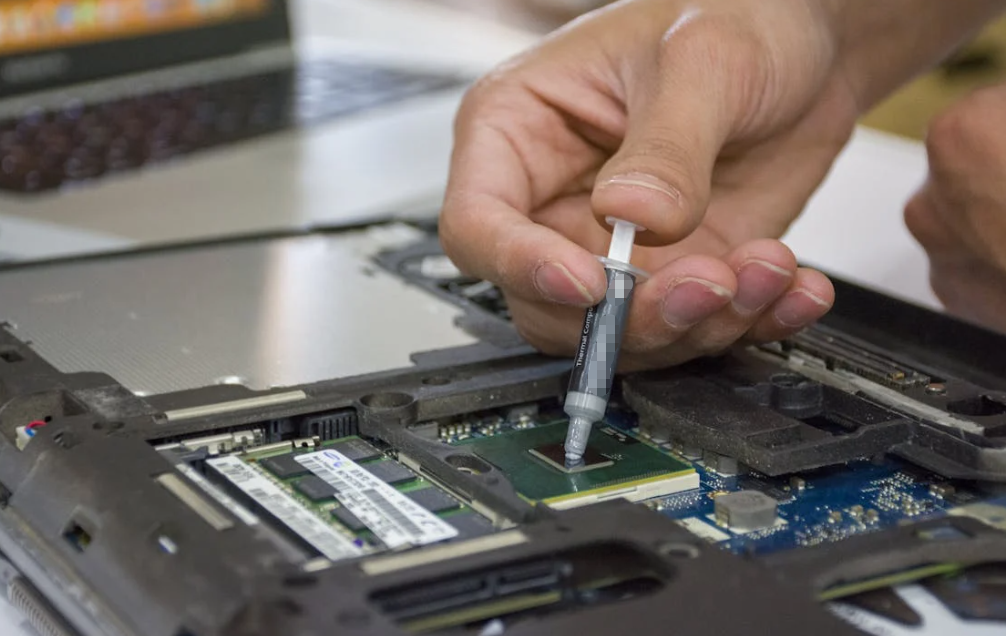
That’s where thermal paste—more formally known as a thermal interface material (TIM)—steps in.
Understanding the Role of Thermal Paste in Photoelectric Sensors
At its core, thermal paste exists to solve a deceptively simple problem: imperfect contact.
Even polished metal surfaces have microscopic gaps. These gaps trap air—an extremely poor heat conductor (~0.025 W/m·K). Thermal paste replaces that air with a material that conducts heat far more effectively, improving heat flow between components.
In a photoelectric sensor system, thermal paste is typically used between:
- Sensor chip and housing
- Sensor module and heat sink
- Optical emitter/receiver and thermal dissipation structures
Without it, heat accumulates locally, leading to:
- Signal drift
- Reduced detection accuracy
- Accelerated material degradation
Why Thermal Management Matters More for Optical Sensors
Unlike CPUs or power electronics, photoelectric sensors operate on light detection—often at precise wavelengths. Temperature fluctuations can cause:
- Wavelength shifts in emitters (LEDs/lasers)
- Noise increase in photodetectors
- Mechanical expansion affecting alignment
Even a few degrees of variation can introduce measurable error.
Thermal paste doesn’t just cool—it stabilizes.
Key Factors When Choosing Thermal Paste for Photoelectric Sensors

Let’s move beyond generic advice. Choosing the right paste for sensors requires a slightly different mindset compared to CPUs or GPUs.
Thermal Conductivity (But Don’t Chase Marketing Numbers)
Thermal conductivity is usually the first specification engineers look at, measured in W/m·K.
Typical ranges:
- Standard silicone-based paste: 2–5 W/m·K
- High-performance paste: 5–10+ W/m·K
- Specialized formulations: up to 15–17 W/m·K
But here’s the nuance: For photoelectric sensors, interface quality and stability often matter more than peak conductivity.
Why?
Because:
- The heat load is moderate
- The contact area is small
- Long-term stability outweighs short-term performance
👉 Practical takeaway: Choose consistent, reliable conductivity over extreme values.
Electrical Insulation (Non-Negotiable)
Many thermal pastes use metal fillers (silver, copper). These can be electrically conductive.
In compact sensor assemblies, that’s a risk.
Most sensor applications require:
- Electrically insulating paste
- Low dielectric constant
- No capacitive interference
Fortunately, most silicone-based or ceramic-filled pastes meet this requirement.
👉 Avoid:
- Liquid metal pastes
- Highly conductive silver-based compounds
Viscosity and Spreadability
Photoelectric sensors often involve:
- Small bonding areas
- Tight tolerances
- Delicate optical alignment
If the paste is too thick:
- It won’t fill micro-gaps properly
If it’s too thin:
- It may pump out over time
Thermal pastes are designed to be viscous yet conformable, allowing them to fill gaps under pressure while maintaining a thin bond line.
👉 Ideal characteristics:
- Medium viscosity
- Good wetting behavior
- Controlled flow under compression
Bond Line Thickness (BLT)
A common mistake: using too much paste.
Thermal paste is less conductive than metal surfaces, so thinner is better.
For sensors:
- Target ultra-thin layers (often <100 µm)
- Ensure uniform spreading
👉 Remember:
Thermal paste fills gaps—it should not create them.
Long-Term Stability and Aging
Sensors are often deployed in:
- Industrial environments
- Outdoor conditions
- Continuous operation systems
Low-quality paste can:
- Dry out
- Crack
- Pump out under thermal cycling
This increases thermal resistance over time.
Some materials (like phase-change pastes) are designed specifically for long-term stability and reliability under repeated heating cycles.
👉 Look for:
- Low evaporation rate
- Anti-drying formulations
- Proven lifecycle performance
Operating Temperature Range
Photoelectric sensors may operate in:
- Freezing outdoor environments
- High-temperature industrial settings
Ensure the paste:
- Maintains viscosity across the temperature range
- Does not degrade or separate
Typical requirements:
- -40°C to 150°C (or higher for industrial use)
Compatibility with Sensor Materials
Sensor assemblies often include:
- Aluminum housings
- Plastic enclosures
- Glass optics
Thermal paste must be:
- Non-corrosive
- Chemically stable
- Compatible with polymers and coatings
Some metal-based pastes can corrode aluminum or damage sensitive surfaces—another reason to avoid them.
Types of Thermal Paste Suitable for Photoelectric Sensors

Let’s break down the most relevant categories.
Silicone-Based Thermal Paste
- Most common
- Good electrical insulation
- Moderate conductivity
✔ Best for general sensor applications
Ceramic-Filled Thermal Paste
- Uses aluminum oxide, boron nitride
- Non-conductive
- Stable over time
✔ Ideal for precision sensors
Phase-Change Materials (PCM)
- Solid at room temperature, soften when heated
- Excellent surface wetting
- Very stable over long cycles
✔ Best for high-reliability industrial sensors
Metal-Based Thermal Paste
- High conductivity
- Electrically conductive
✖ Generally NOT recommended for sensors
Common Mistakes Engineers Make
Even experienced engineers occasionally get this wrong.
Overapplying Paste
More paste ≠ better cooling
Too much increases thermal resistance.
Ignoring Surface Preparation
Contaminants reduce conductivity significantly.
Always:
- Clean surfaces
- Remove debris
- Ensure proper contact pressure
Choosing Based Only on Conductivity
A 12 W/m·K paste that dries out in 6 months is worse than a stable 4 W/m·K paste.
Using Consumer-Grade Paste in Industrial Systems
Consumer products prioritize cost and short-term performance—not durability.
Practical Selection Checklist
When selecting thermal paste for photoelectric sensors, ask:
- Is it electrically insulating?
- Is the conductivity sufficient (not excessive)?
- Does it maintain performance over time?
- Can it form a thin, uniform bond line?
- Is it compatible with sensor materials?
- Does it handle the operating environment?
If you can confidently answer “yes” to all six—you’re on the right track.
How HakTak Thermal Solutions Fit In
For applications like photoelectric sensors, a brand like HakTak focuses on:
- Stable thermal conductivity (not exaggerated specs)
- Industrial-grade reliability
- Materials optimized for electronics—not just CPUs
This aligns well with what sensor systems actually need: predictability over peak performance.
Conclusion
Choosing thermal paste for photoelectric sensors is less about chasing high numbers and more about understanding system behavior.
You’re not cooling a gaming processor—you’re stabilizing a precision instrument.
The right thermal paste should:
- Improve heat transfer
- Maintain long-term consistency
- Protect electrical and optical integrity
In short, the best choice is the one you don’t have to think about again after deployment.
FAQs
Can I use CPU thermal paste for photoelectric sensors?
Yes, but only if it’s electrically insulating and stable. Industrial-grade paste is usually better.
What thermal conductivity is ideal for sensors?
Typically 2–8 W/m·K is sufficient for most sensor applications.
Is more thermal paste better?
No. Use the thinnest layer possible to fill gaps.
How long does thermal paste last?
High-quality paste can last 3–10 years, depending on conditions.
Should I use metal-based thermal paste?
Generally no—it can cause electrical short circuits and corrosion.