
When people talk about cooling performance in electronics—whether it’s a gaming PC, industrial control board, or LED module—they often jump straight to heatsinks or fans. But the quiet workhorse sits in between: the thermal interface material (TIM).

And here’s where the debate begins: thermal paste vs thermal pads.
At first glance, it feels like a simple trade-off—messy vs clean. In reality, the difference runs deeper, touching thermal physics, material science, manufacturing tolerances, and even long-term reliability. Let’s unpack it properly.
What Are Thermal Paste and Thermal Pads?
Thermal Paste (Thermal Grease)
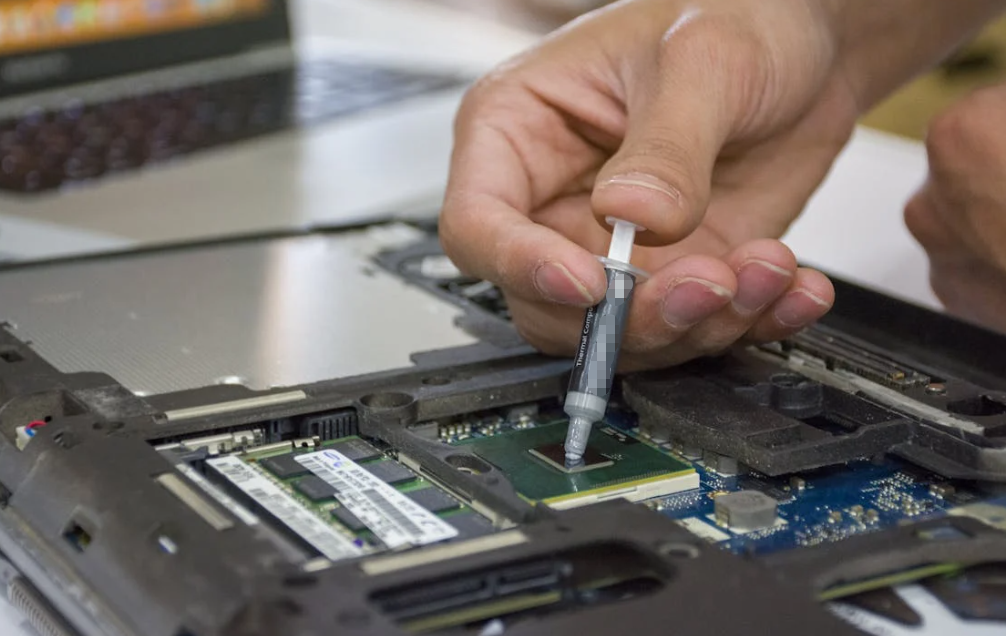
Thermal paste is a semi-liquid compound made from silicone or oil-based carriers filled with conductive particles like silver, aluminum oxide, or carbon.
Its job is deceptively simple: eliminate air gaps between two metal surfaces. Air is a terrible heat conductor, so even microscopic voids can trap heat and raise temperatures.
Because paste spreads thinly and flows into surface imperfections, it creates near-perfect contact between a chip and its heatsink.
Thermal Pads
Thermal pads are solid sheets of thermally conductive material, typically silicone-based and filled with ceramic or graphite particles.
They come in fixed thicknesses (from fractions of a millimeter up to several millimeters) and are designed to bridge gaps where surfaces aren’t perfectly aligned.
Unlike paste, pads don’t flow—they compress.
Why Thermal Interface Materials Matter
No surface is perfectly flat. Even polished metal looks like a mountain range under a microscope. Without a TIM:
- Air pockets form
- Heat transfer drops dramatically
- Component temperatures rise
- Performance throttling or failure occurs
Both paste and pads exist to solve this—but they do it in fundamentally different ways.
Thermal Conductivity: The Core of the Debate
Let’s start with numbers—because they tell part of the story.
Typical Thermal Conductivity Ranges
- Thermal paste: ~4 to 13 W/m·K
- High-end paste: up to ~12+ W/m·K
- Thermal pads: ~1 to 12 W/m·K
At first glance, they look similar. Some premium pads even rival paste in raw conductivity.
But here’s the catch:
Thermal conductivity alone does NOT determine real-world heat dissipation.
The Real Winner: Thermal Resistance vs Thickness
This is where many comparisons go wrong.
Thermal performance depends on:
Thermal Resistance = Thickness ÷ Conductivity
Even if a pad has similar conductivity to paste, it is much thicker.
- Thermal paste layer: typically < 0.1 mm
- Thermal pad: 0.5 mm to 3 mm (or more)
That thickness dramatically increases resistance.
This is why:
- Paste often delivers lower CPU temperatures
- Pads can show higher steady-state temps under load
Surface Contact: Where Paste Dominates
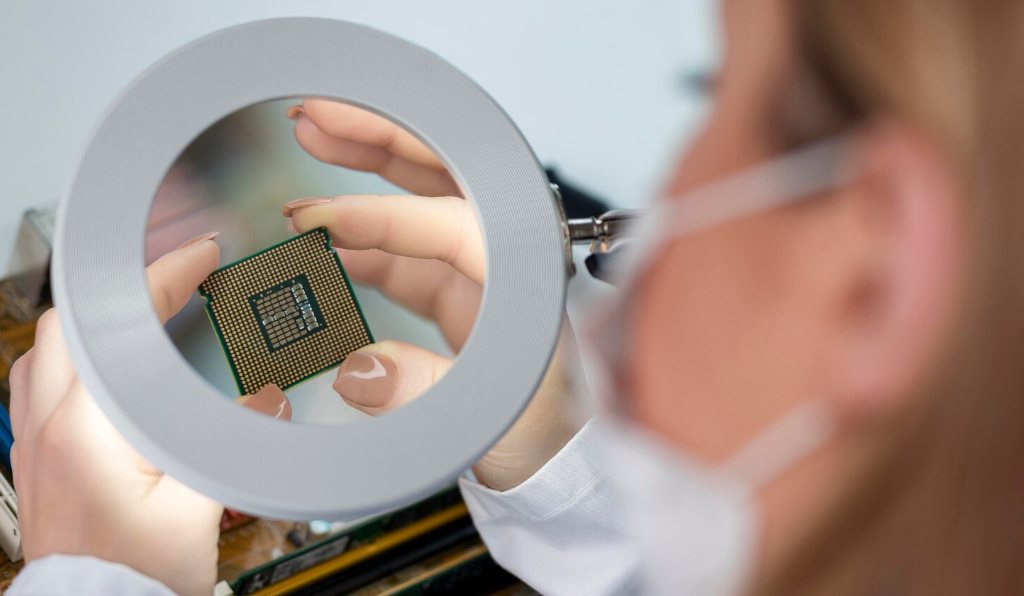
Thermal paste has a critical advantage:
- It flows into microscopic imperfections
- It removes nearly all trapped air
- It maximizes actual contact area
Pads, on the other hand:
- Sit flat
- Cannot fully conform to micro-level roughness
- Leave tiny voids that reduce efficiency
As a result:
Thermal paste typically achieves better heat transfer efficiency in high-performance applications.
Where Thermal Pads Excel
If paste is “technically better,” why do pads exist at all?
Because real-world engineering is messy.
Gap Filling Capability
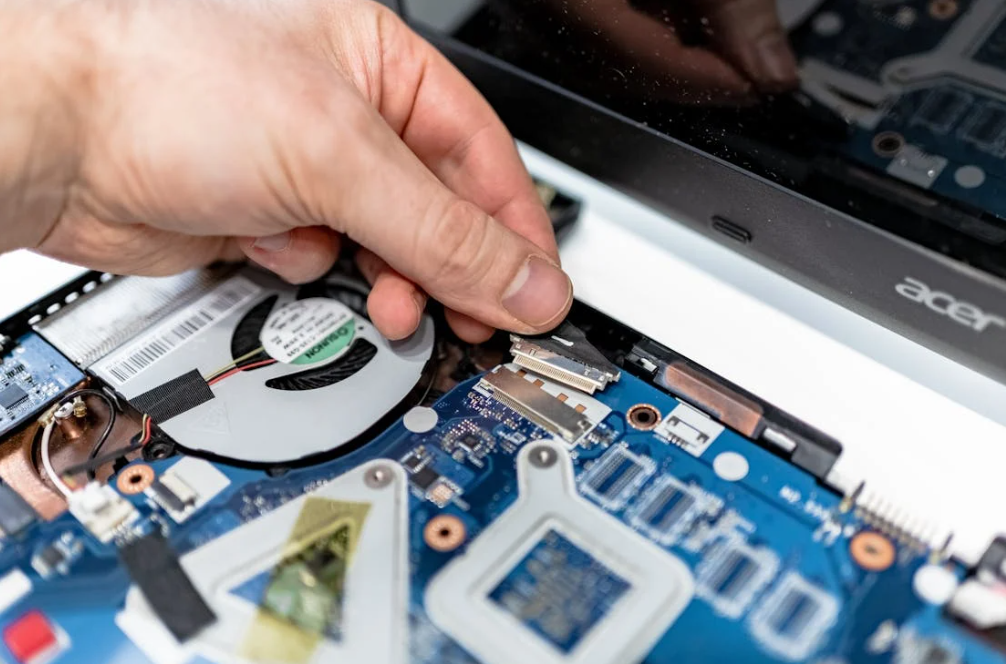
Pads shine when there’s distance between surfaces.
Examples:
- VRAM chips
- Power MOSFETs
- Uneven heatsinks
Paste cannot fill large gaps effectively—it will either:
- Pump out
- Leave voids
- Lose performance
Pads, however, are designed for exactly this.
Ease of Application
Pads are:
- Pre-cut
- Clean
- Foolproof
Paste requires:
- Correct amount
- Even pressure
- Skill to avoid air bubbles
In mass production or field maintenance, pads save time and reduce error.
Electrical Insulation
Many pads provide strong electrical insulation (up to thousands of volts).
This makes them ideal for:
- Power electronics
- Automotive systems
- Industrial boards
Reusability and Longevity
Thermal paste:
- Can dry out over time
- Needs replacement after years
Pads:
- Often reusable
- More stable under repeated assembly
New technologies (like carbon-based pads) are even pushing toward maintenance-free solutions.
Performance Under Load: Real-World Behavior
In high-power scenarios—think gaming CPUs or AI chips—the difference becomes more obvious.
- Thermal paste handles thermal spikes better
- Pads may struggle with sustained high wattage loads
This is why enthusiasts and overclockers almost always choose paste.
Emerging Hybrid Solutions
The industry isn’t standing still.
Recent innovations include:
- Graphene thermal pads (~70 W/m·K claims)
- Vapor chamber-integrated pads reaching 800–1200 W/m·K
These aim to combine:
- Pad convenience
- Paste-level (or better) performance
However, most are still:
- Expensive
- Application-specific
- Not yet mainstream
Thermal Paste vs Thermal Pads: Side-by-Side Comparison
| Factor | Thermal Paste | Thermal Pads |
| Form | Semi-liquid | Solid sheet |
| Thermal Conductivity | Medium–High | Low–Medium (some high-end) |
| Thickness | Very thin | Thick |
| Surface Contact | Excellent | Moderate |
| Gap Filling | Poor (large gaps) | Excellent |
| Ease of Use | Moderate | Very easy |
| Reusability | No | Often yes |
| Electrical Insulation | Varies | Excellent |
| Best Use Case | CPUs, GPUs | VRAM, power components |
Which Offers Better Heat Dissipation?
If we focus strictly on heat dissipation performance, the answer is clear:
Thermal paste generally offers better heat dissipation than thermal pads.
Why?
- Lower thermal resistance
- Better surface conformity
- Thinner interface layer
However—and this matters—
The best choice is context-dependent, not universal.
When to Choose Thermal Paste
Use thermal paste when:
- You need maximum cooling performance
- Surfaces are flat and tightly mated
- Application involves CPUs, GPUs, or high-power chips
- You can ensure proper application
When to Choose Thermal Pads
Use thermal pads when:
- There is a gap between components
- You need fast, clean installation
- Electrical insulation is required
- You’re working with memory chips, VRMs, or uneven surfaces
A Practical Perspective (From Engineers, Not Marketing)
In real-world system design, engineers rarely choose one universally.
Instead:
- Paste is used on the main processor
- Pads are used on supporting components
It’s not a competition—it’s a division of labor.
Conclusion
Thermal paste wins the performance race, especially in high-power, precision-contact environments. Thermal pads win the practicality race, offering simplicity, reliability, and gap-filling capability.
If your goal is pure heat dissipation, go with paste. If your goal is ease, safety, and flexibility, pads may be the smarter choice.
The smartest systems? They use both.
FAQs
Is thermal paste always better than thermal pads?
Not always. Paste is better for performance, but pads are better for gap filling and ease of use.
Can I replace thermal paste with a pad on a CPU?
You can, but temperatures will usually be higher.
Do thermal pads last longer than paste?
Yes. Pads are generally more durable and can often be reused.
How often should thermal paste be replaced?
Typically every 2–5 years, depending on quality and usage.
Can I use both thermal pad and paste together?
In most cases, no. Each is designed for different interface conditions and shouldn’t be layered.