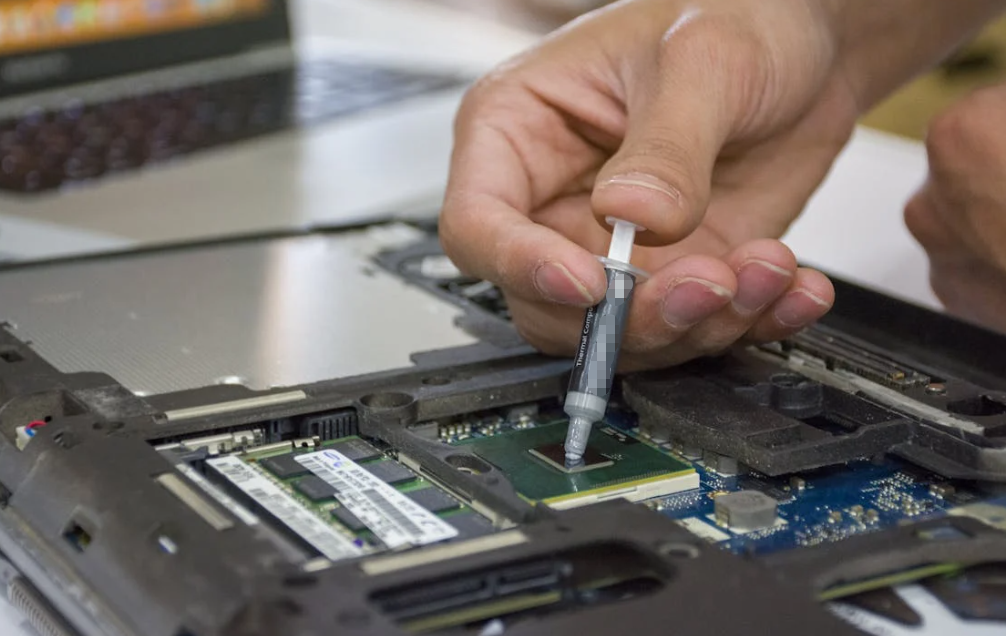
In today’s electronics landscape — from high-performance CPUs and GPUs to LED modules and power electronics — managing heat is no longer optional. Poor thermal management not only throttles performance; it shortens lifespan and undermines reliability. At the heart of thermal management lies a deceptively simple but critical material: thermal grease.

Also known as thermal paste or thermal compound, thermal grease fills microscopic air gaps between a heat-generating device and its heat sink, facilitating efficient heat flow. The key metric that defines its performance? Thermal conductivity — often referred to as k-value, measured in W/m·K. The higher this value, the better a grease conducts heat away from hot components.
However, choosing and accurately testing thermal grease’s conductivity is not a plug-and-play job. It requires careful consideration of materials, methods, equipment standards, and real-world application conditions. In this in-depth guide, we’ll explore how to select the right thermal grease for your application and how to test its thermal conductivity with scientific accuracy.
Why Thermal Conductivity Matters
Thermal grease’s primary purpose is to improve thermal contact between two surfaces. Even when two solid surfaces appear smooth, at the microscopic level they have peaks and valleys. These create tiny pockets of air — and air is a terrible conductor of heat. Using thermal grease fills those gaps, displacing air and increasing the contact area between mating surfaces.
Without high-conductivity grease:
- heat buildup leads to higher junction temperatures,
- thermal throttling occurs,
- long-term reliability suffers.
Even though grease’s thermal conductivity is orders of magnitude lower than metals like copper or aluminum, it dramatically improves heat flow compared to air. Typical good-quality paste ranges from 8 W/m·K to over 12 W/m·K, which is still far lower than copper (~400 W/m·K) but vastly better than air (~0.026 W/m·K).
So, thermal conductivity is a defining metric, but it’s not the only factor to consider when choosing thermal grease.
The Fundamentals of Thermal Grease Selection

Selecting the right thermal grease requires balancing a set of interrelated properties. Thermal conductivity alone won’t guarantee performance if other aspects are neglected.
Thermal Conductivity (k-Value)
This is the cornerstone metric. It quantifies the material’s intrinsic ability to conduct heat. Higher values are generally better, but not always in all contexts:
- For high-power electronics, higher k-values improve heat dissipation.
- For low-power or sensitive devices, extremely thick or high-viscosity grease may add unnecessary resistance or complicate application.
When comparing greases, ensure the testing methods and conditions are consistent (temperature, pressure, sample thickness — all affect measurements).
Viscosity and Application Properties
Thermal grease viscosity affects both ease of application and effectiveness.
- High viscosity can fill large gaps but may be hard to spread evenly.
- Low viscosity spreads easily but may not fill larger voids.
Correct thickness is critical: too thin, and voids remain; too thick, and the grease itself adds thermal resistance. This is why manufacturers often specify optimum application thickness.
Electrical Conductivity
Ideally, thermal grease should be non-electrically conductive for safety reasons. Conductive fillers (like silver) can improve heat conduction but pose an electrical risk if spread onto sensitive circuitry.
Non-conductive greases — typically ceramic-filled — strike a balance between safety and thermal performance.
Durability and Stability
Thermal grease should remain stable over the operating temperature range of the equipment. Some greases dry out or harden with age, reducing effectiveness. Higher-temperature applications, especially above 150 °C, require specially formulated greases with extended life and resistance to thermal degradation.
Environmental conditions like humidity, vibration, and thermal cycling also influence long-term performance.
What Determines Thermal Conductivity in Grease?
Thermal conductivity in grease is not a fixed number independent of its composition and conditions. Several factors influence real-world thermal conductivity:

Base Fluid and Filler Materials
Thermal greases typically have a polymer or silicone base with dispersed fillers such as:
- Ceramics (Alumina, Boron Nitride, Aluminum Nitride)
- Metal powders (Silver, Copper)
- Carbon-based materials (Graphene, Carbon Nanotubes)
These fillers increase thermal paths within the grease, boosting conductivity. Studies show that adding metal nanopowders can dramatically increase conductivity, but the improvement tends to taper after a certain filler loading.
Filler Loading and Distribution
The fraction and uniform distribution of conductive particles directly affect how well heat can hop from particle to particle. Higher loading generally improves conduction — up to a point. Too much filler can make grease too viscous and hard to apply.
Operating Temperature
Thermal conductivity can vary with temperature. In some formulations, conductivity decreases at very high temperatures due to matrix softening; in others, it may slightly increase due to enhanced phonon transport.
Contact Conditions
Real heat transfer depends on:
- Uniformity of application
- Pressure applied between surfaces
- Surface flatness
- Presence of voids
Thick, uneven layers or trapped air pockets increase thermal resistance, reducing effective conductivity.
How to Test Thermal Conductivity of Thermal Grease
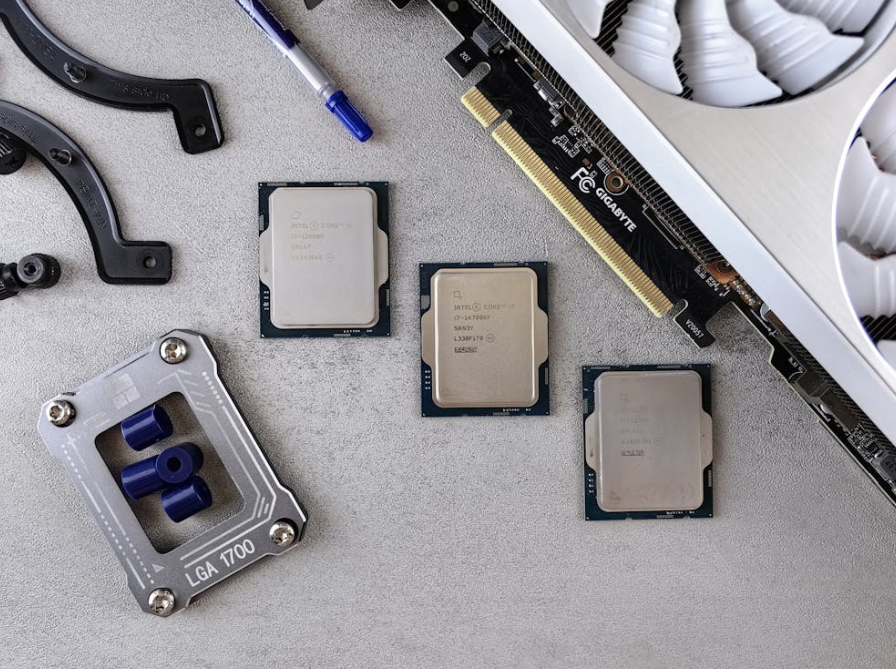
Testing the thermal conductivity of grease accurately requires specialized measurement methods. Traditional thermal conductivity testers designed for solid materials are not always suitable for pastes and gels. In practice, laboratories use a combination of steady-state and transient methods along with defined standards.
Let’s break down the most common methods.
Transient Hot Wire (THW) Method
A proven method for liquids and pastes. A thin wire both heats the sample and acts as a resistance thermometer. By applying a voltage step and recording the temperature rise, the thermal conductivity is calculated. This method is fast and minimizes convective effects.
The THW method is often referenced under standards like ASTM D7896 (for liquids/pastes).
Transient Plane Source (TPS) / Hot Disk Method
A disc-shaped heated sensor sits between two sample halves. The rise in temperature over time gives both thermal conductivity and diffusivity.
This Hot Disk / TPS method is versatile and suited for solids, liquids, and pastes alike with wide measurement ranges.
Guarded Heat Flow Meter
Better suited for thicker, homogeneous materials, it measures the steady-state heat flow across a sample. Grease testing may use this method with fixed sample geometries and compressive loads. Standards such as ASTM E1530 describe how thermal pads and paste can be characterized.
Standardized Methods and Calibration
To ensure comparability:
- Test labs follow established standard procedures (ASTM, ISO) for setup, equipment calibration, and data analysis.
- Calibration against known reference materials ensures accuracy.
- Environmental control (temperature, humidity) is maintained during measurements.
Using non-standard setups or inconsistent methods leads to inconsistent data — a common issue with informal DIY thermal paste tests online. (For example, PC enthusiasts testing by watching CPU temp changes cannot isolate material’s intrinsic k-value from heat sink and system effects.)
Practical Lab Testing: Step-by-Step Overview

For engineers and lab technicians, here’s what a typical recognized test might involve:
Preparation
- Condition samples to a controlled temperature.
- Apply grease between metal plates with a controlled thickness using spacers.
- Ensure uniform, bubble-free layers.
Measurement
- Use chosen instrument (Hot Disk, THW sensor).
- Run repeated cycles to ensure repeatability.
- Record raw thermal resistance or temperature vs. time data.
Data Processing
- Convert raw readings (temperature rise, heat flow) into a thermal conductivity value using standard formulas and curve fitting.
Reporting
- Include sample thickness, test conditions, and standard reference used.
- Report k-value as W/m·K at specified temperatures.
Choosing the Right Thermal Grease for Your Application
Here’s a practical checklist for engineers:
Define Operating Temperature
Match grease thermal stability to highest expected junction temperatures.
Consider Mechanical Requirements
If the interface sees vibration or mechanical shock, choose grease with good adhesion and stability.
Prioritize Safety
Non-conductive grease reduces electrical risk on sensitive circuitry.
Look Beyond Marketing Claims
Real-world performance depends on how grease behaves under compression, temperature, and gap size — not just headline k-values.
Consult Lab Data
Whenever possible, get unbiased testing data conducted under recognized standards. Certificates from ISO/ASTM-based test labs add confidence.
Conclusion
Choosing and testing the thermal conductivity of thermal grease isn’t a simple checkbox exercise. It requires technical understanding, rigorous testing, and real-world perspective. From material composition to how samples are measured in a lab, each step influences the final performance you’ll see in service.
At HakTak, we understand the nuance behind high-performance thermal interface materials. Whether you’re selecting grease for industrial power modules, LED cooling, or high-density electronics, the key is always clear: choose the right product and test it rigorously using recognized methods to ensure optimal thermal management performance.
Frequently Asked Questions (FAQs)
What is thermal conductivity and why is it important for thermal grease?
Thermal conductivity measures how well a material conducts heat. In thermal grease, it determines how efficiently heat transfers between two surfaces, directly impacting cooling performance.
How is thermal conductivity of grease tested in a lab?
Labs use methods like transient hot wire (THW) and transient plane source (TPS/Hot Disk) under ASTM or ISO standards to accurately measure conductivity.
Does higher thermal conductivity always mean better grease?
Not always — higher k-value helps heat transfer, but application thickness, viscosity, and operating conditions also influence real performance.
Can I test thermal grease conductivity without lab equipment?
DIY tests using system temperature changes are unreliable because they don’t isolate the material’s intrinsic conductivity. Standard lab gear and methods are needed for accurate measurements.
How often should thermal grease be replaced?
It depends on operating temperatures and environment. In high-temperature or high-stress applications, reapplication every few years helps maintain performance.