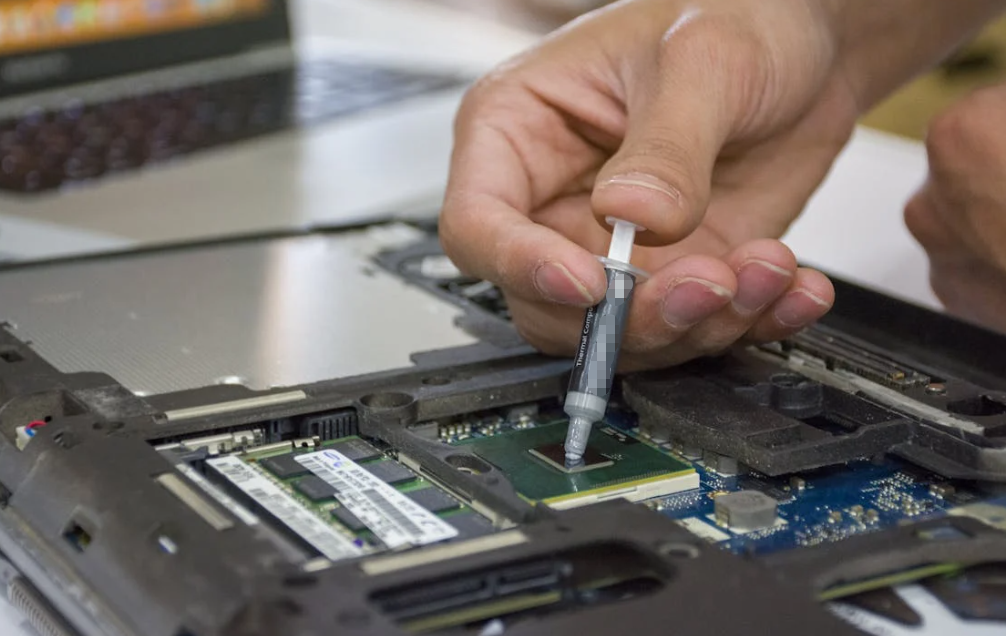
In today’s fast‑moving electronics world, managing heat isn’t just an engineering detail — it’s a strategic advantage. From high‑performance CPUs and GPUs to power modules in EVs and telecom devices, excessive heat reduces performance, shortens lifespans, and can lead to costly failures. One core component in the modern thermal toolbox is the PCM thermal pad, a specialized phase‑change material engineered to bridge heat‑producing components and heat sinks with exceptional efficiency.

But what exactly is a PCM thermal pad, how does it work, and why are electronics designers increasingly favoring it over traditional thermal interface materials? In this comprehensive guide, we break down the science, the benefits, the performance metrics, and the real‑world applications that make PCM thermal pads essential in advanced thermal management.
1. What Does PCM Stand For?
PCM stands for Phase‑Change Material. In the context of thermal pads, these are materials designed to undergo a controlled transformation in physical state — typically from a solid to a softened, more malleable form — at a specific temperature range. This transformation enhances contact with mating surfaces and improves heat transfer across microscopic surface irregularities.
Importantly, the term phase change in thermal pads is used differently from the broad scientific definition (e.g., melting from solid to liquid). In PCM thermal pads used in electronics, it often refers to softening and “wetting” behavior that fills gaps at working temperatures, creating a conformal interface between a chip and heat sink.
2. The Role of Thermal Pads in Electronics
Almost every electronic system with significant heat generation relies on thermal interface materials (TIMs) — substances designed to reduce thermal resistance between components and heat sinks. One such TIM category is thermal pads, including silicone‑ and polymer‑based variants.
Thermal pads serve to:
Fill gaps between imperfectly flat surfaces.
Transfer heat from chips, power modules, and LEDs to heat sinks or chassis.
Provide electrical insulation where needed (many pads are non‑conductive).
Thermal pads are typically easier to handle than greases or pastes, less messy, and simplify automated production processes.
Among thermal pads, PCM thermal pads take this further by actively changing consistency at operational temperatures, improving thermal contact and performance.
3. How PCM Thermal Pads Work
At room temperature, a PCM thermal pad feels firm and stable — easy to place and cut to size. As the device warms up during operation (usually around 40°C–65°C), the PCM begins to soften and partially “flow” to fill tiny surface irregularities between the heat source and the heat sink.
This behavior lowers the contact thermal resistance significantly compared with static pads. After softening, the material maintains a conformal bond during normal operation, ensuring consistent heat transfer and reducing potential hot spots.
A simple analogy: imagine trying to pass heat across two slightly rough metal surfaces. If the surfaces don’t perfectly touch everywhere, air gaps remain — and air is a poor conductor of heat. PCM thermal pads adapt to these surfaces as temperature rises, sealing microscopic gaps and creating a much more efficient thermal pathway.
As the system cools, the material transitions back to a semi‑solid state — providing stability without leaving residue or requiring rework.
4. Key Performance Metrics of PCM Thermal Pads
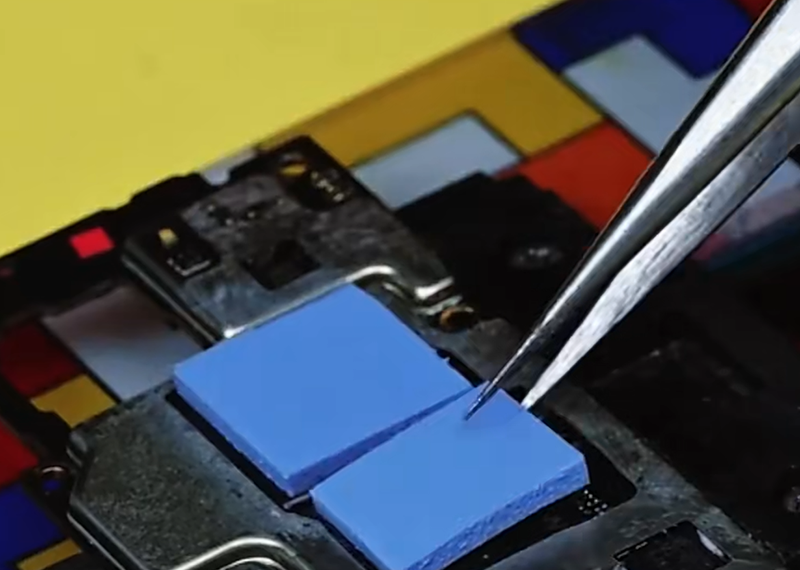
To evaluate PCM thermal pads, engineers commonly consider the following:
Thermal Conductivity (W/m·K)
This measures how effectively heat moves through the material. PCM pads span a wide range — from around 1–2 W/m·K for basic formulations to 6–8+ W/m·K in premium products.
For example:
- Honeywell PTM6880 offers ~6.0 W/m·K with low thermal impedance.
- PCM8990 can reach ~8.5 W/m·K.
Higher thermal conductivity generally means better heat transmission — crucial for demanding applications.
Thermal Impedance (°C·cm²/W)
Thermal impedance combines conductivity with thickness and interface effects to show how much temperature rise occurs per unit of power. Lower values are better, indicating more efficient heat transfer.
Phase Change Temperature
The temperature range where the material softens. Too low, and the pad might become overly flowable; too high, and it may never properly conform under real‑world operating conditions. Many PCM pads activate around 45–60°C, optimized for typical electronics heat flux.
Mechanical and Electrical Properties
Many PCM pads also provide electrical insulation (high volume resistivity), critical in insulating heat sinks from live circuits.
5. Advantages Over Traditional Materials
PCM thermal pads bring several advantages when compared to conventional TIMs like silicones, greases, and non‑PCM pads:
Lower Thermal Resistance at Operating Temperatures
Once softened, PCM pads create a thinner, more conformal interface than static pads, offering performance closer to thermal pastes but with cleaner handling.
Cleaner, Easier Installation
Pads are pre‑formed and can be cut to fit. They don’t require the precise dispensing or messy application of greases.
Stability and Reliability
Unlike some pastes that can pump out, dry, or degrade over time, PCM pads stay in place due to their semi‑solid nature and excellent wetting characteristics through temperature cycles.
Reduced Air Gaps
By softening under heat, PCM pads fill microscopic voids that static pads cannot. This leads to improved efficiency and reduced hotspots.
Automated Production Compatibility
Because they are solid at room temperature, PCM pads can be placed using pick‑and‑place systems — ideal for high‑volume manufacturing.
6. Common Applications
PCM thermal pads are used across electronics sectors where heat management matters:
Consumer Electronics
CPUs and GPUs in laptops and desktops
High‑end gaming devices
Mini‑PCs and embedded systems
Engineers value PCM pads where automated assembly and compact designs make grease impractical.
Networking and Telecom
Routers, switches, and base stations often employ PCM pads between ASICs and heat spreaders to improve reliability under continuous load.
Power Electronics
PCM pads serve in power modules, inverters, and EV chargers — places where heat flux is significant and thermal resistance must be minimized.
Medical and Industrial Electronics
Thermal stability, reliability, and repeatable performance make PCM pads suitable for critical systems in both sectors.
7. Choosing the Right PCM Thermal Pad
Given the diversity of PCM pads, selection should be guided by:
- Thermal conductivity needed for the particular application
- Operating temperature range of the device
- Mechanical constraints (gap thickness, flexibility)
- Electrical insulation requirements
- Environmental considerations (e.g., moisture, vibration)
Brands and formulations vary widely, so engineers often benchmark products to ensure specification compliance before production.
8. Installation Best Practices
Even the best PCM thermal pad won’t perform if installed poorly. Follow these guidelines:
- Clean surfaces thoroughly to remove oils, dust, or oxidation.
- Select precise thickness based on gap measurements.
- Align pads carefully to avoid overlap or misplacement.
- Avoid contamination from fingerprints or debris.
Unlike pastes, PCM pads don’t smear; they’re easier to place but require accurate alignment for optimal performance.
9. PCM Thermal Pads in High‑Demand Sectors
AI and Data Centers
With chips running at intense heat flux levels, thermal pathways must be efficient. PCM pads with higher conductivity and low impedance help maintain reliability under constant heavy load.
Automotive Electrification
Power electronics in EVs and hybrid systems demand stable operation across extreme conditions. PCM pads combine solid‑state reliability with advanced thermal performance.
Mobile and Compact Systems
For handheld or space‑constrained devices, PCM pads balance form‑factor requirements with thermal needs.
10. Conclusion
A PCM thermal pad is not just another thermal interface material — it is a smart blend of solid‑state stability and thermally active performance. Through controlled phase change behavior, these pads minimize thermal resistance, enhance long‑term reliability, and simplify manufacturing processes. Whether you’re designing high‑performance computing hardware, rugged industrial electronics, or next‑generation power modules, understanding and leveraging PCM thermal pad technology can significantly elevate your thermal management strategy.
At HakTak, we specialize in quality thermally conductive solutions, including advanced PCM thermal pads engineered to deliver superior performance and reliability across demanding applications.
11. FAQ
What temperature do PCM thermal pads soften at?
Most PCM pads begin to soften around 40–65°C, depending on formulation.
Are PCM thermal pads better than thermal paste?
PCM pads often provide cleaner application and better gap‑filling at operating temperatures, though performance depends on device requirements.
Can PCM pads be reused after removal?
Generally, it’s best to replace them after removal to ensure consistent thermal performance.
Do PCM pads conduct electricity?
Many are electrically insulating, but always verify the specification for your application.
How do I choose the right thickness?
Measure the gap between components and choose a pad that matches without excessive compression.