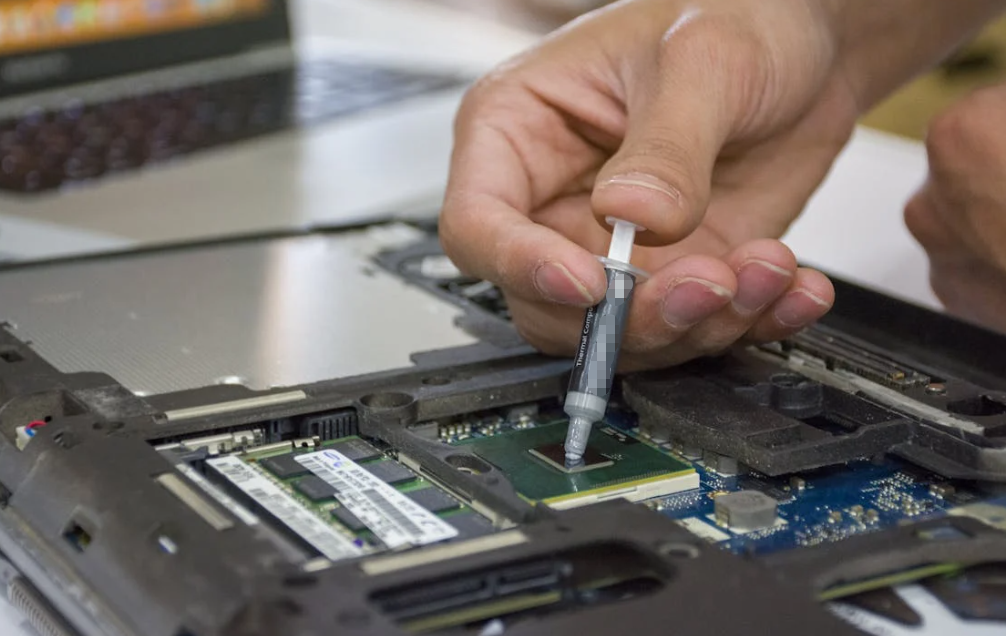
In the complex world of thermal management, thermal grease stands as a deceptively simple yet critically important material. Whether you’re engineering cutting-edge electronics or building high-performance computing systems, understanding what thermal grease is — and why it matters — helps unlock optimized performance and reliability. In this article, we explore thermal grease from the ground up: its definition, how it works, what it’s made of, where it’s used, and how to choose the right one for your application.

1. Introduction to Thermal Grease
At its core, thermal grease (also known as thermal paste, thermal compound, or thermal interface material – TIM) is a specialized thermally conductive material applied between two solid surfaces to enhance heat transfer. It fills microscopic surface irregularities or air gaps that, if left unchecked, trap air — a poor conductor of heat — and hinder efficient dissipation of thermal energy.
In practical terms, thermal grease acts like a “bridge” for heat. On one side of this bridge is a heat-generating component, such as a CPU, power transistor, or LED. On the other is a cooling solution, such as a heat sink or cold plate. The grease ensures that these components “talk” to one another thermally despite imperfections in the surfaces.
2. Why Thermal Grease Matters
The Challenge of Surface Microscopy
Solid surfaces aren’t perfectly flat — at the microscopic level, even machined metal surfaces are rough and uneven. When two such surfaces meet, microscopic pockets of air remain trapped between them. Because air has extremely low thermal conductivity, this trapped air acts as insulation, reducing heat flow and creating hot spots.
Thermal grease fills these tiny gaps and replaces air with a material that has much higher thermal conductivity — enabling more efficient heat transfer. This is essential in a range of high-performance and industrial applications, where overheating can degrade performance, shorten lifespan, or even cause failure.
3. What Thermal Grease Is — and Isn’t
Thermal grease is often confused with other thermal interface materials like pads, adhesives, or phase-change materials. But there are important differences.
- Thermal grease vs. thermal pads: Pads are solid or semi-solid materials placed between surfaces. They are easier to handle but typically provide lower thermal performance compared to grease in high-precision applications.
- Thermal grease vs. thermal adhesives: Unlike adhesives, which bond surfaces and cure into a solid, thermal grease does not provide mechanical strength — it stays pliable and requires a mechanical clamp or fastener.
- Thermal grease vs. phase-change materials (PCMs): PCMs soften and flow as they reach operating temperatures, but thermal grease remains fluid over longer temperature ranges without curing.
4. Composition and Thermal Properties
At the heart of thermal grease’s performance are two components: the matrix and the filler.
Matrix
The matrix is typically a polymer base — often silicone — that provides the structural medium of the grease. It ensures that the material spreads easily and conforms to surface topography. Common matrices include:
- Silicone oils
- Urethane compounds
- Acrylates and other polymers
Filler Materials
Filler materials are finely divided particles suspended within the matrix that provide thermal conductivity. Because the polymers themselves conduct heat poorly, the fillers do the heavy lifting.
Common fillers include:
- Aluminum oxide
- Boron nitride
- Zinc oxide
- Aluminum nitride
- Diamond particles
- Silver or metal fillers (for high-end applications)
Thermal Conductivity
The performance of thermal grease is often evaluated by thermal conductivity, measured in watts per meter-Kelvin (W/m·K). Here are typical ballpark figures:
- Ordinary thermal greases: 0.8–4 W/m·K
- High-performance silicone and ceramic-based greases: 5–10 W/m·K
- Liquid metal compounds and premium materials: >10 W/m·K
By comparison, pure metals like copper have thermal conductivities of 200+ W/m·K. So, even the best grease doesn’t approach metal performance — its value lies in eliminating air gaps where direct contact isn’t possible.
5. How Thermal Grease Works — The Physics in Plain Words
To grasp thermal grease’s role, imagine two surfaces with tiny imperfections. Microscopes reveal that surfaces are not smooth; they are like miniature mountains and valleys. When two such surfaces meet, only the peaks touch directly. All the valleys — and the tiny air pockets within them — remain unfilled.
Air’s thermal conductivity is very low, roughly 0.02–0.04 W/m·K, compared to solid materials. So even a small bit of trapped air drastically increases thermal resistance, slowing heat flow.
Thermal grease flows into those valleys and replaces the air with a material that conducts heat better. The grease rarely cures or hardens; instead it stays pliable to maintain contact even under thermal expansion or vibration. This continuous contact reduces the thermal boundary resistance and improves heat transfer.
What’s important here is not that thermal grease conducts heat exceptionally well, but that it bridges microscopic gaps that would otherwise act like insulation. The best performance comes from applying the thinnest layer possible — just enough to fill voids without creating barriers thicker than necessary.
6. Common Types of Thermal Grease
Thermal greases are broadly categorized based on their base materials or filler types:
Ceramic-Based Grease
Uses ceramic particles such as aluminum oxide or boron nitride. These products are electrically non-conductive and safe for electronics, making them common in consumer and industrial cooling.
Metal-Based Grease
Filler particles include metals like silver or copper. These greases can have higher thermal conductivity but may pose electrical conductivity risks if used improperly.
Carbon or Graphite-Enhanced Grease
Some high-end greases incorporate carbon or graphene fillers to significantly improve thermal conductivity without electrical conduction risks.
7. Thermal Grease in Action: Key Applications
Consumer Electronics
Thermal grease is most familiar to PC builders who apply it between CPUs or GPUs and heat sinks. It is critical to maintain optimal temperatures and prevent thermal throttling. Beyond computing, it’s used in game consoles, laptops, and high-performance routers.
LED Lighting and Power Electronics
High-power LEDs generate significant heat. Thermal grease helps transfer this heat to heat sinks, preventing premature LED failure. It’s also used in power semiconductor modules like IGBTs and MOSFETs to stabilize temperature under load.
Industrial Machinery
In industrial equipment with high thermal loads — such as converters, drives, and motor controllers — thermal grease plays a vital role in maintaining reliability and preventing overheating.
Telecommunications
Network base stations, 5G radios, and telecom power supplies all require efficient thermal management to maintain uptime and performance. Thermal grease helps here too.
8. Application Best Practices
Even with the right grease, mistakes in application can compromise performance.
Surface Preparation
Clean mating surfaces of old grease, dust, or debris before applying new material. A clean metal surface ensures the best contact.
Proper Amount Matters
Too much thermal grease means a thick interface that adds thermal resistance. Too little leaves air pockets unfilled. The goal is a thin, uniform layer.
Mechanical Clamping
Because thermal grease doesn’t cure, the surfaces must be mechanically clamped together — using screws, brackets, or clamps — to maintain contact and pressure.
Reapplication and Lifespan
Over time, some greases can degrade, pump out, or dry. Periodic inspection and reapplication can sustain optimal thermal performance, especially in high-heat or high-vibration environments.
9. Thermal Grease vs Thermal Pads and Liquid Metals
| Feature | Thermal Grease | Thermal Pads | Liquid Metal |
| Thermal conductivity | Good | Moderate | Excellent |
| Ease of application | Moderate | Easy | Hard |
| Electrical conductivity | Usually no | No | Often yes |
| Reusability | Yes | Yes | No |
| Best for | CPUs/GPU, power modules | Large gaps or variable heights | Extreme performance |
Thermal grease is ideal where surfaces are flat and spaces are defined. Thermal pads are easier to handle, especially where height variations exist. Liquid metal offers the best conductivity but risks electrical shorting and requires expertise.
10. Common Misconceptions About Thermal Grease
“Thermal grease dramatically increases heat transfer on its own.”
Actually, its main function is to improve the interface, not replace direct metal-to-metal contact. The grease fills gaps that would otherwise trap air and insulate.
“All thermal greases are the same.”
Not true. Different formulations vary widely in conductivity, electrical properties, and longevity. Choosing the right type for the operating temperature, mechanical environment, and electrical context is crucial.
“Thermal grease is a lubricant.”
Despite the name grease, it’s not a lubricant in the traditional mechanical sense. Its thermal performance involves conduction, not reducing friction between moving parts.
11. Emerging Trends in Thermal Grease Technology
Research continues to push the limits of thermal interface performance. Innovations such as graphene-enhanced greases are showing the potential for much higher thermal conductivity at lower filler volumes, potentially outperforming traditional materials.
These developments open exciting possibilities, particularly for next-generation high-power electronics, AI processors, and dense data center environments where efficient thermal management is paramount.
12. Environmental and Safety Considerations
While most thermal greases are electrically non-conductive and safe, some metal-rich formulas carry electrical conductivity risks. Leaks into circuitry can cause shorts. Choosing a reputable, well-tested product mitigates these risks.
Recent investigative reports have highlighted the dangers of poorly formulated thermal pastes that can corrode metal surfaces or emit corrosive vapors — underscoring the importance of high-quality materials and proper sourcing.
Choosing the Right Thermal Grease
When selecting a thermal grease for your application, consider the following:
- Thermal conductivity rating: Higher isn’t always better, but it matters for demanding applications.
- Electrical properties: Ensure non-conductivity where circuits are exposed.
- Operating temperature range: Match grease to expected thermal conditions.
- Viscosity and application method: Lower viscosity for thin interfaces; thicker for larger gaps or stenciling.
At HakTak, we specialize in high-performance thermally conductive materials designed for reliability and efficiency across electronics, industrial systems, and power modules. Contact us for expert guidance tailored to your needs.
13. Conclusion
Thermal grease is one of those unassuming materials that quietly does a crucial job. By filling microscopic air gaps and forming an efficient thermal bridge between heat sources and cooling systems, it keeps electronics running cooler, longer, and more reliably. Its importance spans from everyday consumer devices to advanced industrial applications. Choosing the right thermal grease, applying it correctly, and understanding its properties and limitations make all the difference in thermal management success.
14. Frequently Asked Questions (FAQs)
What exactly is thermal grease?
Thermal grease is a thermally conductive compound applied between heat-generating components and heat dissipating systems to improve heat transfer by filling air gaps.
Is thermal grease electrically conductive?
Most thermal greases are electrically insulating, but some with metal fillers may conduct electricity — choose carefully.
Can thermal grease dry out over time?
Yes. Poor quality or old thermal grease can dry out, reducing performance and necessitating reapplication.
How thick should I apply thermal grease?
A thin and even layer is ideal — just enough to fill gaps without adding extra resistance.
Can I replace thermal grease with thermal pads?
Yes, in some applications. Pads are easier to use but may not match the performance of a well-applied thermal grease.