
Designing or maintaining a high-power amplifier is rarely about just the circuit. Heat—the quiet enemy—often decides whether your system performs beautifully for years or fails prematurely. And sitting right in the middle of that thermal battlefield is a deceptively simple material: thermal paste.

But not all thermal pastes are created equal. Especially when you’re dealing with high-power amplifiers—RF amplifiers, audio power stages, or industrial modules pushing serious wattage—the wrong choice can quietly sabotage efficiency, reliability, and even safety.
This guide walks you through how to choose the right thermal paste for high-power amplifiers, with practical insights, engineering logic, and a few real-world nuances that don’t always show up in datasheets.
Understanding the Role of Thermal Paste in Amplifiers
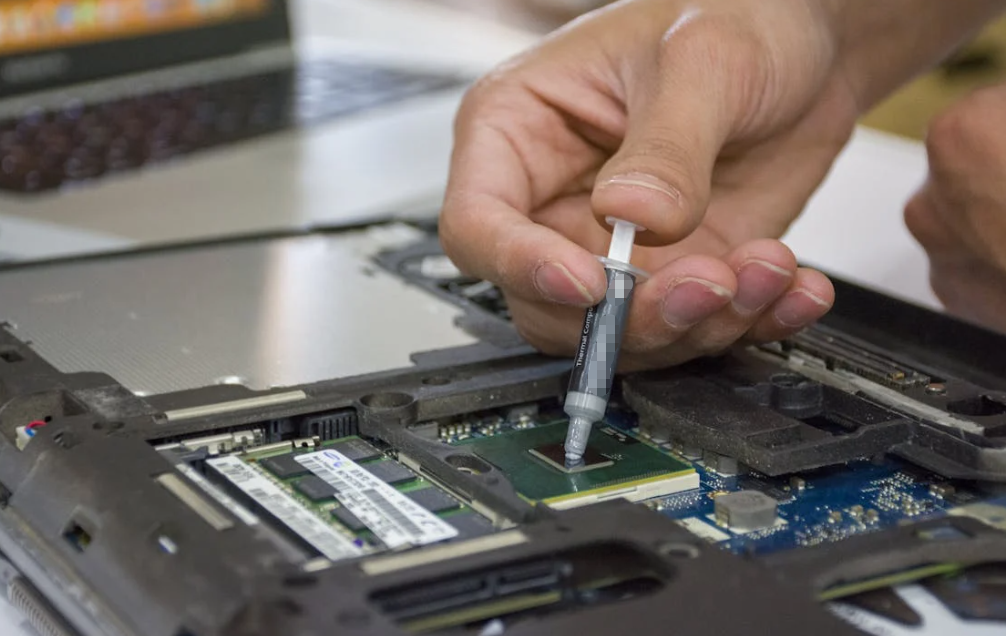
At its core, thermal paste (also called thermal grease or thermal interface material, TIM) exists for one reason: to improve heat transfer between two surfaces—typically a semiconductor device and a heatsink.
Even polished metal surfaces are microscopically rough. Air pockets form between them, and air is a terrible heat conductor. Thermal paste fills those gaps, replacing air with a more conductive medium, improving heat flow significantly .
In high-power amplifiers, this matters more than ever:
- Power transistors (MOSFETs, LDMOS, GaN) generate substantial heat
- Thermal resistance directly impacts efficiency and lifespan
- Poor thermal management leads to thermal runaway or derating
A critical point often overlooked: thermal paste is not the main heat conductor. It’s the bridge. The goal is always minimum thickness with maximum surface contact .
Why High-Power Amplifiers Are Different

Choosing thermal paste for a CPU is one thing. For a 500W RF amplifier or a Class D industrial unit? Entirely different game.
Here’s why:
Continuous Thermal Load
Unlike burst workloads in computing, amplifiers often run at sustained high power. That means:
- Constant thermal stress
- Long-term material stability becomes critical
Elevated Operating Temperatures
Many amplifier systems operate above 100°C junction temperatures. Some thermal pastes degrade or bleed under these conditions.
Mechanical Pressure Variability
Amplifier modules may have:
- Uneven mounting pressure
- Larger interface areas
- Heavier heatsinks
All of this affects how paste performs in real-world conditions.
Key Factors to Consider When Choosing Thermal Paste

Let’s get practical. If you’re selecting thermal paste for high-power amplifiers, these are the parameters that actually matter.
Thermal Conductivity (W/m·K)
This is the headline spec everyone looks at—and yes, it matters.
Typical ranges:
- Low-end: 0.5–1.5 W/m·K
- Mid-range: 2–5 W/m·K
- High-performance: 6–10+ W/m·K
For high-power amplifiers: 👉 Aim for ≥3 W/m·K at minimum, preferably higher.
Examples:
- Standard compounds: ~0.67 W/m·K
- High-performance paste: ~4.3 W/m·K
- Industrial-grade: up to ~6–9 W/m·K
But here’s the nuance: Thermal conductivity alone doesn’t guarantee performance.
Real-world performance depends heavily on:
- Application thickness
- Contact pressure
- Surface flatness
Thermal Resistance (or Impedance)
If conductivity is theoretical, thermal resistance is practical.
It tells you how well heat actually flows through the interface layer under real conditions.
Lower is better.
Some datasheets specify:
- Thermal resistance (°C·cm²/W)
- Thermal impedance (K·cm²/W)
These values often include contact resistance, which makes them more realistic than conductivity alone.
Viscosity and Wetting Ability
High-power amplifiers often involve:
- Larger surfaces
- Uneven mounting pressure
You need a paste that:
- Spreads easily
- Fills micro-gaps effectively
- Maintains a thin bond line
Low viscosity improves surface wetting and reduces air gaps .
But don’t go too low—overly fluid paste may:
- Pump out over time
- Migrate under thermal cycling
Operating Temperature Range
Check both:
- Continuous temperature rating
- Peak temperature rating
Typical good range:
- Continuous: -40°C to 150°C
- Peak: up to 200°C
For high-power amplifiers: 👉 Choose paste with stable performance above your maximum junction temperature.
Some high-end compounds operate from -60°C to 200°C .
Long-Term Stability (Dry-Out & Pump-Out Resistance)
This is where many pastes fail.
Key risks:
- Drying out over time
- Oil separation
- Pump-out due to thermal cycling
Non-curing formulations are generally preferred because they:
- Don’t crack
- Maintain consistent performance over time
For amplifier systems running 24/7, this is critical.
Electrical Insulation
Most thermal pastes are electrically insulating—and that’s exactly what you want.
High-power amplifiers often operate at:
- High voltage
- High frequency
A conductive paste could:
- Cause short circuits
- Introduce EMI issues
Look for:
- High volume resistivity (e.g., 10¹²–10¹⁵ ohm·cm)
Silicone vs Non-Silicone
This is a subtle but important choice.
Silicone-Based Paste
Pros:
- Stable over wide temperature range
- Good flexibility
- Proven reliability
Cons:
- Possible oil bleed (contamination risk)
Non-Silicone Paste
Pros:
- No migration issues
- Cleaner for sensitive electronics
Cons:
- May have different mechanical behavior
Example: non-silicone paste can eliminate migration problems in sensitive applications .
👉 For RF or sensitive amplifier environments, non-silicone can be a safer choice.
Application Thickness (Bond Line Control)
This is often ignored—but it shouldn’t be.
Thermal paste has lower conductivity than metals, so: 👉 Thinner is always better
The paste should:
- Fill gaps only
- Not create a thick layer
A properly applied thin layer dramatically improves performance .
Matching Thermal Paste to Amplifier Types
Different amplifier designs demand slightly different priorities.
RF Power Amplifiers (LDMOS / GaN)
Key concerns:
- High heat density
- High frequency sensitivity
Best paste characteristics:
- High conductivity (≥5 W/m·K)
- Low bleed
- Non-silicone preferred
Audio Power Amplifiers
Key concerns:
- Moderate heat
- Long operating hours
Best paste:
- Mid-to-high conductivity (≥3 W/m·K)
- Excellent long-term stability
Industrial / High-Voltage Amplifiers
Key concerns:
- Extreme reliability
- Safety
Best paste:
- High dielectric strength
- Wide temperature range
- Strong anti-dry-out performance
Common Mistakes Engineers Make
Even experienced engineers sometimes get this wrong.
Chasing the Highest Conductivity Number
Reality check:
- Differences often shrink in real applications
- Contact quality matters more
Applying Too Much Paste
Thicker layer = higher thermal resistance.
Ignoring Long-Term Behavior
A paste that performs well on day one may degrade after months.
Overlooking Mechanical Conditions
Mounting pressure, vibration, and thermal cycling all affect performance.
Practical Selection Checklist
If you want a quick decision framework:
- Thermal conductivity ≥ 3–6 W/m·K
- Low thermal resistance rating
- Operating range up to ≥150°C (preferably 200°C peak)
- Non-curing, anti-dry-out formulation
- Electrically insulating
- Suitable viscosity for your application method
- Minimal bleed or pump-out
Why HakTak Thermal Paste Fits High-Power Applications
From a B2B and industrial perspective, HakTak thermal interface materials are engineered with:
- High thermal conductivity formulations for power electronics
- Stable performance under continuous high temperatures
- Optimized viscosity for automated or manual dispensing
- Silicone and non-silicone options for different industries
For amplifier manufacturers, especially ODM/OEM projects, consistency across batches is just as important as raw performance—and that’s where industrial-grade suppliers make a difference.
Conclusion
Choosing thermal paste for high-power amplifiers isn’t about picking the “best” product—it’s about selecting the right balance of thermal, mechanical, and electrical properties for your specific system.
If you remember one thing, let it be this:
Thermal paste doesn’t cool your amplifier. It enables your cooling system to work efficiently.
Focus on real-world performance—thin application, stable materials, and long-term reliability—and your amplifier will reward you with consistent, high-performance operation.
FAQs
What thermal conductivity is best for high-power amplifiers?
Typically, 3–6 W/m·K or higher is recommended for reliable heat dissipation.
Is higher thermal conductivity always better?
Not necessarily. Real performance depends on thickness, pressure, and surface contact—not just the number.
Should I use silicone or non-silicone thermal paste?
For sensitive or RF applications, non-silicone is often preferred due to lower migration risk.
How thick should thermal paste be applied?
As thin as possible—just enough to fill microscopic gaps.
Does thermal paste wear out over time?
Yes. Poor-quality paste can dry out or pump out, which is why long-term stability is critical.