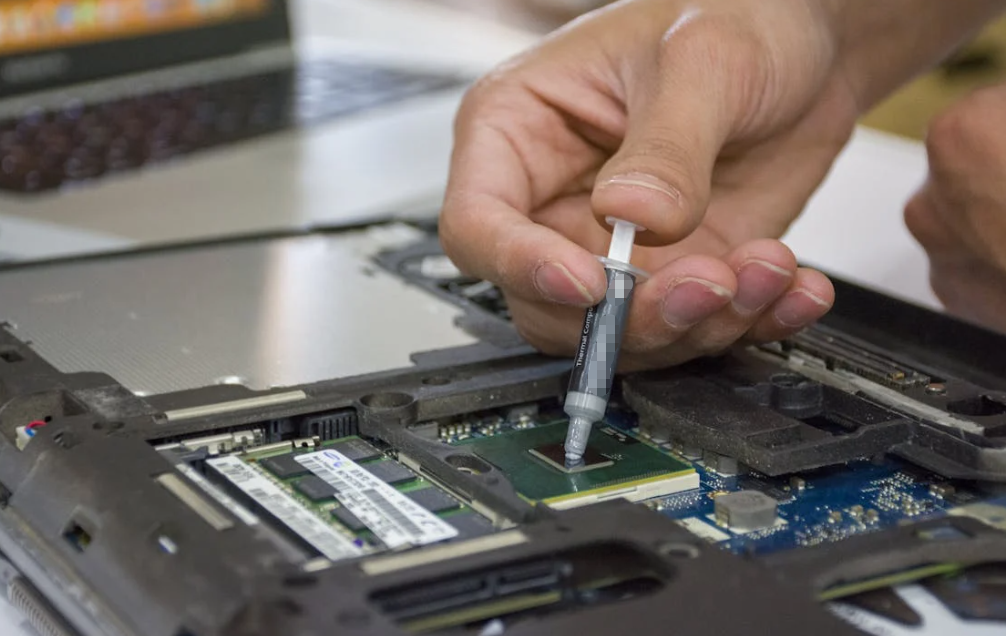
Thermal grease is one of those materials that seems simple on the surface, yet its behavior inside semiconductor cooling systems is often misunderstood. Engineers ask this question frequently: does it actually dry, and if so, how long does it take?
The short answer is—most thermal greases do not “dry” in the traditional sense, but they can change consistency or degrade over time under heat, pressure, and environmental stress. On a semiconductor cooling plate, the timeline is less about “drying” and more about stabilization, pump-out, and long-term thermal aging.
Hãy phân tích nó theo cách thực tế, tập trung vào kỹ thuật.
Hiểu rõ thực chất keo tản nhiệt làm gì
Thermal grease (or thermal compound) is a non-curing vật liệu tản nhiệt designed to fill microscopic air gaps between a semiconductor package and a cooling plate or heat sink.
Instead of bonding or hardening, it:
- Flows under mounting pressure
- Conforms to surface roughness
- Eliminates air pockets (air is a poor thermal conductor)
- Maintains a thin thermal path for heat transfer
According to thermal interface material behavior studies, greases are typically composed of silicone or hydrocarbon oils filled with ceramic or metal oxides to enhance độ dẫn nhiệt.
This means the material is designed to stay semi-fluid—not to “dry out” quickly.
So… Does Thermal Grease Actually Dry?
In most semiconductor cooling applications, no immediate drying occurs after application.
Instead, what happens is:
Initial stabilization (minutes to hours)
Once the cooling plate is mounted:
- Grease spreads under pressure
- Air voids are eliminated
- Thermal resistance drops quickly
- System reaches near-peak thermal performance almost immediately
There is no chemical curing stage in standard thermal grease.
Early performance settling (first few thermal cycles)
Over the first hours to days:
- The grease redistributes slightly due to heat cycling
- Minor “pump-out” may occur in high-pressure or vibration environments
- Thermal interface becomes more uniform
This is sometimes mistaken for “curing,” but it is purely mechanical settling.
Long-term behavior (weeks to years)
This is where the real “drying-like” effect appears.
Over time, depending on temperature and operating stress:
- Oil carriers can slowly migrate or evaporate
- Fillers remain but lose mobility
- The interface may become less efficient
- Thermal resistance gradually increases
Industry references note that thermal grease can dry out or degrade over time, increasing điện trở nhiệt in long-term use.
On semiconductor cooling plates running at elevated junction temperatures, this aging process can accelerate significantly.
Typical Timeframes in Semiconductor Cooling Systems
While exact timing depends heavily on formulation and operating conditions, real-world observations show:
- 0–24 hours: Full functional performance established
- 1–4 weeks: Mechanical settling phase (minor performance drift possible)
- 6 months–3 years: Noticeable degradation in high-power or high-temperature systems
- 3+ years: Often replacement recommended in critical semiconductor systems
High-performance electronics manufacturers often plan maintenance reapplication cycles every 2–3 years, especially in power electronics or data center modules.
Factors That Influence “Drying” Speed
Thermal grease behavior is strongly influenced by operating conditions inside semiconductor cooling assemblies:
Junction temperature
Higher temperatures accelerate oil separation and evaporation.
Thermal cycling frequency
Frequent ON/OFF cycles increase pump-out effects.
Áp lực ngày càng tăng
Too high → grease squeezes out
Too low → void formation
Surface flatness of cooling plate
Poor flatness increases mechanical movement of the grease.
Formulation type
Some advanced TIMs include stabilizers or semi-curing gels that resist migration longer.
Thermal Grease vs Thermal Gel (Important Distinction)

In modern semiconductor cooling plates, it’s important not to confuse:
- Keo tản nhiệt: non-curing, long-term mechanical stability issue
- Keo tản nhiệt: partially curable or structured materials with controlled flow
For example, certain industrial thermal gels can take days to weeks to fully cure depending on temperature, unlike grease which never truly cures.
This distinction matters in high-reliability semiconductor packaging.
Practical Insight for Semiconductor Cooling Plate Applications
From a real engineering perspective:
- Thermal grease does not have a meaningful “dry time”
- It reaches performance almost immediately after proper mounting pressure is applied
- Long-term degradation—not drying—is the real concern
- System design (pressure, surface finish, thermal load) matters more than cure time
In semiconductor cooling plates, most performance issues blamed on “drying” are actually caused by:
- Pump-out under thermal cycling
- Improper mounting force
- Material aging under sustained high heat
Kết luận ngắn gọn
Thermal grease used on semiconductor cooling plates does not dry in a conventional time-based way. It performs immediately after application and then slowly degrades over months or years depending on temperature, pressure, and operating cycles. In most electronic systems, it is a long-life but not permanent material, requiring periodic inspection rather than waiting for a “drying time.”
Câu hỏi thường gặp
Does thermal grease need time to cure?
No. Standard thermal grease does not cure; it works immediately after installation.
How long before thermal grease reaches full performance?
Usually within minutes after proper mounting pressure is applied.
Can thermal grease dry out completely?
Not quickly. It degrades slowly over years under heat and cycling.
How often should it be replaced in semiconductor systems?
Typically every 2–3 years, depending on thermal load and environment.
What causes thermal grease failure on cooling plates?
Main causes are pump-out, thermal cycling stress, and long-term oil separation.