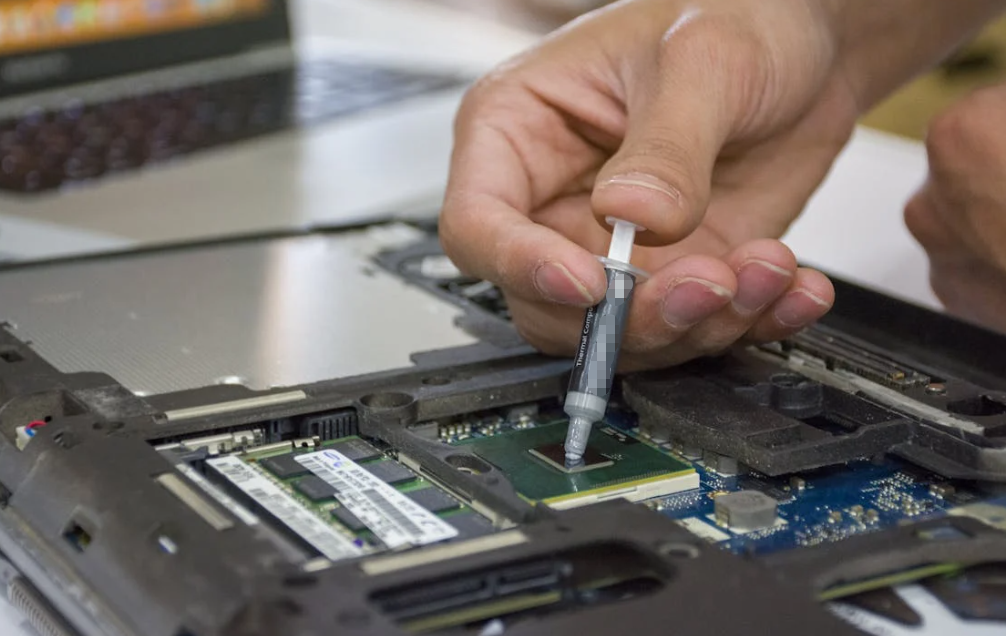
La pâte thermique — également appelée graisse thermique ou matériau d'interface thermique (TIM) — est l'un de ces petits composants en électronique qui détermine discrètement si un système fonctionne de manière fraîche et stable ou s'il lutte contre l'accumulation de chaleur. Pourtant, lorsque des ingénieurs ou des acheteurs y sont confrontés pour la première fois, une question revient souvent : Pourquoi la pâte thermique est-elle blanche et grise, et est-ce que la couleur signifie réellement quelque chose ?
À première vue, cela ressemble à un détail esthétique. Mais dans la pratique industrielle, la couleur n'est pas le fruit du hasard. Elle reflète généralement des différences de composition, matériaux de charge, niveau de conductivité et formulation de fabrication.
Décomposons cela d'une manière pratique et axée sur l'ingénierie.
Ce que fait réellement la pâte thermique (et pourquoi la couleur a même de l'importance)
Pâte thermique est conçu pour combler les micro-intervalles entre une source de chaleur (comme un Processeur, module d'alimentation ou puce LED) et un dissipateur thermique. Même les surfaces métalliques polies ne sont pas parfaitement plates. De minuscules poches d'air se forment lorsque les deux surfaces se touchent, et l'air est un mauvais conducteur thermique.
Un matériau d'interface thermique approprié remplace cet air emprisonné par un médium plus conducteur, améliorant considérablement l'efficacité du transfert de chaleur.
En bref :
- Il ne “ refroidit ” pas tout seul
- Il améliore le contact entre les surfaces
- Il réduit résistance thermique
La différence de couleur provient de ce qui se trouve à l'intérieur de cette pâte.
Pourquoi la graisse thermique est blanche et grise
L'explication la plus simple est celle-ci :
La couleur est un sous-produit de la formulation, et non un indicateur de performance.
Cependant, dans la fabrication réelle, la couleur est souvent corrélée à la composition du matériau.
Graisse thermique blanche : formulations généralement à base de silicone ou de céramique

La graisse thermique blanche est généralement associée à :
- Compositions à base de silicone
- Charges céramiques (telles que l'oxyde d'aluminium ou l'oxyde de zinc)
- Matériaux électriquement isolants
Les pâtes blanches ont tendance à paraître plus lisses et d'une texture plus “ plastique ”.
Caractéristiques principales :
- Généralement non conducteur de l'électricité
- Plus sûr pour les débutants et la production de masse
- Modéré conductivité thermique
- Rentable
Dans de nombreuses fiches techniques industrielles, la graisse thermique blanche est utilisée là où la sécurité et l'isolation comptent plus que les performances maximales.
Où il est couramment utilisé :
- Assemblage de produits électroniques grand public
- Processeurs de faible à moyenne puissance
- Systèmes d'éclairage LED
- Dissipation thermique universelle
Les composés blancs sont souvent choisis parce qu'ils réduisent les risques : si une petite quantité se propage sur des composants voisins, elle est moins susceptible de provoquer des courts-circuits.
Graisse thermique grise : charges à plus hautes performances et mélanges à base de métal
La graisse thermique grise est plus courante dans les applications à plus hautes performances.
La couleur grise provient généralement de :
- Charges d'oxydes métalliques
- Matériaux carbonés
- Parfois, de fines particules métalliques (selon la formulation)
Ces additifs améliorent la conductivité thermique mais modifient également la couleur vers des tons gris ou argent foncé.
Caractéristiques principales :
- Potentiel de conductivité thermique supérieure
- Souvent utilisé dans les applications axées sur les performances
- Peut-être légèrement plus visqueux ou plus dense
- Certaines formulations peuvent être électriquement conductrices ou semi-conductrices.
Comme on le voit dans les classifications de produits industriels, les pâtes grises sont souvent utilisées dans les pâtes thermiques haut de gamme conçues pour des charges thermiques exigeantes.
Où il est couramment utilisé :
- CPUs et GPUs
- Modules d'électronique de puissance
- Électronique automobile
- Dissipateurs thermiques industriels
La graisse thermique grise est généralement préférée lorsque la performance importe plus que le coût ou la simplicité.
Le gris est-il donc toujours meilleur que le blanc ?
C'est là que se produisent de nombreux malentendus.
La réponse courte : Non. La couleur seule ne définit pas la performance.
En pratique, vous constaterez :
- Une pâte blanche de haute qualité surpassant une pâte grise bon marché
- Une pâte grise conçue pour la durabilité plutôt que pour une conductivité maximale
- Mélanges spécialisés où la couleur n'a aucun rapport avec la performance thermique
Les fabricants choisissent la couleur pour :
- Identification des matériaux
- Cohérence de la marque
- Séparation de la ligne de production
- Reconnaissance de l'utilisateur
Pas comme un indicateur de performance strict.
Même au sein d'une même gamme de produits, les versions blanche et grise peuvent avoir des caractéristiques thermiques très similaires.
Ce qui détermine réellement la performance thermique (plus que la couleur)

Si la couleur n'est pas le facteur décisif, quel est-il ?
En termes d'ingénierie réelle, ceux-ci comptent bien plus :
Conductivité thermique (W/m·K)
Plus le chiffre est élevé, meilleur est le potentiel de transfert thermique.
Type et taille des particules
Charges à base d'oxyde métallique vs céramique vs à base de carbone.
Viscosité et étalement
Affecte sa capacité à combler les micro-interstices.
Conductivité électrique
Crucial pour la sécurité dans les circuits denses.
Stabilité à long terme
Séchage, résistance au pompage et comportement au vieillissement.
La couleur est simplement le résultat visuel de ces choix de design, et non la cause de la performance.
Pourquoi les fabricants utilisent encore le blanc et le gris
Même si cela peut sembler dépassé, la différenciation des couleurs aide en réalité à la production et à l'application :
- Les ingénieurs peuvent identifier rapidement le type de matériau
- Les chaînes de montage évitent de mélanger les formulations
- Le contrôle de la qualité devient plus facile
- Les techniciens de maintenance reconnaissent les composés de remplacement
Dans la fabrication électronique à grande échelle, la distinction visuelle réduit les erreurs plus que les fiches techniques seules.
Perspective HakTak : Pourquoi les matériaux d'interface thermique doivent être basés sur les spécifications
À HakTak, les matériaux thermiques sont conçus pour la précision industrielle, où la régularité importe plus que l'apparence. Qu'ils soient blancs ou gris, le véritable objectif est :
- Conductivité thermique stable dans le temps
- Viscosité contrôlée pour le dépôt automatisé
- Isolation fiable ou conductivité selon les besoins
- Compatibilité avec différents substrats et environnements
Dans les applications réelles, le faux type de pâte thermique peut causer plus de problèmes que la mauvaise la couleur sera toujours.
Brève conclusion
Les pâtes thermiques blanches et grises ne sont pas fondamentalement différentes en raison de leur couleur — elles diffèrent par leur formulation, charges et application prévue. Les composés blancs sont généralement plus sûrs et plus isolants, tandis que les composés gris privilégient souvent de meilleures performances thermiques. Mais en termes d'ingénierie, la couleur n'est qu'un effet secondaire, pas une spécification.
Si vous sélectionnez de la graisse thermique pour des applications réelles, fiez-vous toujours aux performances de la fiche technique, et non à l'apparence.
Foire aux questions
La couleur de la pâte thermique affecte-t-elle les performances ?
Non. La performance dépend de la composition, pas de la couleur.
La graisse thermique blanche est-elle moins performante que la grise ?
Pas nécessairement. Certains composés blancs fonctionnent très bien dans les applications à faible puissance.
Pourquoi la plupart des pâtes thermiques pour processeur sont-elles grises ?
Parce qu'il contient souvent des charges à base de carbone ou de métal pour un meilleur transfert thermique.
La pâte thermique grise est-elle conductrice d'électricité ?
Certains types peuvent l'être, mais beaucoup sont uniquement thermiquement conducteurs, et non électriquement.
Puis-je mélanger de la pâte thermique blanche et grise ?
Ce n'est pas recommandé. Le mélange peut modifier les propriétés thermiques et mécaniques de manière imprévisible.