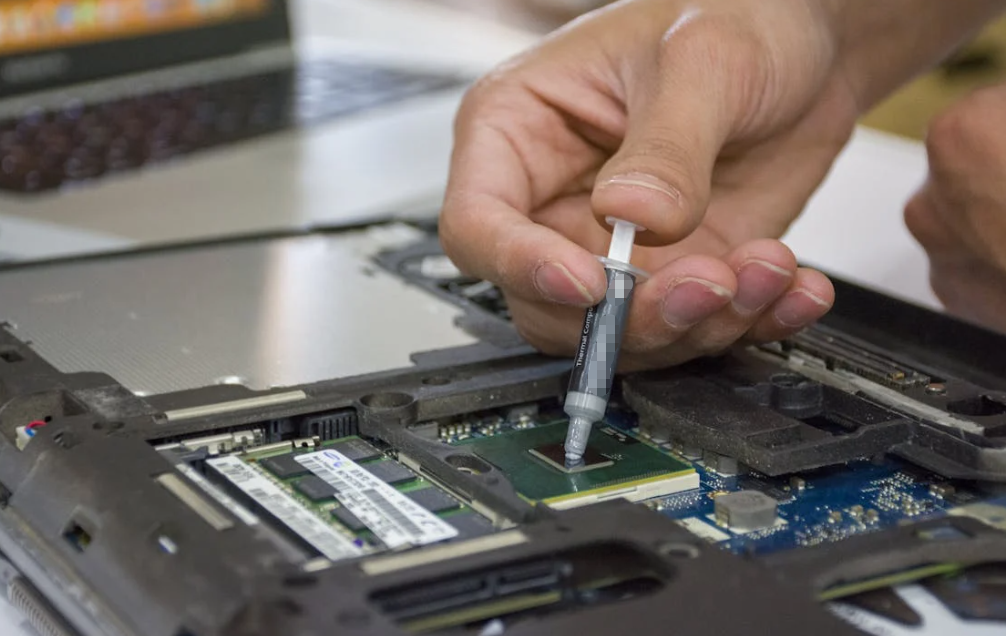
Thermal grease—also called thermal paste or thermal interface material (TIM)—is one of those small components in electronics that quietly determines whether a system runs cool and stable or struggles with heat buildup. Yet when engineers or buyers first encounter it, one question often comes up: why does thermal grease come in white and gray, and does the color actually mean anything?
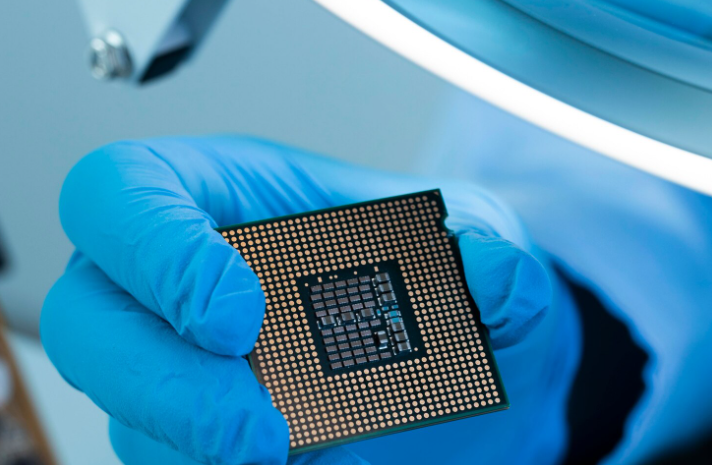
At first glance, it looks like a cosmetic detail. But in industrial practice, color is not random. It usually reflects differences in composition, filler materials, conductivity level, and manufacturing formulation.
Let’s break it down in a practical, engineering-focused way.
What Thermal Grease Actually Does (and Why Color Even Matters)
Wärmeleitpaste is designed to fill microscopic gaps between a heat source (like a CPU, power module, or LED chip) and a heat sink. Even polished metal surfaces are not perfectly flat. Tiny air pockets form when the two surfaces touch, and air is a poor heat conductor.
A proper thermal interface material replaces that trapped air with a more conductive medium, improving heat transfer efficiency significantly.
So in short:
- It doesn’t “cool” by itself
- It improves contact between surfaces
- It reduces Wärmewiderstand
The color difference comes from what is inside that paste.
Why Thermal Grease Comes in White and Gray
The simplest explanation is this:
Color is a byproduct of formulation—not a performance label.
However, in real-world manufacturing, color often correlates with material composition.
White Thermal Grease: Typically Silicone or Ceramic-Based Formulations

White thermal grease is usually associated with:
- Silicone-based compounds
- Ceramic fillers (such as aluminum oxide or zinc oxide)
- Electrically insulating materials
White pastes tend to look smoother and more “plastic-like” in texture.
Key characteristics:
- Normalerweise nicht elektrisch leitend
- Safer for beginners and mass production
- Mäßig Wärmeleitfähigkeit
- Cost-effective
In many industrial datasheets, white thermal grease is used where safety and insulation matter more than maximum performance.
Where it is commonly used:
- Consumer electronics assembly
- Low to mid-power CPUs
- LED lighting systems
- General-purpose heat dissipation
White compounds are often chosen because they reduce risk—if a small amount spreads onto nearby components, it is less likely to cause short circuits.
Gray Thermal Grease: Higher Performance Fillers and Metal-Based Blends
Gray thermal grease is more common in higher-performance applications.
The gray color typically comes from:
- Metal oxide fillers
- Carbon-based materials
- Sometimes fine metal particles (depending on formulation)
These additives improve thermal conductivity but also change the color toward gray or dark silver tones.
Key characteristics:
- Higher thermal conductivity potential
- Often used in performance-focused applications
- May be slightly more viscous or dense
- Some formulations may be electrically conductive or semi-conductive
As seen in industrial product classifications, gray pastes are often used in higher-end thermal compounds designed for demanding heat loads.
Where it is commonly used:
- CPUs und GPUs
- Leistungselektronikmodule
- Fahrzeugelektronik
- Industrial heat sinks
Gray thermal grease is generally preferred when performance matters more than cost or simplicity.
So, Is Gray Always Better Than White?
This is where many misunderstandings happen.
The short answer: No. Color alone does not define performance.
In practice, you may find:
- A high-quality white paste outperforming a cheap gray paste
- A gray paste designed for durability rather than peak conductivity
- Specialized blends where color is unrelated to thermal performance entirely
Manufacturers choose color for:
- Material identification
- Branding consistency
- Production line separation
- User recognition
Not as a strict performance indicator.
Even within the same product line, white and gray versions can have very similar thermal ratings.
What Actually Determines Thermal Performance (More Than Color)

If color is not the deciding factor, what is?
In real engineering terms, these matter far more:
Thermal conductivity (W/m·K)
Higher number = better heat transfer potential.
Particle type and size
Metal oxide vs ceramic vs carbon-based fillers.
Viscosity and spreadability
Affects how well it fills micro-gaps.
Elektrische Leitfähigkeit
Critical for safety in dense circuits.
Long-term stability
Drying, pump-out resistance, and aging behavior.
Color is simply the visual outcome of these design choices—not the cause of performance.
Why Manufacturers Still Use White and Gray
Even though it might seem outdated, color differentiation actually helps in production and application:
- Engineers can quickly identify material type
- Assembly lines avoid mixing formulations
- Quality control becomes easier
- Maintenance technicians recognize replacement compounds
In large-scale electronics manufacturing, visual distinction reduces errors more than technical datasheets alone.
HakTak Perspective: Why Thermal Interface Materials Must Be Spec-Driven
Bei HakTak, thermal materials are designed for industrial precision, where consistency matters more than appearance. Whether white or gray, the real focus is on:
- Stable thermal conductivity over time
- Controlled viscosity for automated dispensing
- Reliable insulation or conductivity as required
- Compatibility with different substrates and environments
In real applications, the wrong type of thermal grease can cause more issues than the wrong color ever will.
Kurzes Fazit
White and gray thermal greases are not fundamentally different because of color—they differ because of formulation, fillers, and intended application. White compounds are typically safer and more insulating, while gray compounds often prioritize higher thermal performance. But in engineering terms, color is only a side effect, not a specification.
If you are selecting thermal grease for real applications, always rely on datasheet performance—not appearance.
Häufig gestellte Fragen
Does the color of thermal grease affect performance?
No. Performance depends on composition, not color.
Is white thermal grease weaker than gray?
Not necessarily. Some white compounds perform very well in low-power applications.
Why is most CPU thermal paste gray?
Because it often contains carbon or metal-based fillers for better heat transfer.
Is gray thermal paste electrically conductive?
Some types can be, but many are only thermally conductive, not electrically.
Can I mix white and gray thermal grease?
It is not recommended. Mixing can change thermal and mechanical properties unpredictably.