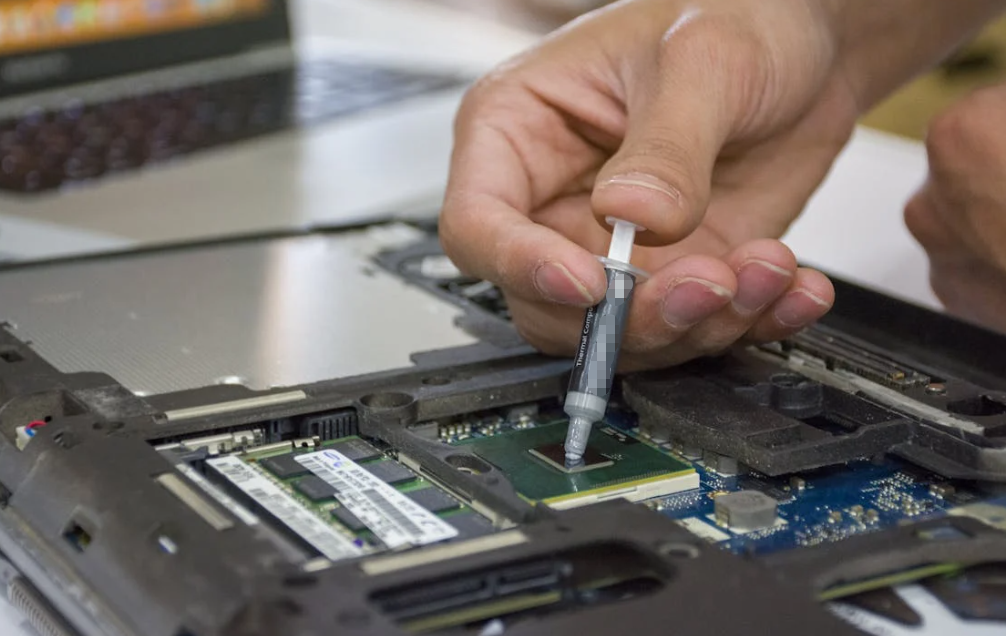
Modern electronic systems are getting smaller and more powerful by the day — from electric vehicles and 5G equipment to high-end gaming PCs and industrial automation. Efficient thermal management has become a mission-critical requirement, not a luxury add-on. One material at the forefront of addressing these thermal challenges is low modulus thermal gel — a versatile, high-performance thermally conductive interface material that combines performance with mechanical compliance.

In this long-form article, we’ll explore exactly what low modulus thermal gel is, how it works, its key benefits and limitations, how it compares with other thermal interface materials (TIMs), and where it’s most commonly used in the real world.
1. Understanding Thermal Interface Materials (TIMs)
Before we zoom in on low modulus thermal gel specifically, it’s helpful to understand the broad category it belongs to: thermal interface materials (TIMs).
Modern electronic components generate heat as they operate. That heat must be conducted away from the source — for example, a CPU chip or a power transistor — to a heat sink, spreader, or cooling solution. Surfaces that are nominally “flat” at the macroscopic level are actually microscopically rough. This leaves tiny air gaps when two components are mated together.
Air is a terrible thermal conductor, with a thermal conductivity near 0.024 W/m·K — orders of magnitude lower than most thermal management materials. TIMs fill these microscopic voids, replacing air with a material that conducts heat much more effectively.
Typical TIM categories include:
- Thermal grease/thermal paste – viscous compounds applied manually
- Thermal pads – pre-formed, solid or semi-solid pads
- Thermally conductive tapes – adhesive “gap fill” films
- Thermal gels – compliant, gap-filling gels
Each type has its own mechanical properties and thermal performance profiles.
2. Introducing Thermal Gel — A Distinct Class of TIM
Thermal gels are a unique subgroup of TIMs. They are one-component (or occasionally multi-component) gel-like materials engineered to combine strong thermal conduction with mechanical compliance. In other words, they not only conduct heat effectively, they can deform and conform to uneven surfaces without generating high stress on components.
Thermal gels can be supplied in liquid-like form, dispensed in place, and left to remain as a gel — they don’t always need to cure or harden, unlike some adhesive TIMs. This makes them excellent for form-in-place applications where coverage and conformability matter.
3. So What Does Low Modulus Mean?

The term modulus refers to a material’s stiffness or resistance to deformation. In mechanical terms, this is usually quantified by the Young’s Modulus or shear modulus — measures of how much a material will deform under stress.
A low modulus means:
- The material is softer
- It deforms more easily under low pressure
- It does not transmit large stresses to adjacent parts
This contrasts sharply with stiff, high-modulus materials like ceramics or metals, which resist deformation but can fracture or stress solder joints if forced into tight spaces.
In the context of thermal gels:
- Low modulus gels compress and spread under assembly pressure
- They conform to microscopic surface irregularities
- They reduce mechanical stress on delicate components while bridging thermal paths
This is especially important when:
- Heat sinks and chips have different coefficients of thermal expansion
- Temperature cycling would otherwise cause stress fatigue
- You’re working with fragile components like BGAs, LEDs, or sensors
Ultimately, low modulus gels act almost like “thermal cushions,” conforming to contact surfaces and maximizing thermal contact without damage.
4. Key Characteristics of Low Modulus Thermal Gels

Here’s a breakdown of the main physical traits that distinguish low modulus thermal gel from other TIMs:
4.1. Thermal Conductivity
Low modulus thermal gels are engineered to have high thermal conductivity — often in the range of several W/m·K (e.g., 3.5 to 6 W/m·K in typical commercial products). This places them significantly above air and above many thermal pastes or older silicone gap fillers.
Higher thermal conductivity means:
- More heat is transferred per unit time
- Component junction temperatures are kept lower
- System reliability increases
4.2. Mechanical Softness
As discussed, low modulus means flexibility. The material can fill micro-gaps more effectively than rigid pads or stiff adhesives — improving actual contact area at the interface.
4.3. Form-In-Place or Non-Curable Formulations
Many low modulus thermal gels are supplied as non-curable, one-component gels. This means they don’t harden over time — allowing immediate device activation after application.
This isn’t always the case, however; some gels can cure on demand if additional mechanical strength is needed.
4.4. Minimal Pump-Out and Long-Term Stability
“Pump-out” refers to a material being squeezed out of the gap over time due to thermal cycling. Low modulus gels tend to resist this, retaining their position and thermal performance.
4.5. Electrical Insulation (Optional)
Many thermal gels are electrically insulating — useful in electronics to avoid short circuits — although electrically conductive options exist for specialized applications.
5. How Low Modulus Thermal Gel Works

At a microscopic level, the contact between a heat-generating surface (e.g., a chip) and a heat-dissipating surface (e.g., a heat sink) is riddled with tiny voids and roughness. Because even polished materials have imperfections, those voids trap air — and air is a poor thermal conductor.
Low modulus thermal gel works by:
Conforming to surface irregularities — maximizing surface contact
Displacing trapped air — replacing it with a highly conductive medium
Maintaining low thermal resistance — enabling heat to flow efficiently
Accommodating mechanical movement — reducing stress during thermal cycling
A soft, compliant gel layer can compress down to thin “bond line thicknesses,” minimizing the distance heat has to travel and thus lowering thermal resistance.
6. Low Modulus vs. Other Thermal Interface Materials

To appreciate the unique place of low modulus thermal gels, let’s briefly compare them to other common TIM types.
6.1. Thermal Grease/Paste
- Often higher thermal conductivity than basic gels
- Usually manual application, can be messy
- Can dry out over time, leading to pump-out or separation
- Not always compliant to mechanical movement
Thermal gels, by contrast, tend to be more forgiving, mess-free, and mechanically stable in long-term use.
6.2. Thermal Pads
- Solid pads are convenient and clean
- Easier to apply than pastes
- But may not conform to fine surface geometry without pressure
Low modulus gels outperform pads in filling complex gaps and irregular shapes.
6.3. Adhesive TIMs
- Provide permanent bonding
- Can add mechanical strength
- But stiffness can introduce stress and limit thermal compliance
Low modulus gels excel when you need reworkability, stress relief, and minimal mechanical impact.
7. Real-World Applications of Low Modulus Thermal Gel

The advantages described above aren’t abstract — they translate to performance benefits in real systems.
7.1. Power Electronics and Automotive
In power-dense environments like EV power modules, inverters, or DC-DC converters, heat removal is mission-critical. Low modulus gels help sustain stable thermal paths under vibration and thermal cycling.
7.2. CPUs, GPUs, and High-Performance Computing
Gels with high conductivity and low stress allow efficient cooling in tight tolerances between chips and heatsinks or cold plates.
7.3. LED Lighting and Optical Modules
In LED modules and optical sensors, minimizing mechanical stress protects delicate components while ensuring heat is conducted reliably.
7.4. Telecom and Data Center Infrastructure
From 5G base stations to data servers, low modulus thermal gels provide consistent thermal management even under high duty cycles.
7.5. Battery Packs and Energy Storage
In battery modules — especially high-output packs — thermal gels help manage heat uniformly and avoid hotspots that could degrade performance or safety.
8. Design Considerations Before You Choose a Low Modulus Thermal Gel
When specifying a low modulus thermal gel for a project, engineers must weigh several factors:
8.1. Thermal Performance Goals
How much heat needs to be removed? What are the expected junction temperatures?
8.2. Mechanical Environment
Will the assembly experience vibration, shock, or thermal cycling? Low modulus gels excel where mechanical stress relief is needed.
8.3. Electrical Requirements
Do you need electrical insulation, or can you tolerate conductive fillers?
8.4. Bond Line Thickness and Gap Size
Smaller gaps often benefit more from soft, conformable gels; larger gaps might require combined solutions.
8.5. Service Temperature Range
Different gels have different operating temperature limits, which influence reliability and performance.
9. Future Trends and Innovations
As electronics continue to push boundaries — higher power, tighter packaging, and more extreme environments — materials like low modulus thermal gels will remain central to thermal management strategies.
We’re seeing innovations such as:
- Enhanced filler technologies for higher conductivity without sacrificing softness
- Nano-engineered gels with tailored mechanical and thermal properties
- Automatable application systems for mass production environments
These trends point toward materials that are increasingly efficient, reliable, and easy to integrate, giving engineers more thermal design flexibility than ever before.
10. Conclusion
Low modulus thermal gel is a nuanced yet indispensable material in today’s thermal management toolkit. It combines high thermal conductivity with mechanical compliance, enabling efficient heat transfer while protecting delicate components from stress. Whether deployed in high-performance computing, industrial electronics, automotive systems, or communication infrastructure, low modulus thermal gels provide a reliable, form-in-place solution to one of the most persistent challenges in electronics design: getting heat out and keeping devices cool.
By filling microscopic gaps, reducing thermal resistance, and accommodating mechanical stress, low modulus gels play a key role in unlocking performance and longevity in modern devices.
11. Frequently Asked Questions(FAQs)
What exactly is low modulus thermal gel?
It’s a soft, thermally conductive gel used as a thermal interface material to enhance heat transfer between two surfaces without introducing high mechanical stress.
How is low modulus different from regular thermal paste?
Thermal gels are usually more compliant, form-in-place, and stable long-term, while thermal pastes can dry out, pump-out, and require careful application.
Can thermal gel be used between any two materials?
Yes, but you should account for electrical insulation requirements and surface conditions.
Why doesn’t low modulus thermal gel cure like some adhesives?
Many are designed to remain soft to maintain compressibility and ease of rework; others can be engineered to cure if mechanical strength is needed.
Does low modulus thermal gel conduct electricity?
Most gels are electrically insulating, but formulations can vary — always check product specs.