
Les véhicules électriques ne sont plus un produit de niche. Leur adoption à l'échelle mondiale continue de progresser rapidement, et la technologie des batteries évolue presque aussi vite que les infrastructures de recharge. Mais alors que les consommateurs s'intéressent souvent à l'autonomie, à la vitesse de recharge ou à la composition chimique des batteries, les ingénieurs savent qu'un facteur méconnu détermine discrètement les performances et la sécurité à long terme : la gestion thermique.

Et au cœur de tout système efficace de gestion thermique des batteries, les matériaux d'interface thermique (MIT) — en particulier la pâte thermique — jouent un rôle étonnamment crucial.
Dans les batteries des véhicules électriques, la chaleur est inévitable. Lors de la charge, de la décharge, de l’accélération, du freinage régénératif et de la recharge rapide, les cellules lithium-ion génèrent une énergie thermique considérable. Si cette chaleur n’est pas évacuée efficacement des cellules, la dégradation de la batterie s’accélère, la recharge ralentit, le rendement diminue et, dans les cas les plus graves, un emballement thermique peut se produire. Les données issues de la recherche et de l'industrie montrent systématiquement que les batteries lithium-ion fonctionnent de manière optimale dans une plage de température contrôlée, généralement comprise entre 15 °C et 35 °C.
C'est ici que graisse thermique devient indispensable.
Contrairement à l'air, qui est un mauvais conducteur de chaleur, la pâte thermique comble les interstices microscopiques entre les modules de batterie, les plaques de refroidissement, les dissipateurs thermiques et les surfaces métalliques. Il en résulte une résistance thermique réduite et un transfert de chaleur plus stable. Dans les plateformes de véhicules électriques modernes, même de légères améliorations de la conductivité thermique peuvent avoir un impact significatif sur la durée de vie de la batterie, la stabilité de la recharge et la fiabilité du véhicule.
Pour les fabricants de batteries, les ingénieurs spécialisés dans les véhicules électriques et les équipes chargées des achats, choisir la pâte thermique adaptée ne se résume pas à sélectionner le produit présentant la conductivité la plus élevée indiquée dans la fiche technique. Le véritable défi consiste à trouver le juste équilibre entre la conductivité, la viscosité, la résistance au pompage, les propriétés diélectriques, la durabilité, la facilité de fabrication et le coût.
Ce guide explique, de manière pratique et axée sur l'ingénierie, comment choisir une pâte thermique pour les batteries de véhicules électriques.
Pourquoi la pâte thermique est-elle essentielle dans les systèmes de batteries des véhicules électriques ?
Les batteries sont des systèmes très sensibles à la température. En fonctionnement, chaque cellule génère de la chaleur en raison de sa résistance interne et des réactions électrochimiques. Plus le cycle de charge ou de décharge est intense, plus la chaleur s'accumule.
En l'absence d'une dissipation efficace de la chaleur :
- Les températures dans les cellules deviennent inégales
- La baisse des capacités s'accélère
- L'efficacité de la recharge diminue
- La résistance interne augmente
- La durée de vie de la batterie diminue
- Le risque d'emballement thermique augmente
Les véhicules électriques modernes s'appuient donc sur des systèmes sophistiqués de gestion thermique des batteries (BTMS), notamment :
- Plaques de refroidissement à liquide
- Systèmes de refroidissement par air
- Matériaux à changement de phase
- Coussinets thermiques
- Pâtes et gels thermiques
La pâte thermique permet de remédier spécifiquement à un problème majeur : les imperfections de surface.
Même les plaques de refroidissement et les boîtiers de batterie en aluminium usinés avec précision présentent des interstices microscopiques et des irrégularités de surface. Lorsque deux surfaces métalliques entrent en contact, les poches d’air emprisonnées créent une résistance thermique. L’air étant un très mauvais conducteur de chaleur, l’efficacité du refroidissement s’en trouve réduite.
La pâte thermique comble ces minuscules interstices et crée un chemin de transfert thermique continu entre les composants.
Dans les modules de batterie pour véhicules électriques, la pâte thermique est couramment utilisée entre :
- Cellules de batterie et plaques de refroidissement
- Électronique de puissance et dissipateurs thermiques
- Barres omnibus et dissipateurs thermiques
- Boîtiers de modules de batterie
- Onduleurs et plaques de refroidissement
À mesure que la densité énergétique des batteries des véhicules électriques ne cesse d'augmenter, l'importance des interfaces thermiques hautement performantes s'accroît également.
Propriétés clés à prendre en compte lors du choix d'une pâte thermique

Toutes les pâtes thermiques ne sont pas conçues pour être utilisées dans les batteries automobiles. Pâte thermique pour processeurs grand public est totalement différente de la pâte thermique pour véhicules électriques de qualité automobile.
Voici les principaux critères de sélection.
Conductivité thermique
Conductivité thermique C'est généralement la première spécification que les ingénieurs consultent.
Elle mesure l'efficacité avec laquelle la chaleur se propage à travers le matériau et s'exprime généralement en W/m·K.
Une conductivité plus élevée améliore généralement les performances de transfert thermique, mais ce n'est pas le seul facteur qui compte.
Les gammes typiques sont les suivantes
| Application | Conductivité typique |
| Electronique grand public | 1 à 5 W/m·K |
| Électronique industrielle | 3 à 8 W/m·K |
| Systèmes de batteries pour véhicules électriques | 5–15+ W/m·K |
Dans le domaine des véhicules électriques, de nombreux constructeurs privilégient les pâtes thermiques dont la conductivité thermique se situe entre 5 et 12 W/m·K, car celles-ci offrent un bon compromis entre performances, pompabilité et coût.
Cependant, une graisse à très haute conductivité n'est pas toujours la meilleure solution.
Les matériaux présentant une teneur en charge extrêmement élevée peuvent présenter les caractéristiques suivantes :
- Trop visqueux
- Difficile à distribuer
- Mécaniquement instable
- Plus enclins à la séparation
Les performances réelles de l'interface ne dépendent pas seulement de la conductivité, mais aussi de la pression de contact, de la planéité de la surface, de l'épaisseur de la couche de liaison et de la stabilité au vieillissement.
Isolation électrique
Ce facteur est souvent sous-estimé.
Les batteries fonctionnent à des tensions élevées, pouvant parfois dépasser les 400 V ou les 800 V. La pâte thermique utilisée autour des cellules et des composants électroniques de puissance doit assurer une isolation diélectrique fiable tout en assurant un transfert thermique efficace.
Une pâte thermique conductrice d'électricité peut entraîner des risques de défaillance catastrophique.
En ce qui concerne les systèmes de batteries pour véhicules électriques, la plupart des constructeurs privilégient :
- Compositions électriquement isolantes
- Faible contamination ionique
- Propriétés diélectriques stables sur de longs cycles de fonctionnement
Les graisses à base de silicone chargées de céramique sont souvent privilégiées car elles allient performances thermiques et isolation électrique.
Résistance au pompage
L'un des principaux défis à long terme liés à l'utilisation de la pâte thermique dans les véhicules électriques est le phénomène de « pump-out ».
Les véhicules étant soumis à des vibrations, à des cycles thermiques, à des phénomènes de dilatation et de contraction, certaines graisses s'éloignent progressivement de l'interface. Cela entraîne l'apparition de zones sèches et augmente résistance thermique, et réduit l'efficacité du refroidissement.
Les véhicules électriques sont particulièrement exigeants, car leurs systèmes de batteries subissent des milliers de cycles de chauffage et de refroidissement tout au long de leur durée de vie.
Une bonne pâte thermique de qualité automobile doit présenter les caractéristiques suivantes :
- Grande stabilité mécanique
- Faible séparation de l'huile
- Haute résistance aux cycles thermiques
- Intégrité à long terme de l'interface
C'est l'une des raisons pour lesquelles les matériaux homologués pour l'automobile diffèrent considérablement des TIM utilisés dans l'électronique grand public.
Plage de température de fonctionnement
Les batteries des véhicules électriques fonctionnent dans des conditions difficiles.
Les véhicules peuvent rencontrer :
- Températures hivernales inférieures à -30 °C
- Températures ambiantes estivales supérieures à 50 °C
- Pics de température liés à la recharge rapide
- Conditions de charge continues sur autoroute
La pâte thermique doit rester stable sur de larges plages de températures sans :
- Durcissement
- Assèchement
- Fissuration
- Pérte d'huile
- Perte d'adhérence
Les produits destinés au secteur automobile ciblent généralement des gammes telles que :
- -40°C à 150°C
- Certains systèmes spécialisés dépassent les 180 °C
Une rhéologie stable sur toute la plage de fonctionnement est essentielle pour garantir une fiabilité à long terme.
Viscosité et performances de distribution
Dans la fabrication des batteries pour véhicules électriques, l'efficacité de la production est presque aussi importante que les performances thermiques.
La pâte thermique doit être compatible avec les systèmes de distribution automatisés et les chaînes de montage robotisées.
Une graisse trop épaisse peut entraîner :
- Distribution irrégulière
- Prise d'air
- Mauvais mouillage
- Cycles de production lents
En revanche, une graisse trop molle risque de se déplacer de manière excessive pendant le fonctionnement.
Les fabricants évaluent donc :
- Comportement de fluidification sous cisaillement
- Stabilité de l'écoulement
- Régularité de la distribution
- Capacité à combler les lacunes
- Répétabilité de l'assemblage
Cela revêt une importance particulière dans les environnements de fabrication de batteries pour véhicules électriques à grande échelle.
Compatibilité avec les matériaux des batteries
La pâte thermique interagit avec de nombreux matériaux présents à l'intérieur des blocs-batteries, notamment :
- Aluminium
- Cuivre
- Plastiques
- Joints en silicone
- Adhésifs
- Boîtiers de cellules
Une compatibilité insuffisante peut entraîner :
- Corrosion
- Gonflement
- Dégradation des matériaux
- Défaillance du joint
Une pâte thermique de haute qualité destinée aux véhicules électriques doit passer avec succès les tests de compatibilité avec les matériaux adjacents de la batterie dans des conditions de vieillissement à long terme.
Pâte thermique à base de silicone vs pâte thermique sans silicone
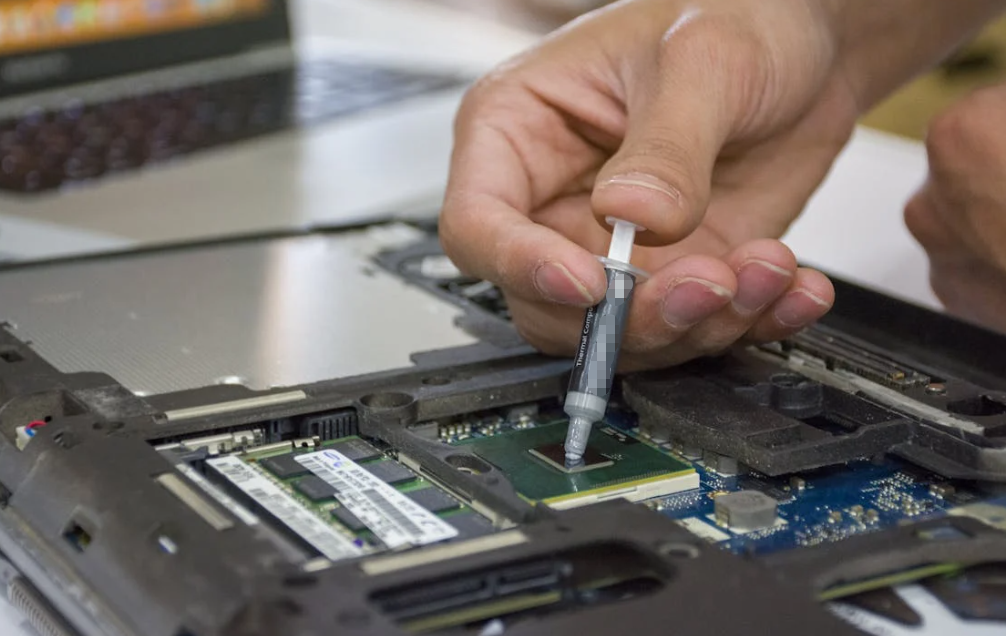
L'un des principaux critères de choix consiste à déterminer s'il convient d'utiliser des formulations à base de silicone ou sans silicone.
Pâte thermique à base de silicone
Avantages :
- Excellente stabilité thermique
- Large gamme de températures
- Une technologie éprouvée
- Excellentes performances diélectriques
- Bonne fiabilité à long terme
Inconvénients :
- Risque de migration de silicone
- Risques de contamination potentiels dans les composants électroniques sensibles
La graisse à base de silicone reste la solution privilégiée dans les applications liées aux batteries automobiles en raison de sa durabilité et de ses performances éprouvées sur le terrain.
Pâte thermique sans silicone
Avantages :
- Risque de contamination réduit
- Une meilleure compatibilité dans certains environnements
- Volatilité réduite du silicone
Inconvénients :
- Stabilité parfois réduite à basse température
- Durée de vie réduite dans des conditions extrêmes
Les matériaux sans silicone gagnent en popularité dans le domaine de l'électronique spécialisée, mais de nombreux fabricants de batteries pour véhicules électriques continuent de privilégier les solutions à base de silicone pour les interfaces thermiques critiques.
Pâte thermique, coussinets thermiques et produits de comblement
Les ingénieurs se demandent souvent si la pâte thermique est toujours la meilleure solution.
La réponse dépend de la géométrie de l'interface.
Graisse thermique
Meilleur pour :
- Lignes de collage fines
- Surfaces lisses
- Transfert thermique haute performance
- Tolérances serrées
Avantages :
- Résistance thermique minimale
- Excellente mouillabilité de la surface
- Rentable pour les interfaces minces
Limites :
- Peut évoluer au fil du temps
- Nécessite une application contrôlée
Coussinets thermiques
Meilleur pour :
- Des écarts plus importants
- Surfaces irrégulières
- Montage plus facile
Avantages :
- Manipulation plus propre
- Epaisseur constante
- Meilleur amortissement mécanique
Limites :
- Résistance thermique supérieure à celle de la graisse
Produits de remplissage des interstices
Meilleur pour :
- Importantes variations de tolérance
- Structures de modules complexes
Avantages :
- Un hébergement idéal pour une escale
- Absorption des contraintes mécaniques
Limites :
- Plus cher
- Plus lourd
Les systèmes de batteries modernes pour véhicules électriques combinent souvent plusieurs types de TIM au sein d'une même architecture de pack.
Pourquoi la recharge rapide modifie les exigences en matière de pâte thermique
La recharge ultra-rapide a considérablement accru les exigences en matière de gestion thermique.
Lors d'une recharge rapide en courant continu, la température des batteries peut augmenter rapidement en raison d'une densité de courant plus élevée et de la résistance interne. Des études et des observations menées par le secteur continuent de montrer qu'une chaleur excessive accélère la dégradation des batteries.
Cela pose de nouveaux défis en matière de choix de la pâte thermique :
- Un transfert de chaleur plus rapide est nécessaire
- Contrainte thermique cyclique plus importante
- Températures de fonctionnement plus élevées
- Des besoins en refroidissement plus importants
À mesure que les vitesses de recharge des véhicules électriques atteignent 350 kW et au-delà, les performances de l'interface thermique deviennent encore plus cruciales.
Certaines plateformes de batteries de nouvelle génération intègrent désormais :
- Refroidissement liquide avancé
- Systèmes de refroidissement hybrides
- Matériaux à changement de phase
- TIM à conductivité plus élevée
Le marché des pâtes thermiques évolue parallèlement à ces technologies de batteries.
L'importance des normes de fiabilité automobile
Une erreur que commettent de nombreux acheteurs consiste à choisir une pâte thermique en se basant uniquement sur les spécifications figurant dans la fiche technique.
Dans le secteur automobile, les normes de fiabilité ont bien plus d'importance que les arguments marketing.
Idéalement, une pâte thermique destinée aux véhicules électriques devrait présenter les caractéristiques suivantes :
- Vieillissement thermique à cycles longs
- Résistance aux vibrations
- Résistance à l'humidité
- Stabilité chimique
- Essais de qualification dans le secteur automobile
- Faible dégazage
La durée de vie des batteries devrait être comprise entre 8 et 15 ans. Un matériau d'interface thermique qui donne de bons résultats pendant six mois lors d'essais en laboratoire n'est pas suffisant.
La fiabilité à long terme est le véritable critère de référence.
Erreurs courantes lors du choix d'une pâte thermique pour véhicules électriques
Choisir uniquement en fonction de l'indice de conductivité
Un produit de 15 W/m·K peut présenter des performances inférieures à celles d'un produit de 8 W/m·K si le processus de mise en œuvre n'est pas stable.
Évaluez toujours les performances globales de l'interface.
Non-respect des exigences en matière de délivrance
La compatibilité avec les chaînes de production revêt une importance capitale dans la construction automobile.
Utilisation des TIM dans l'électronique grand public
La pâte thermique destinée aux ordinateurs portables ou aux processeurs n'est pas adaptée aux systèmes de batteries pour véhicules électriques.
Négligence des performances en matière de cycles thermiques
Les véhicules électriques subissent des cycles continus de dilatation et de contraction pendant leur fonctionnement.
Une stabilité insuffisante lors des cycles d'utilisation entraîne une défaillance prématurée.
Négligence en matière d'isolation électrique
La sécurité électrique reste un enjeu absolument crucial dans les systèmes de batteries à haute tension.
Tendances futures concernant les matériaux d'interface thermique pour batteries de véhicules électriques
La gestion thermique des véhicules électriques progresse à grands pas.
Plusieurs tendances du secteur influencent le développement des pâtes thermiques de nouvelle génération :
Matériaux à conductivité élevée
À mesure que la densité énergétique des batteries augmente, les fabricants repoussent les limites traditionnelles de la conductivité.
Formulations légères de TIM
La réduction du poids des véhicules améliore le rendement des véhicules électriques et leur autonomie.
Optimisation automatisée de la distribution
Les futurs TIM sont de plus en plus souvent conçus spécifiquement pour les systèmes de fabrication robotisés.
Systèmes hybrides de gestion thermique
Les recherches se poursuivent pour étudier les associations entre :
- Refroidissement par liquide
- Systèmes PCM
- Plaques de refroidissement avancées
- TIM améliorés par des nanomatériaux
Architectures de batteries plus sûres
La gestion thermique occupe désormais une place centrale dans les stratégies de prévention des incendies liés aux véhicules électriques et dans la lutte contre l'emballement thermique.
Comment HakTak contribue à la gestion thermique des véhicules électriques
À mesure que les systèmes de batteries pour véhicules électriques deviennent plus compacts et présentent une densité énergétique plus élevée, le besoin en matériaux d'interface thermique fiables ne cesse de croître.
Pour les constructeurs, choisir la pâte thermique adaptée ne se résume pas à l'achat d'un simple matériau : il s'agit d'améliorer la durée de vie de la batterie, la régularité de la recharge, l'efficacité de la production et la sécurité à long terme du véhicule.
HakTak se concentre sur les matériaux thermoconducteurs conçus pour les environnements industriels et automobiles exigeants, notamment les applications de gestion thermique des batteries de véhicules électriques. Les pâtes thermiques haute performance destinées aux systèmes de batteries modernes doivent présenter un équilibre entre :
- Transfert thermique efficace
- Isolation électrique
- Stabilité à long terme
- Régularité de la distribution
- Durabilité automobile
Pour les fabricants de batteries et les intégrateurs de systèmes pour véhicules électriques, ces facteurs revêtent une importance bien plus grande que les simples chiffres de conductivité avancés dans les titres.
Conclusion
La pâte thermique peut sembler n'être qu'un petit élément d'une batterie de véhicule électrique, mais son impact est considérable.
Des interfaces thermiques inadéquates entraînent une élévation de la température des cellules, une dégradation plus rapide, une baisse du rendement de charge et des risques accrus pour la sécurité. Une pâte thermique bien choisie améliore le transfert thermique, stabilise la température des batteries et contribue à prolonger la durée de vie des systèmes des véhicules électriques.
La meilleure pâte thermique pour véhicules électriques n'est pas nécessairement celle qui présente la conductivité la plus élevée. Le choix approprié dépend de l'ensemble des conditions d'utilisation, notamment les cycles thermiques, le procédé d'application, les exigences diélectriques, les contraintes mécaniques et la fiabilité à long terme.
À mesure que la technologie des véhicules électriques évolue vers une densité énergétique plus élevée et une recharge plus rapide, les matériaux d'interface thermique ne feront que gagner en importance.
FAQ
Quel est le rôle de la pâte thermique dans les batteries des véhicules électriques ?
La pâte thermique comble les interstices microscopiques entre les composants et améliore le transfert de chaleur au sein du système de batterie.
Une conductivité thermique plus élevée est-elle toujours préférable ?
Pas toujours. Une graisse à conductivité extrêmement élevée peut devenir difficile à appliquer et risque de nuire à sa stabilité à long terme.
Pourquoi l'isolation électrique est-elle importante dans la pâte thermique pour véhicules électriques ?
Les systèmes de batteries des véhicules électriques fonctionnant à haute tension, la pâte thermique doit empêcher tout risque de court-circuit en toute sécurité.
Quelle est la durée de vie de la pâte thermique pour véhicules électriques ?
La pâte thermique de qualité automobile est généralement conçue pour résister pendant de nombreuses années aux cycles thermiques et aux vibrations.
Peut-on utiliser de la pâte thermique classique pour processeurs sur les batteries de véhicules électriques ?
Non. La pâte thermique pour processeurs grand public ne présente généralement pas la durabilité, la sécurité et la fiabilité requises pour les systèmes de batteries automobiles.
