
ディスペンス可能な熱伝導ギャップ充填
シリコーンフリー熱伝導性ゲルによる汚染に敏感な電子機器のギャップ充填
シリコーン系材料の使用が制限される場合に、軟質でディスペンス可能な熱伝導インターフェース材で、部品とハウジング間の不均一なギャップを橋渡しします。シリコーンフリーという表示やW/m·Kだけでなく、汚染要件、実際のボンドライン、ディスペンス工程、長期信頼性に基づいてシリコーンフリー熱伝導性ゲルを選定してください。.
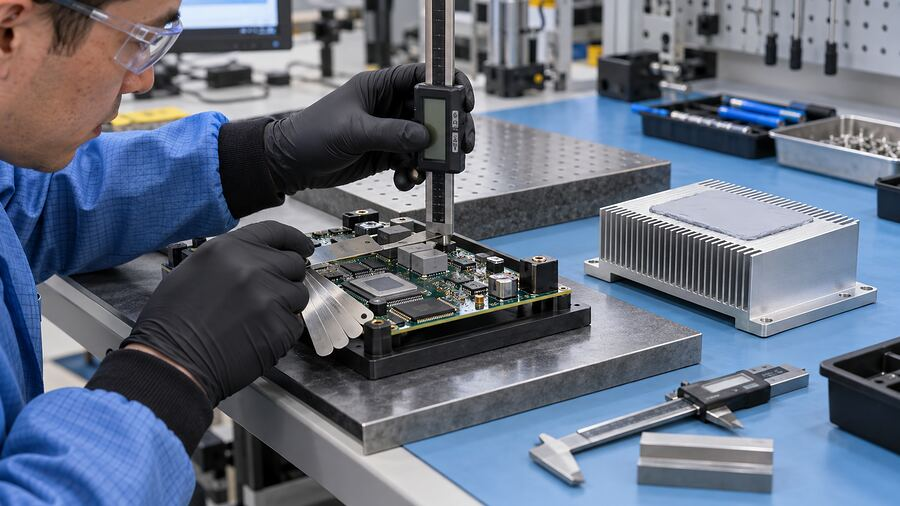
Define the material, not just the label
What Is Silicone-Free Thermal Gel?
シリコーンフリー熱伝導ゲルは、シリコーン系バインダーを使用せずに配合されたディスペンス可能な熱インターフェース材料で、凹凸のある発熱部品とヒートシンク、冷却プレートまたは筐体の間の空気を置き換えるために使用されます。.
熱伝導性フィラーが熱伝導経路を形成し、非シリコーン系キャリアと納入時の材料状態が、流動性、柔軟性、濡れ性、使用時の特性を左右します。アセンブリが閉じる際にゲルが形状に追従するため、塗布量の管理と最終厚さが引き続き重要です。.
The category name does not establish a universal formulation or cure mechanism. A ready-to-dispense, one-part material may be non-curing or pre-cured; other silicone-free liquid gap fillers require mixing and a subsequent cure. Specify the exact grade rather than treating these routes as interchangeable.
より幅広い製品ファミリーについては、こちらをご覧ください 液状ギャップフィラーのカテゴリー. For basic formats and use cases, read what a thermal gap filler does.
Silicone-free is not silicon-free
Silicone describes a polymer chemistry; silicon is an element that may appear in ceramic fillers or other compounds. Define the prohibited substances, allowed limits and analytical method in the purchasing specification.
A silicone-free declaration also does not establish zero outgassing, zero oil bleed or universal surface compatibility. Those require separate evidence.
制限理由から確認する
シリコーン-フリー放熱ゲルを選ぶべきなのはどのような場合か?
柔軟なギャップ充填が必要で、シリコーンの使用が製品の使用環境または製造仕様と相容れない場合は、この方法を検討してください。まず、露出面と故障メカニズムを特定します。.
光路を保護する
For cameras, sensors and optical modules, define acceptable deposition, haze or transmission change. Test the material at the real distance, temperature and enclosure ventilation—not only as an isolated sample.
Preserve coating and bonding
Painting, conformal coating and adhesive bonding may require controlled surface chemistry. Evaluate wetting, adhesion and contamination after the full production sequence, including handling and thermal exposure.
Respect sensitive zones
Contact-sensitive hardware or a silicone-restricted factory may have specific acceptance limits. Include connectors, relays, residue transfer and equipment cleanliness in qualification; a clean material alone does not make a clean process.
Separate chemistry from supplied state
Silicone-Free Thermal Gel Types and Material States
Select the operating state and production route together. The following are screening routes, not a claim that every grade is available with the same properties.
一液型軟質ゲル
供給形態のコンパウンドで、インラインでの二液混合を不要にできる場合があります。あらかじめ硬化済み、非硬化、または別のメカニズムで活性化されるものか、また塗布から閉じるまでの最長待機時間中も形状を保持できるかを確認してください。.
最適:ディスペンス工程の簡素化と保守を考慮した組立を求めるラインで、保管安定性、垂れ、最終的な熱接触を検証できる場合。.
シリコーンフリー硬化型ギャップフィラー
液状システムは、所定の最終状態に達する前に界面を濡らすことができます。混合、可使時間、固定条件、実際の材料温度が、管理対象の工程要素となります。.
最適な用途:配置後の安定化が必要で、設備、部品、タクトタイムが、規定された硬化時間範囲に対応できるアセンブリ。.
規定条件下でのエビデンス
組立工程で重要なシリコーンフリー熱伝導ゲルの仕様
納入材料と組み立て後の界面を比較してください。報告値にはすべて、試験片、測定方法、使用条件を明記する必要があります。競合他社のデータは、Haktakグレードの仕様ではありません。.
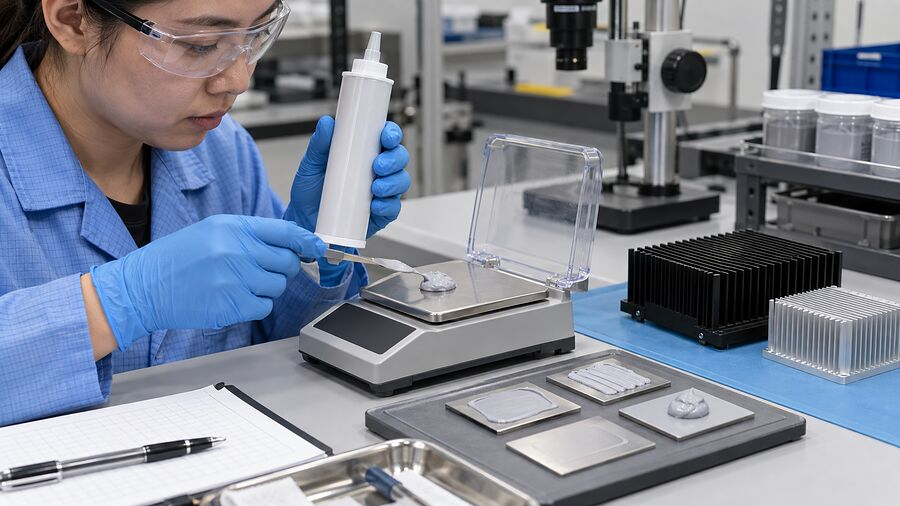
| 仕様書 | その重要性 | 何を記録するか |
|---|---|---|
| シリコーンの使用制限および組成 | 申告内容を実際の禁止対象となる化学組成に結び付けます。. | 物質、制限値、サプライヤー宣言および分析範囲。. |
| 熱伝導率とインピーダンス | バルク伝導率は材料をスクリーニングし、インピーダンスには厚さと接触が含まれます。. | 方法、温度、圧力、接触面積および最終ボンドライン。. |
| ギャップと閉鎖荷重 | 部品、基板、はんだ接合部の被覆範囲と荷重を決定します。. | 最小/公称/最大ギャップ、塗布量、ひずみ、圧縮力。. |
| 粘度および形状保持性 | ポンプ圧力、ノズル選定、ぬれ性、スランプを管理します。. | 温度、せん断速度、保持時間、ビード形状および向き。. |
| 供給形態と最終状態 | 混合、活性化、硬化、取り扱いの要件を決定します。. | 1K/2K、該当する場合の配合比、可使時間、保管条件、実際に到達した硬化状態。. |
| ブリード、アウトガス、適合性 | 周辺表面の汚染と後続工程への影響を確認します。. | 曝露条件、付着/残留物の評価基準、および代表的な基材。. |
| 電気的挙動 | 熱伝導性能を電気伝導性または絶縁性と切り分けます。. | 絶縁特性/抵抗率の裏付けデータ、電圧、厚さ、端部およびクリアランス。. |
| 信頼性と手直し | 想定耐用期間にわたる接触状態の維持と保守性を確認します。. | サイクル、湿度、振動、変位、取り外しおよび交換の結果。. |
狭い画面では、表内をスワイプしてすべての列を表示してください。.
組み立て後の性能にバルク値以上の情報が必要な理由を 熱伝導率と熱インピーダンスのガイド.
つながる1つの製造窓口
管理工程としてのシリコーンフリー熱伝導ゲルのディスペンス
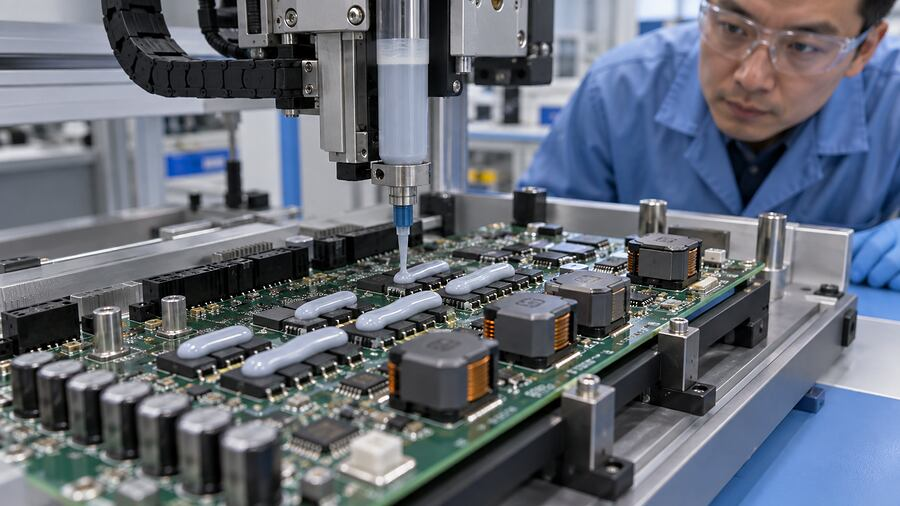
保管から封止まで材料を適格性評価します。温度、沈降、空気の取り込み、ミキサーのせん断、ノズルの絞りによって、公称配合が変わらなくても、実際に塗布されるビードが変化する可能性があります。.
コンディショニングと計量
Confirm package handling, material temperature, shelf life and shot mass. For two-part grades, record ratio tolerance and mixing quality.
排出して閉じる
両方の表面を濡らし、空気を逃がせるビードパターンを使用します。吐出開始、停止、コーナー、最小ショット量、最長の待機時間または組み立て遅延をテストします。.
安定化して検査
材料に必要な硬化を確認したうえで、塗布範囲、はみ出し、最終厚さ、機能性能を検査します。取り扱い可能な状態と、完全な機能硬化を区別します。.
実際のアセンブリを試験する
汚染に敏感なアセンブリ向けシリコーンフリー熱伝導ゲルを検証する
サービス曝露の前後で、同じ表面と合否判定基準を使用する。熱経路と敏感領域の両方を確認する。熱特性が良好なだけでは、汚染適合性があるとは証明できない。.
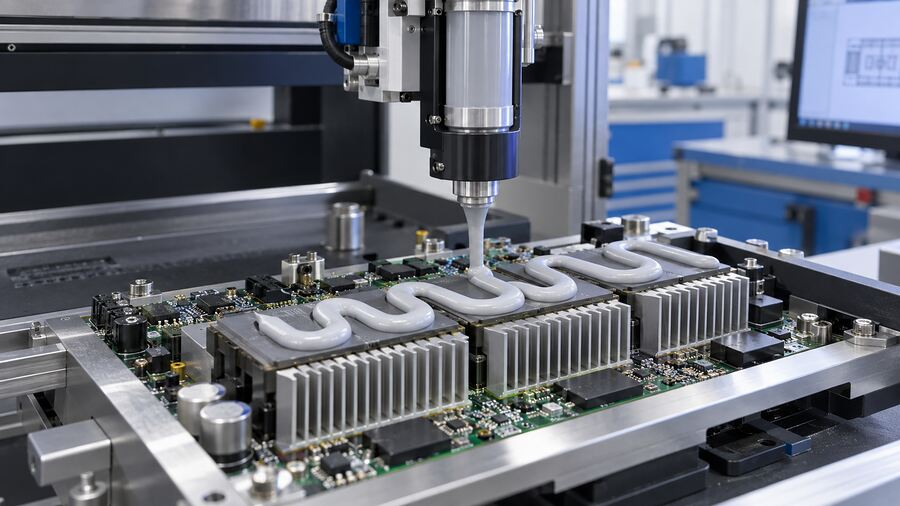
Record the starting interface
Measure dose, gap, contact, thermal impedance and electrical behavior. Record optical, coating, bonding or contact performance before introducing the candidate.
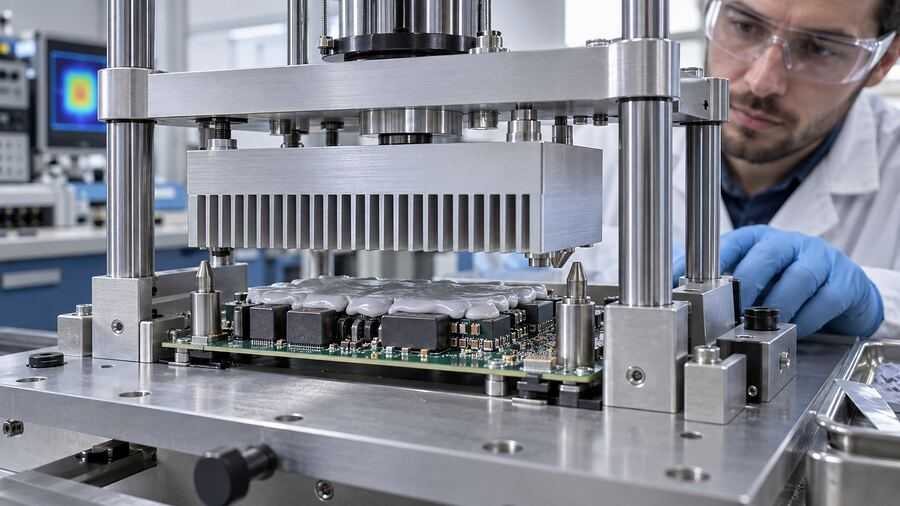
Reproduce the duty
Apply relevant heat, humidity, vibration and orientation. Include nearby witness surfaces or actual sensitive substrates; define residue and deposition acceptance limits in advance.
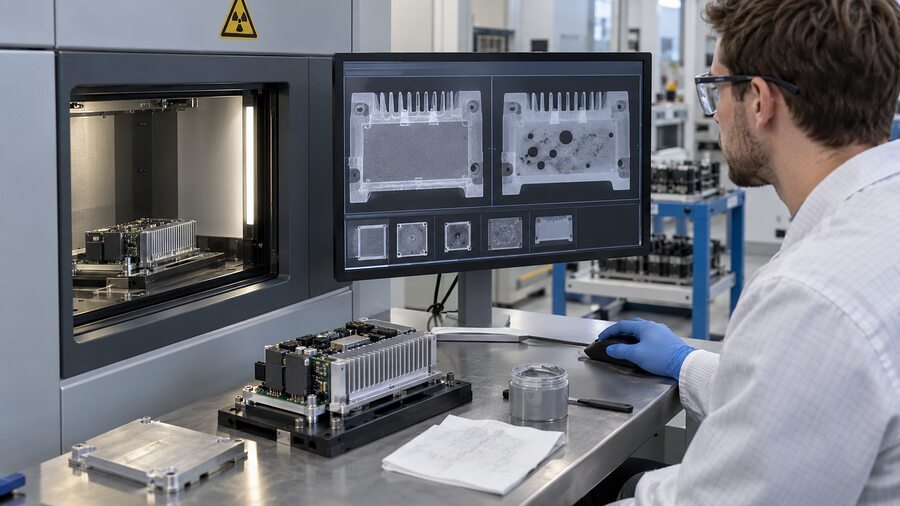
Retest the functions
Repeat thermal, electrical and surface checks. Inspect migration, bleed, adhesion and contact loss; validate disassembly, cleaning and the thermal result after replacement.
アプリケーション主導型スクリーニング
Silicone-Free Thermal Gel Applications
These are candidate applications, not automatic qualifications. The restriction reason and complete service conditions determine whether this material route is appropriate.
Cameras and optical electronics
Connect sensors and processors to housings while checking optical deposition, alignment loads and nearby surface contamination.
Coated and bonded assemblies
Evaluate heat transfer together with paint wetting, conformal coating adhesion and adhesive bond quality after handling and aging.
Controls, compute and power
Bridge mixed component heights where silicone restrictions apply, while retaining dielectric margins, mechanical reliability and an acceptable repair route.
Choose by interface and service strategy
Silicone-Free Thermal Gel vs Silicone Gel, Putty and Pads
A similar conductivity number does not make different chemistries or formats interchangeable. Compare them at the same gap, pressure, temperature and contamination criteria.
| ルート | 最適 | Main qualification |
|---|---|---|
| ノンシリコーンサーマルゲル | Soft dispensed contact where a defined silicone restriction applies. | Composition declaration, surface compatibility, process window and aging. |
| 1液性サーマルゲル | Ready-to-dispense supply without two-part metering. | Binder chemistry, delivered state, slump and rework; 1K is not synonymous with silicone-free. |
| 後硬化サーマルゲル | Placement followed by a qualified final stabilization. | Cure window, final softness and retained contact; confirm chemistry separately. |
| サーマルパティ | Formable contact across local height variation. | Actual material state, mass, migration and service procedure. |
| サーマルパッド | Defined footprint, controlled thickness and clean part placement. | Binder compatibility, contact at the largest gap and load at the smallest gap. |
| 熱伝導グリス | Very thin, tightly controlled interfaces rather than large stand-offs. | Binder chemistry, pump-out, application amount and long-term contact. |
Swipe within the table on mobile to compare every column.
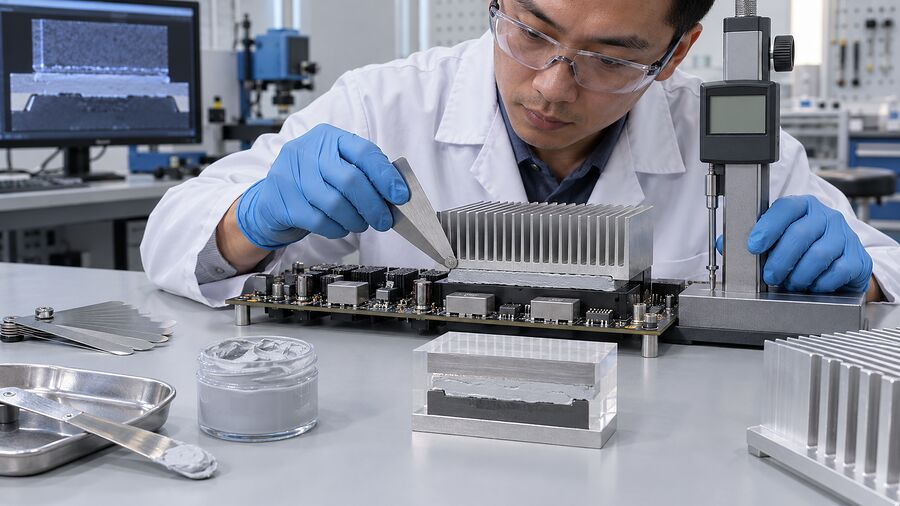
From screening to production
Match Silicone-Free Thermal Gel to Your Actual Interface
Send the silicone restriction, sensitive surfaces, minimum/nominal/maximum gap, heat load, voltage, equipment, any cure limits and reliability plan. はくたく can review the material route and comparison evidence needed for your assembly.
Practical engineering answers
Silicone-Free Thermal Gel FAQ
What is silicone-free thermal gel?
It is a dispensable thermal interface material made with a non-silicone binder, used to fill uneven electronic heat-source-to-cooling-surface gaps. The exact composition and final state depend on the grade.
Is silicone-free the same as silicon-free?
No. Silicone is a polymer chemistry and silicon is an element. State the substances and limits that your specification prohibits; fillers may contain silicon without being silicone polymers.
Is every silicone-free thermal gel single component?
No. Silicone-free describes chemistry, not component count. Both ready-to-dispense one-part materials and mixed liquid gap-filling systems exist.
Does silicone-free thermal gel require curing?
Some grades are pre-cured or non-curing; others need a defined cure or activation step. Confirm the delivered state and functional cure requirements from the selected grade’s documentation.
Does silicone-free mean zero bleed or outgassing?
No. A non-silicone carrier can still release volatile compounds or leave residue. Define relevant conditions and acceptance limits, then test the candidate with the actual sensitive surfaces.
Can it be used near optical components?
It can be screened for that application, but optical compatibility is not automatic. Evaluate deposition, haze or transmission changes at representative temperature, distance, ventilation and exposure time.
Is silicone-free thermal gel electrically insulating?
Many formulations target insulation, but the category name does not guarantee it. Check grade-specific dielectric strength, resistivity, voltage, bond-line thickness and edge clearance.
How is thermal gel different from silicone-free grease?
Gel is typically selected for conformable gap filling and shape retention. Grease is generally used in much thinner interfaces. The actual rheology and qualified thickness—not the name alone—determine fit.
Will it remain stable in vertical or vibrating assemblies?
That requires testing. Confirm pre-closure slump and post-assembly migration, contact and thermal performance through the intended temperature, orientation and vibration duty.
Can silicone-free thermal gel be reworked?
It depends on the grade and final state. Validate removal force, residue cleanup, replacement volume and thermal, electrical and surface performance after the next closure.