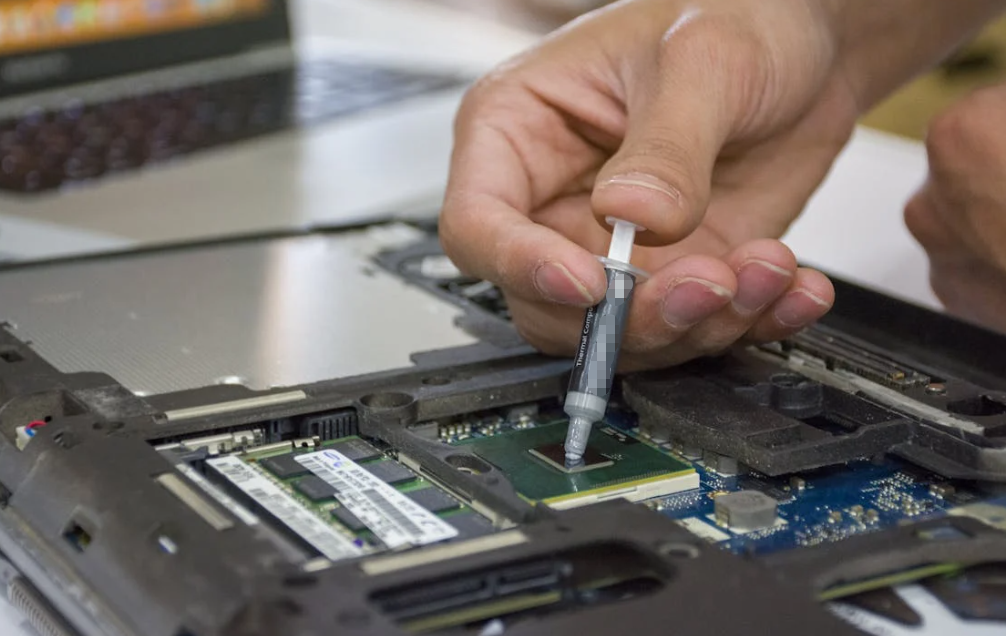
In today’s high‑performance electronics, efficient heat dissipation isn’t just an afterthought — it’s a fundamental design requirement. From cutting‑edge CPUs to power modules in EV inverters and LED lighting systems, managing heat directly affects reliability, performance, and service life. At the heart of this thermal management strategy lies a deceptively simple but critically important material: thermal paste — and specifically, high thermal conductivity paste.

This guide dives deep into the engineering, materials science, and real‑world applications behind high thermal conductivity paste. You’ll gain a practical yet technical understanding of what it is, how it works, why thermal conductivity matters, and how high‑performance versions differ from standard thermal pastes.
1. What Is Thermal Paste (Also Called TIM)?
At its core, thermal paste is a thermal interface material (TIM) — a substance applied between a heat‑generating surface (like a semiconductor or power transistor) and a heat‑dissipating surface (like a heat sink or cold plate). The primary purpose of TIMs is to fill microscopic air gaps and surface irregularities that naturally occur between mating surfaces. These tiny voids trap air — a poor thermal conductor — and dramatically reduce heat flow.
Thermal paste is also known as:
- thermal compound
- thermal grease
- thermal gel
- heat sink compound
- CPU grease
- gap filler
Despite its many names, the principle remains the same: create a better thermal bridge between two surfaces.
2. Thermal Conductivity — The Key to Thermal Transfer
The phrase “thermal conductivity” refers to a material’s ability to carry heat. Technically expressed in watts per meter‑Kelvin (W/m·K), it quantifies heat flow through a material per unit thickness per unit temperature difference.

Simply put:
- High thermal conductivity means heat moves quickly through the material.
- Low thermal conductivity means heat is trapped and dissipates slowly.
Air, for example, has very low thermal conductivity (around ~0.025 W/m·K), while metals like copper and aluminum have very high values (~400 W/m·K and ~200 W/m·K respectively). In between lies the realm of thermal pastes — engineered to maximize heat transfer where direct metal‑to‑metal contact isn’t possible.
3. What Makes Paste “High Thermal Conductivity”?
Not all thermal paste is created equal. What differentiates high thermal conductivity paste from standard thermal paste are:

A. Higher Loading of Conductive Fillers
The base matrix of thermal paste — typically silicone, epoxy, acrylate, or urethane — acts as a carrier. It is inherently a poor conductor of heat on its own. The real thermal performance comes from thermally conductive fillers within the matrix.
Common high‑performance fillers include:
- aluminum oxide (Al₂O₃)
- boron nitride (BN)
- zinc oxide (ZnO)
- graphite or carbon
- micronized silver particles
- liquid metal alloys (e.g., galinstan)
Standard thermal paste may have conductivities from ~1–4 W/m·K, while high thermal conductivity paste can reach 5–8 W/m·K and above depending on the formulation and filler type.
B. Advanced Filler Types and Proportions
Premium compounds often use specialized fillers like diamond, graphene, or liquid metal droplets. These materials possess intrinsically high thermal conductivities and, when dispersed correctly, elevate the overall paste performance.
C. Optimized Microstructure
The distribution, size, and shape of filler particles can dramatically affect how heat percolates through the paste. Uniform distribution and controlled particle geometry help construct efficient heat pathways, minimizing thermal resistance even at thin bond lines.
D. Stability Under Load
High thermal conductivity pastes maintain their performance across:
- wide temperature ranges
- mechanical stress
- long‑term operation
This stability is essential for demanding applications like power electronics and industrial automation.
4. How Does High Thermal Conductivity Paste Work?
To understand how thermal paste enhances heat transfer, imagine two imperfect metal surfaces — one hot, one cool. Due to surface roughness, millions of microscopic air pockets exist between them. These air pockets are thermal insulators.
Thermal paste performs two critical tasks:
Gap Filling
The paste flows into tiny voids and irregularities, replacing trapped air with a material that conducts heat far better than air.
Thermal Coupling Enhancement
By creating an uninterrupted path between the heat source and heat sink, the paste significantly reduces thermal resistance — the barrier that slows heat flow.
A well‑applied high conductivity paste allows heat to travel from the heat‑producing surface, through the paste, and into the cooled surface where it can be dissipated effectively.
5. High‑Performance Applications of Thermal Paste
High thermal conductivity paste is indispensable in many industries — especially where heat becomes a limiting factor:
Computing and Data Centers
High‑end CPUs, GPUs, and server processors generate significant heat. Using high conductivity paste ensures that:
- heat spreads more efficiently
- temperatures stay within safe limits
- long‑term reliability improves
In data centers, proper thermal management directly impacts uptime and energy efficiency.
Power Electronics
Devices like IGBTs, MOSFETs, and power modules in EV inverters and industrial drives benefit immensely from low thermal resistance interfaces. High‑conductivity TIMs help mitigate thermal stress and extend service life.
LED Lighting and Optoelectronics
High‑brightness LEDs require excellent heat management to prevent premature degradation and color shift.
Communications and Telecom
High data throughput increases heat generation in RF amplifiers and telecom hardware, where effective heat transfer is vital.
Aerospace and Defense
Systems that operate under extreme temperatures rely on advanced pastes engineered for harsh environments.
6. What Thermal Conductivity Values Mean in Practice
To put things in perspective:
| Material | Approx. Thermal Conductivity |
| Air | ~0.025 W/m·K |
| Standard silicone thermal paste | ~1–3 W/m·K |
| High conductivity thermal paste | ~5–8+ W/m·K |
| Liquid metal TIM | >13 W/m·K |
| Copper | ~400 W/m·K |
From these figures, it’s clear that even the best pastes don’t approach metal conductors, but they vastly outperform air — the default medium between imperfect surfaces.
This explains why proper application (thin, continuous layer) and correct product choice matter almost as much as the thermal conductivity number itself.
7. Practical Factors When Choosing High Thermal Conductivity Paste
Choosing the right paste is more than just picking the highest W/m·K number:
Electrical Conductivity or Insulation
Some high conductivity pastes — especially liquid metals — may be electrically conductive. This can pose a risk of short circuits and corrosion if misapplied.
Operating Temperature Range
Applications with wide temperature swings (like automotive or industrial systems) require TIMs that won’t degrade or pump out over time.
Viscosity and Application Ease
Pastes vary in thickness and flow behavior; some are better suited for automated dispensing, others for manual application.
Long‑Term Stability and Reliability
Higher quality pastes maintain performance over extended cycles without becoming brittle or separating.
8. High Thermal Conductivity Paste vs. Other TIMs
There are several types of thermal interface materials. Here’s how high conductivity paste compares:
Thermal Pads
Solid, compressible thermal pads that are easy to install and clean. They generally have lower thermal conductivity than high‑end pastes, especially at thin interfaces.
Phase‑Change Materials
These soften at operating temperature to fill gaps like paste but transition to different states for improved contact. Some high‑conductivity pastes may incorporate phase‑change technology to enhance wetting and reduce interface resistance.
Liquid Metal TIMs
These offer the highest thermal conductivities but come with drawbacks such as electrical conductivity and handling challenges.
In many high‑end electronics and power applications, a carefully engineered high thermal conductivity paste strikes the best balance between performance, ease of use, and reliability.
9. How to Apply Thermal Paste for Optimal Performance
While product formulation is critical, application technique matters just as much:
- Clean Surfaces Thoroughly Remove old paste and contaminants before application.
- Apply Thinly but Fully Too much paste can increase thermal resistance; too little leaves gaps.
- Ensure Good Contact Pressure The heatsink or module must make even contact across the surface.
- Consider Automated Dispensing for Industrial Use Manual application is suitable for prototypes, but high‑volume production benefits from precision dispensing systems.
10. Trends and Future Directions
The field of thermal interface materials continues to evolve with innovations like:
- Graphene‑enhanced composites boosting conductivity at lower filler loadings.
- Nanostructured fillers offering better percolation networks for heat flow.
- Hybrid materials combining phase‑change behavior with high conductivity.
These developments promise even thinner, more efficient TIMs for next‑generation electronics.
11. Conclusion
High thermal conductivity paste is a cornerstone material in modern thermal management systems. Whether your application is high‑performance computing, power electronics, telecom hardware, or advanced industrial machinery, understanding how thermal paste works and how to choose it can make the difference between adequate performance and design excellence.
At HakTak, our thermally conductive solutions deliver optimized heat transfer with engineered formulations designed for your toughest challenges. Leveraging advanced fillers, reliable performance across temperature extremes, and compatibility with automated processes, our pastes help maximize device reliability, efficiency, and longevity.
12. Frequently Asked Questions (FAQs)
What is thermal conductivity paste?
A thermally conductive material applied between heat‑generating surfaces and heat sinks to improve heat transfer by filling air gaps.
Why does thermal paste matter?
Because it dramatically reduces thermal resistance at interfaces, enabling better cooling and protecting components from overheating.
What is a good thermal conductivity value?
For high‑performance paste, values typically range from 5 to 8 W/m·K and above depending on formulation and fillers.
Can thermal paste be electrically conductive?
Some pastes (especially with metal fillers or liquid metal) can be electrically conductive and risky for electronics if misapplied.
How thick should thermal paste be applied?
A thin, uniform layer is best — enough to fill surface gaps without excessive buildup, which increases resistance.