
In der modernen Industrie ist Wärme kein Nebenaspekt mehr. Sie ist einer der Hauptfaktoren, die darüber entscheiden, ob Anlagen effizient laufen, vorzeitig ausfallen oder unter anspruchsvollen Betriebsbedingungen bestehen können. Da die Leistungsdichte in den Bereichen Elektronik, Automatisierungssysteme, Anlagen für erneuerbare Energien, Elektrofahrzeuge, Telekommunikationshardware und Industriemaschinen stetig zunimmt, sind Materialien für das Wärmemanagement mittlerweile unverzichtbare technische Komponenten und nicht mehr nur einfaches Zubehör.

Unter diesen Materialien weisen solche mit hoher Leitfähigkeit Wärmeleitpaste spielt eine entscheidende Rolle. Es befindet sich unauffällig zwischen wärmeerzeugenden Bauteilen und Kühlkörpern, doch sein Einfluss auf die thermische Stabilität, die Zuverlässigkeit und die Lebensdauer ist enorm. Ein schlecht ausgewähltes Material der thermischen Schnittstelle kann die Temperaturen der Bauteile drastisch erhöhen, die Energieeffizienz verringern und die Lebensdauer verkürzen. Andererseits kann eine hochwertige Wärmeleitpaste die Betriebstemperaturen stabilisieren, die Wärmeübertragung verbessern und dazu beitragen, dass industrielle Anlagen über lange Produktionszyklen hinweg eine gleichbleibende Leistung erbringen.
Für Hersteller in den Bereichen Industrieelektronik, Leistungsmodule, LED-Systeme, Wechselrichtertechnologien, Robotik oder Automobilelektronik ist die Wahl der richtigen Wärmeleitpaste mittlerweile eine technische Entscheidung mit messbaren wirtschaftlichen Auswirkungen.
Chinesische Hersteller von Wärmemanagementlösungen wie beispielsweise HakTak liefern zunehmend hochentwickelte Wärmeleitmaterialien an globale Erstausrüster und industrielle Systemintegratoren, die zuverlässige Lösungen mit hoher Wärmeleitfähigkeit für anspruchsvolle Umgebungen benötigen.
Warum das Wärmemanagement wichtiger denn je ist
Industrieanlagen arbeiten heute mit deutlich höheren Leistungen als Systeme, die vor einem Jahrzehnt gebaut wurden. Die Komponenten sind kleiner, die Schaltfrequenzen höher und die thermischen Belastungen stärker konzentriert.
Dies stellt eine große Herausforderung dar: die effiziente Wärmeabfuhr aus beengten Räumen.
Übermäßige Hitze kann zu folgenden Problemen führen:
- Verschleiß von Halbleitern
- PCB-Verzug
- Geringere Verarbeitungseffizienz
- Thermische Drosselung
- Ermüdung von Lötstellen
- Ausfallzeiten der Anlagen
- Vorzeitiger Systemausfall
In Bereichen wie erneuerbare Energien, Elektromobilität, Fabrikautomation und Dateninfrastruktur kann bereits ein geringfügiger Anstieg der Betriebstemperatur die langfristige Zuverlässigkeit beeinträchtigen.
Studien und Beobachtungen aus der Industrie zeigen immer wieder, dass die Wärmeleitfähigkeit einen direkten Einfluss auf die Lebensdauer elektronischer Bauteile und den Wirkungsgrad von Systemen hat. Moderne Wärmeleitmaterialien sind daher so konzipiert, dass sie den Kontaktwiderstand verringern und die Wärmeübertragung zwischen den Kontaktflächen verbessern.
Dieses Thema gewinnt in industriellen Umgebungen noch mehr an Bedeutung, in denen Systeme unter Vibrationen, Staub, Feuchtigkeit oder erhöhten Umgebungstemperaturen möglicherweise Tausende von Stunden lang ununterbrochen in Betrieb sind.
Was ist Wärmeleitpaste mit hoher Leitfähigkeit?

Wärmeleitpaste, manchmal auch als Wärmeleitpaste oder Wärmeleitpaste, ist ein wärmeleitendes Material, das dazu dient, mikroskopisch kleine Luftspalten zwischen zwei Oberflächen auszufüllen.
Selbst polierte Metalloberflächen weisen mikroskopisch kleine Unebenheiten auf. Wenn ein Kühlkörper auf einem Prozessor, einem Leistungstransistor oder einem Industriemodul montiert wird, bleiben winzige Lufteinschlüsse zwischen den Oberflächen zurück. Da Luft ein schlechter Wärmeleiter ist, führen diese Hohlräume zu Wärmebeständigkeit.
Wärmeleitpaste beseitigt diese Lücken.
Das Material füllt Unebenheiten der Oberfläche aus und bildet einen durchgehenden Wärmepfad, über den die Wärme effizienter von der Wärmequelle zur Kühlstruktur übertragen werden kann.
Wärmeleitpaste mit hoher Leitfähigkeit wurde speziell entwickelt, um diese Wärmeübertragungsleistung zu maximieren. Sie enthält in der Regel spezielle Füllstoffe wie beispielsweise:
- Aluminiumoxid
- Zinkoxid
- Bornitrid
- Keramikpartikel
- Metalloxidverbindungen
- Siliziumkarbid
Diese Füllstoffe steigern die Leistung erheblich Wärmeleitfähigkeit und dabei die Verarbeitbarkeit und die langfristige Stabilität zu gewährleisten.
Wärmeleitpasten in Industriequalität weisen in der Regel einen Wärmeleitkoeffizienten zwischen 2 W/mK und 15 W/mK oder höher auf, je nach Zusammensetzung und Anwendungsanforderungen. Einige fortschrittliche Formulierungen zielen nicht nur auf die Volumeleitfähigkeit ab, sondern auch auf die Verringerung des thermischen Übergangswiderstands unter realen Betriebsdrücken.
Wesentliche Eigenschaften von industriellen Wärmeleitpasten
Nicht alle Wärmeleitpasten sind für industrielle Umgebungen ausgelegt. Für den Endverbraucher bestimmte Produkte mögen zwar für Desktop-Elektronik geeignet sein, versagen jedoch unter industriellen Beanspruchungsbedingungen.
Industrielle Wärmeleitpaste muss ein wesentlich breiteres Spektrum an Leistungsanforderungen erfüllen.
Hohe Wärmeleitfähigkeit
Die Hauptfunktion von Wärmeleitpaste ist die effiziente Wärmeübertragung. Höhere Leitfähigkeitswerte deuten im Allgemeinen auf eine bessere Wärmeableitungsfähigkeit hin, wobei die tatsächliche Leistung jedoch auch von der Dicke der Klebefuge, der Oberflächenebenheit und dem Anpressdruck abhängt.
Moderne industrielle Wärmeleitpasten erreichen in der Regel Leitfähigkeitswerte von 4 W/mK bis 8 W/mK, während Spezialprodukte diese Werte sogar noch übertreffen können.
Geringer Wärmewiderstand
In industriellen Anwendungen ist ein geringer Wärmewiderstand oft wichtiger als der angegebene Leitfähigkeitswert.
Ein Material kann zwar mit hoher Leitfähigkeit werben, dennoch jedoch schlechte Leistung erbringen, wenn es keine ultradünne, stabile Grenzschicht bilden kann. Hochentwickelte Wärmeleitpasten werden daher so formuliert, dass sie eine geringe Schichtdicke und starke Oberflächenbenetzungseigenschaften aufweisen.
Langfristige Zuverlässigkeit
Industrieanlagen können über Jahre hinweg ununterbrochen in Betrieb sein. Wärmeleitpaste muss folgenden Anforderungen standhalten:
- Austrocknen
- Ölabscheidung
- Pump-out-Effekte
- Knacken
- Oxidation
- Thermische Ermüdung
Die Hersteller legen zunehmend Wert auf langfristige Stabilität, da Schwankungen in der thermischen Leistung empfindliche Komponenten im Laufe der Zeit beschädigen können.
Elektrische Isolierung
In vielen industriellen Anwendungen werden elektrisch nichtleitende Werkstoffe benötigt, um Kurzschlüsse zu verhindern.
Mit Keramikpartikeln gefüllte Wärmeleitpasten finden breite Anwendung, da sie eine hohe Wärmeleitfähigkeit bieten und gleichzeitig ihre elektrischen Isolationseigenschaften beibehalten.
Breiter Betriebstemperaturbereich
Industrieanlagen können in eisigen Außenbereichen oder in Produktionsstätten mit hohen Temperaturen betrieben werden. Wärmeleitpaste muss über weite Temperaturbereiche hinweg stabil bleiben, oft von -40 °C bis +150 °C oder höher.
Industrielle Anwendungen von Wärmeleitpaste mit hoher Leitfähigkeit

Der Einsatz von Wärmeleitpaste erstreckt sich auf nahezu alle modernen Industriezweige.
Leistungselektronik
Leistungsmodule erzeugen im Betrieb enorme Wärmemengen. IGBTs, MOSFETs, Gleichrichter und Wandler benötigen stabile thermische Schnittstellen, um eine Überhitzung zu verhindern.
Wärmeleitpaste wird üblicherweise zwischen folgenden Teilen aufgetragen:
- Leistungshalbleiter
- Kühlkörper
- Aluminium-Kühlplatten
- Wärmeverteiler
Bei Wechselrichtersystemen können bereits geringfügige Verringerungen des thermischen Widerstands den Wirkungsgrad verbessern und die Lebensdauer der Anlagen verlängern.
LED-Beleuchtungssysteme
Hochleistungs- LED Diese Systeme reagieren äußerst empfindlich auf Temperaturschwankungen.
Wenn die Sperrschichttemperaturen übermäßig ansteigen, nimmt die Helligkeit der LEDs ab und die Farbkonsistenz verschlechtert sich. Eine langfristige Überhitzung kann zu einer dauerhaften Verringerung der Lichtausbeute führen.
Wärmeleitpaste unterstützt die Wärmeübertragung von LED-Platinen auf Metallkühlkörper und verbessert so die Stabilität und die Lebensdauer.
Kfz-Elektronik
Elektrofahrzeuge und moderne Fahrzeugelektronik sind in hohem Maße auf Materialien für das Wärmemanagement angewiesen.
Die Anwendungen umfassen:
- Batteriesysteme
- Bordladegeräte
- DC-DC-Wandler
- Motorsteuerungen
- Radarsysteme
- ADAS-Module
Da die Leistungsdichte von Elektrofahrzeugen weiter zunimmt, sind Wärmeleitmaterialien zu unverzichtbaren Komponenten für Sicherheit und Leistung geworden.
Telekommunikationsgeräte
5G-Infrastruktur und Telekommunikationshardware erzeugen konzentrierte thermische Belastungen.
Basisstationen, Server, Router und Kommunikationsmodule benötigen eine effiziente Kühlung, um die Signalstabilität zu gewährleisten und Systemausfälle zu verhindern.
Wärmeleitpaste findet breite Anwendung in:
- HF-Module
- Netzwerkprozessoren
- Optische Kommunikationssysteme
- Netzteile
Industrielle Automatisierung
Roboter- und Fabrikautomatisierungssysteme enthalten kompakte Elektronik, die kontinuierlich in geschlossenen Umgebungen betrieben wird.
Servosysteme, SPSen, industrielle CPUs und Motorantriebe profitieren alle von zuverlässigen Wärmeleitmaterialien, die die Temperaturen bei längerem Betrieb stabilisieren.
Silikonhaltige vs. silikonfreie Wärmeleitpaste
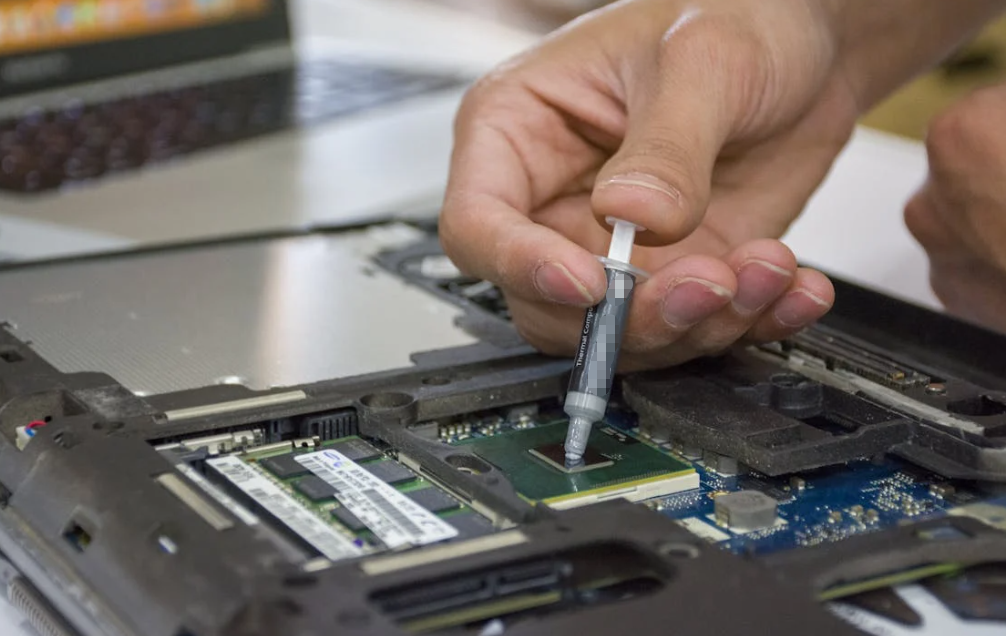
Ein wichtiger Aspekt in der Industrie ist die Frage, ob Formulierungen auf Silikonbasis oder silikonfreie Formulierungen verwendet werden sollen.
Silikonbasiertes Wärmeleitfett
Verbindungen auf Silikonbasis finden breite Anwendung, da sie folgende Vorteile bieten:
- Ausgezeichnete Temperaturstabilität
- Gute Streichfähigkeit
- Lange Lebensdauer
- Hohe Oxidationsbeständigkeit
Sie erfreuen sich nach wie vor großer Beliebtheit in der Elektronik und in industriellen Anwendungen.
Silikonfreie Wärmeleitpaste
Bestimmte Branchen vermeiden eine Verunreinigung durch Silikon, da die Migration von Silikon Beschichtungen, optische Systeme oder empfindliche Fertigungsprozesse beeinträchtigen kann.
Silikonfreie Wärmeleitpasten kommen zunehmend zum Einsatz in:
- Lackierumgebungen in der Automobilindustrie
- Optische Elektronik
- Halbleiterfertigung
- Präzisionssysteme für die Industrie
Die Hersteller haben fortschrittliche silikonfreie Formulierungen entwickelt, die dennoch eine hohe Wärmeleitfähigkeit und langfristige Stabilität aufweisen.
Faktoren, die bei der Auswahl von industriellen Wärmeleitpasten zu berücksichtigen sind
Die Auswahl von Wärmeleitpaste sollte niemals ausschließlich auf der in einem Datenblatt angegebenen Leitfähigkeitszahl basieren.
Die tatsächliche industrielle Leistungsfähigkeit hängt von zahlreichen miteinander wechselwirkenden Faktoren ab.
Wärmeleitfähigkeit im Vergleich zur tatsächlichen Leistung
Ein weit verbreiteter Irrtum ist, dass der höchste W/mK-Wert automatisch das beste Ergebnis liefert.
Tatsächlich hängt die tatsächliche thermische Leistung von folgenden Faktoren ab:
- Oberflächenrauhigkeit
- Montagedruck
- Dicke der Anwendung
- Benetzungsleistung
- Viskositätsstabilität
- Schnittstellenwiderstand
In Fachkreisen wird zunehmend betont, dass die Bedingungen in der Praxis die Wärmeübertragung erheblich beeinflussen.
Viskosität
Fett mit niedriger Viskosität lässt sich leicht verteilen, kann jedoch bei Temperaturwechselbeanspruchung herausgepumpt werden.
Hochviskoses Schmierfett bietet zwar eine bessere Stabilität, erfordert jedoch einen höheren Anpressdruck.
Industrielle Anwendungen erfordern oft eine sorgfältig abgestimmte Rezeptur.
Pump-Out-Widerstand
Wiederholte Erwärmungs- und Abkühlungszyklen können dazu führen, dass sich die Wärmeleitpaste aus dem Kontaktbereich löst.
Dieses als „Pump-out“ bezeichnete Phänomen beeinträchtigt die langfristige thermische Leistung.
Hochwertige Industriefette wurden speziell entwickelt, um diesem Problem entgegenzuwirken.
Kompatibilität bei der Dosierung
Moderne Fertigungslinien sind in hohem Maße auf automatisierte Dosieranlagen angewiesen.
Wärmeleitpaste muss für folgende Zwecke stabile rheologische Eigenschaften aufweisen:
- Siebdruck
- Roboterbasierte Dosierung
- Anwendung mit einer Spritze
- Automatisierte Montage
Umgebungsbeständigkeit
Industrielle thermische Werkstoffe können folgenden Herausforderungen ausgesetzt sein:
- Luftfeuchtigkeit
- Vibration
- Staub
- Korrosive Atmosphären
- Mechanischer Stoß
Zuverlässige Schmierfettformulierungen müssen unter all diesen Bedingungen ihre Leistungsfähigkeit beibehalten.
Die Rolle von Füllstoffen bei der Wärmeleitfähigkeit
Die Füllstoffe im Wärmeleitpaste bestimmen maßgeblich deren Leistungseigenschaften.
Keramische Füllstoffe
Keramikpartikel wie Aluminiumoxid und Bornitrid bieten folgende Vorteile:
- Elektrische Isolierung
- Stabile thermische Leistung
- Chemikalienbeständigkeit
Diese finden in der Industrieelektronik breite Anwendung.
Füllstoffe auf Metallbasis
In einigen Wärmeleitpasten werden Metallpartikel verwendet, um die Leitfähigkeit zu erhöhen.
Diese Formulierungen bieten zwar eine hervorragende Wärmeübertragung, können jedoch elektrisch leitfähig werden, wodurch sie für bestimmte Anwendungen ungeeignet sind.
Fortschrittliche thermische Werkstoffe
Die Forschung im Bereich hochleitfähiger Werkstoffe schreitet weiterhin rasch voran.
Aktuelle Studien haben Materialien wie Bornitrid und Siliziumkarbid identifiziert, die ein außergewöhnlich hohes Wärmeleitfähigkeitspotenzial für zukünftige Wärmemanagementsysteme aufweisen.
Neueste Forschungsarbeiten befassen sich zudem mit Flüssigmetallsystemen und nanotechnologisch hergestellten thermischen Schnittstellen, mit denen sich der Wärmewiderstand drastisch senken lässt.
Auch wenn viele dieser Technologien nach wie vor Nischencharakter haben, zeigen sie doch, wie wichtig das Wärmemanagement in der gesamten Elektronikbranche geworden ist.
Häufige Fehler beim Auftragen von Wärmeleitpaste
Selbst hochwertiges Wärmeleitpaste kann versagen, wenn sie falsch aufgetragen wird.
Zu viel Material auftragen
Überschüssiges Fett erhöht die Dicke der Grenzschicht und kann die Wärmeübertragungseffizienz sogar verringern.
Das Ziel ist es, eine möglichst dünne, durchgehende Wärmeschicht zu schaffen.
Ungleiche Verteilung
Lufteinschlüsse oder unvollständige Abdeckung können zu thermischen Hotspots führen.
In der industriellen Fertigung werden automatisierte Dosieranlagen häufig bevorzugt, um eine gleichbleibende Qualität zu gewährleisten.
Ignorieren der Oberflächenvorbereitung
Staub, Oxidation oder Verunreinigungen können den Wärmewiderstand erheblich erhöhen.
Saubere Kontaktflächen sind für eine einwandfreie Funktion unerlässlich.
Auswahl von Konsumgütern für industrielle Systeme
Verbindungen in Verbraucherqualität halten industriellen Temperaturwechselbeanspruchungen oder Umwelteinflüssen möglicherweise nicht stand.
Industrielle Anwendungen erfordern spezielle, auf Zuverlässigkeit ausgerichtete Formulierungen.
Warum industrielle Einkäufer mehr Wert auf Zuverlässigkeit legen als auf Marketingzahlen
Angaben zur Wärmeleitfähigkeit sind zwar hilfreich, doch erfahrene Ingenieure verlassen sich selten auf einen einzigen Wert.
Eine Wärmeleitpaste mit einem Wärmeleitkoeffizienten von 6 W/mK kann ein Material mit einem höheren Wärmeleitkoeffizienten übertreffen, wenn sie folgende Eigenschaften aufweist:
- Bessere Benetzung
- Geringerer Grenzflächenwiderstand
- Verbesserte Langzeitstabilität
- Höhere Auspumpfestigkeit
- Bessere Herstellbarkeit
Aus diesem Grund sind Qualifikationsprüfungen in der Industrie nach wie vor von entscheidender Bedeutung.
Hersteller bewerten Wärmeleitmaterialien in der Regel anhand folgender Kriterien:
- Thermische Zyklustests
- Alterungstests
- Schwingungsprüfung
- Prüfung der Umweltexposition
- ASTM-Messungen des Wärmewiderstands
Die tatsächliche Betriebsstabilität ist wichtiger als theoretische Laborwerte.
Die steigende Nachfrage nach fortschrittlichen Wärmeleitmaterialien
Die weltweiten Trends zur Elektrifizierung lassen die Nachfrage nach Materialien für das Wärmemanagement steigen.
Zu den Branchen, die dieses Wachstum vorantreiben, gehören:
- Elektrische Fahrzeuge
- Erneuerbare Energiesysteme
- KI-Recheninfrastruktur
- Industrierobotik
- Hochleistungsserver
- Telekommunikation
- Energiespeichersysteme
Mit steigender Leistungsdichte der Geräte gewinnen Wärmeleitmaterialien für die Zuverlässigkeit des Systems zunehmend an Bedeutung.
Hersteller, die in der Lage sind, gleichbleibendes Wärmeleitpaste in Industriequalität mit stabiler Qualitätskontrolle zu liefern, gewinnen als Zulieferer in der globalen Elektronik-Lieferkette zunehmend an Bedeutung.
Chinesische Hersteller spielen mittlerweile eine wichtige Rolle auf diesem Markt, da sie skalierbare Produktionskapazitäten und maßgeschneiderte thermische Lösungen für internationale OEMs bereitstellen.
Unternehmen wie HakTak ihre Produktpalette im Bereich Wärmemanagement weiter auszubauen, um den sich wandelnden Anforderungen an die industrielle Kühlung in den Bereichen Elektronik, Automobilindustrie und Energieversorgung gerecht zu werden.
Schlussfolgerung
Wärmeleitpaste mit hoher Leitfähigkeit ist in der industriellen Fertigung längst kein nebensächliches Hilfsmaterial mehr. Sie ist eine zentrale Komponente des Wärmemanagements, die sich unmittelbar auf die Zuverlässigkeit, Effizienz und Lebensdauer der Anlagen auswirkt.
Da industrielle Systeme immer kleiner, schneller und leistungsdichter werden, gewinnt eine effektive Wärmeableitung zunehmend an Bedeutung. Bei der Auswahl der richtigen Wärmeleitpaste reicht es nicht aus, lediglich die Leitfähigkeitswerte zu vergleichen. Ingenieure müssen den Wärmewiderstand, die Langzeitstabilität, die Anwendungsbedingungen, die elektrische Isolierung und die Kompatibilität mit den Fertigungsprozessen berücksichtigen.
Zuverlässige Wärmeleitmaterialien tragen dazu bei, dass Industrieanlagen unter anspruchsvollen Bedingungen sicher, zuverlässig und effizient arbeiten. Für Hersteller, die nach langlebigen und leistungsstarken Lösungen für das Wärmemanagement suchen, gehören hochentwickelte industrielle Wärmeleitpasten nach wie vor zu den praktischsten und kostengünstigsten Technologien, die derzeit verfügbar sind.
FAQs
Wofür wird Wärmeleitpaste verwendet?
Wärmeleitpaste verbessert die Wärmeübertragung zwischen elektronischen Bauteilen und Kühlkörpern, indem sie mikroskopisch kleine Luftspalten ausfüllt.
Ist eine höhere Wärmeleitfähigkeit immer besser?
Nicht immer. Die tatsächliche Leistung hängt auch vom Wärmewiderstand, dem Oberflächenkontakt und der Langzeitstabilität ab.
Kann Wärmeleitpaste mit der Zeit austrocknen?
Ja. Fett minderer Qualität kann nach langen Temperaturwechselzyklen austrocknen oder sich absetzen.
In welchen Branchen wird Wärmeleitpaste am häufigsten verwendet?
In den Bereichen Leistungselektronik, Automobilindustrie, LED-Beleuchtung, Telekommunikation, erneuerbare Energien und industrielle Automatisierung kommt Wärmeleitpaste in großem Umfang zum Einsatz.
Was ist der Unterschied zwischen silikonhaltiger und silikonfreier Wärmeleitpaste?
Fett auf Silikonbasis bietet eine hohe Stabilität, während silikonfreies Fett in Umgebungen bevorzugt wird, in denen eine Silikonverunreinigung ein Problem darstellt.
