Battery technology has moved faster in the last five years than many thermal engineers expected. Fast charging is now common. Energy density keeps climbing. EV platforms are shifting toward 800V architectures. Meanwhile, battery packs are becoming thinner, lighter, and more compact.

All of that creates one unavoidable problem: heat.
A modern Battery Management System (BMS) is no longer just a control board sitting quietly inside a pack. It is a high-density electronic environment filled with MOSFETs, sensors, power modules, communication chips, and balancing circuits that generate localized heat continuously. If thermal energy is not transferred away efficiently, component drift, voltage instability, accelerated aging, and even thermal runaway risks become more likely.
That is where thermal grease becomes critical.
Choosing the right thermal grease for battery management systems is not as simple as selecting the highest thermal conductivity number on a datasheet. In real-world battery packs, engineers must balance conductivity, dielectric strength, viscosity, pump-out resistance, long-term reliability, manufacturability, and cost — all at the same time.
And this is exactly where many projects go wrong.
Why Thermal Grease Matters in BMS Applications
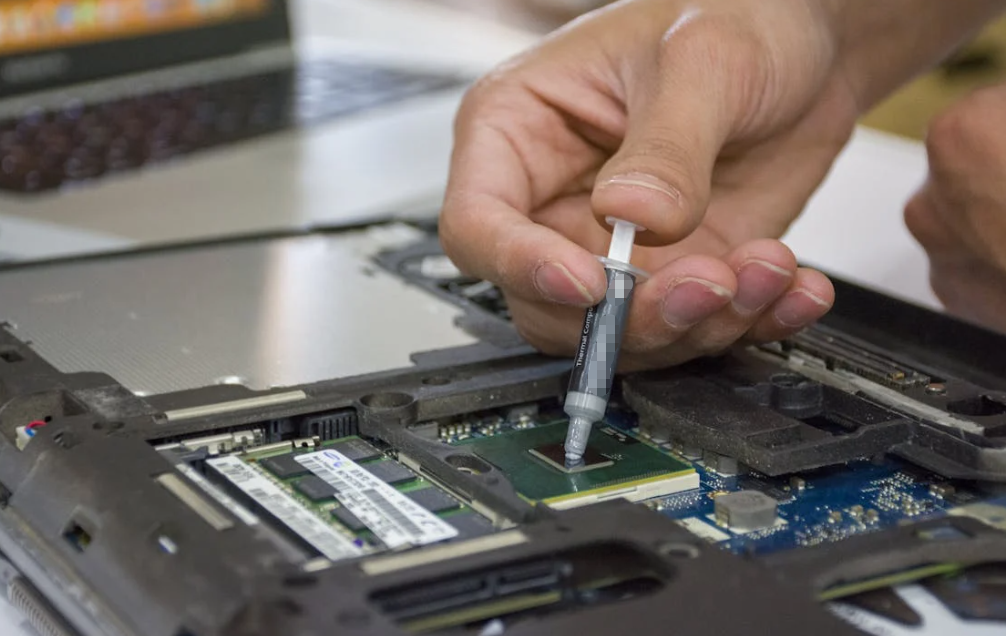
A battery pack contains many microscopic air gaps between components and cooling surfaces. Air is an extremely poor conductor of heat. Even tiny voids can dramatically reduce thermal transfer efficiency. 熱界面材料, including 熱伝導グリース, fill these gaps and create a low-resistance thermal path.
In BMS assemblies, thermal grease is commonly used between:
- MOSFETs and heat sinks
- Power modules and aluminum cooling plates
- Battery modules and cooling channels
- Sensors and metal housings
- DC-DC converters and thermal spreaders
- High-current busbars and cooling structures
Without a proper thermal interface, hotspots form quickly. Even a temperature imbalance of a few degrees can reduce lithium-ion battery lifespan over time. Research and industry data consistently show that maintaining temperature uniformity is just as important as reducing peak temperature.
Interestingly, many engineers entering EV or energy storage design from consumer electronics underestimate how aggressive vibration, thermal cycling, and environmental exposure can be inside battery packs. A thermal grease that performs perfectly on a desktop CPU may fail surprisingly fast inside an electric vehicle.
That difference matters.
What Makes Thermal Grease Different from Other TIMs?

Battery systems use several kinds of thermal interface materials:
- サーマルパッド
- つなぎ言葉
- 相変化材料
- Thermal adhesives
- Graphite sheets
- 熱伝導グリス
Each has strengths and weaknesses. Thermal grease is preferred in applications where ultra-low 熱抵抗 and thin bond lines are required.
Compared with thermal pads, grease can conform more effectively to microscopic surface irregularities. This creates better surface contact and lower interface resistance.
ただし、グリースには次のような課題もあります:
- 振動によるポンプアウトの可能性
- 時間の経過に伴う油分離
- 塗布の均一性に関する課題
- 再作業と清掃が困難
- 材料移行のリスク
そのため、BMSサーマルグリースの選定では、熱伝導率の数値だけでなく、必ず使用環境全体を考慮する必要があります。.
サーマルグリース選定時に最も重要なパラメータ

熱伝導率
これは通常、エンジニアが最初に確認する仕様です。.
熱伝導率 熱が材料内をどれだけ効率的に移動するかを示し、通常は W/m·K で表されます。.
For most battery management systems:
- 1–3 W/m·K works for low-power electronics
- 3–6 W/m·K is common in automotive-grade BMS applications
- 6–12 W/m·K is increasingly used in fast-charging or high-power systems
But there is an important nuance here.
熱伝導率が高いからといって、システム冷却性能が必ずしも劇的に向上するわけではありません。界面熱抵抗が十分に低くなると、制約要因は冷却プレートの設計、エアフロー、冷却液温度、または筐体形状へと移ることがよくあります。.
長期的には、安定した15 W/m·Kグリースのほうが実際に優れた性能を発揮する場合でも、5 W/m·Kの材料を追い求めるエンジニアがいます。.
実際には、ピーク時のラボ性能よりも、安定性が勝ることがよくあります。.
電気絶縁
Battery packs operate at increasingly high voltages. Modern EV systems commonly exceed 400V, while premium architectures are moving toward 800V systems.
つまり、熱伝導グリースには、熱を効率よく伝えるだけでなく、信頼性の高い絶縁性能も求められます。.
絶縁特性が不十分な熱伝導性グリースは、重大な電気的リスクを引き起こす可能性があります。.
主な仕様には以下が含まれます。
- 体積抵抗率
- 絶縁耐力
- 絶縁破壊電圧
- 表面絶縁抵抗
シリコーン系電気絶縁グリースは、熱性能と信頼性の高い絶縁性を両立するため、多くのBMS用途で依然として主流です。.
粘度と吐出挙動
実験室環境では、ほとんどどのグリースでも良好に見えます。.
大量生産ラインでは、話はより複雑になります。.
粘度が高すぎる放熱グリースは、吐出が安定しない場合があります。粘度が低すぎるものは、熱サイクル中や振動によって移動する可能性があります。.
バッテリーパックメーカーは、自動ディスペンスへの適合性をますます重視しています。EVの組立環境では、生産スループットが極めて重要だからです。.
Good BMS grease should offer:
- Stable rheology
- Predictable dispensing
- Minimal void formation
- Controlled spread behavior
- Repeatable bond-line thickness
This is one reason many automotive OEMs test multiple dispensing methods before final material approval.
耐ポンピング性
Pump-out is one of the least discussed — yet most damaging — thermal grease failures.
Over repeated heating and cooling cycles, grease can slowly migrate away from the interface area. Vibration accelerates the process further.
結果は?
Thermal resistance rises gradually over time.
This issue is especially severe in EV battery systems because packs experience:
- Constant vibration
- Wide thermal swings
- Mechanical expansion and contraction
- Long service lifetimes
A grease that survives 500 hours in electronics testing may not survive 10 years in an electric vehicle.
Some phase-change materials and specialized automotive greases are specifically engineered to resist pump-out behavior.
動作温度範囲
Battery systems encounter harsh environments.
Vehicles in Arizona may see pack temperatures above 60°C during charging. Nordic climates can expose materials to -40°C startup conditions.
A thermal grease must remain stable across the entire operating range without:
- 乾燥
- ひび割れ
- ハードニング
- Separating
- Losing viscosity
Automotive-grade materials commonly target ranges from -40°C to 150°C.
Lower-grade commercial greases often struggle with long-duration thermal cycling.
Material Compatibility
This is a surprisingly overlooked issue.
Certain thermal greases can interact negatively with:
- アルミニウム
- 銅
- Plastic housings
- シリコン製シール
- Battery adhesives
- コンフォーマルコーティング
Silicone oil migration is a particular concern in sensitive electronic assemblies. Some OEMs now specify silicone-free formulations specifically to reduce contamination risks.
Compatibility testing should always be part of qualification.
シリコーン系 vs 非シリコーン系サーマルグリス
This debate has become increasingly common in battery manufacturing.
シリコーン系サーマルグリス
利点:
- 優れた熱安定性
- 広い動作温度範囲
- Strong long-term elasticity
- Mature manufacturing ecosystem
- Proven automotive history
デメリット:
- Potential silicone oil migration
- Outgassing concerns
- Possible contamination risks
非シリコーン系サーマルグリース
利点:
- Reduced contamination risk
- Better compatibility in some sensitive electronics
- Preferred by certain automotive OEMs
デメリット:
- Narrower operating temperature range
- Sometimes reduced long-term flexibility
- Often higher cost
There is no universal winner.
The best choice depends on the battery architecture, assembly environment, and reliability targets.
Why Thermal Cycling Reliability Is More Important Than Peak Performance

Many datasheets highlight maximum thermal conductivity values.
But experienced engineers often care more about thermal aging curves.
なぜ?
Because BMS systems are expected to survive years of cycling.
Repeated expansion and contraction place enormous mechanical stress on thermal interfaces. Over time, lower-quality grease may:
- 分離する
- Bleed oil
- Form voids
- Lose adhesion
- 熱抵抗を増加させる
This degradation is gradual and difficult to detect early.
In real battery systems, long-term stability often matters more than chasing record conductivity numbers.
One Reddit engineering discussion summarized this challenge well: selecting TIMs is less about theoretical thermal physics and more about balancing conductivity, compression behavior, outgassing, and process compatibility together.
That observation is painfully accurate.
Should You Use Thermal Grease or Thermal Pads in Battery Packs?
This depends heavily on the interface geometry.
Thermal Grease Is Better When:
- Surface flatness is high
- Bond lines are very thin
- Maximum thermal performance is required
- Low interface resistance is critical
Thermal Pads Are Better When:
- Gaps are uneven
- Shock absorption matters
- Faster assembly is needed
- Rework simplicity is important
Many modern battery systems actually combine multiple TIM technologies within the same pack.
例えば:
- Thermal grease for power electronics
- Gap fillers for cell interfaces
- Phase-change materials for hotspot control
- Graphite sheets for thermal spreading
Hybrid thermal management is becoming increasingly common.
Common Mistakes When Selecting Thermal Grease for BMS
Choosing Only by Thermal Conductivity
This is probably the biggest mistake.
A 12 W/m·K grease that pumps out after six months is worse than a stable 5 W/m·K formulation.
調剤要件の無視
Lab testing is easy.
Mass production is hard.
Always evaluate dispensing repeatability and automation compatibility.
Forgetting Electrical Isolation
High thermal conductivity means nothing if dielectric protection fails.
Overlooking Thermal Cycling
Battery packs do not operate at steady temperatures.
Cycling durability is essential.
Skipping Compatibility Testing
Some materials can damage plastics, seals, or coatings over time.
Always validate compatibility.
Emerging Trends in BMS Thermal Interface Materials
Battery thermal management is evolving rapidly.
Several major trends are shaping next-generation thermal grease development.
高導電性材料
As charging speeds increase, heat flux rises sharply. Materials above 8 W/m·K are becoming more common in premium EV systems.
Silicone-Free Formulations
More OEMs are adopting silicone-free TIMs to minimize contamination risks.
Graphene and Advanced Fillers
Researchers are exploring graphene-enhanced TIMs for dramatically improved conductivity. Some studies show major conductivity improvements with relatively low filler loading.
Multi-Functional Materials
Future TIMs may combine:
- Thermal transfer
- 構造用接着
- 炎に対する耐性
- 電気絶縁
- Vibration damping
The line between adhesives and thermal materials is beginning to blur.
How HakTak Thermal Grease Supports Battery Thermal Management
For battery management systems, the ideal thermal grease should balance:
- 信頼性の高い熱伝導率
- 電気絶縁
- Long-term cycling durability
- Stable dispensing
- Automotive-grade reliability
HakTak focuses on thermally conductive materials designed for demanding electronics and energy applications, where stable heat transfer and long operational lifespan are essential.
In battery environments, consistency matters more than marketing claims. A material that maintains thermal performance after thousands of thermal cycles is far more valuable than one that only performs well in short-term lab conditions.
That distinction becomes increasingly important as EV charging rates continue rising worldwide.
結論
Choosing thermal grease for battery management systems is not just a thermal decision — it is a reliability decision.
The best material is rarely the one with the highest conductivity number on the datasheet. Instead, successful BMS thermal design depends on balancing conductivity, dielectric performance, viscosity stability, pump-out resistance, compatibility, manufacturability, and long-term durability.
As battery systems become more compact and power-dense, thermal interface materials will play an even larger role in safety, charging performance, and battery lifespan.
And in many cases, the difference between a stable battery platform and a problematic one comes down to a few microns of interface material engineers barely notice during early prototyping.
Until the field failures begin.
よくある質問
What thermal conductivity is recommended for BMS thermal grease?
Most BMS applications use thermal grease between 3–6 W/m·K, while high-performance EV systems may require 6–12 W/m·K.
Is silicone thermal grease safe for EV battery packs?
Yes. Silicone-based greases are widely used in automotive battery systems because of their stability and insulation properties, although some OEMs now prefer silicone-free options.
Why does thermal grease pump out over time?
Thermal cycling and vibration can gradually force grease away from the interface surface, increasing thermal resistance.
Can thermal grease replace thermal pads in battery packs?
Not always. Thermal grease works best for thin interfaces and smooth surfaces, while pads are better for uneven gaps and easier assembly.
How long does thermal grease last in a battery system?
Automotive-grade thermal grease can last many years if properly selected and applied, but lifespan depends heavily on thermal cycling, vibration, and environmental conditions.