エレクトロニクスの世界では、熱対策は後付けの検討事項ではなく、信頼性の高い設計と最適な性能を支える基盤です。産業用電力変換器を設計する場合でも、民生機器のPCBレイアウトを改善する場合でも、効果的な熱伝達を確保できるかどうかが、長期的な安定性と早期故障の分かれ目になります。熱管理用ツールキットで最も重要な材料の一つが 熱伝導パッド.
この詳細ガイドでは、サーマルパッドについて知っておくべきことをすべて解説します。サーマルパッドとは何か、どのように機能するのか、なぜ使用されるのか、主な利点と限界、他の熱インターフェース材料との比較、代表的な用途、そしてプロジェクトに適したパッドの選び方について説明します。.
1. サーマルパッド:定義と基本的な役割
A サーマルパッド は、次のような種類の 熱伝導材(TIM) — a solid, compressible sheet designed to improve heat transfer between two surfaces, typically between a heat-generating component and a heat sink or heat spreader. The primary role of a thermal pad is to fill microscopic air gaps that naturally exist between imperfect surfaces, reducing thermal resistance and improving heat conduction.
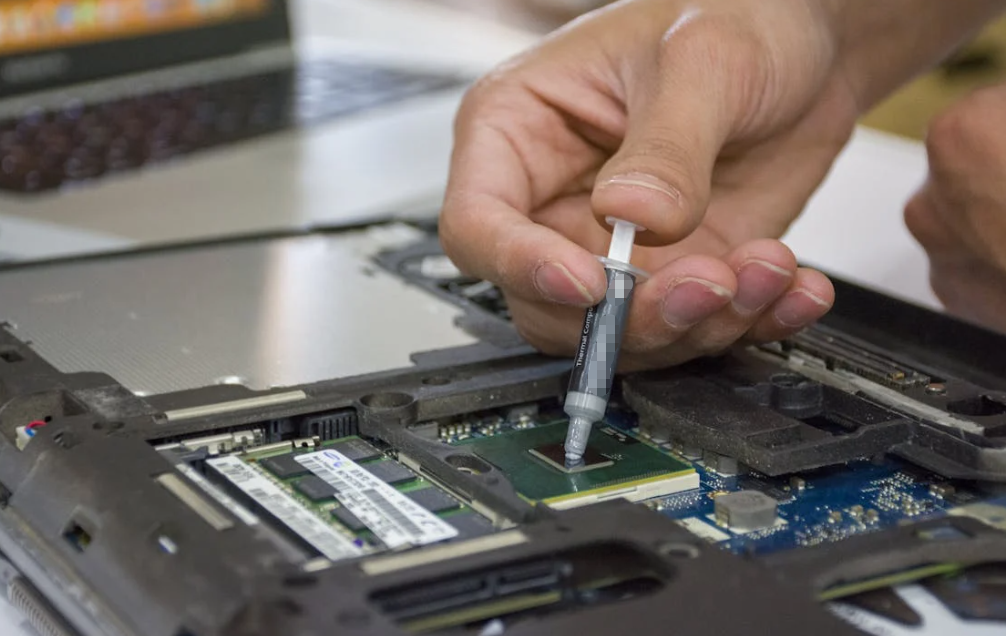
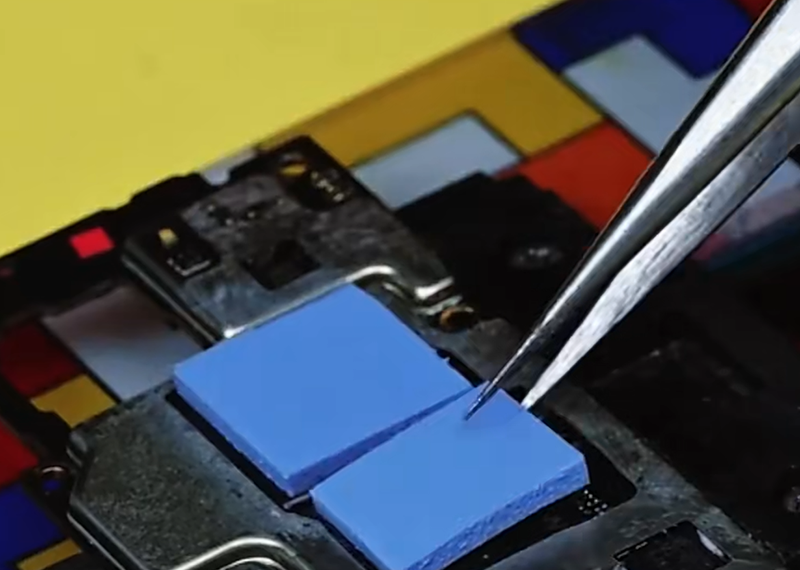
とは違って 熱伝導グリス 半流動性で手作業により塗布するグリースとは異なり、サーマルパッドはあらかじめ成形された長方形またはシート状で提供され、用途に合わせて切断し、部品上に容易に配置できます。.
2. サーマルパッドの材質
サーマルパッドは、バランスを取る材料から設計されています 熱伝導率, 電気絶縁, 、および 機械的コンプライアンス. 代表的な組成には以下が含まれます:
- Silicone elastomers — soft rubber-like base that compresses under pressure.
- セラミックフィラー — materials such as aluminum oxide (Al₂O₃) or boron nitride to boost thermal conductivity.
- Specialized polymers — sometimes infused with metallic oxides for enhanced performance.
These materials are chosen to be thermally conductive, yet most remain 電気絶縁性の, which helps prevent short circuits in sensitive electronics.
High-performance thermal pads available today can achieve thermal conductivity ratings of up to approximately 12 W/m·K in real-world applications, although typical products vary.

3. How Thermal Pads Work
At their core, thermal pads bridge the gap between a heat source and a heat sink. Although heat ideally travels through solid contact, real surfaces are never perfectly smooth — microscopic peaks, valleys, and other imperfections create tiny air pockets. Air is a poor conductor of heat, so these gaps increase thermal resistance.
サーマルパッド:
- Compress into surface irregularities when installed, replacing air with a material that conducts heat better than air.
- 低減 熱抵抗, デバイスからヒートシンクへの熱の流れをより効率的にします。.
- 冷却性能全体を向上 熱の蓄積を最小限に抑え、動作温度を低下させることで。.
一部のサーマルパッドは動作温度で軟化し、表面の凹凸にさらによく追従するプロセスは、次のように表現されることもあります phase-change behavior — though this term is specific to the pad’s softening, not full melting as in other materials.
4. Why Thermal Pads Matter
For designers and engineers, thermal pads offer key value:
- ギャップ Filling Between Uneven Surfaces: When components have irregular surfaces or significant height differences, pads can fill large gaps that pastes can’t, making them ideal for multi-component assemblies or large MOSFETs, memory chips, power supplies, or LED modules.
- Simplified Installation: Unlike thermal pastes, pads can be placed without special tools or messy dispersion.
- 電気絶縁: Most pads insulate as they transfer heat, protecting circuits from unintended electrical contact.
- Reproducibility: Pads can be precisely cut to shape and thickness, delivering consistent thermal performance across mass production.
These strengths make thermal pads a natural choice for many OEM and industrial thermal management scenarios. They are especially valuable where ease of assembly, reliability, and safety are priorities.
5. Thermal Pads vs. Thermal Paste — Key Differences
Thermal pads often get compared to 熱伝導グリス because both are TIMs designed to improve heat transfer. However, their use cases and behaviors differ significantly:
Form Factor and Application
- サーマルパッド Pre-formed solid sheets. Easy to install — just peel and place.
- 熱伝導グリス Semi-fluid and must be applied carefully to thinly cover components.
熱性能
- Thermal paste generally has lower effective 熱抵抗 because it forms a very thin layer that fills microscopic imperfections.
- Thermal pads, even with equal or higher conductivity on paper, are thicker and therefore often exhibit higher overall 熱抵抗 in practical use.
使いやすさ
- Thermal pads are cleaner, less messy, and easier for non-specialist assembly.
- Thermal paste can be messy and requires skillful application.
耐久性
- Pads can degrade and become brittle under repeated heat cycles.
- Quality pastes can remain stable longer within certain temperature ranges.
Suitability
- Pads excel in large gaps or uneven surfaces.
- Pastes are better where maximum heat conduction is needed in tightly coupled interfaces like high-performance CPUs and GPUs.
要するに: pads offer convenience and volume gap filling; pastes deliver performance where surfaces closely match.
6. Common Applications of Thermal Pads
Thermal pads are ubiquitous in many industries and product types where heat management matters:
Electronics and PCBs
Thermal pads are often used on printed circuit boards (PCBs) to transfer heat from power components — like MOSFETs, VRAM modules, or LED drivers — to heat sinks, metal shields, or chassis surfaces.
Computing and Servers
In laptop and embedded designs, pads help cool chips and components with irregular interfaces, or where disassembly may be occasional rather than continuous.
LED照明
Pads can conduct heat away from arrays of LEDs to aluminum housings, preventing premature lumen depreciation and extending life.
パワーエレクトロニクス
In high-power converters, power supplies, and industrial drives, pads ensure efficient thermal bridging between semiconductor packages and heat dissipation systems.
Automotive and EV Electronics
Thermal pads cushion vibration, support heat dissipation from power modules, and contribute to reliability under harsh conditions.
7. Choosing the Right Thermal Pad
Selecting the appropriate thermal pad depends on several factors:
熱伝導率
Higher conductivity pads (measured in W/m·K) transfer heat more efficiently. Typical values range from 1 W/m·K for basic pads to 10+ W/m·K for high-performance materials.
厚さ
Pad thickness must match the gap between the heat source and the heat sink. Pads are available from 0.2 mm up to 20 mm or more for large gaps.
電気的特性
Ensure the pad’s dielectric strength meets your application’s requirements, especially in high-voltage environments.
Mechanical Compliance
Soft, compressible pads are better at compensating for uneven surfaces, while firmer pads are suited for planned, consistent gaps.
Environmental Stability
Consider operational temperature range and thermal cycling durability for long-life applications.
Ease of Assembly
If automated or quick assembly is needed, pads streamline production.
Partnering with a supplier like ハクタック, which offers a range of thermally conductive materials, enables you to match pad selection to your specific performance and manufacturing requirements.
8. Installation Best Practices
Even the best thermal pad can underperform if installed improperly. Follow these tips:
- Clean Surfaces: Remove dust, oils, and oxidation from both mating surfaces before application.
- Correct Thickness: Use a thickness gauge or measure gap closely to choose the right pad.
- Avoid Over-Compression: Compressing pads too much can reduce effectiveness; designed compression ranges matter.
- Trim Precisely: Cut pads to fit, respecting component outlines to avoid interference or shorts.
- Verify Contact: After mounting, ensure consistent contact across the pad without air pockets.
Proper installation helps realize the pad’s thermal potential and preserves longevity.
9. Advantages and Limitations
利点
- Simple and clean application with no mess.
- Effective at filling large or irregular gaps.
- Provides electrical insulation alongside thermal conduction.
- Ideal for automated assembly and consistent mass production.
制限
- Generally lower heat transfer efficiency compared to thin thermal pastes.
- Performance can degrade if repeatedly thermally cycled.
- Must be replaced if adhesion or compressibility decreases.
10. Future Trends in Thermal Pad Technology
As electronics continue to shrink and power densities rise, thermal interface materials evolve too:
- Higher conductivity composites with graphite, boron nitride, or nano-structured fillers.
- 相変化材料 that adjust physical properties at operating temperature for optimized contact.
- Material innovations aimed at combining electrical insulation with unprecedented thermal performance.
Suppliers at the cutting edge — like HakTak — are continuously developing tailored thermal pads for emerging applications, from 5G infrastructure to autonomous vehicle electronics.
11. 結論
Thermal pads are a cornerstone thermal interface material in modern electronic design. They offer practical, reliable heat transfer solutions where ease of use, gap compensation, and electrical insulation matter. While they may not always match the thermal performance of specialized pastes in every scenario, their role in cooling, reliability, and manufacturability is irreplaceable — especially in complex assemblies or industrial environments.
Understanding what thermal pads are, how they function, and how they compare with alternatives empowers engineers and makers to choose the right solution for their unique thermal challenges. With correct selection and installation, thermal pads significantly improve heat management, enhancing both performance and product lifespan.
12. よくある質問 (FAQ)
What is a thermal pad used for?
A thermal pad fills gaps between heat-generating components and heat sinks to improve heat transfer and prevent overheating.
サーマルパッドはサーマルペーストよりも優れていますか?
Thermal pads are easier to install and better for larger gaps, but thermal paste usually conducts heat more efficiently in tightly coupled interfaces.
How thick are thermal pads?
Thermal pads are available in thicknesses from around 0.2 mm up to about 20 mm to accommodate different gap sizes.
Can thermal pads be reused?
In some cases pads can be gently reused if undamaged, but performance may decline after removal and reinstallation.
What materials are thermal pads made from?
They are typically made from silicone or polymer bases filled with thermally conductive particles like ceramic or metal oxides.