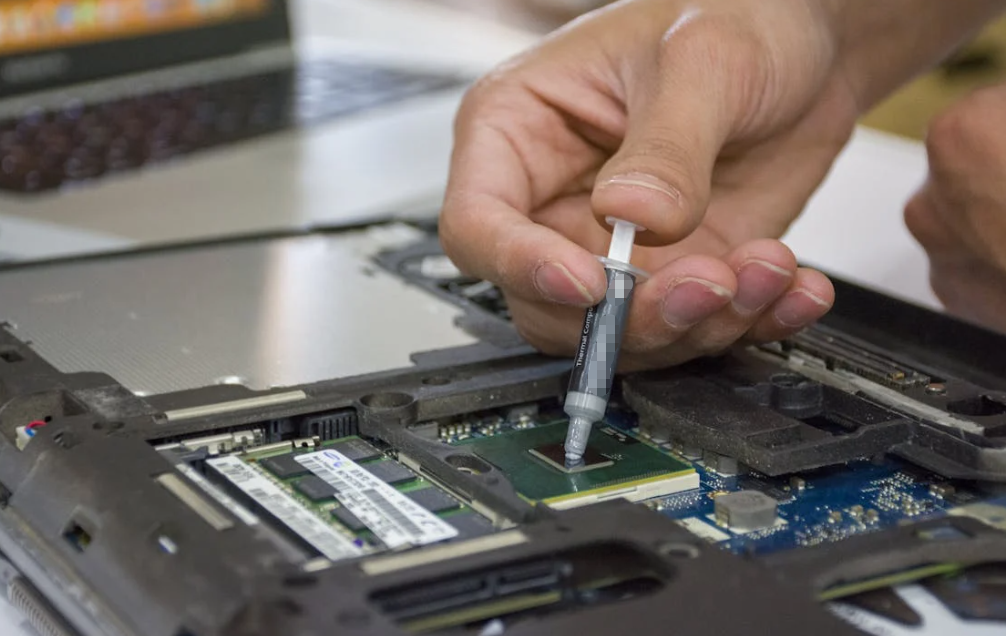
Yes, thermal pads can be physically stacked. But two thin pads are not automatically equivalent to one pad of the same total thickness.

Every extra layer creates another contact interface. That middle boundary can add thermal resistance, trap air, collect contamination, slide under shear, or split compression unevenly. A short temperature test may look fine. Long-term reliability can still be uncertain.
For a temporary, low-risk repair, a carefully assembled stack may work after inspection and temperature testing. For mass production, automotive electronics, medical hardware, aerospace systems, high-voltage power modules, or other reliability-sensitive equipment, one qualified pad of the correct thickness is normally the better answer.
In plain English: stacking is possible. It is rarely the first-choice engineering solution.
Why Engineers Usually Avoid Stacking Thermal Pads
A thermal pad sits between a heat source and a cooling surface. Its job is to replace insulating air, follow surface roughness, and create a stable path for heat.
With one pad, the heat path looks like this: heat source -> thermal pad -> heat sink
There are two main contact interfaces:
- Heat source to pad
- Pad to heat sink
With two pads, the path becomes: heat source -> pad 1 -> pad 2 -> heat sink
Now there are three contacts. The new pad-to-pad boundary is the concern.
The two layers may look flat to the eye. At a microscopic level, they still contain surface texture, filler particles, tack variation, dust, and tiny air pockets. Pressure can reduce those voids, but it does not make the interface disappear.
A Stack Can Work Without Being the Best Design
This distinction matters:
- Can it transfer heat? Often, yes.
- Có it pass a short bench test? Possibly.
- Will every production unit behave the same way? Less certain.
- Will it remain stable after years of cycling and vibration? That requires evidence.
Think of two mattresses stacked to reach the height of one thick mattress. The height can match. The way the stack shifts, compresses, and supports load does not.
That is more or less what happens here, just with heat involved.
How an Extra Interface Changes Thermal Resistance
Thermal resistance is the opposition to heat flow. Lower resistance generally means heat can move through the interface with a smaller temperature rise.
For a simplified single-pad interface: Rsingle = Rc,hot + t/kA + Rc,cold
Ở đâu:
- Rc,hot is contact resistance at the hot surface.
- t is the compressed pad thickness.
- k is through-plane thermal conductivity.
- A is effective contact area.
- Rc,cold is contact resistance at the cooling surface.
For two stacked pads: Rstack = Rc,hot + t1/k1A + Rc,1-2 + t2/k2A + Rc,cold
The new term is Rc,1-2, the contact resistance between the two pads.
Does Stacking Double Thermal Resistance?
No. That claim is too simple.
If two pads use the same material and their combined compressed thickness equals one thicker pad, the bulk conduction part can be similar. The problem is the added middle interface and the less predictable mechanical behavior.
The size of the penalty depends on:
- Áp suất tiếp xúc
- Pad modulus
- Độ nhám bề mặt
- Độ dính bề mặt
- Trapped air
- Sự ô nhiễm
- Phân phối chất làm đầy
- Nhiệt độ
- Compression history
An open-access study of thermal-pad contact resistance reported that contact resistance represented 2.2% to 45.85% of total thermal resistance across the cases modeled in that work. That range should not be copied directly into a product design. It does show why contact conditions cannot be ignored.
Thermal Conductivity Is Not the Whole Answer
A W/mK value describes bulk material behavior. It does not include every real interface effect unless the reported method and conditions say so.
When comparing one pad with a stack, look at:
- Final compressed thickness
- Trở kháng nhiệt
- Áp suất tiếp xúc
- Number of interfaces
- Surface conformity
- Device temperature
- Sự ổn định lâu dài
HAKTAK’s explanation of thermal conductivity versus thermal impedance provides more context for this difference.
Are Two 0.5 mm Thermal Pads Equal to One 1.0 mm Pad?

Not necessarily.
Their nominal thickness adds up to 1.0 mm. That arithmetic is correct. The installed interface may still behave differently.
Nominal Thickness Is Only the Starting Point
Each sheet has its own manufacturing tolerance. Two pads can stack those tolerances in the same direction.
Ví dụ:
- Pad 1 is nominally 0.5 mm but measures 0.54 mm.
- Pad 2 is nominally 0.5 mm but measures 0.54 mm.
- The total supplied stack is 1.08 mm, not 1.00 mm.
That difference may sound small. In a tightly clamped GPU cooler or thin laptop assembly, it can change contact with another component.
Compression May Not Split Equally
Assume a 1.0 mm stack must fit into a 0.85 mm gap. Total nominal compression is 15%.
If both layers are identical and loaded evenly, each may compress by roughly the same proportion. If one layer is softer, it can absorb most of the movement.
| Construction | Nominal Total Thickness | Installed Gap | Main Concern |
| One 1.0 mm pad | 1.0 mm | 0.85 mm | Check whether 15% compression is within supplier guidance |
| Two identical 0.5 mm pads | 1.0 mm | 0.85 mm | Added middle interface and alignment |
| Soft 0.5 mm plus hard 0.5 mm | 1.0 mm | 0.85 mm | Soft layer may take most compression |
| Two adhesive-backed 0.5 mm pads | More than 1.0 mm including adhesive | 0.85 mm | Added PSA resistance and higher force |
Selecting material by simple addition misses tolerance, adhesive, hardness, and contact.
For a stronger method, measure the real gap and follow HAKTAK’s guide to selecting thermal pad thickness.
Compression Becomes Harder to Predict in a Pad Stack
Thermal pads need compression to conform to surfaces. Too little compression leaves air gaps. Too much can overload the assembly.
The basic calculation is:
Compression (%) = (supplied thickness – installed thickness) / supplied thickness x 100
Run it at the minimum, nominal, and maximum gap.
Two Layers May Not Share the Load
Compression depends on the stress-strain behavior of each pad. Shore hardness gives a useful clue, but it does not show the full force-deflection curve.
When different materials are stacked:
- The softer layer may compress heavily.
- The harder layer may remain nearly unchanged.
- Contact pressure may not be uniform.
- The middle interface can curve or wrinkle.
- One layer may extrude earlier.
Even pads with the same printed hardness can behave differently because of filler loading, reinforcement, surface films, and test methods.
HAKTAK’s soft versus hard thermal pad comparison explains why hardness and available assembly force must be considered together.
Total Area Changes the Force Requirement
The relationship is simple: Force = pressure x area
A large pad needs more total force to reach the same average pressure. Stacking does not create extra clamp force. It asks the existing screws, clips, springs, or housing to compress a more complex interface.
If the assembly is already close to its force limit, adding another layer can:
- Bend the PCB
- Tilt the heat sink
- Stress solder joints
- Load fragile packages
- Distort a thin cover
- Reduce contact elsewhere
HAKTAK’s guide to tỷ lệ nén tản nhiệt shows why the compression window must include mechanical safety.
Trapped Air, Misalignment, and Contamination Between Pads

The middle interface must be as clean and complete as the two outer surfaces. In repair work, that is harder than it sounds.
Air Can Remain Between the Layers
Air may enter the middle interface because of:
- Surface texture
- Curled corners
- Uneven placement
- Dust or fibers
- Fingerprints
- A pad that was previously compressed
- Wrinkles created during liner removal
Pressing the stack harder may reduce some voids. It may also create too much force elsewhere.
Misalignment Reduces Effective Area
If two 20 x 20 mm pads are offset by 2 mm, the full overlapping area becomes smaller. The exposed edge may also interfere with a connector, component, or electrical-clearance region.
Cutouts and holes make alignment more sensitive. A screw opening that looks fine in the first layer can partly close when the second pad shifts.
Should Thermal Paste Be Added Between Two Pads?
Usually, no.
Thermal paste is designed to fill microscopic surface roughness in a thin, clamped interface. It is not meant to become a structural spacer between thick gap pads.
Adding paste between pads introduces:
- Another material
- Another application thickness
- More opportunity for contamination
- Slip between layers
- Mess during rework
- Possible pump-out or migration
- Poor production repeatability
A controlled manufacturer-designed coating is different. It has a defined formulation, process, thickness, and qualification. A repair-bench smear does not.
Mechanical Reliability Risks Beyond Temperature
A stacked pad may pass an initial temperature check and still fail mechanically later.
Shear and Sliding
Components, PCBs, aluminum housings, and copper cold plates expand at different rates. Heating and cooling create small movements across the interface.
With one pad, shear occurs mainly at the external contacts and inside the compliant material. With two pads, the middle boundary can become another slip plane.
Vibration and shock can make this worse in:
- Vehicles
- Industrial machinery
- Rail equipment
- Outdoor telecom systems
- Portable electronics
- Servers during transport
Delamination and Edge Extrusion
Soft layers may squeeze outward at different rates. One pad can move while the other stays attached to the heat sink.
Possible evidence includes:
- Offset edges
- A visible step between layers
- Wrinkling
- Torn corners
- Reduced overlap
- Oil or residue at the middle interface
Compression Set and Unequal Recovery
Compression set is the permanent deformation that remains after a pad has been compressed.
Two layers may age differently. After long heat exposure:
- One layer may recover.
- The other may remain flattened.
- Contact pressure can shift.
- The middle boundary may open locally.
A short startup test does not reveal this behavior.
Electrical Insulation Can Also Change
Stacking two electrically insulating pads may increase nominal insulation thickness. It does not automatically create a safer dielectric system.
Check:
- Final compressed thickness
- Aligned edges
- Puncture over sharp features
- Contamination between layers
- Adhesive construction
- Creepage and clearance
- Breakdown performance after aging
Graphite sheets require extra care because graphite can be electrically conductive. Combining graphite and silicone materials should be treated as an engineered laminate, not casual stacking.
Can You Stack Different Types or Brands of Thermal Pads?
It is riskier than stacking two pieces of the same product.
| Stack Combination | Main Concern | Default Recommendation |
| Same product and lot | Added interface, air, and alignment | Temporary or prototype use only after checks |
| Same product, different thickness | Tolerance and compression split | Prefer one correct thickness |
| Different brands | Unknown modulus, tack, and filler interaction | Avoid without full testing |
| Soft pad plus hard pad | Soft layer takes most strain | Avoid as an improvised design |
| Two adhesive-backed pads | Extra adhesive resistance and difficult rework | Use only if supplier-qualified |
| Silicone plus silicone-free pad | Mechanical mismatch and contamination concern | Avoid unless intentionally engineered |
| Silicone pad plus graphite sheet | Directional heat flow and electrical risk | Use a qualified laminate construction |
| Phase-change film plus gap pad | Activation and layer movement | Validate the complete system |
The color of two pads does not prove compatibility. Neither does the same W/mK rating.
Material identity should include:
- Product number
- Độ dày
- Hardness or modulus
- Force-deflection data
- Độ dính bề mặt
- Adhesive and reinforcement
- Nhiệt độ hoạt động
- Dielectric properties
- Độ biến dạng vĩnh viễn sau nén
When Stacking Thermal Pads Might Be Acceptable
There are situations where a stack may be tolerated. The important word is “may.”
Temporary Low-Risk Repair
A temporary stack can be considered when:
- The correct pad is not immediately available.
- The equipment is low risk.
- The exact gap is reasonably known.
- Both pads are clean and undamaged.
- Temperature can be monitored.
- The interface can be reopened and inspected.
- The stack will later be replaced.
This is a workaround, not a permanent material specification.
Prototype or Early Engineering Evaluation
Stacked sheets can help estimate:
- Approximate gap
- Required thickness
- Heat sink fit
- Compression sensitivity
- Whether a softer material is needed
Mark the prototype clearly. Temporary fixes have an odd habit of becoming production designs when nobody writes down that they were temporary.
Supplier-Designed Laminates
Some thermal materials contain several layers by design:
- Fiberglass reinforcement
- PET or PEN film
- Pressure-sensitive adhesive
- Graphite heat spreader
- Electrical insulation film
- Protective surface layer
These are not improvised stacks. The manufacturer controls lamination, thickness, interfaces, and testing. The final construction is supplied as one product.
When You Should Not Stack Thermal Pads
Stacking should be rejected by default when failure consequences or reliability requirements are high.
| Situation | Decision | Reason |
| Bench prototype with monitoring | Conditional | Useful for learning, not lifetime proof |
| Temporary low-risk repair | Conditional | Replace when the correct material is available |
| Consumer GPU with a shared cold plate | High caution | Stack height can reduce GPU die contact |
| High-volume production | Usually reject | Repeatability and traceability are weak |
| Automotive, medical, or aerospace hardware | Reject unless formally qualified | Environmental and reliability requirements |
| High-voltage power electronics | Reject unless qualified | Dielectric and mechanical risk |
| Strong vibration environment | Reject unless qualified | Slip and layer movement |
| Supplier-designed laminate | Potentially acceptable | Construction is controlled and tested as one product |
Do not use unknown scraps, previously compressed pads, or mixed materials in a critical stack. The few dollars saved are not worth losing the interface history.
Stacking Thermal Pads in GPUs and VRAM
GPU repair is where this question appears most often.
A graphics-card cold plate may contact:
- GPU die
- VRAM packages
- MOSFET
- Chokes
- Backplate regions
These interfaces share the same screws and cooler position.
If stacked VRAM pads are too thick or too hard, they can hold the cold plate above the GPU die. Memory temperature may improve while GPU core and hot-spot temperatures rise sharply.
Before approving a stack:
- Confirm the original pad thickness and material behavior.
- Remove every protective liner.
- Inspect the GPU paste imprint after a controlled test fit.
- Check pad compression marks.
- Tighten the cooler in the specified sequence.
- Monitor core, hot-spot, memory, and fan behavior.
Do not judge success from VRAM temperature alone.
Can You Stack Thermal Pads on an SSD?
It may work in a low-risk setup, but the same concerns remain.
M.2 SSDs can have different heights at the:
- Controller
- NAND packages
- DRAM
- Labels
- Rear-side components
Some heat sinks use a small clip or thin cover. Clamp force can be limited. A thick stack may bend the SSD PCB or prevent the enclosure from closing correctly.
For double-sided drives, check both sides. Solving the top gap while overloading the bottom is not much of a win.
Use the thinnest single material that maintains contact across the intended components without bending the board.
Stacking Risks in Power Electronics, Batteries, LEDs, and Servers

MOSFETs and IGBT Modules
These assemblies often need electrical insulation as well as heat transfer. Stacking adds uncertainty to compressed dielectric thickness, puncture resistance, torque, and power-cycling behavior.
EV Batteries and BMS Electronics
Large pad areas can require substantial force. Battery assemblies also face vibration, coolant exposure, long service life, and strict traceability. Improvised stacks are a poor default.
LED Modules
Uneven compression can create local hot spots under an LED board. Long heat exposure may also change the two layers differently.
AI Servers and High-Power Accelerators
Server hardware places a high value on repeatable assembly and uptime. A pad stack that saves sourcing time can add service risk across many expensive units.
Telecom and Industrial Controls
Remote equipment may run continuously for years. Qualification should include thermal cycling, vibration where relevant, and post-aging thermal checks.
Better Alternatives to Stacking Thermal Pads
Use One Pad in the Correct Thickness
This is normally the cleanest answer.
One pad provides:
- Fewer interfaces
- Simpler compression behavior
- Better traceability
- Lắp ráp dễ dàng hơn
- Cleaner rework
- More reliable inspection
For production programs, a custom thermal pad design can define thickness, hardness, tack, shape, liner, packaging, and validation together. HAKTAK also supports tấm đệm tản nhiệt silicone in sheet, roll, and custom die-cut formats.
Use Thermal Putty for Unusual or Variable Gaps
Thermal putty is more conformable than a fixed sheet. It can suit:
- Several component heights
- Các bề mặt gồ ghề
- Hard-to-measure gaps
- Low available pressure
- Early design validation
The tradeoff is process control. Applied amount, placement, residue, and movement still need attention. HAKTAK’s guide to thermal putty versus thermal pads explains when each format fits.
Use a Dispensable Gap Filler
A thermal conductive gap filler can cover complex geometry and wide tolerance at low assembly stress.
It requires control of:
- Mix ratio for two-part systems
- Dispensed volume
- Bead shape
- Voids
- Cure
- Sửa lại
- Production equipment
Again, there is no magic material. There is only a better match for the actual interface.
Correct the Mechanical Stack
Sometimes the pad is being asked to repair a mechanical problem.
Better options may include:
- Machining the heat sink
- Adding a controlled metal spacer
- Changing spring or fastener design
- Improving housing flatness
- Separating components with different height ranges
- Reducing the nominal gap
If the design always needs three pads to reach the heat sink, the heat sink may be the part that needs attention.
How to Validate Stacked Thermal Pads If Stacking Is Unavoidable
If a stack must be used, treat it as a new thermal interface construction.
Step 1: Identify Both Materials
Hồ sơ:
- Manufacturer and product code
- Lot number
- Nominal thickness and tolerance
- Độ cứng
- Độ dẫn nhiệt
- Thermal impedance conditions
- Adhesive or reinforcement
- Nhiệt độ hoạt động
- Dielectric properties
Step 2: Measure the Real Gap
Define minimum, nominal, and maximum gap. Include component, solder, PCB, housing, heat sink, and fastener tolerances.
Step 3: Calculate Compression and Force
Calculate total nominal compression, then review how the individual layers may share strain.
If force-deflection data are unavailable, the design has a major unknown. A hand squeeze is not a substitute.
Step 4: Control the Middle Interface
Use:
- Clean, unused pads
- Intact liners until assembly
- Aligned edges and cutouts
- No wrinkles
- No unapproved paste
- A documented placement method
Step 5: Compare Against a One-Piece Control
Measure:
- Component temperature
- Hot-spot temperature
- Thermal impedance where possible
- Assembly force
- Final thickness
- Biến động giữa các đơn vị
A practical NEDC stacking experiment found an additional thermal penalty but did not find it statistically significant in that particular test. The authors also noted that reliability testing was not included. That is exactly why one result should not become a universal rule.
Step 6: Run Reliability Tests
Depending on the product, include:
- Heat aging
- Chu kỳ nhiệt
- Tắt và bật lại nguồn
- Rung động
- Sốc cơ học
- Độ biến dạng vĩnh viễn sau nén
- Độ ẩm
- Tiếp xúc với chất lỏng
- Dielectric testing
Inspect alignment and the middle interface after testing.
Step 7: Define Acceptance Criteria
Set limits before testing:
- Maximum temperature rise
- Maximum unit variation
- Minimum contact area
- Allowed movement
- Final compressed thickness
- Maximum force or PCB deflection
- Dielectric withstand
- Post-aging thermal change
Without acceptance limits, testing becomes a collection of interesting numbers.
Thermal Pad Stacking Standards and Test Methods
No standard gives a universal statement that all stacked thermal pads are safe.
ASTM D5470 for Thermal Impedance
ASTM D5470-17(2024) covers steady-state thermal impedance and apparent thermal conductivity for thermally conductive electrical insulation materials.
For stacking, test the complete construction. Testing each pad separately does not capture the middle interface.
The method uses defined conditions. The measured value cannot be copied directly into every real product without considering pressure, thickness, area, and heat flow.
Compression, Hardness, and Compression Set
Useful methods can include:
- ASTM D575 for compression-deflection behavior
- ASTM D2240 for durometer hardness
- ASTM D395 for compression set
These tests describe different properties. Shore hardness alone does not predict total assembly force.
Độ tin cậy môi trường
IEC 60068 methods can support temperature change, vibration, shock, and damp-heat testing.
The thermal interface should be checked after exposure. A pad that remains physically present may still have shifted or increased in thermal resistance.
A Practical Thermal Pad Stacking Checklist
Before stacking, ask:
- Is one pad in the correct thickness available?
- Has the real gap been measured?
- Are minimum, nominal, and maximum tolerances known?
- Are both pads the same identified material?
- Is the middle interface clean and fully aligned?
- Does the assembly have enough force without damage?
- Could the stack reduce contact at another component?
- Is electrical insulation required?
- Will the product see vibration or thermal cycling?
- Is this temporary, or has the stack been formally qualified?
If several answers are unknown, stop and solve the interface rather than adding another sheet.
Kết luận
Thermal pads can be stacked, but physical possibility is not engineering equivalence.
Two 0.5 mm pads may have the same nominal thickness as one 1.0 mm pad. They still add a middle contact interface. That boundary can introduce thermal resistance, trapped air, contamination, misalignment, unequal compression, sliding, and long-term reliability risk.
A temporary stack may be acceptable in a low-risk repair when the gap is understood and temperatures can be monitored. For production or high-reliability electronics, use one pad of the correct thickness, a qualified laminated material, thermal putty, a dispensable gap filler, or a corrected mechanical design.
If stacking cannot be avoided, test the complete stack under realistic pressure. Then repeat the thermal, mechanical, and electrical checks after aging and environmental exposure.
Short version? One correct pad is usually better than two almost-correct ones.
Các câu hỏi thường gặp
Can You Stack Thermal Pads?
Yes, thermal pads can be stacked physically. It is normally better to use one pad of the correct thickness because stacking adds another contact interface and makes compression, alignment, and long-term behavior less predictable.
Are Two 0.5 mm Thermal Pads Equal to One 1.0 mm Pad?
Their nominal thickness is equal, but their installed behavior may not be. Two pads add a middle interface and combine two thickness tolerances. They may also compress unevenly, especially when the materials have different hardness.
Does Stacking Thermal Pads Increase Thermal Resistance?
Usually, it adds some resistance because heat must cross an additional pad-to-pad interface. The size of the increase depends on pressure, material, surface condition, trapped air, and total compressed thickness. It does not automatically double resistance.
Can Thermal Paste Be Applied Between Two Thermal Pads?
It is generally not recommended. Paste adds another uncontrolled material layer and can cause slipping, mess, migration, or inconsistent thickness. Use paste between pads only as part of a supplier-approved and tested construction.
Can Thermal Pads from Different Brands Be Stacked?
They can be placed together, but the result is difficult to predict. Different brands may use different hardness, modulus, fillers, tack, reinforcement, and thickness tolerance. Avoid mixed-brand stacks unless the complete construction is tested.
Can Thermal Pads Be Stacked on GPU VRAM?
A temporary stack may work, but it can also lift the shared cold plate away from the GPU die. Check the original pad specification, GPU paste imprint, pad compression marks, screw sequence, memory temperature, GPU core temperature, and hot-spot temperature.
Can Thermal Pads Be Stacked on an SSD?
It is possible, but excessive thickness can bend the SSD PCB or overload a light heat-sink clip. Check controller and NAND heights, both sides of the drive, and the final board shape. One correctly sized soft pad is preferable.
How Do You Measure the Correct Thermal Pad Thickness?
Measure the assembled minimum, nominal, and maximum gap rather than only the CAD dimension. Consider component height, solder, PCB warpage, housing flatness, heat sink tolerance, and screw load. Then select a pad within its recommended compression range.
What Should You Use When the Exact Pad Thickness Is Unavailable?
The best options are a custom-thickness pad, a suitable thermal putty, a dispensable gap filler, or a mechanical spacer or heat-sink change. The choice depends on gap variation, pressure, cleanliness, electrical insulation, and production needs.
Is Stacking Thermal Pads Acceptable for a Temporary Repair?
It may be acceptable for low-risk temporary use when both pads are clean, the gap is known, contact is confirmed, and temperatures can be monitored. Replace the stack with the correct qualified material when available.