
You need electrically insulating thermal pads when a heat-generating electronic component must transfer heat to a metal heat sink, housing, chassis, or cold plate without creating an electrical path. They are especially important in power electronics, EV inverters, MOSFET and IGBT modules, LED drivers, power supplies, battery management systems, and any assembly where heat transfer and electrical isolation are both required.

In simple terms: use an electrically insulating thermal pad when the cooling surface may be conductive, but the component or circuit must remain electrically isolated.
The best insulating thermal pad is not chosen only by thermal conductivity. Engineers must also evaluate dielectric strength, breakdown voltage, volume resistivity, final compressed thickness, thermal impedance, compression force, gap tolerance, flammability, temperature range, and long-term reliability. A pad must keep the device cool and electrically safe through assembly, aging, vibration, and thermal cycling.
What Is an Electrically Insulating Thermal Pad?
An electrically insulating thermal pad is a thermal interface material that transfers heat while resisting electrical current. It is placed between a heat source and a cooling surface to fill air gaps and reduce thermal resistance, while also preventing electrical conduction between the two sides.
The heat source may be:
- MOSFET
- IGBT
- Power module
- LED board
- Battery management component
- Telecom power device
- Industrial controller
- DC-DC converter
- AC-DC power supply
- Automotive electronics module
The cooling surface may be:
- Aluminum heat sink
- Metal housing
- Chassis
- Cold plate
- Heat spreader
- Enclosure wall
In many products, the heat sink or housing is conductive. If a component or circuit node contacts that metal directly, it can cause short circuits, leakage current, electrical shock risk, or system failure. An insulating thermal pad creates a thermal path without creating an electrical path.
Why Electrical Insulation Matters in Thermal Design
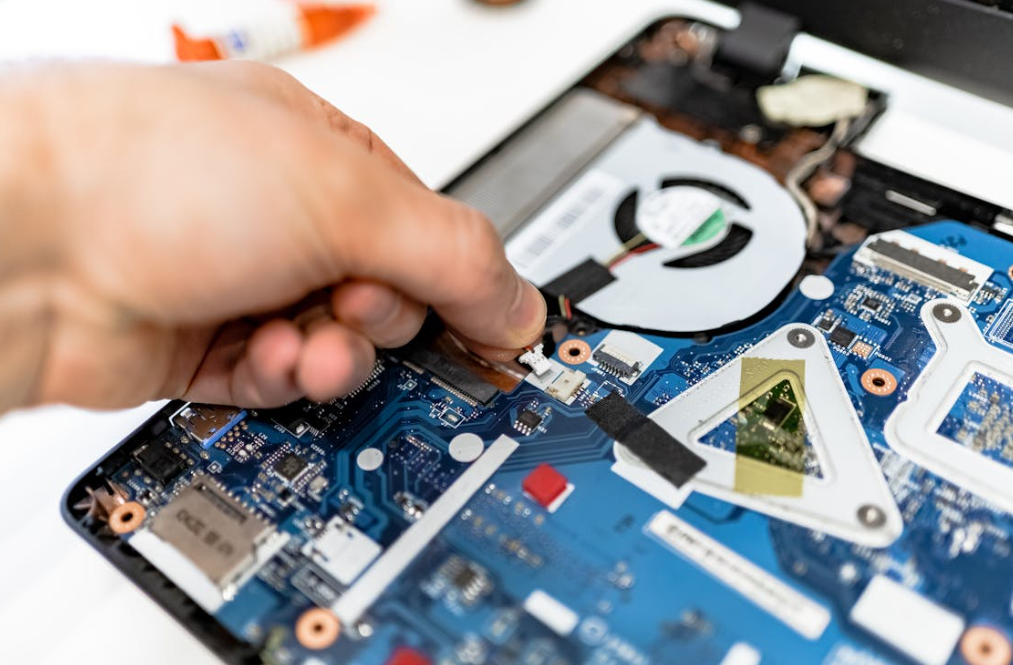
Thermal design and electrical design are often connected. Engineers may focus on heat transfer first, but power electronics also require safe electrical separation.
An electrically conductive thermal interface can be dangerous when:
- The heat sink is grounded
- The component tab is electrically live
- The housing is metal
- Multiple components share one heat sink
- Creepage and clearance are limited
- High voltage is present
- Safety certification is required
In these cases, a thermal material must do two jobs at once:
- Move heat efficiently away from the component.
- Prevent current from passing through the interface.
This is why electrically insulating thermal pads are widely used in power electronics and high-reliability systems.
For general TIM selection, HakTak’s product hub draft Thermal Interface Materials is designed to connect material choices such as pads, grease, PCM, putty, and custom materials.
When Do You Need an Electrically Insulating Thermal Pad?
You need an electrically insulating thermal pad when heat must pass into a conductive cooling structure while the electrical circuit must remain isolated.
When the Heat Sink Is Conductive
Most heat sinks are aluminum or copper. Both are electrically conductive. If the component surface is electrically active, direct metal contact is unsafe.
An insulating thermal pad allows the heat sink to remove heat while preventing current flow.
This is common in:
- MOSFET heat sinks
- IGBT modules
- Power supply heat sinks
- LED driver housings
- Motor drive electronics
- EV inverter cold plates
When Multiple Components Share One Heat Sink
In many assemblies, several power devices are mounted to the same heat sink. Those devices may operate at different electrical potentials.
Without insulation, the heat sink can create unintended electrical connections between components. An insulating pad helps isolate each device while allowing heat to move into the shared cooling surface.
When the Housing Is Part of the Thermal Path
Many compact electronics use the metal housing as the heat sink. This is common in telecom devices, automotive control units, LED lighting, and industrial electronics.
If the housing can be touched, grounded, or connected to other system structures, electrical isolation becomes important.
When High Voltage or Safety Certification Is Involved
High-voltage devices need materials that can withstand electrical stress. A thermal pad must provide adequate dielectric strength and breakdown voltage for the design.
This is especially important in:
- EV systems
- Inverters
- Power supplies
- Battery chargers
- Industrial drives
- Medical electronics
- Aerospace electronics
When Electrical Noise or Leakage Must Be Controlled
Even if a short circuit is unlikely, leakage current or capacitive coupling can still affect sensitive electronics. Insulating materials help maintain electrical separation and reduce risk.
Electrically Insulating vs Electrically Conductive Thermal Pads
Not all thermal pads are electrically insulating. Some materials may include conductive fillers or carbon-based structures that improve heat transfer but reduce electrical insulation.
| Feature | Electrically Insulating Thermal Pad | Electrically Conductive Thermal Pad |
| Electrical behavior | Blocks current | May conduct current |
| Typical use | Power electronics, LED drivers, metal housings | Grounded thermal paths, EMI-related designs |
| Key safety data | Dielectric strength, breakdown voltage, resistivity | Electrical conductivity, grounding behavior |
| Main risk | Too thick or poor thermal performance | Short circuit or leakage risk |
| Common fillers | Ceramic fillers, boron nitride, alumina | Graphite, carbon, metal particles |
| Best for | Heat transfer plus isolation | Heat transfer where conductivity is acceptable |
If the electrical requirements are unclear, assume insulation is needed until the circuit design confirms otherwise.
Key Electrical Properties to Check
Electrically insulating thermal pads should be evaluated by more than thermal conductivity. Engineers should check several electrical properties.
Dielectric Strength
Dielectric strength describes the voltage stress a material can withstand before breakdown. It is often expressed in kV/mm, V/mil, or similar units.
ASTM D149 is a key standard for dielectric breakdown voltage and dielectric strength of solid electrical insulating materials at commercial power frequencies. ASTM notes that dielectric strength is important for applications where an electrical field will be present, and that test results should be interpreted carefully for the actual application. Official reference: ASTM D149.
Breakdown Voltage
Breakdown voltage is the voltage at which insulation failure occurs through a sample under defined test conditions.
For thermal pads, breakdown voltage depends on:
- Material formulation
- Pad thickness
- Compression
- Surface condition
- Temperature
- Humidity
- Electrode geometry
- Aging condition
A thicker pad may have higher breakdown voltage, but it also increases thermal resistance. Engineers must balance safety and heat transfer.
Volume Resistivity
Volume resistivity describes how strongly a material resists current through its volume. High volume resistivity is desirable for insulating thermal pads.
This property helps engineers compare electrical isolation performance, but it should not replace breakdown voltage or application-specific safety testing.
Surface Resistivity
Surface resistivity describes resistance along the surface of the material. It can matter when contamination, moisture, or surface tracking risk exists.
For real products, surface condition can change over time because of dust, humidity, oils, flux residues, or aging.
Key Thermal Properties to Check
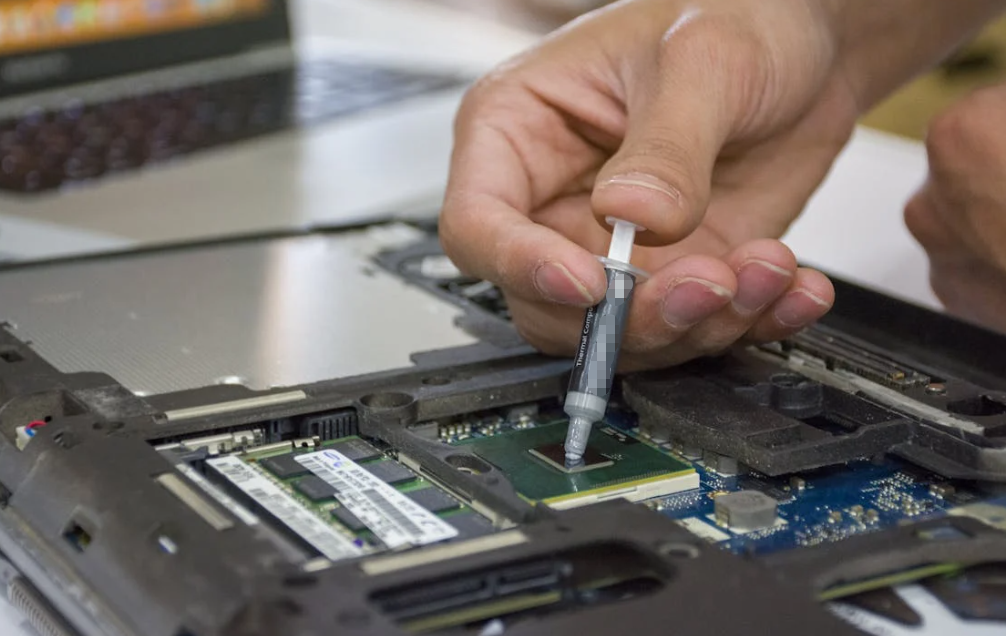
Electrical insulation is only useful if the pad still transfers heat effectively. Thermal performance should be evaluated at the same time.
Thermal Conductivity
Thermal conductivity indicates how well the pad material conducts heat. It is usually measured in W/mK.
Higher conductivity can help, but it does not guarantee better cooling. If the pad is too thick, too hard, or poorly compressed, thermal resistance may still be high.
HakTak has covered this principle in Why High W/mK Does Not Always Mean Better Cooling Performance.
Thermal Impedance
Thermal impedance is often more useful than conductivity because it reflects the interface under specific thickness, pressure, and contact conditions.
For TIM testing, ASTM D5470 is commonly referenced for thermal transmission properties of thermally conductive electrical insulation materials. It is relevant when evaluating thermal impedance and apparent conductivity of interface materials. Official reference: ASTM D5470.
Bond Line Thickness
Bond line thickness is the final thickness of the pad after compression. It directly affects thermal resistance.
For a simplified heat path:
R = t / (k × A)
Where:
- R is thermal resistance
- t is thickness
- k is thermal conductivity
- A is contact area
Thicker pads may improve insulation margin, but they usually increase thermal resistance. This is one of the core tradeoffs in insulating thermal pad selection.
HakTak’s article How Bond Line Thickness Affects Thermal Performance explains this relationship in detail.
Thermal Pad Thickness and Electrical Safety
Thickness is one of the most important design variables for electrically insulating thermal pads.
A thicker pad may:
- Increase breakdown voltage
- Improve tolerance coverage
- Fill larger gaps
- Reduce risk of direct metal contact
But a thicker pad may also:
- Increase thermal resistance
- Require more compression
- Increase mechanical stress
- Reduce cooling performance
- Make assembly more difficult
This tradeoff is why engineers should not simply choose the thickest insulating pad. The right choice is the thinnest pad that fills the gap, maintains insulation, survives compression, and keeps thermal resistance low.
HakTak’s guide How to Select Thermal Pad Thickness for Electronics provides a practical thickness selection workflow.
Compression and Insulation
Thermal pads must often be compressed to make good contact. Compression improves thermal transfer, but it can also change electrical and mechanical behavior.
Compression affects:
- Final thickness
- Contact area
- Mechanical stress
- Dielectric spacing
- Pad deformation
- Long-term compression set
If a pad is over-compressed, the final thickness may be lower than expected. This can reduce dielectric margin. It can also create stress on components or cause pad extrusion.
If a pad is under-compressed, it may leave air gaps, raising thermal resistance and reducing cooling performance.
HakTak’s article How Compression Affects Thermal Pad Performance explains how compression affects contact, thermal impedance, and mechanical reliability.
Soft vs Hard Insulating Thermal Pads
Electrically insulating thermal pads can be soft or relatively hard. Hardness affects how much pressure is required to reach good contact.
Soft insulating pads are useful when:
- Pressure is limited
- Components are fragile
- Surface flatness is poor
- The assembly has tolerance variation
- Low mechanical stress is required
Harder insulating pads are useful when:
- The gap is controlled
- Handling and placement need stability
- Die-cut shape accuracy matters
- The assembly can provide enough pressure
- Rework cleanliness is important
For more detail, see HakTak’s article Soft vs Hard Thermal Pads: Which Is Better?.
Electrically Insulating Thermal Pads vs Other TIMs
Electrically insulating thermal pads are not the only way to solve a thermal interface. Engineers should compare options based on both thermal and electrical requirements.
| Material | Electrical Insulation | Best Use | Watch-Out |
| Insulating thermal pad | Usually strong | Power devices, heat sinks, housings | Thickness can increase thermal resistance |
| Thermal grease | Depends on formulation | Thin flat interfaces | Can spread, pump out, or contaminate |
| PCM thermal pad | Often insulating grades available | Clean assembly and improved wetting | Must reach activation temperature |
| Thermal putty | Depends on formulation | Uneven gaps and low pressure | Dispensing volume and residue control |
| Thermal adhesive | Can be insulating | Bonding heat sinks or modules | Rework is difficult |
| Potting compound | Often insulating | Encapsulation and protection | Cure quality and bubbles matter |
Thermal grease can be electrically insulating, but it may spread outside the target area. For high-voltage or safety-sensitive assemblies, a pad offers more controlled thickness and placement.
PCM thermal pads can provide clean handling with improved wetting after activation. HakTak’s article PCM Thermal Pads Explained explains this material type.
For uneven gaps, thermal putty or gap filler may be more suitable. See Thermal Putty vs Thermal Pad: How to Choose for Uneven Gaps.
Application Examples
Power Supplies
Power supplies often use MOSFETs, diodes, rectifiers, transformers, and control components mounted near metal heat sinks or housings. Electrically insulating pads help transfer heat while preventing unwanted conduction to the heat sink.
Key requirements:
- Dielectric strength
- Thermal impedance
- Pad thickness
- Compression control
- Flammability rating
- Long-term aging stability
EV Inverters and Automotive Electronics
EV inverters and automotive control modules face high voltage, vibration, and thermal cycling. Electrically insulating pads may be used between power devices and cold plates or housings.
Key requirements:
- High dielectric reliability
- Thermal cycling stability
- Vibration resistance
- Compression set control
- Automotive temperature range
- Consistent production quality
LED Lighting
LEDs and LED drivers generate heat and often use metal boards, housings, and heat sinks. Insulating thermal pads help prevent electrical contact while supporting heat transfer.
Key requirements:
- Thin bond line
- Stable thermal path
- Electrical insulation
- Long service life
- Flame resistance if required
Telecom and 5G Equipment
Telecom electronics often operate continuously and may be exposed to outdoor temperature changes. Insulating pads can help transfer heat to metal housings while isolating circuit nodes.
Key requirements:
- Long-term compression stability
- Thermal cycling resistance
- Electrical insulation
- Moisture and aging resistance
- Repeatable assembly
Industrial Drives and Motor Controls
Industrial drives and motor controls may use high-voltage power electronics mounted to metal heat sinks. Electrically insulating pads provide thermal transfer and isolation in harsh environments.
Key requirements:
- Dielectric strength
- Mechanical durability
- Thermal impedance
- Vibration resistance
- Oil, dust, or humidity exposure considerations
How to Select an Electrically Insulating Thermal Pad
A practical selection process should include both electrical and thermal requirements.
Step 1: Define the Voltage Requirement
Start with the electrical design. Identify the maximum voltage difference across the interface, including transients, spikes, and safety margin.
Ask:
- What voltage must the pad isolate?
- Is the heat sink grounded?
- Is the component tab live?
- Are multiple devices sharing one heat sink?
- Are creepage and clearance limited?
- Is certification required?
Step 2: Measure the Gap
Measure the minimum, nominal, and maximum gap. The pad must fill the maximum gap while avoiding over-compression at the minimum gap.
Step 3: Choose Thickness and Compression Range
Select a pad thickness that provides sufficient dielectric spacing and thermal performance after compression. Final compressed thickness matters more than nominal thickness.
Step 4: Check Thermal Impedance
Review thermal impedance under realistic pressure and final thickness. Do not rely only on W/mK.
Step 5: Validate Dielectric Strength After Assembly
Electrical insulation should be validated under conditions that reflect real use. Compression, temperature, humidity, and aging can affect performance.
Step 6: Test Reliability
Test after:
- Thermal cycling
- High-temperature aging
- Vibration
- Humidity exposure
- Power cycling
- Rework
- Compression set
Selection Checklist
| Requirement | What to Check | Why It Matters |
| Voltage isolation | Breakdown voltage, dielectric strength | Prevents electrical failure |
| Thermal performance | Thermal impedance, conductivity | Controls component temperature |
| Gap filling | Thickness and compression | Ensures contact without over-stress |
| Mechanical safety | Hardness and compression force | Protects components and PCB |
| Reliability | Aging, cycling, compression set | Maintains long-term performance |
| Safety compliance | Flammability and insulation data | Supports product certification |
| Production handling | Die-cut shape, liner, tack | Improves assembly repeatability |
Common Mistakes Engineers Should Avoid
The first mistake is choosing an insulating thermal pad only by W/mK. Electrical insulation, thickness, pressure, and dielectric strength matter just as much.
The second mistake is ignoring final compressed thickness. The pad’s insulation and thermal resistance depend on the thickness after assembly.
The third mistake is using a conductive thermal material where electrical isolation is required. This can create short circuits or leakage paths.
The fourth mistake is selecting a pad that is too thick for thermal performance. Extra thickness may improve voltage margin but can raise component temperature.
The fifth mistake is testing insulation only before assembly. Compression, heat, and aging can change the real condition.
The sixth mistake is overlooking flammability or safety requirements. In power electronics, flame rating may be part of the material selection process. UL provides plastic material testing services and flammability-related resources; engineers can review UL’s plastic materials testing overview here: UL Plastic Materials Testing.
The seventh mistake is assuming one pad works for every voltage level. Higher voltage, thinner gaps, and harsher environments require more careful validation.
HakTak Perspective
At HakTak, electrically insulating thermal pads are treated as both thermal and electrical design components. A pad must not only transfer heat; it must also maintain insulation under pressure, temperature, and long-term use.
For accurate material selection, engineers should provide:
- Heat source type and power
- Contact area
- Minimum, nominal, and maximum gap
- Required breakdown voltage or dielectric strength
- Whether the heat sink or housing is grounded
- Available pressure or screw torque
- Component fragility
- Required thermal conductivity or impedance target
- Operating temperature range
- Thermal cycling and vibration requirements
- Flame-retardancy or safety requirements
- Production method and die-cut needs
With this information, a supplier can recommend pad thickness, hardness, conductivity grade, dielectric rating, and compression range more accurately.
The best electrically insulating thermal pad is the one that keeps the component cool while maintaining safe electrical isolation over the full life of the product.
Conclusion
Electrically insulating thermal pads are needed when electronics must transfer heat to a conductive heat sink, housing, chassis, or cold plate without creating an electrical path.
They are especially important in power electronics, EV systems, LED drivers, telecom devices, industrial controls, and any product where electrical isolation and thermal management must work together.
The right pad should be selected by both thermal and electrical criteria. Engineers should evaluate dielectric strength, breakdown voltage, volume resistivity, thickness, compression, thermal impedance, hardness, aging, thermal cycling, and production handling.
Do not choose an insulating thermal pad only by conductivity or voltage rating. The real requirement is stable thermal and electrical performance in the final assembly.
FAQs
What is an electrically insulating thermal pad?
An electrically insulating thermal pad is a thermal interface material that transfers heat while preventing electrical current from passing between a component and a cooling surface.
When do I need an electrically insulating thermal pad?
You need one when a heat-generating component must transfer heat to a conductive heat sink, housing, chassis, or cold plate while staying electrically isolated.
Are all thermal pads electrically insulating?
No. Some thermal pads are electrically insulating, while others may be electrically conductive depending on filler type and formulation.
What is dielectric strength in a thermal pad?
Dielectric strength describes how much electrical stress a material can withstand before breakdown under specified test conditions.
Does a thicker insulating pad provide better insulation?
Often, a thicker pad can increase breakdown voltage, but it also increases thermal resistance. Engineers must balance insulation and cooling.
Can thermal grease be electrically insulating?
Some thermal greases are electrically insulating, but grease can spread and may be harder to control than a pad. Pads provide more defined thickness and placement.
What is the difference between dielectric strength and breakdown voltage?
Breakdown voltage is the voltage at which failure occurs for a sample. Dielectric strength is typically normalized by thickness, such as kV/mm.
Can compression affect electrical insulation?
Yes. Compression changes final thickness and may affect dielectric margin, contact, mechanical stress, and long-term reliability.
Which applications commonly use electrically insulating thermal pads?
Common applications include power supplies, MOSFETs, IGBT modules, EV inverters, LED drivers, telecom equipment, industrial drives, and battery systems.
What data should I provide to select an insulating thermal pad?
Provide voltage requirement, heat load, contact area, gap range, pressure limit, surface materials, operating temperature, insulation target, and reliability requirements.
