
Elektrisch isolierende Wärmeleitpads sind erforderlich, wenn ein wärmeerzeugendes elektronisches Bauteil Wärme an einen Metallkühlkörper, ein Gehäuse, ein Chassis oder eine Kühlplatte abgeben muss, ohne dabei einen elektrischen Pfad zu erzeugen. Sie sind besonders wichtig in der Leistungselektronik, bei Elektrofahrzeug-Inrichtern, MOSFET- und IGBT-Modulen, LED-Treibern, Netzteilen, Batterie-Managementsystemen und allen Baugruppen, bei denen sowohl Wärmeübertragung als auch elektrische Isolierung erforderlich sind.

Einfach ausgedrückt: einen elektrisch isolierenden thermischen Block wenn die Kühlfläche leitfähig sein darf, das Bauteil oder die Schaltung jedoch elektrisch isoliert bleiben muss.
Das beste thermische Leitpad wird nicht allein nach der Wärmeleitfähigkeit ausgewählt. Ingenieure müssen zudem die Durchschlagsfestigkeit, die Durchbruchspannung, den spezifischen Durchgangswiderstand, die endgültige komprimierte Dicke, die thermische Impedanz, die Anpresskraft, die Spaltoleranz, die Entflammbarkeit, den Temperaturbereich und die langfristige Zuverlässigkeit bewerten. Ein Pad muss das Gerät während der Montage, Alterung, Vibration und von Temperaturwechseln kühl und elektrisch sicher halten.
Was ist ein elektrisch isolierendes Wärmeleitpad?
Ein elektrisch isolierendes Wärmeleitpad ist ein Wärmeleitmaterial, das Wärme überträgt und gleichzeitig elektrischem Strom widersteht. Es wird zwischen einer Wärmequelle und einer Kühlfläche platziert, um Luftspalte zu füllen und den Wärmewiderstand zu verringern, während es gleichzeitig eine elektrische Leitung zwischen den beiden Seiten verhindert.
Die Wärmequelle kann sein:
- MOSFET
- IGBT
- Leistungsmodul
- LED-Platine
- Batteriemanagementkomponente
- Telekommunikations-Stromversorgungsgerät
- Industriesteuerung
- Gleichspannungswandler
- Netzteil
- Automotive-Elektronikmodul
Die Kühlfläche kann sein:
- Aluminium-Kühlkörper
- Metallgehäuse
- Chassis
- Kaltplatte
- Wärmeverteiler
- Umfassungswand
Bei vielen Produkten ist der Kühlkörper oder das Gehäuse leitfähig. Wenn ein Bauteil oder Schaltungsknoten dieses Metall direkt berührt, kann dies zu Kurzschlüssen, Kriechströmen, der Gefahr eines elektrischen Schlags oder zu einem Systemausfall führen. Ein isolierendes Wärmeleitpad schafft einen thermischen Pfad, ohne einen elektrischen Pfad zu erzeugen.
Warum elektrische Isolierung beim thermischen Design wichtig ist
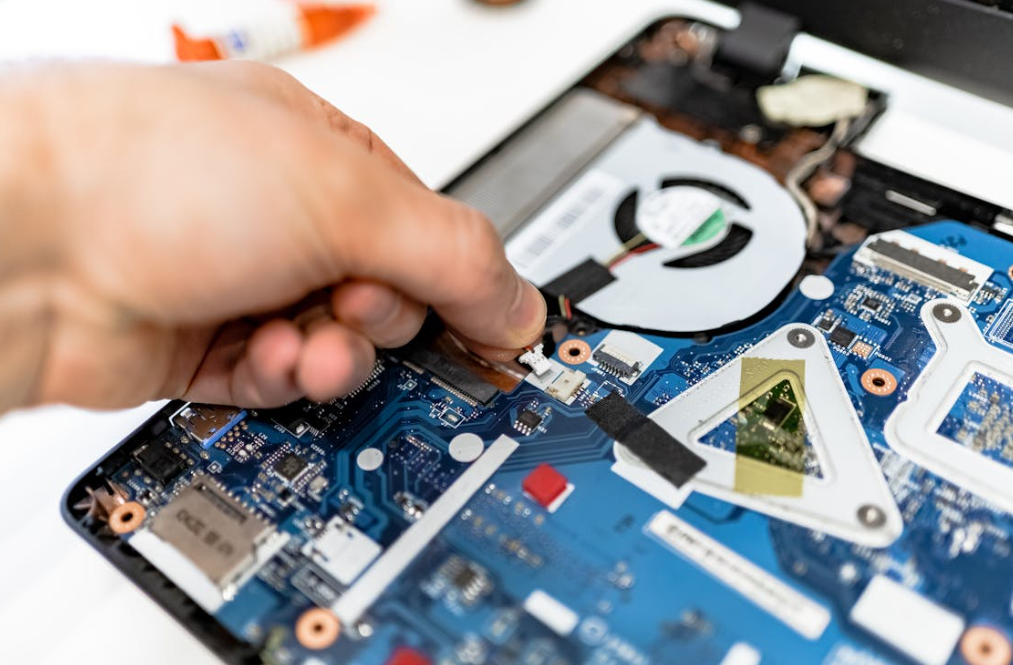
Thermisches Design und elektrisches Design sind oft miteinander verbunden. Ingenieure konzentrieren sich möglicherweise zuerst auf die Wärmeübertragung, aber Leistungselektronik erfordert auch eine sichere elektrische Trennung.
Eine elektrisch leitfähige thermische Schnittstelle kann gefährlich sein, wenn:
- Der Kühlkörper ist geerdet.
- Die Komponentenlasche steht unter elektrischer Spannung
- Das Gehäuse ist aus Metall
- Mehrere Komponenten teilen sich einen Kühlkörper
- Kriechstrecke und Luftstrecke sind begrenzt
- Es liegt Hochspannung an
- Eine Sicherheitszertifizierung ist erforderlich.
In diesen Fällen muss ein thermisches Material zwei Aufgaben gleichzeitig erfüllen:
- Leiten Sie Wärme effizient vom Bauteil ab.
- Verhindern Sie, dass Strom durch die Schnittstelle fließt.
Deshalb werden elektrisch isolierende Wärmeleitpads in der Leistungselektronik und in Systemen mit hoher Zuverlässigkeit häufig eingesetzt.
Für die allgemeine TIM-Auswahl, HakTaks Produkt-Hub-Entwurf Wärmeleitmaterialien ist darauf ausgelegt, Materialauswahl wie Pads, Fette, PCM, Kitt und maßgeschneiderte Materialien zu verbinden.
Wann benötigt man ein elektrisch isolierendes Wärmeleitpad?
Sie benötigen ein elektrisch isolierendes Wärmeleitpad, wenn Wärme in eine leitfähige Kühlstruktur abgeleitet werden muss, während der Stromkreis isoliert bleiben muss.
Wenn der Kühlkörper leitfähig ist
Die meisten Kühlkörper bestehen aus Aluminium oder Kupfer. Beide sind elektrisch leitfähig. Wenn die Bauteiloberfläche elektrisch aktiv ist, ist ein direkter Metallkontakt unsicher.
Ein isolierendes Wärmeleitpad ermöglicht es dem Kühlkörper, Wärme abzuführen, während es den Stromfluss verhindert.
Dies ist üblich in:
- MOSFET-Kühlkörper
- IGBT-Module
- Netzteil-Kühlkörper
- LED-Treibergehäuse
- Motorantriebselektronik
- EV-Wechselrichter-Kühlplatten
Wenn sich mehrere Komponenten einen Kühlkörper teilen
In vielen Baugruppen sind mehrere Leistungshalbleiter auf demselben Kühlkörper montiert. Diese Bauelemente können auf unterschiedlichen elektrischen Potentialen arbeiten.
Ohne Isolierung kann der Kühlkörper unbeabsichtigte elektrische Verbindungen zwischen Bauteilen erzeugen. Eine Isoliermatte hilft, die einzelnen Bauteile zu trennen und gleichzeitig die Wärmeableitung auf die gemeinsame Kühlfläche zu ermöglichen.
Wenn das Gehäuse Teil des thermischen Pfades ist
Viele kompakte Elektronikgeräte nutzen das Metallgehäuse als Kühlkörper. Dies ist üblich bei Telekommunikationsgeräten, Kfz-Steuergeräten, LED-Beleuchtungen und der Industrieelektronik.
Wenn das Gehäuse berührt, geerdet oder mit anderen Systemstrukturen verbunden werden kann, wird eine elektrische Isolierung wichtig.
Wenn es um Hochspannung oder Sicherheitszertifizierung geht
Hochspannungsgeräte benötigen Materialien, die elektrischer Beanspruchung standhalten können. Ein Wärmeleitpad muss für das Design eine ausreichende Durchschlagsfestigkeit und Durchbruchspannung aufweisen.
Dies ist besonders wichtig in:
- EV-Systeme
- Wechselrichter
- Netzteile
- Batterieladegeräte
- Industrielle Antriebe
- Medizinelektronik
- Luft- und Raumfahrtelektronik
Wenn elektrisches Rauschen oder Ableitströme kontrolliert werden müssen
Selbst wenn ein Kurzschluss unwahrscheinlich ist, können Ableitströme oder kapazitive Kopplung dennoch empfindliche Elektronik beeinträchtigen. Isoliermaterialien helfen dabei, die elektrische Trennung aufrechtzuerhalten und das Risiko zu verringern.
Elektrisch isolierende vs. elektrisch leitfähige Wärmeleitpads
Nicht alle Wärmeleitpads sind elektrisch isolierend. Einige Materialien können leitfähige Füllstoffe oder kohlenstoffbasierte Strukturen enthalten, die die Wärmeübertragung verbessern, aber die elektrische Isolierung verringern.
| Funktion | Elektrisch isolierendes Wärmeleitpad | Elektrisch leitfähiges Wärmeleitpad |
| Elektrisches Verhalten | Blockiert aktuell | Strom leiten |
| Typische Verwendung | Leistungselektronik, LED-Treiber, Metallgehäuse | Geerdete thermische Pfade, EMV-bezogene Designs |
| Wesentliche Sicherheitsdaten | Durchschlagsfestigkeit, Durchbruchspannung, spezifischer Widerstand | Elektrische Leitfähigkeit, Erdungsverhalten |
| Hauptrisiko | Zu dick oder schlechte thermische Leistung | Kurzschluss- oder Leckagerisiko |
| Häufige Füllwörter | Keramische Füllstoffe, Bornitrid, Aluminiumoxid | Graphit, Kohlenstoff, Metallpartikel |
| Am besten für | Wärmeübertragung plus Isolierung | Wärmeübertragung, bei der die Leitfähigkeit akzeptabel ist |
Wenn die elektrischen Anforderungen unklar sind, ist davon auszugehen, dass eine Isolierung erforderlich ist, bis der Schaltungsentwurf das Gegenteil bestätigt.
Wichtige elektrische Eigenschaften zur Überprüfung
Elektrisch isolierende Wärmeleitpads sollten anhand von mehr als nur der Wärmeleitfähigkeit bewertet werden. Ingenieure sollten mehrere elektrische Eigenschaften überprüfen.
Dielektrizitätsfestigkeit
Die elektrische Festigkeit beschreibt die Spannungsbeanspruchung, der ein Material standhalten kann, bevor es zu einem Durchschlag kommt. Sie wird häufig in kV/mm, V/mil oder ähnlichen Einheiten ausgedrückt.
Offizielle Referenz: ASTM D149.
Durchbruchspannung
Die Durchschlagsspannung ist die Spannung, bei der unter definierten Testbedingungen ein Isolationsversagen durch eine Probe auftritt.
Für Wärmeleitpads hängt die Durchschlagsspannung ab von:
- Materialformulierung
- Polsterstärke
- Kompression
- Oberflächenbeschaffenheit
- Temperatur
- Luftfeuchtigkeit
- Elektrodengeometrie
- Alterungszustand
Eine dickere Unterlage hat möglicherweise eine höhere Durchschlagspannung, erhöht aber auch den Wärmewiderstand. Ingenieure müssen Sicherheit und Wärmeübertragung abwägen.
Spezifischer Durchgangswiderstand
Der spezifische Durchgangswiderstand beschreibt, wie stark ein Material dem Strom durch sein Volumen entgegenwirkt. Ein hoher spezifischer Durchgangswiderstand ist für isolierende Wärmeleitpads wünschenswert.
Diese Eigenschaft hilft Ingenieuren, die Leistung der elektrischen Isolation zu vergleichen, sollte jedoch die Durchschlagsspannung oder anwendungsspezifische Sicherheitstests nicht ersetzen.
Oberflächenwiderstand
Der Oberflächenwiderstand beschreibt den Widerstand entlang der Oberfläche des Materials. Er kann von Bedeutung sein, wenn das Risiko von Verschmutzung, Feuchtigkeit oder Kriechstrombildung besteht.
Bei realen Produkten kann sich der Oberflächenzustand im Laufe der Zeit durch Staub, Feuchtigkeit, Öle, Flussmittelrückstände oder Alterung verändern.
Wichtige thermische Eigenschaften zur Überprüfung
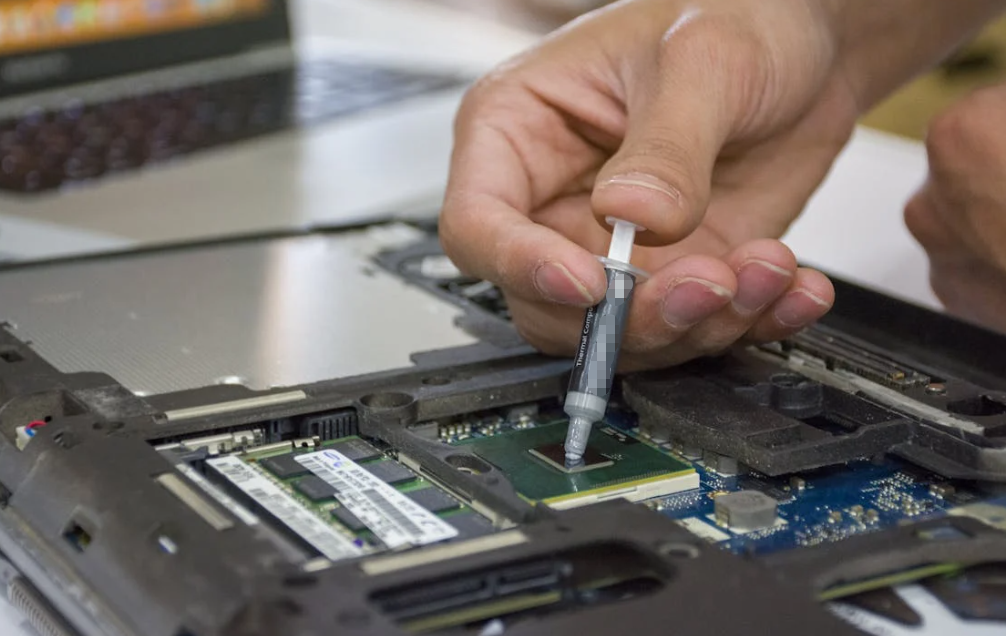
Elektrische Isolierung ist nur dann sinnvoll, wenn das Pad dennoch effektiv Wärme überträgt. Die thermische Leistung sollte gleichzeitig bewertet werden.
Wärmeleitfähigkeit
Die Wärmeleitfähigkeit gibt an, wie gut das Material des Pads Wärme leitet. Sie wird normalerweise in W/mK gemessen.
Höhere Leitfähigkeit kann helfen, garantiert aber keine bessere Kühlung. Wenn das Pad zu dick, zu hart oder schlecht komprimiert ist, kann der Wärmewiderstand dennoch hoch sein.
HakTak hat dieses Prinzip in Warum ein hoher W/mK-Wert nicht immer eine bessere Kühlleistung bedeutet.
Wärmeimpedanz
Thermische Impedanz ist oft nützlicher als Leitfähigkeit, da sie die Grenzfläche unter spezifischen Dicken-, Druck- und Kontaktbedingungen widerspiegelt.
Für TIM-Tests wird ASTM D5470 häufig für die thermischen Übertragungseigenschaften von wärmeleitfähigen elektrischen Isoliermaterialien herangezogen. Es ist relevant bei der Bewertung der thermischen Impedanz und der apparenten Leitfähigkeit von Schnittstellenmaterialien. Offizielle Referenz: ASTM D5470.
Bindungsliniendicke
Die Dicke der Klebefuge ist die endgültige Dicke des Pads nach der Kompression. Sie beeinflusst direkt den Wärmewiderstand.
Für einen vereinfachten Wärmepfad:
R = t / (k × A)
Wo
- R ist thermischer Widerstand
- t ist die Dicke
- k ist Wärmeleitfähigkeit
- A Kontaktfläche
Dichtere Pads verbessern möglicherweise die Isolationsmarge, erhöhen aber in der Regel den Wärmewiderstand. Dies istiner der Kernkompromisse bei der Auswahl von isolierenden Wärmeleitpads.
HakTaks Artikel Wie sich die Dicke der Klebefuge auf die thermische Leistung auswirkt Erklärt diese Beziehung im Detail.
Wärmeleitpad-Dicke und elektrische Sicherheit
Die Dicke ist eine der wichtigsten Designvariablen für elektrisch isolierende Wärmeleitpads.
Ein dickeres Kissen kann:
- Durchschlagsspannung erhöhen
- Toleranzabdeckung verbessern
- Größere Lücken schließen
- Risiko eines direkten Metallkontakts verringern
Aber ein dickeres Kissen kann auch:
- Wärmewiderstand erhöhen
- Mehr Kompression erforderlich
- Increase mechanical stress
- Reduce cooling performance
- Make assembly more difficult
This tradeoff is why engineers should not simply choose the thickest insulating pad. The right choice is the thinnest pad that fills the gap, maintains insulation, survives compression, and keeps thermal resistance low.
HakTak’s guide Auswahl der Dicke von Wärmeleitpads für Elektronik provides a practical thickness selection workflow.
Compression and Insulation
Thermal pads must often be compressed to make good contact. Compression improves thermal transfer, but it can also change electrical and mechanical behavior.
Compression affects:
- Final thickness
- Contact area
- Mechanical stress
- Dielectric spacing
- Pad deformation
- Long-term compression set
If a pad is over-compressed, the final thickness may be lower than expected. This can reduce dielectric margin. It can also create stress on components or cause pad extrusion.
If a pad is under-compressed, it may leave air gaps, raising thermal resistance and reducing cooling performance.
HakTaks Artikel Wie sich die Kompression auf die Leistung von Wärmeleitpads auswirkt explains how compression affects contact, thermal impedance, and mechanical reliability.
Soft vs Hard Insulating Thermal Pads
Electrically insulating thermal pads can be soft or relatively hard. Hardness affects how much pressure is required to reach good contact.
Soft insulating pads are useful when:
- Pressure is limited
- Components are fragile
- Surface flatness is poor
- The assembly has tolerance variation
- Low mechanical stress is required
Harder insulating pads are useful when:
- The gap is controlled
- Handling and placement need stability
- Die-cut shape accuracy matters
- The assembly can provide enough pressure
- Rework cleanliness is important
For more detail, see HakTak’s article Weiche vs. harte Wärmeleitpads: Welche sind besser?.
Electrically Insulating Thermal Pads vs Other TIMs
Electrically insulating thermal pads are not the only way to solve a thermal interface. Engineers should compare options based on both thermal and electrical requirements.
| Material | Elektrische Isolierung | Beste Verwendung | Watch-Out |
| Insulating thermal pad | Usually strong | Power devices, heat sinks, housings | Thickness can increase thermal resistance |
| Wärmeleitpaste | Depends on formulation | Thin flat interfaces | Can spread, pump out, or contaminate |
| PCM thermal pad | Often insulating grades available | Clean assembly and improved wetting | Must reach activation temperature |
| Thermal putty | Depends on formulation | Uneven gaps and low pressure | Dispensing volume and residue control |
| Wärmeleitkleber | Can be insulating | Bonding heat sinks or modules | Rework is difficult |
| Gießharz | Often insulating | Encapsulation and protection | Cure quality and bubbles matter |
Thermal grease can be electrically insulating, but it may spread outside the target area. For high-voltage or safety-sensitive assemblies, a pad offers more controlled thickness and placement.
PCM thermal pads can provide clean handling with improved wetting after activation. HakTak’s article PCM Thermal Pads Explained explains this material type.
For uneven gaps, thermal putty or gap filler may be more suitable. See Wärmeleitpaste vs. Wärmeleitpad: Wie man bei ungleichmäßigen Spalten die richtige Wahl trifft.
Application Examples
Power Supplies
Power supplies often use MOSFETs, diodes, rectifiers, transformers, and control components mounted near metal heat sinks or housings. Electrically insulating pads help transfer heat while preventing unwanted conduction to the heat sink.
Key requirements:
- Durchschlagfestigkeit
- Wärmeimpedanz
- Polsterstärke
- Compression control
- Flammability rating
- Long-term aging stability
EV Inverters and Automotive Electronics
EV inverters and automotive control modules face high voltage, vibration, and thermal cycling. Electrically insulating pads may be used between power devices and cold plates or housings.
Key requirements:
- High dielectric reliability
- Thermal cycling stability
- Vibration resistance
- Compression set control
- Automotive temperature range
- Consistent production quality
LED-Beleuchtung
LEDs and LED drivers generate heat and often use metal boards, housings, and heat sinks. Insulating thermal pads help prevent electrical contact while supporting heat transfer.
Key requirements:
- Thin bond line
- Stable thermal path
- Elektrische Isolierung
- Long service life
- Flame resistance if required
Telekommunikations- und 5G-Ausstattung
Telecom electronics often operate continuously and may be exposed to outdoor temperature changes. Insulating pads can help transfer heat to metal housings while isolating circuit nodes.
Key requirements:
- Long-term compression stability
- Thermal cycling resistance
- Elektrische Isolierung
- Moisture and aging resistance
- Repeatable assembly
Industrial Drives and Motor Controls
Industrial drives and motor controls may use high-voltage power electronics mounted to metal heat sinks. Electrically insulating pads provide thermal transfer and isolation in harsh environments.
Key requirements:
- Durchschlagfestigkeit
- Mechanical durability
- Wärmeimpedanz
- Vibration resistance
- Oil, dust, or humidity exposure considerations
How to Select an Electrically Insulating Thermal Pad
A practical selection process should include both electrical and thermal requirements.
Step 1: Define the Voltage Requirement
Start with the electrical design. Identify the maximum voltage difference across the interface, including transients, spikes, and safety margin.
Ask:
- What voltage must the pad isolate?
- Is the heat sink grounded?
- Is the component tab live?
- Are multiple devices sharing one heat sink?
- Are creepage and clearance limited?
- Is certification required?
Step 2: Measure the Gap
Measure the minimum, nominal, and maximum gap. The pad must fill the maximum gap while avoiding over-compression at the minimum gap.
Step 3: Choose Thickness and Compression Range
Select a pad thickness that provides sufficient dielectric spacing and thermal performance after compression. Final compressed thickness matters more than nominal thickness.
Step 4: Check Thermal Impedance
Review thermal impedance under realistic pressure and final thickness. Do not rely only on W/mK.
Step 5: Validate Dielectric Strength After Assembly
Electrical insulation should be validated under conditions that reflect real use. Compression, temperature, humidity, and aging can affect performance.
Step 6: Test Reliability
Test after:
- Temperaturwechselbeanspruchung
- High-temperature aging
- Vibration
- Humidity exposure
- Power cycling
- Überarbeiten
- Druckverformungsrest
Selection Checklist
| Requirement | What to Check | Why It Matters |
| Voltage isolation | Breakdown voltage, dielectric strength | Prevents electrical failure |
| Thermal performance | Thermal impedance, conductivity | Controls component temperature |
| Gap filling | Thickness and compression | Ensures contact without over-stress |
| Mechanical safety | Hardness and compression force | Protects components and PCB |
| Zuverlässigkeit | Aging, cycling, compression set | Maintains long-term performance |
| Safety compliance | Flammability and insulation data | Supports product certification |
| Produktionsabwicklung | Die-cut shape, liner, tack | Improves assembly repeatability |
Common Mistakes Engineers Should Avoid
The first mistake is choosing an insulating thermal pad only by W/mK. Electrical insulation, thickness, pressure, and dielectric strength matter just as much.
The second mistake is ignoring final compressed thickness. The pad’s insulation and thermal resistance depend on the thickness after assembly.
The third mistake is using a conductive thermal material where electrical isolation is required. This can create short circuits or leakage paths.
The fourth mistake is selecting a pad that is too thick for thermal performance. Extra thickness may improve voltage margin but can raise component temperature.
The fifth mistake is testing insulation only before assembly. Compression, heat, and aging can change the real condition.
The sixth mistake is overlooking flammability or safety requirements. In power electronics, flame rating may be part of the material selection process. UL provides plastic material testing services and flammability-related resources; engineers can review UL’s plastic materials testing overview here: UL Plastic Materials Testing.
The seventh mistake is assuming one pad works for every voltage level. Higher voltage, thinner gaps, and harsher environments require more careful validation.
HakTak Perspective
At HakTak, electrically insulating thermal pads are treated as both thermal and electrical design components. A pad must not only transfer heat; it must also maintain insulation under pressure, temperature, and long-term use.
For accurate material selection, engineers should provide:
- Heat source type and power
- Contact area
- Minimum, nominal, and maximum gap
- Required breakdown voltage or dielectric strength
- Whether the heat sink or housing is grounded
- Available pressure or screw torque
- Component fragility
- Required thermal conductivity or impedance target
- Operating temperature range
- Thermal cycling and vibration requirements
- Flame-retardancy or safety requirements
- Production method and die-cut needs
With this information, a supplier can recommend pad thickness, hardness, conductivity grade, dielectric rating, and compression range more accurately.
The best electrically insulating thermal pad is the one that keeps the component cool while maintaining safe electrical isolation over the full life of the product.
Fazit
Electrically insulating thermal pads are needed when electronics must transfer heat to a conductive heat sink, housing, chassis, or cold plate without creating an electrical path.
They are especially important in power electronics, EV systems, LED drivers, telecom devices, industrial controls, and any product where electrical isolation and thermal management must work together.
The right pad should be selected by both thermal and electrical criteria. Engineers should evaluate dielectric strength, breakdown voltage, volume resistivity, thickness, compression, thermal impedance, hardness, aging, thermal cycling, and production handling.
Do not choose an insulating thermal pad only by conductivity or voltage rating. The real requirement is stable thermal and electrical performance in the final assembly.
Häufig gestellte Fragen
What is an electrically insulating thermal pad?
An electrically insulating thermal pad is a thermal interface material that transfers heat while preventing electrical current from passing between a component and a cooling surface.
When do I need an electrically insulating thermal pad?
You need one when a heat-generating component must transfer heat to a conductive heat sink, housing, chassis, or cold plate while staying electrically isolated.
Are all thermal pads electrically insulating?
No. Some thermal pads are electrically insulating, while others may be electrically conductive depending on filler type and formulation.
What is dielectric strength in a thermal pad?
Dielectric strength describes how much electrical stress a material can withstand before breakdown under specified test conditions.
Does a thicker insulating pad provide better insulation?
Often, a thicker pad can increase breakdown voltage, but it also increases thermal resistance. Engineers must balance insulation and cooling.
Can thermal grease be electrically insulating?
Some thermal greases are electrically insulating, but grease can spread and may be harder to control than a pad. Pads provide more defined thickness and placement.
What is the difference between dielectric strength and breakdown voltage?
Breakdown voltage is the voltage at which failure occurs for a sample. Dielectric strength is typically normalized by thickness, such as kV/mm.
Can compression affect electrical insulation?
Yes. Compression changes final thickness and may affect dielectric margin, contact, mechanical stress, and long-term reliability.
Which applications commonly use electrically insulating thermal pads?
Common applications include power supplies, MOSFETs, IGBT modules, EV inverters, LED drivers, telecom equipment, industrial drives, and battery systems.
What data should I provide to select an insulating thermal pad?
Provide voltage requirement, heat load, contact area, gap range, pressure limit, surface materials, operating temperature, insulation target, and reliability requirements.