In thermal management, there’s a deceptively simple question that keeps coming up in engineering discussions, procurement meetings, and even factory floors: Should you choose a thicker thermal Block or a thinner one?

At first glance, thicker seems safer—more forgiving, better gap filling, more “robust.” But when you look at the physics, the story changes. And not subtly.
This article unpacks the real relationship between thermal pad thickness and thermal resistance, grounding it in physics, practical engineering trade-offs, and real-world application scenarios. If you work with Wärmeleitmaterialien, this is one of those fundamentals you can’t afford to misunderstand.
Understanding the Basics: Thermal Conductivity vs. Thermal Resistance
Before diving into thickness, we need to clarify two terms that are often confused:
- Wärmeleitfähigkeit (k): A material property (W/m·K) — how well a material conducts heat
- Thermal resistance (Rₜₕ): A system property (°C/W or K/W) — how difficult it is for heat to pass through a specific structure
The key relationship between them is:
Rₜₕ=t/k⋅A
Wo
- t = thickness
- k = thermal conductivity
- A = contact area
This equation is not just theoretical—it’s the foundation of thermal design. It shows that Wärmewiderstand is directly proportional to thickness and inversely proportional to conductivity and area.
The Core Relationship: Thickness vs. Thermal Resistance

Thermal Resistance Increases Linearly with Thickness
Let’s state the most important conclusion clearly:
As thermal Block thickness increases, Wärmewiderstand increases linearly.
This is not a rule of thumb—it’s physics. If you double the thickness, you double the thermal resistance (assuming conductivity and area remain constant).
A Practical Example
Consider two thermal interface layers:
| Parameter | Thin TIM | Thick Pad |
| Dicke | 0.05 mm | 0.5 mm |
| Leitfähigkeit | 5 W/m·K | 6 W/m·K |
Even though the thicker pad has higher conductivity, its thermal resistance is still significantly worse due to thickness. In real calculations, temperature rise across the thicker pad can be 8× higher .
That’s a huge difference—and often overlooked.
Why Thickness Matters More Than You Think
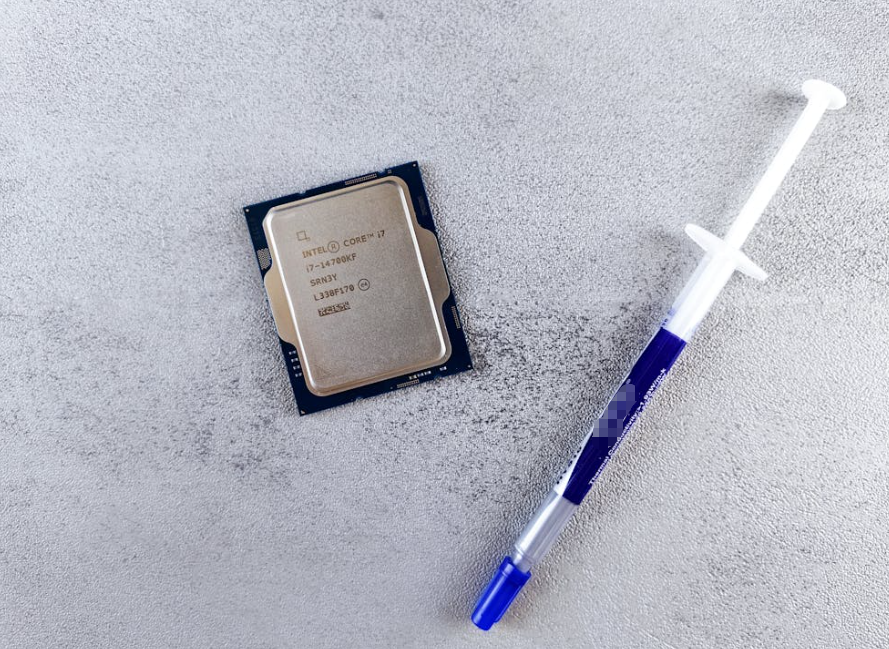
Heat Must Travel a Longer Path
Wärmeleitpads act as a bridge between a heat source (like a chip) and a heat sink. The thicker the pad, the longer the heat path.
Think of it like this:
- A thin layer = short highway → faster heat flow
- A thick layer = long detour → slower heat flow
Aus diesem Grund bond line thickness (BLT) is one of the most critical design parameters in thermal engineering.
Thermal Resistance Is a System Property, Not Just a Material Property
Many engineers focus heavily on thermal conductivity (W/m·K). But in real applications, Wärmewiderstand is what determines temperature rise, not conductivity alone.
This leads to a counterintuitive insight:
A lower-conductivity material in a thin layer can outperform a higher-conductivity material in a thick layer.
That’s why simply choosing “higher W/m·K” pads without considering thickness often leads to disappointing results.
The Trade-Off: Thin vs. Thick Thermal Pads
If thinner is always better thermally, why not just use ultra-thin pads everywhere?
Because real-world engineering is never that simple.
The Role of Gap Filling
Surfaces in electronics are not perfectly flat. Microscopic roughness and tolerance stack-ups create air gaps—and air is a terrible thermal conductor (~0.026 W/m·K).
Thermal pads exist to fill these gaps.
- If the pad is too thin → gaps remain → air pockets → very high resistance
- If the pad is too thick → no gaps, but increased internal resistance
So the real goal is:
Use the thinnest pad that still fully fills the gap.
Mechanical Compliance and Assembly Reality
Thermal pads also serve mechanical functions:
- Absorbing vibration
- Compensating for height differences
- Preventing component stress
Thicker pads are often necessary when:
- Component height tolerances vary
- Surfaces are uneven
- Shock or vibration is present (e.g., automotive electronics)
But this comes at a cost: reduced thermal performance .
Compression: The Hidden Variable

Thickness Is Not Always What It Seems
In practice, thermal pads are compressed during assembly.
This means:
- Nominal thickness ≠ actual working thickness
- Compression reduces thickness → lowers thermal resistance
- Proper pressure ensures full surface contact
A poorly compressed pad—even if thin—can perform worse than a thicker, well-compressed one.
Real-World Engineering Scenarios
Let’s look at how this relationship plays out across applications.
Consumer Electronics (Smartphones, Laptops)
- Gap: very small
- Requirement: maximum heat transfer
- Solution: ultra-thin TIMs (or thermal paste)
Result: minimal thermal resistance
Power Electronics (Inverters, Power Supplies)
- Gap: moderate to large
- Requirement: electrical isolation + gap filling
- Solution: thicker thermal pads (0.5–3 mm)
Result: higher thermal resistance, but necessary trade-off
Automotive & Industrial Systems
- Gap: large and variable
- Requirement: vibration resistance + durability
- Solution: thick, soft pads
Result: thermal efficiency sacrificed for reliability
Key Design Insight: It’s About Optimization, Not Minimization
A common mistake is to treat thickness as something to minimize at all costs.
In reality, the design goal is:
Optimize thickness to balance thermal performance and mechanical reliability.
This involves:
- Measuring actual gap distances
- Considering compression ratio
- Matching pad softness (Shore hardness)
- Evaluating operating conditions
Common Misconceptions
“Thicker Pads Are Better for Cooling”
False. Thicker pads generally erhöhen Wärmewiderstand and reduce cooling efficiency.
“Higher Conductivity Solves Thickness Problems”
Not entirely. Even high-k materials can perform poorly if they are too thick.
“Thickness Doesn’t Matter If Contact Is Good”
Incorrect. Even with perfect contact, thickness still directly affects resistance.
Practical Selection Guidelines
Here’s a simplified decision framework:
- Measure the gap accurately
- Choose the thinnest pad that fully fills the gap
- Ensure proper compression (20–50% typical)
- Prioritize system-level Wärmewiderstand, not just k value
- Validate with real thermal testing
Fazit
The relationship between thermal pad thickness and thermal resistance is straightforward in theory but nuanced in practice:
- Thermal resistance increases linearly with thickness
- Thinner pads generally provide better heat transfer
- However, pads must be thick enough to eliminate air gaps
- The optimal thickness is a balance—not a minimum
In thermal design, there are no shortcuts. The best-performing system is not the one with the highest conductivity or the thickest pad—it’s the one where material, thickness, pressure, and geometry are all aligned.
Häufig gestellte Fragen
Does increasing thermal pad thickness always increase thermal resistance?
Yes. Thermal resistance increases linearly with thickness if all other factors remain constant.
Is a thinner thermal pad always better?
Not always. It must still fully fill the gap; otherwise, air gaps will increase resistance.
Can a high-conductivity pad compensate for thickness?
Partially, but thickness still dominates. A thick high-k pad can perform worse than a thin lower-k pad.
What is the ideal thermal pad thickness?
The thinnest thickness that ensures full surface contact after compression.
Why do some applications require thick thermal pads?
To accommodate large gaps, uneven surfaces, or mechanical stress—even though it reduces thermal efficiency.