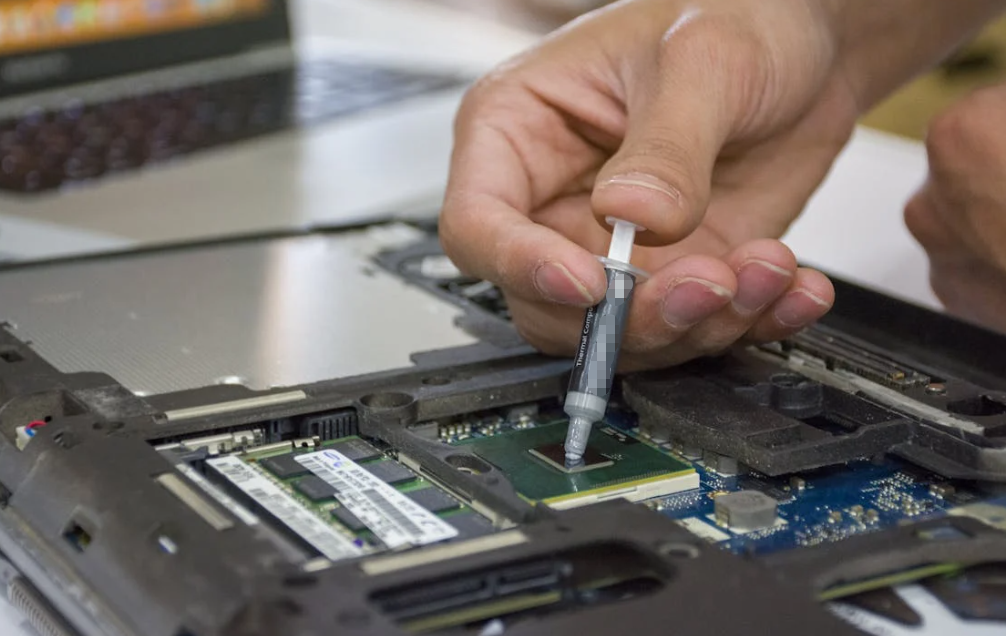
Soft thermal pads are usually better for uneven surfaces, low-pressure assemblies, fragile components, and applications where the pad must conform easily to surface roughness or gap tolerance. Harder thermal pads are usually better when the gap is well controlled, the assembly can provide enough pressure, and the design needs better handling, dimensional stability, or mechanical support.

わかりやすく言うと: choose a soft thermal パッド when contact is difficult; choose a harder thermal pad when the gap is controlled and mechanical stability matters.
Neither soft nor hard thermal pads are universally better. Thermal performance depends on the complete interface: pad thickness, hardness, compression, bond line thickness, contact pressure, surface flatness, thermal conductivity, electrical insulation, and long-term reliability. A softer lower-W/mK pad can outperform a harder higher-W/mK pad if it makes better contact. A harder pad can outperform a soft pad if the design provides enough pressure and requires tighter thickness control.
What Is Thermal Pad Hardness?
Thermal pad hardness describes how much the material resists indentation or compression. In practical electronics cooling, hardness affects how easily the pad compresses between a heat source and a cooling surface.
A soft thermal pad deforms easily under low pressure. A hard thermal pad resists deformation and usually requires more force to compress.
Thermal pad hardness is commonly described using Shore hardness or durometer values. Soft thermal interface pads may use Shore 00 or similar soft elastomer scales. Harder elastomeric pads may use Shore A. The correct scale depends on the material type and softness range.
Hardness is not the same as thermal conductivity. A pad can be soft and highly conductive, hard and low-conductivity, or any combination in between depending on formulation, filler loading, polymer system, and structure.
For general hardness measurement, ASTM D2240 is a key reference. ASTM describes D2240 as a standard test method for rubber property durometer hardness, covering multiple durometer types and elastomeric material categories. Engineers can review the official ASTM page here: ASTM D2240.
Why Hardness Matters in Thermal Pad Selection
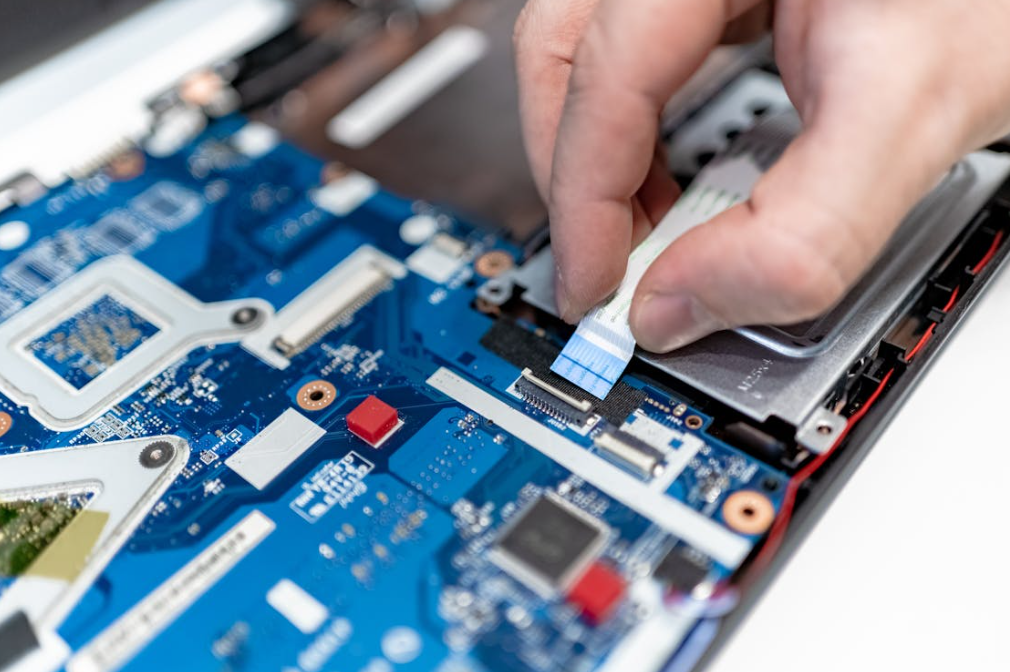
Thermal pads are used to fill gaps between electronic components and heat sinks, housings, chassis, or cold plates. The pad must touch both surfaces and replace insulating air gaps with a thermally conductive path.
Hardness matters because it affects whether the pad can actually make that contact.
If a pad is too hard for the available pressure, it may not conform to surface roughness or component height variation. Air pockets remain, contact resistance increases, and the component runs hotter.
If a pad is too soft, it may conform well but become difficult to handle, deform during assembly, tear during rework, or lose dimensional control. In some designs, a very soft pad may also squeeze out, shift, or fail to provide the mechanical support expected from the interface.
The best hardness is the one that creates reliable contact without excessive mechanical stress.
Soft vs Hard Thermal Pads: Core Difference
The main difference is how the pad responds to pressure.
| 因数分解する | Soft Thermal Pad | Hard Thermal Pad |
| 圧縮力 | Lower force required | Higher force required |
| 順応性 | Better for uneven surfaces | Better for flat, controlled surfaces |
| Component stress | Usually lower | Can be higher if over-compressed |
| 取扱い | May be delicate or tacky | Usually easier to handle |
| Dimensional stability | Lower to moderate | もっと高く |
| 隙間公差 | Good for variable gaps | Best for consistent gaps |
| Contact resistance | Often lower at low pressure | Can be low if pressure is sufficient |
| 作り直す | May leave residue or deform | Often easier to remove cleanly |
| Best use case | Fragile, uneven, low-pressure assemblies | Controlled, repeatable, mechanically stable assemblies |
Soft pads are not automatically better because they compress easily. Hard pads are not automatically better because they feel more stable. The correct choice depends on the assembly stack.
ソフトサーマルパッドの方が優れています
Soft thermal pads are usually better when the design has limited pressure or uneven contact. They can deform into microscopic surface roughness and fill small height variations more easily than harder pads.
Uneven Gaps and Component Height Variation
Electronic assemblies are rarely perfectly flat. A PCB may include components of different heights. Solder joints may vary. The housing may not be perfectly parallel to the board. In these cases, a soft thermal pad can help compensate for tolerance variation.
Soft pads are often useful for:
- マルチコンポーネントPCB冷却
- バッテリー管理システム
- Telecom boards
- Automotive control units
- Power supplies with varied component heights
- Enclosure-to-board heat transfer
When the interface is highly uneven, thermal putty or gap filler may be even more suitable than a sheet pad. HakTak’s guide サーマルパテ対サーマルパッド:不均一な隙間に対する選び方 explains this selection problem in more detail.
Low-Pressure Assemblies
Some electronic designs cannot apply high clamping force. Screws may be limited. The housing may be thin. Components may be fragile. The PCB may bend easily.
In these cases, a soft pad helps because it reaches useful contact under lower pressure. This can reduce contact resistance without requiring aggressive mechanical loading.
Soft pads are often preferred when:
- PCBの曲げは最小限に抑える必要があります
- Solder joints are sensitive
- Component packages are fragile
- Screw torque is limited
- Plastic housings or thin metal covers are used
- Low assembly force is required
Fragile Components
Hard pads can transfer force directly into components. If the component package is brittle or the PCB support is limited, this can create mechanical risk.
Possible risks include:
- Cracked components
- Stressed solder joints
- PCB bowing
- Localized pressure points
- エンクロージャー歪み
A soft pad distributes pressure more gently. This is why softness can be as important as thermal conductivity in real product design.
When Hard Thermal Pads Are Better

Harder thermal pads can be better when the mechanical design is controlled and stable. They may be easier to handle, place, inspect, and process in production.
Controlled Gap and Strong Compression
If the gap is consistent and the assembly can apply enough pressure, a harder pad may perform well. The key is that the pad must still compress enough to create full contact.
Harder pads are often suitable when:
- Gap tolerance is tight
- Surfaces are flat and parallel
- Screw torque or clamping force is controlled
- The product needs repeatable assembly
- The pad must hold a precise shape
- Die-cut placement is used
For gap and thickness selection, see HakTak’s guide 電子機器向けサーマルパッドの厚さの選び方.
Better Handling in Production
Soft pads can be tacky, stretchable, or delicate. In high-volume production, that can create handling issues. A harder pad may be easier to pick, place, peel, align, and inspect.
Harder pads may be preferred for:
- Automated placement
- Die-cut parts with complex shapes
- Thin pads that must hold dimensions
- Manual assembly lines that need clean handling
- Products that require frequent rework
機械的安定性
Some applications need the thermal pad to remain dimensionally stable during assembly and operation. A harder pad can resist excessive deformation, shifting, or extrusion.
However, this advantage only matters if the mechanical system can provide enough pressure to overcome the pad’s stiffness. A hard pad that does not compress properly may create poor thermal contact.
Thermal Performance: Soft Does Not Always Mean Better
It is tempting to assume that softer pads always cool better because they conform more easily. This is not always true.
Thermal performance depends on both contact resistance and bulk resistance.
Soft pads may reduce contact resistance by improving surface contact. But if the soft pad is thick, low-conductivity, or excessively compressed in an unstable way, it may still create higher thermal resistance than a harder pad.
Harder pads may have higher filler loading and higher thermal conductivity, but they may require more pressure. If the actual assembly cannot provide that pressure, the pad may leave air gaps and underperform.
The practical question is:
Which パッド creates the lowest stable thermal impedance in the real assembly?
HakTak has covered this broader issue in TIM選定における熱伝導率と熱インピーダンス そして 高W/mKが常に優れた冷却性能を意味するとは限らない理由.
Hardness, Compression, and Contact Resistance

Thermal pad hardness directly affects compression. Compression affects contact resistance. Contact resistance affects real thermal performance.
What Happens with Too Little Compression?
If a thermal pad is not compressed enough, it may only touch the highest surface points. Air remains in the valleys between surfaces.
圧縮が少なすぎると、以下の原因になることがあります:
- 高い接点抵抗
- Poor thermal transfer
- ホットスポット
- 個体差
- 不安定なテスト結果
- サーマルスロットリング
This problem is common when a pad is too hard for the available force or too thin for the maximum gap.
What Happens with Proper Compression?
Proper compression helps the pad fill surface roughness, increase contact area, and reduce air gaps. Thermal impedance usually decreases as contact improves.
The correct compression range depends on:
- パッドの硬さ
- パッドの厚さ
- 隙間公差
- 接触面
- 表面粗さ
- 組立荷重
- コンポーネントの脆弱性
- 長期圧縮永久ひずみ
HakTakの記事 圧縮がサーマルパッドの性能に与える影響 explains this relationship in more detail.
What Happens with Too Much Compression?
Excessive compression may look good in short-term thermal testing, but it can damage the assembly or reduce long-term reliability.
過剰な圧縮が引き起こす可能性:
- 基板の反り
- コンポーネントの割れ
- はんだ接合部の応力
- ハウジングの変形
- パッド押し出し
- Material tearing
- Loss of dimensional control
- Compression set after aging
This is why hardness selection must include both thermal and mechanical validation.
Hardness and Bond Line Thickness
Bond line thickness, or BLT, is the final thickness of the thermal pad after assembly. It is one of the most important variables in thermal performance.
For a simplified interface:
R = t / (k × A)
どこ:
- R は熱抵抗である
- t 結合線の太さ
- k は熱伝導率である
- A は接触面積です
If the final bond line is thicker, thermal resistance increases. If the final bond line is thinner, thermal resistance usually decreases, as long as contact remains complete.
Hardness affects final BLT because softer pads compress more under the same force, while harder pads compress less.
This means two pads with the same nominal thickness can have different final bond line thicknesses. A soft 2.0 mm pad may compress to 1.4 mm, while a hard 2.0 mm pad may compress only to 1.8 mm under the same force. The final thermal resistance may differ significantly.
For a deeper explanation, see HakTak’s guide ボンドラインの厚さが熱性能に与える影響.
Soft vs Hard Pads by Application
Different industries often prefer different pad characteristics.
| アプリケーション | Common Need | Soft Pad Advantage | Hard Pad Advantage |
| パワーエレクトロニクス | Insulation and heat transfer | Lower stress on components | Stable shape under controlled pressure |
| LED modules | Uniform contact | Conforms to surface variation | Easier placement on flat modules |
| 通信機器 | Long-term reliability | Handles enclosure tolerance | Better dimensional repeatability |
| EV用電子機器 | 振動および熱サイクル | Absorbs movement and tolerance | Useful in controlled module stacks |
| AIサーバー | High power density | Helps with low-pressure contact points | Supports precise pad placement |
| バッテリー管理システム | 複数のコンポーネントの高さ | Better gap tolerance | Useful for predictable housing gaps |
| 産業用制御 | Mixed mechanical conditions | Handles uneven housings | Easier manual assembly |
| 作り直す | May leave residue or deform | Often easier to remove cleanly | |
| Best use case | Fragile, uneven, low-pressure assemblies | Controlled, repeatable, mechanically stable assemblies |
This table is a starting point. Final selection should always be based on the actual assembly geometry and pressure.
Electrical Insulation and Hardness
Many thermal pads are electrically insulating. In power electronics, the pad may need to provide both thermal transfer and dielectric isolation.
Hardness can influence insulation indirectly because it affects compression and final thickness. A thinner compressed pad may transfer heat better, but it must still meet dielectric strength requirements. A thicker or harder pad may provide more physical separation, but it can increase thermal resistance.
Engineers should check:
- 絶縁耐力
- Volume resistivity
- 絶縁破壊電圧
- 最終圧縮厚さ
- Compression effects on insulation
- Aging after thermal cycling
For MOSFETs, IGBTs, inverters, power supplies, and LED drivers, thermal pad selection should be reviewed together with electrical safety requirements.
Hardness and Thermal Conductivity Tradeoffs
Thermal pad formulations often use thermally conductive fillers such as ceramic particles, aluminum oxide, boron nitride, aluminum nitride, graphite, or other materials. Higher filler loading can increase thermal conductivity, but it can also change hardness, flexibility, tack, and processability.
This creates a common tradeoff:
- Higher filler loading may increase W/mK.
- Higher filler loading may also make the pad harder.
- A harder pad may need more pressure to make good contact.
- If pressure is limited, actual thermal performance may decrease.
This is why a high-W/mK hard pad may not outperform a softer lower-W/mK pad in a real device.
Thermal conductivity is useful for screening, but thermal impedance under realistic pressure is more useful for final selection. ASTM D5470 is commonly referenced for thermal transmission properties of thermally conductive electrical insulation materials and is relevant for TIM impedance and apparent conductivity testing. See the official ASTM page: ASTM D5470.
For broader polymer thermal property testing, ISO 22007-2 covers the transient plane heat source method for determining thermal conductivity and thermal diffusivity of plastics. Official ISO reference: ISO 22007-2:2022.
How to Choose Between Soft and Hard Thermal Pads
A practical selection process should begin with the mechanical interface.
Step 1: Measure the Gap Range
Do not use only nominal CAD dimensions. Measure or calculate minimum, nominal, and maximum gap.
含める:
- Component height tolerance
- PCB thickness tolerance
- はんだの高さ
- ハウジングの許容差
- ヒートシンクの平坦度
- ねじのトルク変動
- 熱膨張
If the gap varies widely, a soft pad, thermal putty, or gap filler may be needed.
Step 2: Define Available Pressure
Estimate the real pressure available in the assembly. A hard pad may perform well in a test fixture but poorly in a product with limited force.
質問:
- What screw torque is allowed?
- How stiff is the housing?
- Can the PCB bend?
- Are components fragile?
- Is the pressure distributed evenly?
Step 3: Match Hardness to Compression
Review compression-deflection data if available. The pad should reach the target compression without excessive stress.
If the pad is too soft, handling and stability may suffer. If it is too hard, contact quality may suffer.
Step 4: Compare Thermal Impedance
Compare thermal impedance at realistic pressure and thickness, not only W/mK.
Useful data includes:
- Thermal impedance vs pressure
- Thermal resistance before and after aging
- 最終圧縮厚さ
- 圧縮永久ひずみ
- 圧縮後の誘電強度
Step 5: Validate in the Real Assembly
Final validation should include actual device testing.
Test:
- 部品温度
- ヒートシンク温度
- 熱サイクル
- 振動
- 圧縮永久ひずみ
- 作り直す
- 電気絶縁
- Production repeatability
Soft vs Hard Thermal Pad Selection Table
| 設計条件 | より良い出発点 | 理由 |
| Low assembly pressure | Soft thermal pad | Compresses and contacts under lower force |
| Fragile components | Soft thermal pad | Reduces stress concentration |
| 凹凸のある表面 | Soft thermal pad or putty | Better conformability |
| Tight controlled gap | Harder thermal pad | 優れた寸法安定性 |
| Automated placement | Harder thermal pad | Easier handling and alignment |
| High dielectric requirement | Depends on final thickness | Must validate insulation after compression |
| High power density | Depends on impedance | Conductivity, BLT, and pressure all matter |
| Frequent rework | Often harder pad | May remove more cleanly |
| Multi-height PCB | Soft pad, putty, or gap filler | Better tolerance compensation |
エンジニアが避けるべき一般的な間違い
The first mistake is choosing hardness by touch. A pad that “feels good” may not perform well under real pressure and temperature.
The second mistake is selecting the highest W/mK pad without checking hardness. A high-conductivity pad may be too stiff for the assembly.
The third mistake is using a soft pad to compensate for poor mechanical design without checking long-term stability.
The fourth mistake is ignoring compression set. A soft pad may lose recovery after long-term compression or heat exposure.
The fifth mistake is comparing hardness values without checking the scale. Shore 00 and Shore A values are not interchangeable.
The sixth mistake is testing only at high lab pressure. Real products may apply much lower pressure.
The seventh mistake is assuming one pad hardness will work across every product family. Different devices require different compression behavior.
Testing Soft and Hard Thermal Pads
Testing should reflect the final assembly.
Useful tests include:
- Hardness or durometer testing
- Compression-deflection testing
- Thermal impedance testing
- Dielectric strength testing
- Compression set testing
- 熱サイクル
- 振動試験
- デバイスレベルの温度試験
Hardness testing helps classify material softness, but it does not directly tell engineers the final thermal performance. ASTM D2240 itself notes that indentation hardness depends on factors such as elastic modulus and viscoelastic behavior, and that measurements from different durometer types should not be treated as simply equivalent.
For TIM selection, hardness data should be combined with thermal impedance and real assembly testing.
ハクタック・パースペクティブ
At HakTak, soft and hard thermal pads are treated as different engineering tools, not as good or bad choices.
Soft pads are valuable when the design needs low-stress contact, uneven gap filling, or better conformity under limited pressure. Harder pads are valuable when the assembly has a controlled gap, sufficient clamping force, and production needs clean handling or stable geometry.
For reliable selection, engineers should provide:
- 最小、定格、および最大ギャップ
- 接触面
- Heat source power
- 使用圧力または締め付けトルク
- コンポーネントの脆弱性
- PCB stiffness
- 表面平坦度
- 電気絶縁の必要性
- 動作温度範囲
- 熱サイクルおよび振動の要件
- Rework expectations
- Production method
With this information, a supplier can recommend the right combination of thickness, hardness, conductivity, compression range, and material type.
The best thermal pad is not necessarily the softest pad or the hardest pad. It is the pad that creates stable contact and low thermal impedance without damaging the assembly.
結論
Soft and hard thermal pads both have important roles in electronics cooling.
Soft thermal pads are usually better for uneven gaps, low-pressure assemblies, fragile components, and surfaces that need strong conformity. Hard thermal pads are usually better for controlled gaps, stable production handling, precise die-cut placement, and mechanically supported assemblies.
Hardness affects compression, contact resistance, final bond line thickness, mechanical stress, handling, and reliability. It should be selected together with thickness, thermal conductivity, thermal impedance, pressure, and electrical insulation requirements.
For engineers, the best decision is not based on hardness alone. The right thermal pad is the one that performs best in the real device after compression, aging, thermal cycling, and production assembly.
よくある質問
Are soft thermal pads better than hard thermal pads?
Soft thermal pads are better for uneven gaps, fragile components, and low-pressure assemblies. Harder pads are better when the gap is controlled and the assembly can provide enough pressure.
Do softer thermal pads conduct heat better?
Not always. Softer pads may improve contact, but thermal conductivity, thickness, pressure, and final thermal impedance also determine performance.
What happens if a thermal pad is too hard?
If a thermal pad is too hard, it may not compress enough, leaving air gaps and increasing contact resistance. It may also stress components or bend the PCB.
What happens if a thermal pad is too soft?
A pad that is too soft may deform, tear, shift, leave residue, or lose dimensional stability. It may also show compression set after long-term use.
How is thermal pad hardness measured?
Thermal pad hardness is often measured using Shore or durometer scales. Soft materials may use Shore 00, while harder elastomers may use Shore A.
Should I choose thermal pads by W/mK or hardness?
Use both, but do not rely on either alone. Final selection should consider thermal impedance, compression, bond line thickness, gap tolerance, and reliability.
Are hard thermal pads better for production?
Harder pads can be easier to handle, align, and inspect in production. However, they must still compress enough to make good thermal contact.
Which thermal pad is better for uneven gaps?
Soft thermal pads are generally better for moderately uneven gaps. For highly uneven gaps or multiple component heights, thermal putty or gap filler may be a better choice.
Can a soft thermal pad damage components?
Soft pads usually reduce mechanical stress, but over-compression can still cause problems. Assembly pressure and final thickness should be validated.
What data should I provide to select pad hardness?
Provide gap range, contact area, heat load, available pressure, component fragility, surface flatness, insulation needs, operating temperature, and reliability requirements.