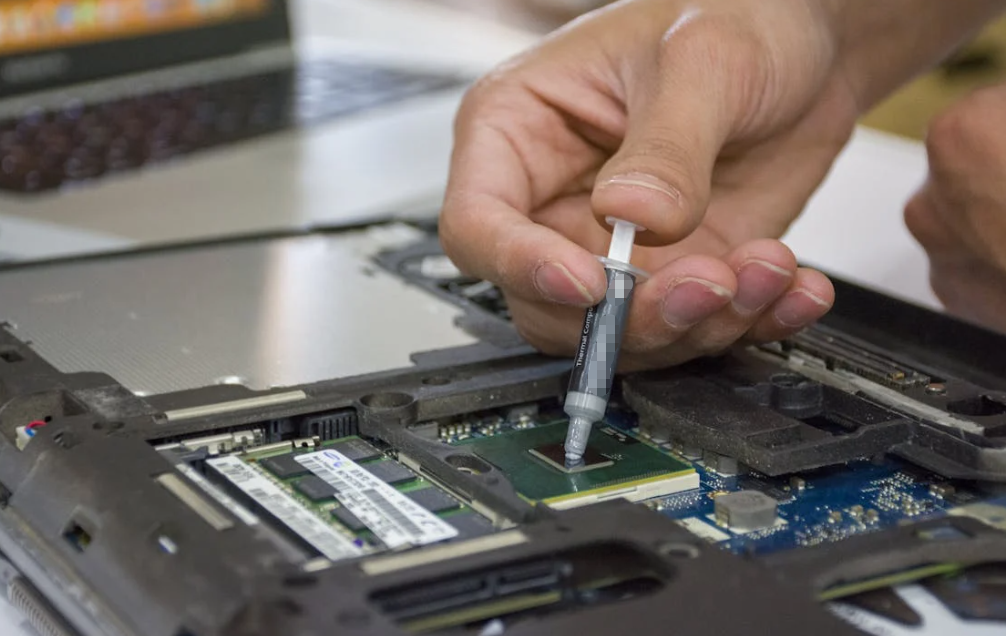
AIサーバーのサーマルパッドは通常、ヒートシンク、コールドプレート、またはシャーシの下で異なる高さに位置するHBM、VRM、メモリ、電力デバイス、ネットワークコントローラなどの部品を冷却します。主なGPUダイ・インターフェースに最適な材料とは限りません。その接合部には、より薄いTIMが必要になることがよくあります。適切な選定は、各熱経路、ギャップ、許容圧力を個別に把握することから始まります。.

この区別がこれまで以上に重要なのは、AIアクセラレータが、広々としたシャーシ内で静かに動作する、もはや控えめな拡張カードではないからです。その NVIDIA H100 SXM can be configured up to 700 W, while AMD lists 750 W peak board power for the Instinct MI300X. Put eight accelerators in one platform and the heat is no longer a side issue. It becomes a design boundary.
Still, a server does not cool itself just because it has a cold plate. Heat must cross the package, interface material, spreader, cold plate, coolant loop and facility system. A tiny problem at one contact can hold up the whole chain, like a toll booth with one lane open.
This guide explains where thermal pads fit, where they do not, and how to choose them without chasing one impressive datasheet number. It is written for thermal engineers, server designers, contract manufacturers, data-center hardware teams and buyers who need a material that works in production, not only on a bench.
Working on an AI server thermal stack? Send Haktak the component map, gap range, pressure limit and cooling architecture through the contact page. You can also review the complete thermal interface material portfolio.
Why AI Servers Put So Much Pressure on Thermal Interfaces
AI servers combine high-power accelerators, high-bandwidth memory, power conversion and very fast interconnects in a dense mechanical envelope. Air or liquid can remove heat only after it reaches a heat sink or cold plate. The thermal interface between components and that cooling hardware therefore affects temperature margin, sustained frequency, fan power, reliability and service behavior.
NVIDIAの公式H100仕様 list up to 700 W for the SXM version. AMD lists 750 W peak board power and 192 GB of HBM3 for the MI300X. These are not direct comparisons, but they show the scale of heat concentrated around modern accelerator modules.
At the rack level, the numbers pile up quickly. ASHRAEのAIデータセンター・エネルギーパフォーマンス・フレームワーク discusses purpose-built AI environments in the 50-120+ kW-per-rack range and recommends cooling architectures designed for those densities. Facility cooling matters, sure. Yet the facility cannot fix a poor component-to-cold-plate joint inside the server.
Three trends make the interface harder:
- より狭い面積に、より大きな電力。. モジュール全体のサイズが変わらなくても、熱流束は上昇する。.
- アクセラレータ周辺のコンポーネントが増加。. HBMスタック、電圧レギュレータ、インターコネクトデバイス、パワーステージが新たなホットスポットを生み出します。.
- 機械的な余裕が減少。. 大型パッケージ、ファインピッチのインターコネクト、高密度基板では、制御されていないクランプ力は許容されません。.
業務は単に“GPUを冷却する”ことではありません。モジュールを曲げたり、隣接部品の接触を損なったり、現場での保守を困難にしたりすることなく、GPU、メモリ、電源供給を同時に許容範囲内に維持することです。.
First, Know Which Interface You Are Designing

An AI accelerator contains several thermal interfaces, and they do different jobs. The primary GPU path often uses a thin material between die, lid, heat spreader or cold plate. Gap pads are more common where component heights vary or a larger distance must be bridged. Mixing these locations together leads to bad specifications and, sometimes, very expensive rework.
TIM1: Die to Integrated Heat Spreader or Package Lid
TIM1 sits inside the package between the silicon die or chiplets and a lid or heat spreader. It may use solder, a high-performance paste, film or another package-engineered material. Server builders normally do not replace it. The package supplier controls this interface because die stress, warpage, adhesion and long-term reliability are tightly linked.
TIM2: Package Lid to Heat Sink or Cold Plate
TIM2 connects the package lid to external cooling hardware. This joint is usually thin and carefully clamped. Grease, phase-change material, high-performance film or other low-bond-line TIMs are common. A conventional millimeter-thick gap pad is rarely the first choice when both surfaces are flat and the primary goal is the lowest possible interface resistance.
Gap-Pad Interfaces Around HBM, VRM and Supporting Components
Thermal pads earn their place where memory stacks, voltage regulators, inductors, controllers, retimers or backside components need to reach a common spreader, frame, lid or cold plate despite height differences. The pad fills a measurable gap and accommodates tolerances. It may also provide electrical isolation and vibration cushioning.
Board-to-Chassis and Backplate Interfaces
Some designs create a secondary path from the module backside or server board into a structural plate. Pads can spread lower-intensity heat, reduce local hot spots and use chassis area that would otherwise sit idle. The backplate path is helpful, but it does not magically replace a weak primary GPU path.
| 接触界面の位置 | 代表的なギャップ状態 | 想定されるTIMファミリー | 主な設計上の懸念事項 |
|---|---|---|---|
| ダイまたはチップレットとパッケージリッド間 | 極薄、パッケージに合わせた制御 | はんだ、ペースト、フィルム、または先進パッケージ用 TIM | ダイ応力、反り、非常に低い抵抗 |
| パッケージリッドから GPU ヒートシンク/コールドプレートまで | 薄型、平坦、クランプ固定 | グリース、PCM、薄膜、または高性能TIM | 接着層厚さ、ポンプアウト、実装圧力 |
| ヒートスプレッダ/コールドプレートへのHBMまたは復元性 | 小~中程度の可変ギャップ | 軟質サーマルパッド、ゲル、または液状ギャップフィラー | コプラナリティ、圧力およびメモリー温度 |
| VRM、MOSFETまたはインダクタから冷却プレートまで | コンポーネント高さのばらつき | サーマルパッド、パテ、ゲルまたはギャップフィラー | 電気的絶縁、規格適合性および局所的な高発熱 |
| モジュール背面からフレーム/バックプレートへ | 中程度の面積とギャップ | 打ち抜きパッドまたはグラファイト併用アセンブリ | 基板応力、平坦度、および二次放熱 |
| リタイマー、NICまたはスイッチASICからシャーシへ | 規定された部品とカバーの間隔 | 間隔に応じたパッド、グリース、またはPCM | 保守性とエアフローの相互作用 |
If your drawing labels all six locations “thermal pad,” pause. The mechanical joint should decide the material format, not a broad purchasing name.
AIおよびGPUサーバー内部でサーマルパッドが使用される箇所
Thermal pads are used wherever a server needs a clean, repeatable and compressible bridge between uneven components and a cooling surface. Typical targets include HBM and memory devices, voltage regulators, power modules, backplates, networking silicon, storage controllers and auxiliary processors. Their role becomes especially valuable when one plate touches several component heights.
HBMおよびその他のメモリデバイス
高帯域幅メモリは、短く幅広い接続によって膨大なデータフローを支えるため、アクセラレーターの近くに配置されます。この近接性は性能面では有利ですが、冷却面では扱いが難しくなります。HBMの温度とGPUの温度は、同じパッケージレベルの環境に影響を及ぼす一方、パッケージのコプラナリティや局所的な反りも接触状態に影響します。.
軟質パッドなどの柔軟なTIMにより、メモリ領域をリッドまたはコールドプレートに接続できます。材料には、パッケージに過大な力を加えることなく熱を伝達する性能が求められます。また、熱サイクル後も接触を維持できなければなりません。より硬く、熱伝導率の高いパッドが必ずしも安全とは限りません。パッケージが、データシート上のW/mKの数値よりも柔軟性を重視する場合もあります。.
新たなメモリアーキテクチャでは、この重要性がさらに高まります。. SK hynixは、iHBMコンセプトについて公に説明しています これは、将来のHBMインターフェース付近に冷却要素を追加するものです。パッケージレベルの方向性であり、そのまま使用できるパッドの推奨ではありませんが、業界の焦点を示しています。メモリの発熱は、もはや二次的な背景ノイズではありません。.
VRM、パワーステージ、インダクタ
アクセラレータモジュールには、大規模な電力変換が必要です。MOSFET、集積型パワーステージ、ドライバ、インダクタは、GPU周辺に集中した熱を発生させることがあります。これらは高さや表面形状にばらつきがあるため、平らなコールドプレートを直接密着させることは容易ではありません。.
パッド、パテ、ディスペンス可能なギャップフィラーが一般的な候補です。冷却プレートが導電性の場合や、近くに露出したノードがある場合は、電気絶縁が必要になることがあります。インダクタでは接触面が不均一になる可能性があるため、形状追従性が重要です。隣接するインダクタが耐えられるからといって、壊れやすいパッケージに硬いパッドを押し付けないでください。.
GPU バックプレートおよび補強フレーム
バックプレートは、機械的な支持と二次的な熱経路を提供します。パッドを使用して、発熱する背面領域をバックプレートに接続できます。これはアドインカードで一般的な構成であり、サーバーモジュールやエッジAIハードウェアにも見られます。.
バックプレートの冷却は、アセンブリ全体の一部として評価する必要があります。スタンドオフとねじで荷重を支持できない場合、厚いパッドによってPCBが反る可能性があります。また、温度が上昇したバックプレートにも、熱を放散する経路が必要です。金属板は短時間に限って熱を蓄えるだけであり、最終的には気流、フレーム、または別の熱経路が必要になります。.
ネットワークインターフェース、リタイマー、スイッチシリコン
GPUサーバーには、高速NIC、DPU、リタイマー、PCIeスイッチ、ファブリックコンポーネントも搭載されています。これらのデバイスは、専用のヒートシンクを使用する場合や、サーバーリッドに熱的に接続される場合があります。ギャップが既知で、保守時にカバーを取り外す構成では、ダイカットパッドによって配置を簡素化できます。.
SSD、コントローラ、補助演算
NVMeドライブ、BMCコントローラ、CPU、ストレージアクセラレータは、シャーシ内に小規模な発熱源を追加します。パッドにより、これらをキャリアまたは気流制御型ヒートスプレッダに接続できます。設計目標は、最大熱流束ではなく、信頼性と温度均一性である場合があります。.
マーケティング上の数値以上に重要なサーマルパッドの特性
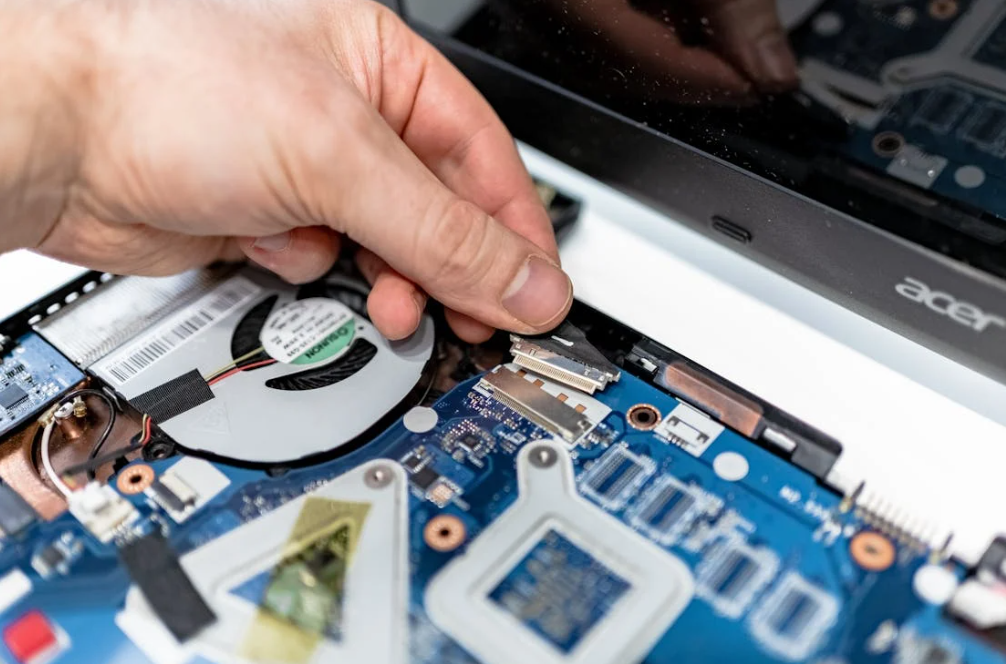
The installed interface is governed by thermal conductivity, thickness, contact resistance, compression, area, surface flatness and aging. A high W/mK value describes one material property under a stated method. It does not predict GPU hotspot temperature by itself. Engineers should compare candidate pads under realistic thickness and pressure, then confirm performance in the complete module.
熱伝導率と熱インピーダンスの比較
Thermal conductivity tells you how readily heat passes through the bulk material. Thermal impedance or resistance describes the temperature penalty of a particular interface condition. For a simple uniform layer:
R = t / (k x A)
ここです、, t は厚さ、, k は熱伝導率であり A is contact area. Real joints add contact resistance at both surfaces. So, yes, a 12 W/mK pad can lose to a softer 6 W/mK pad if the first one is thicker or barely touches the surface.
読む TIMの選定における熱伝導率と熱インピーダンス そして W/mKが高くても、必ずしも冷却性能が優れるとは限らない理由 before comparing headline values.
Bond-Line Thickness and the Real Gap
Measure the minimum, nominal and maximum assembled gap. Include package height, component tolerance, solder variation, board bow, cold-plate flatness, gasket compression, fastener sequence and thermal expansion.
The selected pad must contact at the maximum gap and stay below the force limit at the minimum gap. Adding 1 mm “for safety” is not free. Extra thickness lengthens the heat path and usually raises load.
ハクタックの サーマルパッドの厚さ選定ガイド そして thickness tolerance guide explain the stack-up process in more detail.
Compression, Modulus and Total Force
Compression pushes air out and helps the material conform. Too little leaves partial contact. Too much can bow a board, overload solder joints, crack components or disturb the primary GPU-to-cold-plate interface.
Total force is pressure multiplied by area. That simple fact catches teams out. A pad that feels soft between two fingers can create a large load when it covers a big module.
Do not substitute hardness for a compression curve. Ask for stress-strain or compression-deflection data at the relevant thickness and temperature. Then read 圧縮がサーマルパッドの性能に与える影響 そして サーマルパッドの圧縮率:どのくらいが必要か?.
電気絶縁
Many ceramic-filled polymer pads are electrically insulating. Graphite and some specialty high-performance materials are not. Define whether the pad crosses exposed conductors, power stages or grounded cooling hardware. Dielectric strength, volume resistivity, puncture resistance, creepage and clearance belong to the complete electrical safety plan.
IEC 60243-1 covers electric-strength testing of solid insulating materials at power frequencies. A good result supports material selection; it does not certify the whole server. Haktak’s guide to 電気絶縁性サーマルパッド adds practical context.
Compression Set and Long-Term Contact
AI servers can run continuously under steady clamping load. Over time and temperature, a polymer pad may relax or take a permanent set. Contact pressure can fall, especially after cycling or service disassembly.
Ask how compression set was measured: time, temperature, compression level and recovery period all matter. Then validate aged thermal performance in the actual stack. An unused sample can look perfect while the interface quietly loses margin after months of load.
Pump-Out, Dry-Out and Phase Stability
Pump-out is discussed more often with greases, gels and phase-change materials than with solid pads. Repeated expansion can move a soft TIM away from the hot region. Dry-out or separation can also change performance. Solid pads resist free flow, but they may creep, tear or extrude if over-compressed.
No format is immune to aging. The failure mode just changes clothes.
| 財産 | What it controls in an AI server | Question to ask |
|---|---|---|
| 熱伝導率 | Bulk heat conduction | Which method, direction and specimen condition were used? |
| 熱インピーダンス | Installed temperature drop | At what thickness, pressure and temperature? |
| 厚さ公差 | Contact across min/max gaps | What is controlled for sheet and converted parts? |
| Compression curve | Contact and mechanical load | What stress occurs at the intended compression? |
| Hardness/modulus | Handling and conformity | Which scale, sample thickness and temperature? |
| 絶縁耐力 | Electrical isolation evidence | Which test method and material thickness? |
| 圧縮永久ひずみ | Long-term recovery | What aging time, temperature and compression? |
| Flame classification | Material fire behavior | Is the exact thickness/construction covered? |
| Outgassing/volatiles | Cleanliness near contacts and optics | Which test and acceptance limit? |
| Thermal cycling data | Contact stability over life | Was performance measured again after cycling? |
Thermal Pad Materials for GPU Servers
Most gap pads use a polymer binder loaded with thermally conductive particles. Silicone elastomers are common because they can be soft, stable and easy to convert. Silicone-free binders address contamination-sensitive systems. Ceramic fillers support conduction and electrical insulation, while graphite provides strong heat spreading but is electrically conductive and anisotropic.
シリコンサーマルパッド
シリコンサーマルパッド cover a broad range of thicknesses, hardness levels and thermal performance. They can conform around HBM, VRMs, memory and backside components while remaining easy to die cut.
Potential concerns include siloxane migration, silicone oil bleed or customer material restrictions. These issues are application-specific. A silicone pad is not automatically dirty, and a non-silicone pad is not automatically low-outgassing. Define the actual risk.
シリコーンフリーサーマルパッド
Silicone-free thermal pads may be requested near sensitive contacts, optical hardware, coating or bonding processes, or where a hyperscaler maintains a restricted-material list. Clarify what “silicone-free” means in the project and whether a specific analytical or outgassing test is required.
参照 Understanding Non-Silicone Thermal Materials そして What Is a Low-Outgassing Thermal Material? for the difference between chemistry and measured emissions.
Graphite Sheets and Graphite Thermal Pads
Graphite thermal pads can spread heat laterally from a local hot spot. Their in-plane conductivity is often much higher than through-thickness conductivity. They are also electrically conductive and generally less compliant than thick elastomer gap pads.
Graphite can complement a pad by spreading heat before it enters a larger cooling surface. It should not be specified as a generic thick gap filler unless the construction is designed for that job.
Reinforced and Insulating Films
Fiberglass or polymer reinforcement improves handling, tear resistance and dimensional stability. シリコンサーマルシート can suit thin electrically insulating joints where the surfaces are relatively flat. Reinforcement may reduce conformity, though, so check contact on uneven inductors or mixed-height components.
Ceramic Fillers and Binder Choices
Common electrically insulating fillers include aluminum oxide, boron nitride and other ceramic systems. Formulation affects conductivity, softness, density, surface behavior and cost. More filler can raise conductivity but may also increase stiffness. The best formulation is a balance, which is a slightly boring answer but the honest one.
Thermal Pad, Grease, PCM, Gel or Liquid Gap Filler?
Use a pad when the gap is defined, die-cut placement adds value and rework or cleanliness matters. Use grease or phase-change material for thin, clamped primary interfaces. Consider gel, putty or liquid gap filler for delicate parts, complex topography or wide gap variation. Liquid cooling changes the heat sink, not this basic interface logic.
| TIM format | Best AI-server use | 利点 | 注意点 |
|---|---|---|---|
| 熱伝導パッド | HBM、VRM、メモリ、バックプレート、およびコンポーネントとカバー間の規定隙間 | 清浄な実装、固定された形状、検査および保守性 | 組立荷重、一定厚みおよび打ち抜きロス |
| 熱伝導グリス | 薄型パッケージリッドとヒートシンクまたはコールドプレート間のインターフェース | Very thin bond line and low contact resistance | Pump-out, dry-out, dispensing and messy service |
| 相変化TIM | Thin, clamped GPU/CPU interfaces that reach activation temperature | Dry handling before activation and good wetting in use | Activation, pressure and cycling must match the design |
| サーマルジェルまたはパテ | Fragile mixed-height components and low-stress gaps | Excellent conformity and low mechanical load | Slumping, cure, residue and dispense control vary by product |
| 液体ギャップフィラー | Complex server boards with large or variable gaps | Automated dispensing, low stress and little shape scrap | Equipment, cure/flow behavior, inspection and rework |
| 黒鉛シート | Lateral spreading from compact hot spots | Thin and effective in-plane spreading | Electrical conductivity, edge handling and weak thick-gap compliance |
Does Liquid Cooling Eliminate Thermal Pads?
No. Direct-to-chip liquid cooling replaces or assists the air-side heat sink, but heat still crosses package and component interfaces before entering the cold plate. Pads may remain around HBM, power devices, retimers and backplates. In fact, a better cold plate can make internal interface resistance a larger share of the total temperature rise.
その MetaのAIトレーニングプラットフォームに関するOpen Compute Projectの論文 notes that package interior resistance, warpage control and TIM implementation become increasingly important for high-power modules. Liquid is powerful, but it cannot jump over a poor contact.
Air-Cooled, Liquid-Cooled and Immersion Systems Need Different Answers
Cooling architecture sets the boundary conditions around every TIM. Air-cooled servers depend heavily on sink resistance, airflow and inlet temperature. Direct liquid cooling brings a cold plate closer to the chip but adds coolant temperature, flow and pressure constraints. Immersion changes material-compatibility and sealing questions. One pad specification should not be copied blindly across all three.
Air-Cooled GPU Servers
Air cooling remains practical for many PCIe accelerators, inference servers, edge systems and lower-density racks. Pads often connect memory and VRMs to the main heat sink or backplate. The fan curve, fin resistance and recirculation determine how useful those paths are.
High pad pressure can lift the main heat sink slightly away from the GPU interface. That creates the odd situation where memory gets cooler while the GPU hotspot gets hotter. Contact checks and fastener sequencing matter.
Direct-to-Chip Liquid Cooling
Cold plates can remove high heat loads with lower fan power and tighter temperature control. ASHRAE describes liquid cooling as increasingly important as electronics heat density stretches the capability of air. The system must coordinate facility water, a CDU or technology cooling loop, cold plates, quick disconnects, controls and leak response.
At component level, cold-plate flatness and module warpage deserve careful attention. A cold plate may contact the main package through a thin TIM while separate pad islands reach HBM or power parts. Those pad islands must not hold the plate off the primary interface.
Immersion Cooling
Single-phase or two-phase immersion places hardware in a dielectric fluid. Traditional air-side pads may swell, soften, leach additives or lose tack depending on fluid chemistry. Some interfaces still need solid TIMs, but compatibility must be tested with the exact immersion fluid, temperature and exposure time.
Do not rely on a generic “oil resistant” statement. Immersion fluids differ. So do pad binders and fillers.
Hybrid Cooling
多くのAIサーバーでは、GPUとCPUに液冷を使用する一方、メモリ、ストレージ、電源、ネットワークコンポーネントは空冷します。ASHRAE’sフレームワークは、この混在した冷却環境を施設規模で説明しています。サーバーレベルの熱設計では、残存する空冷負荷が吸気温度とファンの消費電力に影響し続けるため、両方の熱経路を追跡する必要があります。.
A Practical Thermal Pad Selection Workflow
Start with the assembly, not a catalog filter. Map heat sources and cooling surfaces, calculate the full gap range, define component force limits and estimate allowable interface temperature rise. Then screen material families, prototype production-like parts and validate the powered server through environmental and service conditions.
1. Map the Thermal Stack
GPU、HBM、VRM、インダクタ、NIC、リタイマ、CPU、SSD、および関連するコントローラを特定します。想定消費電力、温度限界、想定する冷却面を記録します。あるコンポーネントのパッド圧力が別のコンポーネントの接触に影響する可能性があるため、共有プレートには印を付けます。.
2. Build the Tolerance Stack
Combine component height, solder, package and PCB warpage, cold-plate flatness, standoffs, screw position, gasket load and manufacturing variation. Use minimum, nominal and maximum gaps. Measure multiple prototypes, not only the nicest one.
3. Set the Force Budget
Obtain component and board load limits. Convert pad compression to pressure using supplier curves, then multiply by contact area. Check load distribution and support locations. For multi-island cold plates, analyze each region and the combined effect.
4. Define the Thermal Target
Use power and allowable temperature rise to estimate interface-resistance needs. Include cold-plate or heat-sink temperature. A pad cannot compensate for coolant that is already too warm or airflow that never reaches the fins.
5. Add Electrical and Cleanliness Requirements
State whether the material must insulate, meet a flammability class, avoid silicone, limit outgassing or survive immersion fluid. Avoid vague phrases like “server grade.” Conditions and pass criteria are much more useful.
6. Compare Formats, Not Just Grades
Decide whether a pad, gel, putty, liquid gap filler, grease or PCM best fits each joint. One server may use four formats. That is normal. Trying to force one material everywhere can simplify a bill of materials and complicate everything else.
7. Prototype the Converted Part
Use the intended die-cut shape, liner, pull tab and placement process. A square coupon cannot expose misalignment, liner confusion, trapped air or interference with connectors. If automation is planned, test presentation and pickup early.
8. Validate Powered Hardware
Measure GPU edge/hotspot indicators, HBM or memory temperature, VRM temperature, cold-plate inlet/outlet conditions, coolant flow or server airflow, ambient conditions and power. Run representative training or inference loads, not a brief idle-to-peak burst only.
9. Age, Service and Retest
Run required temperature, humidity, vibration and power-cycling sequences. Then repeat thermal tests and inspect the interface. Open and reassemble serviceable hardware to see whether the pad tears, shifts or takes a permanent set.
Need candidate materials for a build? Request thermal pad samples with your gap range, contact area, force limit, power map and cooling method.
How to Validate Thermal Pads in AI Server Hardware
Validation should connect material properties to server-level performance. Begin with dimensional and mechanical checks, then measure powered temperatures under controlled boundary conditions. Follow with aging and environmental exposure, and finally repeat the thermal test. This before-and-after comparison reveals contact loss that a fresh datasheet sample cannot show.
Check Contact Before Chasing Temperature
Use pressure-sensitive film, witness marks, controlled disassembly, metrology or other suitable methods to inspect contact coverage. Verify that pad islands do not prevent the primary cold-plate interface from seating.
Contact inspection can save days. If only one corner touches, no amount of CFD polishing will rescue the test.
Record Boundary Conditions
For air cooling, record inlet temperature, airflow, fan speed, pressure and neighboring card configuration. For liquid cooling, record coolant type, inlet temperature, flow rate and pressure drop. Record actual GPU or board power in both cases.
Without boundary conditions, two thermal results are just two numbers wearing different coats.
Watch More Than GPU Core Temperature
Track hotspot, HBM/memory, VRM, board and cooling-surface temperatures where sensors or test methods permit. A new pad may improve one component and worsen another by changing plate position or airflow.
Use Relevant Workloads
AI training, inference, communication collectives and memory-heavy tests stress different parts of the system. A compute-heavy benchmark may heat the GPU differently from a memory-bandwidth workload. Test the expected application mix and a defined worst case.
Retest After Aging
熱サイクル、高温保管、恒温恒湿、振動、電源サイクルによって、圧縮永久ひずみ、クリープ、ひび割れ、腐食、または材料移動が明らかになる場合があります。試験シーケンスは、別のサーバーからコピーした無作為なリストではなく、製品要件とリスクに適合させる必要があります。.
よくあるGPUサーマルパッドの故障と、その一般的な意味
High hotspot temperature, memory overheating and inconsistent server-to-server results often point to geometry or contact before they point to insufficient conductivity. Wrong thickness, excessive stiffness, poor die-cut location, cold-plate warpage and uneven screw loading are common causes. Replacement work adds another risk: changing one pad can disturb the main GPU interface.
パッドが厚すぎる
厚いメモリーパッドまたは VRM パッドは、ヒートシンクを GPU リッドから浮かせることがあります。交換用パッドの熱伝導率がより高くても、コア温度またはホットスポット温度は上昇します。これは、GPU の修理に関する議論で最も頻繁に見られるテーマの一つです。.
パッドが薄すぎる
パッドは取り付けられているように見えても、まったく圧縮されていないことがあります。メモリー温度が上昇したり、シャーシの向きや振動によって結果が変動したりします。接触痕から、接触が部分的またはまったくないことが分かる場合があります。.
パッドが硬すぎる
硬い材料は、HBM、インダクタ、はんだ接合部、またはPCBに荷重を伝える可能性があります。反りのある表面への追従を妨げることもあります。Shore硬度だけでなく、圧縮応力を確認してください。.
パッドがクリープする、または永久変形する
高温状態で長時間負荷をかけた後、パッドが元の状態に戻らない場合があります。接触圧が低下します。サーバーは初期試験を通過しても、その後マージンを失います。これは、フリート展開中に誰も説明したくない、まさにその種の問題です。.
主要なTIMがポンプアウトする
GPU temperature may drift even when secondary pads are fine. Repeated thermal expansion can move grease from the central hot region. A suitable PCM or more pump-out-resistant formulation may help, but the mounting system and surface condition must also be checked.
Liners or Protective Films Remain in Place
Yes, this still happens. Split liners, similar film colors and rushed assembly make it possible. Use obvious pull tabs, visual work instructions and poka-yoke packaging.
Pads Shift During Service
Tacky pads can stretch or tear when the cold plate is removed. Non-tacky pads can fall or move during reassembly. Define whether pads are reusable and include replacements in the service kit when needed.
Standards and Industry Guidance Worth Knowing
No single standard certifies a thermal pad as suitable for every AI server. ASTM methods can characterize thermal transmission, IEC methods can support electrical and environmental testing, UL 94 addresses small-scale material flammability, and ASHRAE/OCP guidance frames data-center and liquid-cooling conditions. The product test plan must connect these pieces.
| Standard or source | Relevant subject | What it does not prove by itself |
|---|---|---|
| ASTM D5470 | Thermal transmission properties of conductive electrical-insulation materials | Final GPU temperature or cross-lab equivalence without matching conditions |
| IEC 60243-1 | Electric strength of solid insulating materials | Complete server insulation coordination or safety certification |
| IEC 60068 series | Environmental tests such as dry heat, cold, humidity, temperature change and vibration | Suitability unless the correct severity and pass criteria are selected |
| UL 94 | Small-scale burning behavior of plastic materials | Fire performance of the complete server or an untested thickness |
| ASHRAE TC 9.9 guidance | Datacom environmental envelopes and liquid-cooling guidance | Component-level pad selection |
| Open Compute Project cooling guidance | AI-platform liquid cooling, interfaces, reliability and controls | Qualification of a specific commercial TIM |
| EU RoHS Directive | Restrictions on specified hazardous substances in electrical/electronic equipment | Thermal, mechanical or long-term contact performance |
Use the current revision required by the customer. Test methods and editions change. Also compare data only when thickness, pressure, temperature, fixture and material construction are understood.
For more context, read Haktak’s guide to 一般的なTIM試験規格 そして how thermal conductivity is tested.
A Realistic AI Accelerator Cold-Plate Example
Imagine an OAM-style accelerator with a central package, adjacent HBM regions and power stages around the edge. A liquid cold plate touches the package through a thin primary TIM. Separate islands extend over memory and VRMs. The drawing shows nominal gaps, but prototype measurements reveal plate flatness and package co-planarity variation.
The first build uses one firm, high-conductivity pad grade on every secondary island. Memory temperatures look good. GPU hotspot temperature is worse than predicted, though. Contact inspection shows that the thick VRM pads are carrying too much load and slightly lifting the plate over the main package.
The fix is not necessarily a more conductive main TIM. A sensible investigation would:
- Measure minimum and maximum gaps at each island.
- Record cold-plate flatness and package co-planarity.
- Calculate combined force from all pad areas.
- Use softer or thinner pads where load is excessive.
- Consider gel or liquid gap filler over the most variable components.
- Recheck primary-interface contact after the change.
- Run GPU, HBM and VRM temperature tests at the same power and coolant conditions.
- Age the assembly and repeat the measurements.
Maybe the final design uses a thin PCM or grease at TIM2, soft pads on HBM and a dispensable gap filler over mixed-height power components. That mixed solution is not untidy engineering. It is each interface getting the material it needs.
No responsible supplier can promise a specific GPU temperature drop from a photo. Geometry, power, coolant and mounting dominate the outcome. Material screening narrows the choices; hardware validation settles the argument.
AIサーバー製造向けカスタム抜き加工サーマルパッド

A production thermal pad is more than a rectangle cut from sheet. Hole locations, keep-outs, pad islands, thickness, tack, reinforcement, liner design, pull tabs, presentation and packaging all affect placement and yield. Good conversion design also reduces the chance that an operator leaves a film on or installs the part backwards.
Haktak can discuss:
- Custom die-cut pads for HBM, VRM, memory, NICs, retimers and backplates.
- One-side tack, two-side tack or non-tacky handling surfaces.
- Split liners and pull tabs for cold-plate assembly.
- Reinforcement for large, thin or narrow geometries.
- Kiss-cut sheets or carrier formats for manual and automated placement.
- Multiple thicknesses or materials within one server assembly.
- Prototype samples followed by production-volume conversion.
- Part labels, revision control, lot traceability and oriented packaging.
- Material development where a standard grade misses the softness, conductivity or cleanliness target.
その custom material development service is most productive when the request includes measurable limits. “Very soft, very conductive and very cheap” is a familiar wish. A gap map and force budget are better engineering inputs.
Quality Control and Supplier Questions for Data-Center Hardware
Fleet-scale hardware needs lot-to-lot consistency, traceability and controlled change. Qualification should cover the base material and the converted part because thickness, die-cut accuracy, liner orientation and contamination can affect assembly. Buyers should align incoming inspection with real risks rather than collecting paperwork that never reaches the production line.
Ask the supplier how it controls:
- Raw-material identity and lot traceability.
- Thickness, tolerance and test sampling.
- Die-cut dimensions, holes, edge quality and debris.
- Tack side, liner type, release force and pull-tab orientation.
- Visual defects, folds, tears and trapped particles.
- Clean handling and packaging where contamination matters.
- Shelf-life labeling and storage conditions.
- First-article inspection and approved reference samples.
- Process, formulation, liner and supplier change notification.
- Nonconformance containment and lot segregation.
Large soft pads need support during transport so they do not stretch or crease. Small islands may be supplied on a common carrier to preserve placement. If a robot will pick the part, discuss sheet layout, liner stiffness, pickup area and vision contrast before tooling is frozen.
Purchasing Checklist for GPU Server Thermal Pads
Send a compact technical package with the RFQ. Suppliers can respond more accurately when they know the interface, not just the phrase “best thermal pad for GPU.” Early projects can use ranges, but hiding the mechanical boundary usually creates extra sampling rounds and slower qualification.
含める:
- Server, accelerator or module form factor.
- Component names and estimated power or temperature limits.
- Air, direct-liquid, immersion or hybrid cooling architecture.
- Cooling-surface material, finish and flatness.
- Minimum, nominal and maximum gap by location.
- Contact area and die-cut drawing.
- Maximum component, board and total clamping load.
- Target thermal resistance or allowed temperature rise.
- Electrical-insulation and voltage requirements.
- Operating, storage and service temperature ranges.
- Humidity, vibration, immersion-fluid or contamination exposure.
- Silicone-free, outgassing, flame and restricted-substance requirements.
- Tack, liner, pull-tab and placement preferences.
- Prototype quantity, annual volume and manufacturing location.
- Required test reports, traceability and change-control terms.
Request representative samples and the exact construction intended for production. If two materials look close, test both under identical power and cooling conditions. A second sample set costs much less than reopening qualification after a rack design is committed.
Ready for material review? Haktakに連絡する for samples, a datasheet, custom die-cut support or a gap-filler recommendation.
Frequently Asked Questions About AI Server and GPU Thermal Pads
1. Do high-power GPUs use thermal pads on the GPU die?
Not usually as a conventional thick gap pad. The GPU die or package lid normally uses a thin grease, phase-change material, film, soldered package interface or another low-resistance TIM. Pads are more common on HBM, VRMs, memory, backplates and components with larger gaps.
2. What is the best thermal conductivity for an AI server pad?
There is no universal best value. Compare installed thermal impedance, thickness, contact pressure, softness and aging. A lower-W/mK pad that makes full contact can outperform a harder high-W/mK pad that holds the cold plate away from the component.
3. How thick should GPU memory thermal pads be?
Use the measured minimum, nominal and maximum gap for the exact module and cold plate. Do not copy a thickness from another GPU model. Too thin leaves no contact; too thick can increase force and disturb the primary GPU interface.
4. Can a thicker thermal pad make GPU temperature worse?
Yes. It lengthens the heat path and may lift or tilt the heat sink or cold plate. Memory temperature may improve while GPU hotspot temperature rises. Verify all component temperatures after any pad-thickness change.
5. Can I stack two thermal pads?
Stacking adds another contact interface and can cause sliding or uneven deformation. One correctly sized pad, gel or liquid gap filler is usually better. A temporary stack may help investigate a gap, but it should not become production practice without validation.
6. Do thermal pads need compression?
Yes, most gap pads need controlled compression to conform and displace air. The correct amount depends on the material curve and assembly force limit. More compression is not always better, especially over HBM, BGAs and thin server boards.
7. Is thermal paste better than a pad for a GPU?
For a thin, flat and clamped GPU package-to-cooler joint, paste, grease or PCM often gives a thinner bond line. For memory, VRMs and variable gaps, a pad or gap filler is usually more practical. They solve different mechanical problems.
8. Does liquid cooling remove the need for TIMs?
No. Heat still crosses internal package interfaces and the package-to-cold-plate joint. Pads may also connect HBM, VRMs and secondary components to the cold plate. Better liquid cooling can make interface resistance more visible, not less.
9. Why did GPU hotspot temperature rise after repadding?
Common causes include pads that are too thick or hard, uneven screw tightening, poor primary TIM application, shifted pads or a cold plate that no longer seats flat. Recheck contact and use the original mechanical specification where available.
10. Are graphite thermal pads safe around GPUs?
Graphite can spread heat well but is electrically conductive. It may need insulation, edge control and careful placement near small components. It is not a generic replacement for a soft electrically insulating gap pad.
11. What is pump-out in a GPU thermal interface?
Pump-out is movement of a soft grease or paste away from the central interface during repeated heating, cooling and mechanical expansion. It can raise hotspot temperature over time. Material rheology, surface condition, bond line and mounting design all influence it.
12. Can server thermal pads be reused after cold-plate service?
Only if the material and service procedure permit it. Inspect for tearing, compression set, contamination, misalignment and loss of tack. For controlled field service, replacement pads packaged with the correct revision are often safer.
13. Do AI servers need silicone-free thermal pads?
Only when the product has a defined silicone, siloxane, coating, contact or contamination restriction. Silicone-free chemistry and low outgassing are not identical claims. State the test method and acceptance criterion before selection.
14. Which standards apply to GPU thermal pads?
ASTM D5470 is commonly referenced for thermal transmission testing. IEC 60243-1 supports dielectric-strength testing, IEC 60068 methods support environmental testing, and UL 94 may be requested for flammability. ASHRAE and OCP guide server and cooling conditions. Project requirements decide applicability.
15. What does Haktak need to recommend a thermal pad?
Provide the component and cooling-surface drawing, gap range, contact area, force limit, thermal target, electrical needs, cooling method, operating environment, liner preference and expected volume. Power maps, photos and cold-plate flatness data are also useful.
Build the Thermal Stack Around the Real Interface
AI server cooling is a chain. The cold plate, coolant loop and facility plant matter, but so do the small compliant layers touching HBM, VRMs and supporting silicon. A thermal pad works when its thickness, softness, conductivity and electrical behavior fit the actual joint. It fails when it is chosen as a generic patch for uncertainty.
Haktak supplies standard and custom thermal materials for electronics. Browse thermal pad solutions, compare the wider product range, 、または request a material recommendation for an AI server, accelerator module or high-power GPU assembly.