Modern electronics are faster, thinner, and more powerful than ever before. But behind every high-speed processor, EV battery system, telecom base station, or LED module lies an invisible engineering challenge: heat.

Heat is no longer just a side effect of electronics. In many cases, it has become the main factor limiting performance, lifespan, and reliability. A smartphone that overheats slows down instantly. A power semiconductor running above its thermal limit can fail unexpectedly. In data centers, inefficient thermal management translates directly into higher energy costs.
This is why thermal conduction has become one of the most critical technologies in modern electronic design.
Thermal conduction refers to the transfer of heat through solid materials. In electronics, it allows heat generated by chips, power devices, batteries, and circuit boards to move away from sensitive components and toward cooling structures such as heat sinks, metal chassis, vapor chambers, or liquid cooling systems.
Without efficient thermal conduction, even the most advanced electronic system becomes unstable.
According to research published in advanced semiconductor thermal studies, heat density in modern electronics has increased dramatically over the past decades, with some hotspot regions projected to approach nearly 1 MW/cm² in future high-power applications.
Why Thermal Conduction Matters in Electronics
Electronic components generate heat whenever electrical current flows through them. The smaller and more powerful the device becomes, the harder it is to remove that heat effectively.
In semiconductor systems, excessive temperature can cause:
- Reduced operating speed
- Signal instability
- Material fatigue
- Electromigration
- Shortened component lifespan
- Permanent device failure
Industry thermal engineering studies consistently show that overheating directly impacts reliability and safety in semiconductor devices.
A common engineering rule states that for many electronic systems, every 10°C rise in operating temperature can significantly reduce service life. Some thermal management studies estimate lifespan reductions approaching 50% under elevated thermal stress conditions.
That is why thermal conduction is designed into electronics from the very beginning — not added later as an afterthought.
The Basic Principle of Thermal Conduction
At its core, thermal conduction follows a simple physical rule: heat moves from hotter regions to cooler regions.
In electronics, the heat path usually looks like this:
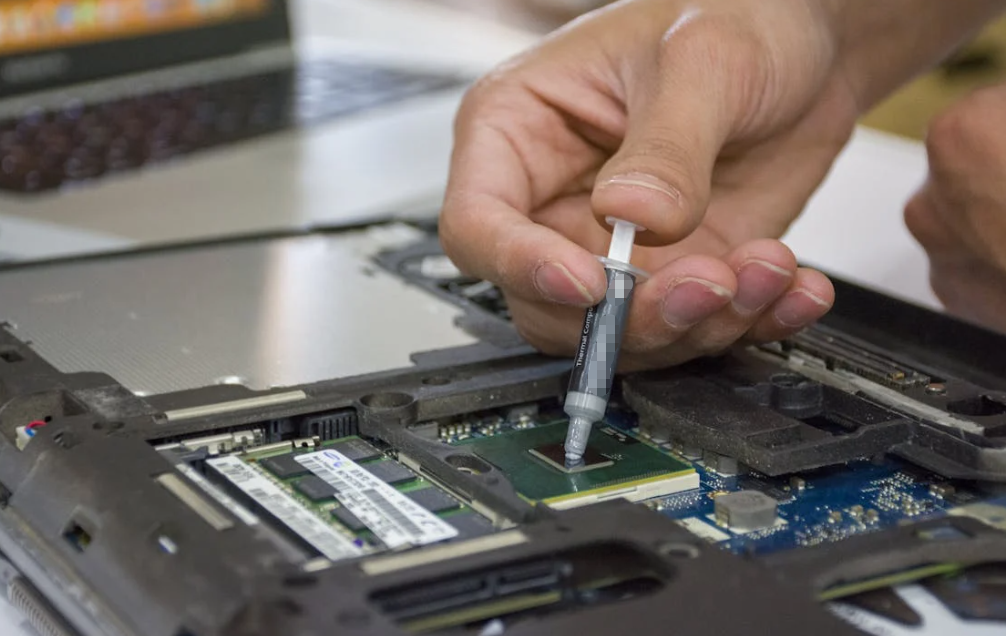
Chip → Thermal Interface Material → Heat Spreader → Heat Sink → Ambient Air
The efficiency of this path determines how effectively heat can escape the system.
Materials with high độ dẫn nhiệt transfer heat rapidly. Materials with low thermal conductivity trap heat.
Ví dụ:
| Vật liệu | Độ dẫn nhiệt xấp xỉ |
| Đồng | ~400 W/m·K |
| Nhôm | ~205 W/m·K |
| Aluminum Nitride | ~170–200 W/m·K |
| Silicone Gap Filler | ~1–12 W/m·K |
| Standard FR4 PCB | ~0.3–0.4 W/m·K |
This enormous difference explains why metals, ceramic substrates, graphite sheets, and advanced thermal interface materials are widely used in electronics cooling.
Main Applications of Thermal Conduction in Electronics
CPU và GPU
Processors are among the hottest components inside modern electronics.
High-performance CPU và GPU can generate enormous thermal loads during gaming, AI computing, or data processing. In these systems, thermal conduction is critical for maintaining stable clock speeds and preventing thermal throttling.
The heat generated inside the silicon die must quickly transfer through:
- Keo tản nhiệt
- Integrated heat spreader
- Vapor chamber or heat pipe
- Tản nhiệt
- Cooling fan
Poor thermal conduction creates hotspots that reduce performance instantly.
Gaming laptops are a good example. Two devices may use the same processor, yet thermal design determines which one performs better under sustained workloads.
This is why premium thermal interface materials have become essential in modern computing systems.
Điện tử công suất
Power electronics produce extremely high heat densities.
Các ứng dụng bao gồm:
- Biến tần xe điện
- Động cơ truyền động
- Solar inverters
- Industrial power supplies
- Charging stations
Wide-bandgap semiconductors such as silicon carbide (SiC) and gallium nitride (GaN) enable higher efficiency and switching speeds, but they also create serious thermal challenges.
In these systems, thermal conduction materials must provide:
- Độ dẫn nhiệt cao
- Cách điện điện
- Mechanical stability
- Resistance to thermal cycling
Common solutions include:
- Miếng tản nhiệt
- Ceramic substrates
- Từ lấp đầy khoảng trống
- Vật liệu chuyển pha
- Keo dẫn nhiệt
For EV power modules, even a small reduction in thermal resistance can significantly improve efficiency and reliability.
Hệ thống chiếu sáng LED
LEDs convert more energy into light than traditional bulbs, but they still generate substantial heat.
In fact, most unused energy inside LEDs becomes heat rather than visible light. If that heat cannot escape efficiently, LED brightness drops and color stability changes over time.
Thermal conduction plays a central role in:
- Đèn đường
- Automotive headlights
- Display backlights
- Industrial lighting
- High-power LED modules
Many LED systems now use:
- Aluminum-core PCBs
- Keo tản nhiệt
- Heat spreaders
- Graphite thermal sheets
The goal is simple: keep junction temperature under control.
A cooler LED lasts longer and performs more consistently.
Electric Vehicle Battery Systems
Battery thermal management has become one of the fastest-growing areas for thermal conductive materials.
Lithium-ion batteries are highly sensitive to temperature fluctuations. Excessive heat accelerates degradation and can create safety risks.
Inside EV battery packs, thermal conduction helps:
- Equalize cell temperature
- Prevent thermal runaway
- Improve charging stability
- Extend battery lifespan
Battery systems commonly use:
- Thermal gap fillers
- Silicone thermal pads
- Thermally conductive potting compounds
- Tấm than chì
Modern EV battery packs require both thermal conduction and electrical insulation simultaneously, making material selection especially complex.
This is one reason why thermally conductive silicone materials have seen rapid adoption in the automotive sector.
Printed Circuit Boards (PCBs)
PCBs are not just electrical platforms anymore. They are also thermal pathways.
As component density increases, PCB thermal management becomes increasingly important.
Thermal conduction in PCBs involves:
- Copper planes
- Thermal vias
- Metal-core substrates
- Embedded heat spreaders
Advanced PCB designs now intentionally route heat away from hotspots toward larger conductive regions.
Studies on PCB reliability show that repeated thermal stress can create cracks, delamination, and material fatigue over time.
This is particularly important in:
- Điện tử ô tô
- Aerospace systems
- Industrial control equipment
- Hạ tầng viễn thông
Smartphones and Consumer Electronics
Consumers expect devices to be thinner every year. Unfortunately, thinner devices leave less room for airflow and cooling hardware.
As a result, thermal conduction materials have become essential.
Modern smartphones use:
- Graphite films
- Vapor chambers
- Copper foils
- Keo tản nhiệt dạng gel
- Conductive adhesives
High-end phones today can dissipate heat surprisingly efficiently despite their compact size.
Without advanced thermal conduction solutions, fast charging, 5G communication, and mobile gaming would not be practical.
Common Thermal Conductive Materials Used in Electronics

Vật liệu tản nhiệt (TIMs)
TIMs fill microscopic air gaps between surfaces.
Because air has extremely poor thermal conductivity, eliminating these gaps dramatically improves heat transfer.
Common TIMs include:
- Keo tản nhiệt
- Miếng tản nhiệt
- Vật liệu chuyển pha
- Hợp chất kim loại lỏng
TIMs are widely used between chips and heat sinks.
Miếng đệm tản nhiệt silicone
Silicone thermal pads are popular because they combine:
- Độ dẫn nhiệt
- Cách điện điện
- Compressibility
- Ease of assembly
They are widely used in:
- Điện tử ô tô
- Telecom systems
- Điện tử tiêu dùng
- Mô-đun LED
Different filler materials such as aluminum oxide, boron nitride, or ceramic particles help improve conductivity.
Graphite and Graphene Materials
Graphite sheets have become extremely important in thin electronic devices.
Họ cung cấp:
- High in-plane thermal conductivity
- Lightweight structure
- Flexible installation
Some advanced graphene-based materials are also being explored for next-generation cooling systems.
Research into boron nitride and graphene-related materials continues to expand due to their excellent thermal performance.
Ceramic Substrates
Ceramics such as aluminum nitride (AlN) and silicon nitride are increasingly used in power electronics.
Họ cung cấp:
- Excellent thermal conductivity
- Cách điện điện
- High-temperature resistance
These materials are especially important in:
- EV power modules
- High-voltage systems
- Điện tử hàng không vũ trụ
Emerging Trends in Electronic Thermal Management
Miniaturization Creates More Heat
Electronic systems continue becoming smaller while power density rises.
This creates localized hotspots that are harder to cool using traditional approaches.
3D chip packaging adds even more complexity because stacked components trap heat internally.
Future thermal solutions will likely rely on:
- Advanced TIMs
- Embedded cooling
- Nano-materials
- Hybrid conduction systems
AI and Data Centers
AI computing hardware consumes enormous power.
Large GPU clusters generate intense thermal loads, forcing data centers to invest heavily in cooling technologies.
Thermal conduction materials now play a major role in:
- Cold plate cooling
- Immersion cooling
- High-density server racks
- Advanced packaging systems
Thermal efficiency directly affects operating costs.
Even small improvements in heat transfer can reduce energy consumption significantly at scale.
Flexible Electronics
Wearables and flexible electronics introduce a new challenge: heat dissipation in bendable structures.
Traditional rigid heat sinks are unsuitable for these applications.
Researchers are developing:
- Flexible graphite films
- Stretchable thermal materials
- Ultra-thin conductive layers
These technologies are expected to become more important in medical devices and smart textiles.
Challenges in Thermal Conduction Design
Despite major advances, thermal conduction in electronics still faces several engineering limitations.
Material Trade-Offs
A material with excellent thermal conductivity may have poor:
- Cách điện điện
- Tính linh hoạt
- Cost efficiency
- Processability
Engineers must balance multiple requirements simultaneously.
Interface Resistance
Even highly conductive materials perform poorly if interfaces are uneven.
Microscopic gaps increase thermal resistance dramatically.
That is why surface flatness, compression force, and material compatibility matter so much.
Thermal Cycling
Electronics repeatedly expand and contract during operation.
Over time, this thermal cycling can damage interfaces and reduce performance.
Materials must maintain long-term stability under:
- Rung động
- Độ ẩm
- Temperature fluctuations
- Ứng suất cơ học
This is especially important in automotive and industrial applications.
Future of Thermal Conduction in Electronics
The future of electronics depends heavily on thermal innovation.
As processors become more powerful and electronic systems more compact, traditional cooling methods alone will not be enough.
Emerging solutions include:
- Diamond-based thermal materials
- Liquid cooling integration
- Two-phase cooling systems
- AI-optimized thermal design
- Nano-engineered interfaces
At the same time, thermally conductive polymers and silicone materials will continue evolving to meet demands for lightweight, electrically insulating, and manufacturable thermal solutions.
The companies that solve thermal challenges effectively will gain major advantages in performance, reliability, and energy efficiency.
Thermal conduction is no longer just a support technology.
It has become a core driver of electronic innovation.
Kết luận
Thermal conduction plays a foundational role in modern electronics. From CPUs and GPUs to EV batteries and power semiconductors, efficient heat transfer determines whether electronic systems operate safely and reliably.
As power density continues increasing across industries, thermal management is becoming more sophisticated and material-driven. Advanced thermal interface materials, ceramic substrates, graphite films, and conductive silicone compounds are now essential components in electronic design.
For manufacturers and engineers, improving thermal conduction is not simply about cooling. It is about extending lifespan, improving efficiency, protecting reliability, and enabling the next generation of electronic technologies.
Câu hỏi thường gặp
What is thermal conduction in electronics?
Thermal conduction is the transfer of heat through solid materials inside electronic systems to prevent overheating.
Why is thermal management important for electronics?
Good thermal management improves performance, reliability, safety, and product lifespan.
What materials are commonly used for thermal conduction?
Common materials include copper, aluminum, graphite, thermal pads, thermal grease, and ceramic substrates.
What happens if electronic devices overheat?
Overheating can cause slower performance, system instability, permanent damage, or shortened lifespan.
Where are thermal conductive materials used?
They are widely used in CPUs, GPUs, EV batteries, LEDs, telecom equipment, PCBs, and industrial electronics.