
Non-silicone thermal interfaces
Silicone-Free Thermal Grease for Contamination-Sensitive Electronics
Connect thin, clamped heat-source interfaces to their cooling surfaces while addressing silicone restrictions. Select non-silicone thermal grease around the actual bond line, sensitive surfaces, application process and lifetime evidence—not a chemistry label alone.
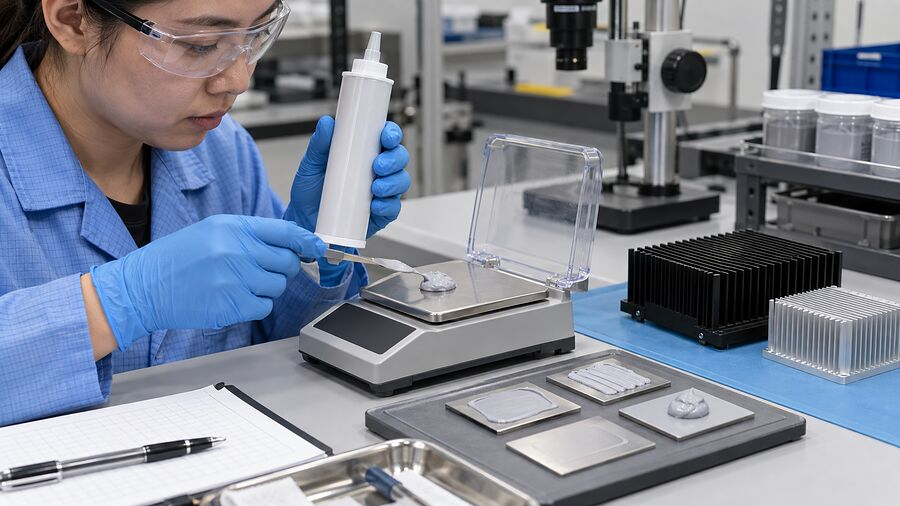
CleanlinessSpecify the heat path and contamination limits together, then validate the assembled interface.
Define the prohibited chemistry and declaration scope
Thin, reasonably flat and mechanically mounted
Controlled dispense or print with sensitive keep-outs
Thermal, electrical, residue and aging acceptance
A chemistry choice within a heat path
What Is Silicone-Free Thermal Grease?
Silicone-free thermal grease is a thermally conductive interface compound using a non-silicone base system. It is selected to wet nearly mating heat-source and cooling surfaces where silicone-related contamination or material restrictions must be addressed.
The finished thermal result depends on coverage, compressed thickness, surface condition and the mounting system. Grease generally serves a thin contact interface; it is not an adhesive, structural support or a material for bridging a large stand-off.
“Silicone-free” describes a chemistry requirement, not a universal promise of zero residue, zero bleed or zero outgassing. Request the selected grade’s declaration scope and relevant evidence.
Explore Haktak thermal material solutions when the interface also requires a different material format or manufacturing route.
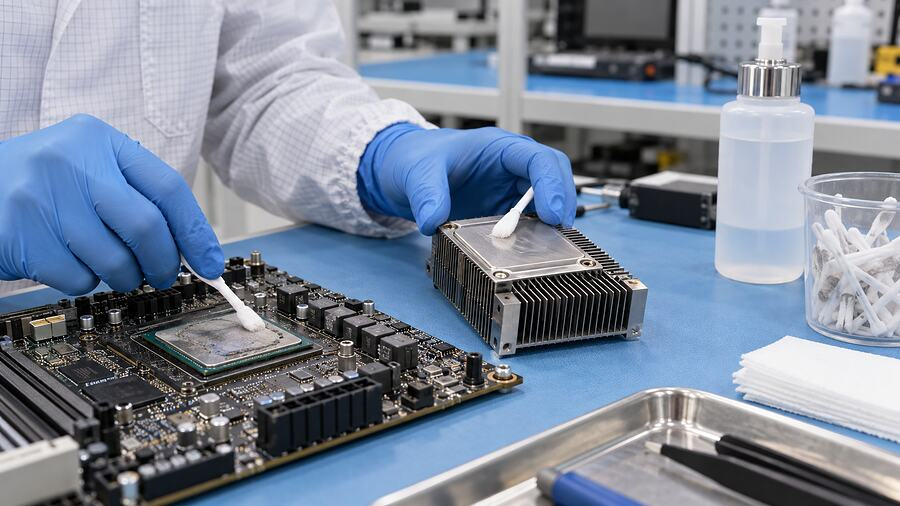
The assembled interface must pass
Coverage and thermal contact still need validation after a non-silicone formulation is chosen.
Separate the requirements
Silicone-Free, Low Bleed and Low Outgassing Are Different Requirements
Use three independent questions in the specification. Passing one does not prove the others.
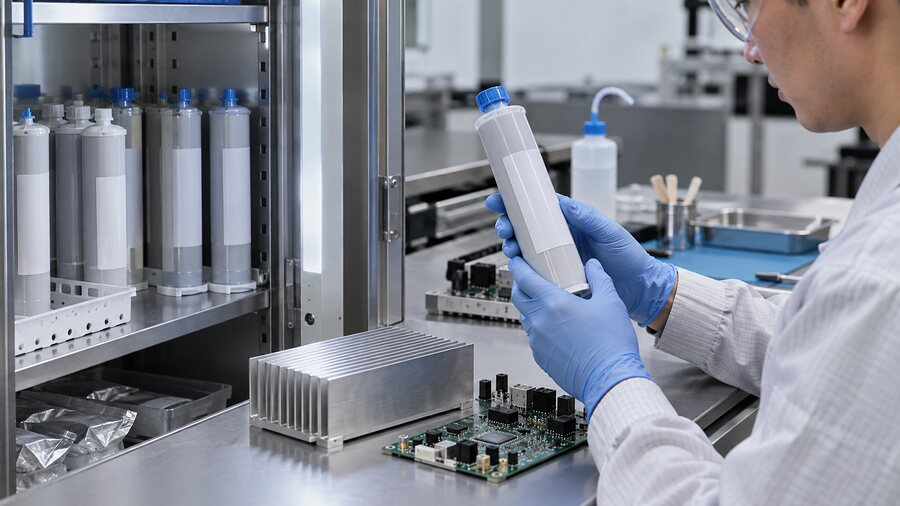 01 / Chemistry
What is restricted?
Define whether the concern is a silicone base, particular siloxanes, transferable residue or a customer material policy. “Low siloxane” may still describe a silicone-based system and is not interchangeable with non-silicone chemistry.
Evidence to request: a grade-specific declaration with an agreed scope and, when required, analytical method and limit. 02 / Liquid migration
How much oil separates or moves?
Non-silicone carriers can still separate and migrate. Evaluate temperature, time, orientation, exposed edges and nearby surfaces—not just whether the jar looks homogeneous.
Evidence to request: bleed and surface compatibility results under relevant conditions. 03 / Volatile release
What can reach sensitive surfaces?
Volatiles and condensable deposits are a separate concern. Vacuum and optical environments may need additional screening, witness surfaces and assembly-level exposure tests.
Use the low-outgassing thermal grease guide for a dedicated vacuum assessment; silicone-free alone is not vacuum qualification.
Make two decisions together
When Should You Choose Non-Silicone Thermal Grease?
Choose the chemistry because the product or process requires it. Choose the grease format because the actual interface can support it.
 Check A / Sensitive surroundings
A specific restriction has a reason
- Optical paths or sensor surfaces have defined deposit limits.
- Contacts, relays or switches require chemistry and residue control.
- Coating, painting or adhesive bonding has a verified contamination sensitivity.
- A customer specification defines the prohibited substance and evidence required.
Best fit: a clearly stated material restriction backed by application-specific acceptance criteria.
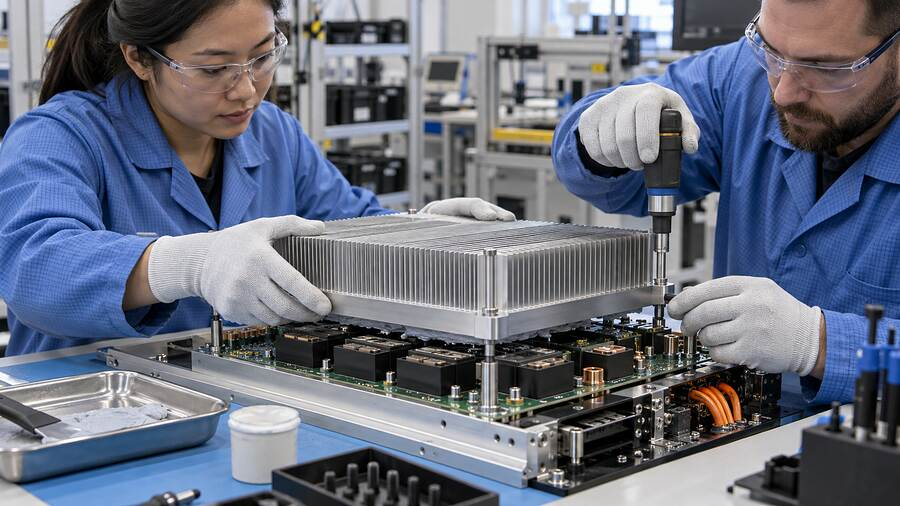 Check B / Thermal interface
The layer can stay thin and complete
- Mating surfaces are reasonably flat with a defined contact footprint.
- Mounting load stays inside the hardware’s safe, repeatable window.
- Deposit quantity and application can produce continuous coverage.
- Lifetime movement and service procedures can be qualified.
Best fit: thin mounted contact—not a large or variable mechanical gap.
Review the thermal grease family for material options. If the dominant selection question is installed heat-path performance, compare the low thermal resistance grease route alongside the chemical requirement.
Ask for complete conditions
Silicone-Free Thermal Grease Specifications to Compare
A useful comparison includes thermal, electrical, chemical and manufacturing evidence for the exact candidate. The checklist below is not a fabricated Haktak product parameter table.
Keep units, methods, specimen state and exposure conditions attached to the results. Different methods or interface geometries may not produce directly comparable values.
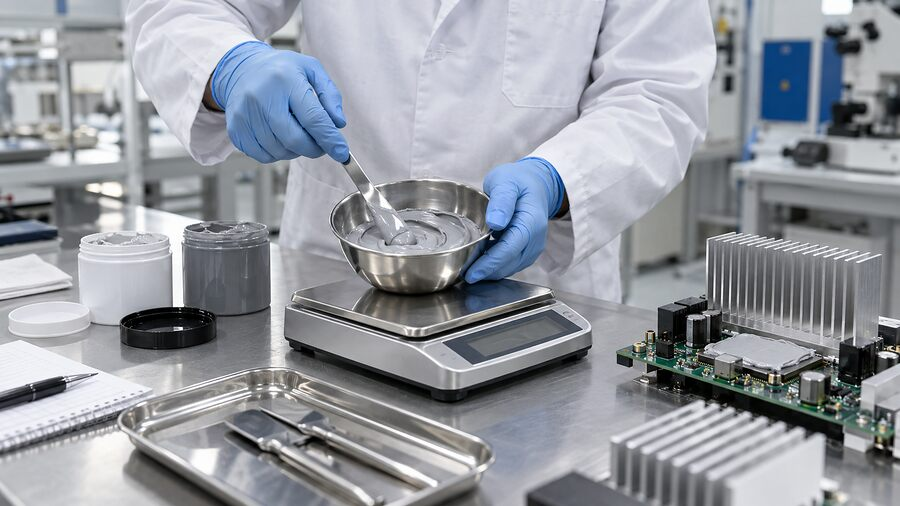
Send thermal and cleanliness targets
Review Your Selection Brief| Specification | Why it matters | Conditions to record |
|---|---|---|
| Chemical restriction | Determines whether the grade meets the intended silicone or siloxane requirement. | Substances, declaration scope, method, limit, grade and revision. |
| Thermal impedance and coverage | Connects the material to the installed heat path. | Units, method, substrates, area, final BLT, temperature and mounting pressure. |
| Viscosity and rheology | Controls print release, pumping, placement and spread. | Measurement temperature/shear, equipment, pattern, cold starts, refills and idle time. |
| Oil bleed and volatile behavior | Addresses carrier migration and released species separately. | Exposure time, temperature, pressure, orientation, conditioning and deposit criteria. |
| Surface compatibility | Protects coatings, optics, contacts, plastics, seals and bonding operations. | Actual adjacent materials, distance, ventilation, exposure and functional acceptance. |
| Electrical properties | Checks insulation or conductive-edge risk; the category name does not guarantee either. | Dielectric/resistivity evidence, voltage, final layer, edge clearance and contamination. |
| Aging and serviceability | Reveals pump-out, hardening and performance drift after exposure or replacement. | Thermal/power cycling, vibration, teardown, cleaning procedure and remounting results. |
Candidate contexts, not automatic approval
Silicone-Free Thermal Grease for Sensitive Electronics Applications
The thermal interface and the nearby sensitive function must both pass. These scenes illustrate electronics contexts, not certified material compatibility.
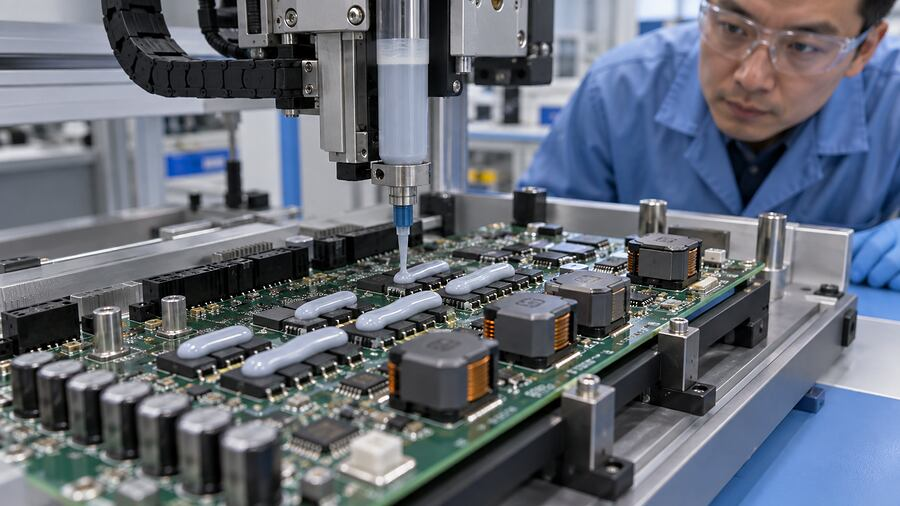
Protect the sensitive path
For cameras and sensors, map the grease location relative to lenses and detection surfaces. Evaluate deposits and optical function at the actual exposure conditions, alongside thermal performance.
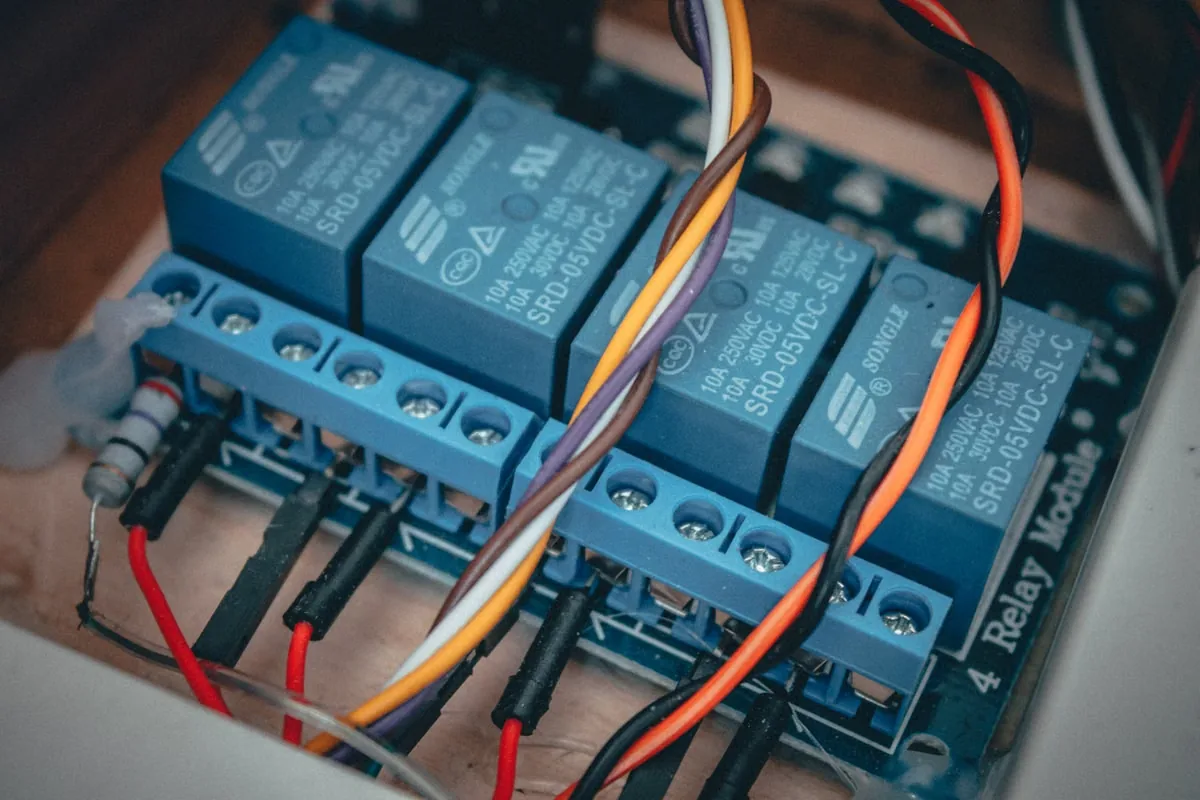
Define what must stay clean
Near relays, switches and connectors, control edge spread and carrier migration. Verify the product’s chemical restrictions and relevant contact function, not appearance alone.

Keep process zones separate
Map coating and adhesive keep-outs, handling tools and transfer routes. Test the actual downstream adhesion or coating result; changing the carrier does not remove every contamination source.
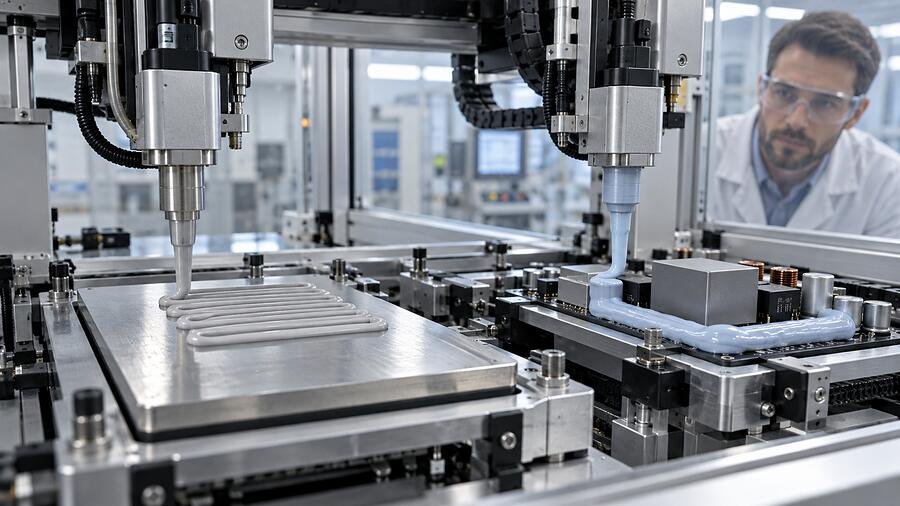
Lock the placement window
Apply Silicone-Free Thermal Grease Without Losing Interface Control
Material, cleaning, tools and mounting are one process. Qualify the method before transferring a hand trial into production.
Clean with a compatible method
Remove old compound and incompatible residue. Define approved cleaners, drying and handling. Segregate tools where the silicone restriction requires it.
Control quantity and keep-outs
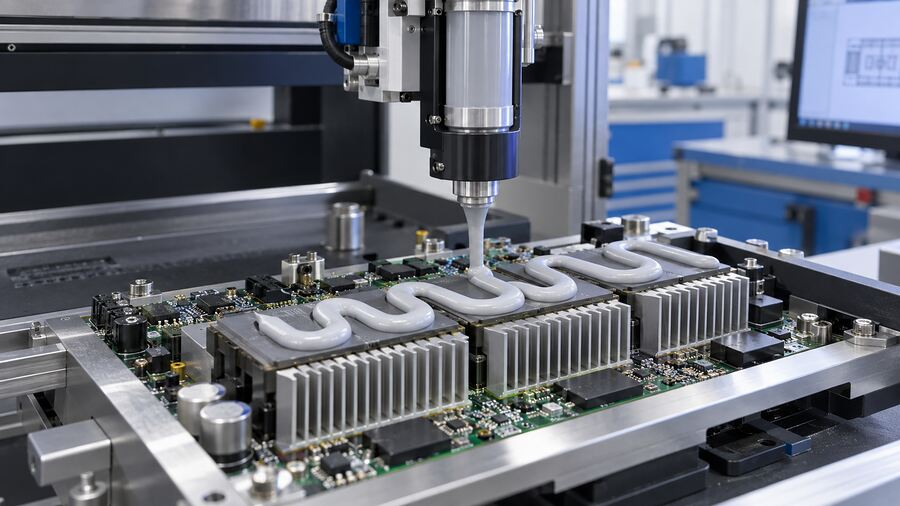
Match nozzle, screen or stencil to the footprint. Qualify dosage, pattern, release and air control without flooding sensitive zones.
Use the approved load
Follow device instructions for alignment and fastener sequence. More pressure is not always better; avoid board bowing, device damage and excessive squeeze-out.
Inspect the finished interface
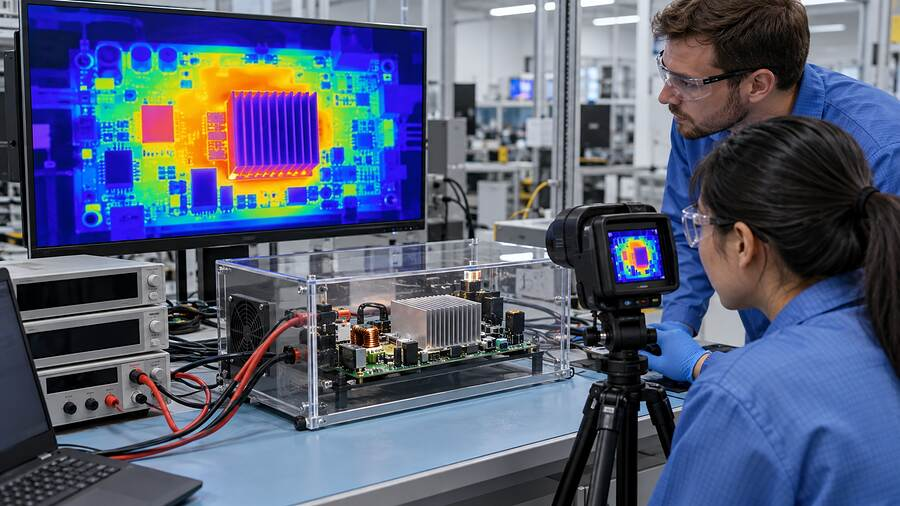
Check coverage, BLT, voids, thermal result and nearby residue. Set traceability and reaction limits for starts, refills, idle periods and changeovers.
Acceptance has two tracks
Validate Silicone-Free Thermal Grease After Aging and Exposure
Measure both the heat path and the sensitive function before and after representative service exposure. Passing a bulk material test does not prove the assembly.
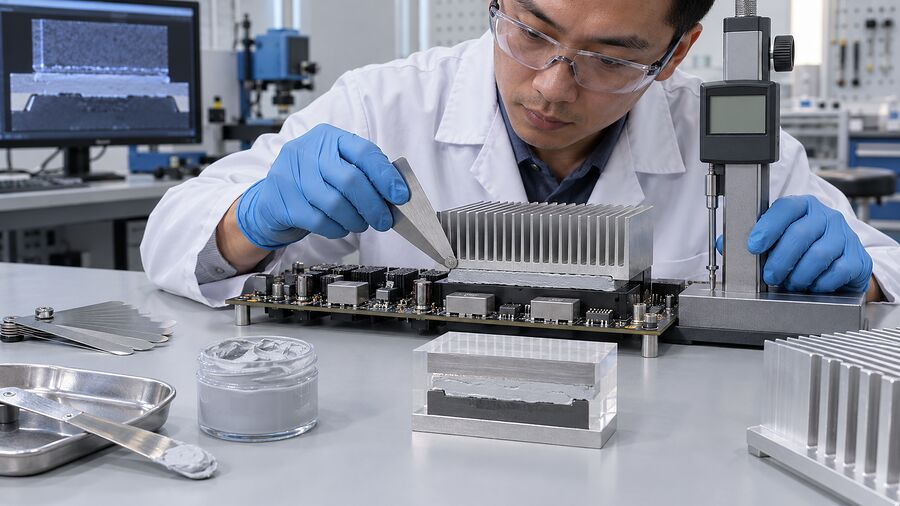 01 / Baseline
Establish both initial results
Record grade, surfaces, dosage, final thickness and mounting load. Measure thermal performance and relevant optical, contact or adhesion function using defined acceptance limits.
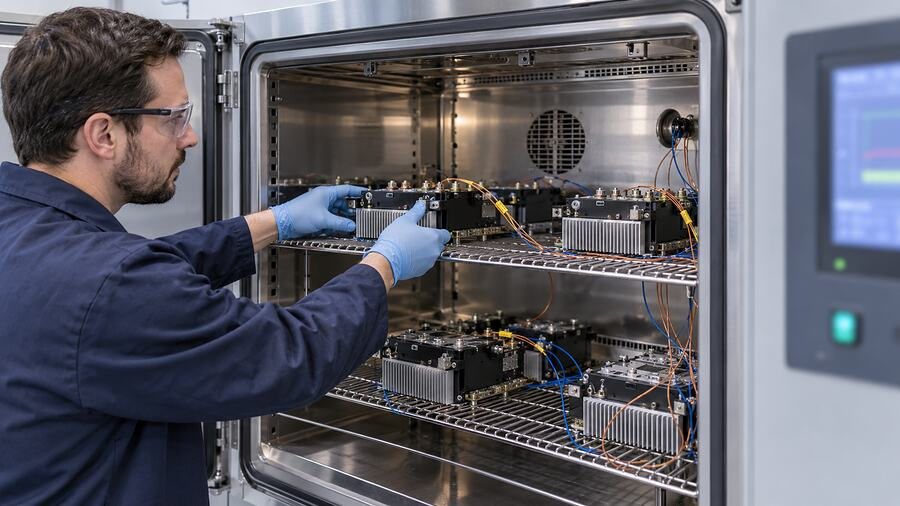 02 / Exposure
Reproduce the service risks
Challenge temperature, cycling, orientation and vibration as appropriate. Track carrier separation, deposits and contact loss. Add application-specific vacuum screening only when that environment requires it.
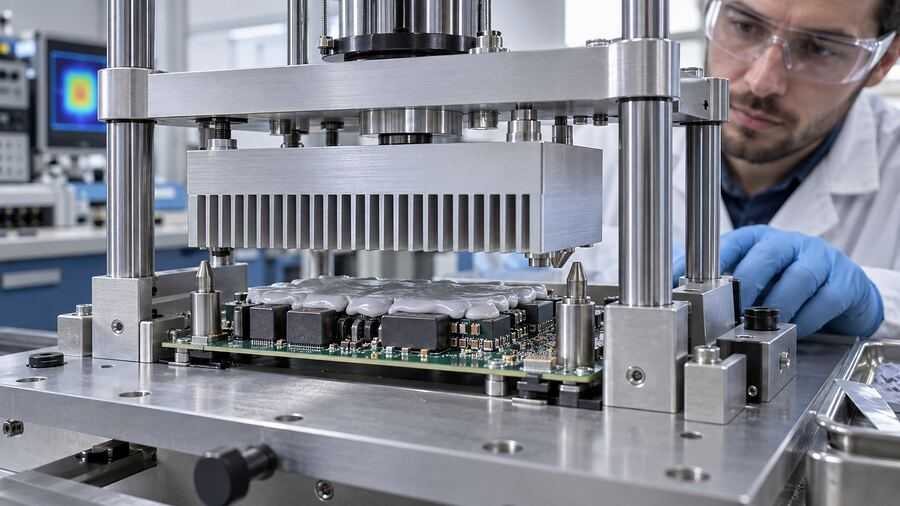 03 / Release
Retest and validate rework
Compare thermal drift and sensitive-surface function. Inspect teardown residue; validate cleaning, replacement quantity and remounting. Keep change control for the grade, packaging and process.
Choose format and chemistry separately
Silicone-Free Thermal Grease vs Silicone Grease, Gel and Pads
A shared chemical requirement does not make material forms interchangeable. Start from the gap, mounting load, processing and surrounding surfaces.
| Material route | Candidate interface | Selection reason | Still needs validation |
|---|---|---|---|
| Silicone-free thermal grease | Thin, nearly mating, mechanically mounted contact. | Non-silicone chemistry with surface wetting and a controlled thin layer. | Declaration scope, coverage, bleed, volatiles, electrical behavior and aging. |
| Silicone-based grease | Thin mounted contact where the relevant chemistry is permitted. | A candidate formulation selected for the thermal and service conditions. | Siloxane/residue limits if relevant, thermal result, compatibility and migration. |
| Silicone-free thermal gel | Variable gaps or topography requiring a qualified soft filling route. | Conformance and dispensing with a non-silicone system. | Gap range, rheology, final state, voids, migration and rework. |
| Silicone-free thermal pad | Defined gaps suited to a preformed part. | Controlled part geometry and placement without wet application. | Compression stress, thickness, contact, residue and service exposure. |
Specify the risk, not just the label
Request a Silicone-Free Thermal Grease Recommendation
Send the reason silicone is restricted, the prohibited substances and acceptance limits. Include the interface drawing, contact area, surface finish, bond-line target, mounting conditions, power and temperature limits.
Share nearby optics, contacts, coatings or bonding zones; application equipment, electrical needs, lifetime tests, packaging and service requirements. Haktak can review a suitable material and trial route with grade-specific evidence before approval.
Practical selection answers
Silicone-Free Thermal Grease FAQ
What is silicone-free thermal grease?
It is a thermal interface compound using a non-silicone base system, selected for thin mounted contact where silicone restrictions matter. Confirm the exact grade’s declaration and performance evidence.
Is silicone-free the same as silicon-free?
No. Silicone is a polymer chemistry; silicon is an element. A silicone restriction does not automatically prohibit every silicon-containing filler. State prohibited substances and limits explicitly.
Does silicone-free grease guarantee zero oil bleed?
No. Non-silicone carriers may also separate or migrate. Request relevant bleed data and test the actual temperature, orientation, exposed edges and sensitive surfaces.
Is every non-silicone grease low outgassing?
No. Volatile release and condensable deposits need independent evidence under defined conditions. Vacuum or optical use may require additional screening and assembly-level exposure tests.
Is silicone-free thermal grease electrically insulating?
Not necessarily. The filler and formulation determine electrical behavior. Verify dielectric or resistivity evidence, final layer, working voltage and edge clearance for the selected grade.
Can it be used near lenses or sensors?
It can be screened, but compatibility is not automatic. Map location and exposure, then evaluate deposits and the actual optical or sensor function with pre-agreed limits.
How is thermal grease different from silicone-free thermal gel?
Grease usually serves a thin, nearly mating mounted interface. Gel may support a qualified variable-gap filling route. Compare rheology, usable gap, final state and assembly load rather than the name alone.
Can silicone-free thermal grease be printed or dispensed?
Suitable grades may support either method. Qualify rheology, temperature, equipment, dosage and pattern release together, including idle periods, refills and coverage after mounting.
Can it pump out, and can it be reworked?
Both are grade- and assembly-dependent. Test coverage and thermal drift after cycling. Validate removal, cleaning compatibility, replacement volume and the result after remounting.
What information does Haktak need for selection?
Provide the chemistry restriction, contamination criteria, drawing, BLT, mounting load, thermal target, sensitive surfaces, application process, electrical needs, reliability plan, packaging and production quantity.