Picture a small sensor housing fixed to a coated aluminum bracket. The housing is plastic. The bracket warms and cools every day. If the bond is too stiff, the edge may lift. If the adhesive stays soft because moisture never reached the center, that is no better. You need a material that sticks, bends enough, and cures in the actual joint.
That is the real question behind “what is polyurethane adhesive?” PU can be a flexible sealant, a structural two-part adhesive, or a reactive hot melt used on a fast production line. The name on the cartridge is a starting clue. It is not a specification.
What Is Polyurethane Adhesive?
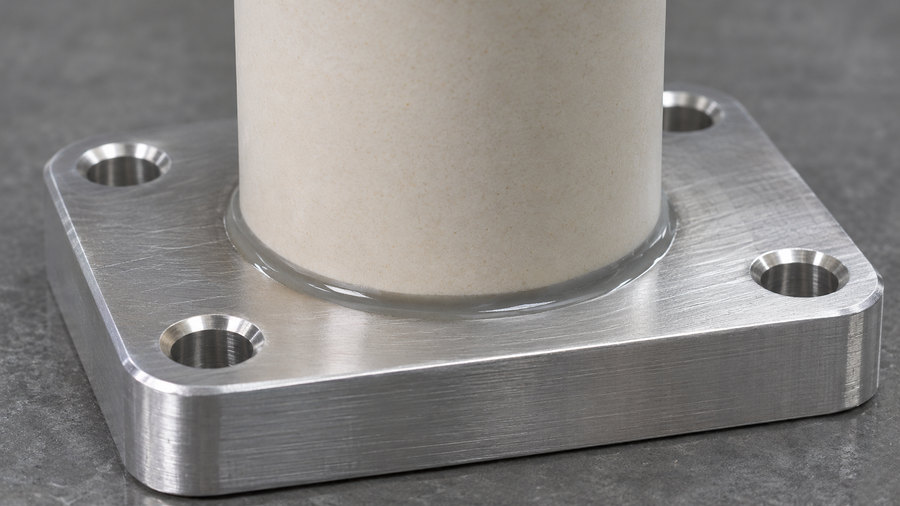
Polyurethane adhesive is a formulated bonding material based on urethane chemistry. A common route involves an isocyanate reacting with a polyol. Formulators can change the building blocks, fillers, catalysts and cure process to make a material that is soft and elastic, fairly rigid, or somewhere in between.
PU adhesive, polyurethane glue and urethane adhesive are often used for related products. The wording alone does not tell you whether the product is a one-part moisture-cure bead, a two-part structural system, or a hot melt. Read the technical data sheet, then look at the actual joint.
A bond has more than one job
An adhesive holds two surfaces together. A sealant mainly closes a path for water, dust or air while allowing movement. One material can do both, but the required tests are different. A potting compound fills or encapsulates a cavity. A thermal interface material mainly helps heat cross a gap. Those names are about function, not just chemistry.
For instance, a flexible PU bead may steady a connector and seal a housing seam. It should not be assumed to provide the heat path under a power device. HAKTAK’s electronic adhesive systems offer a useful product-family starting point when the assembly needs bonding, sealing or component fixing.
Flexibility has to fit the load
PU is often chosen because a suitable formulation can accommodate movement between unlike materials. Think of the adhesive as the rubber strip between two moving door panels. It can spread strain instead of passing it straight to a fragile edge. Yet a softer bond also moves more under a sustained load. A structural bracket, a cosmetic trim and a vibration damper need different balances of stiffness, strength and peel resistance.
Ask where the force enters the joint. A wide overlap mainly loaded in shear behaves differently from a tab that can be peeled up at one corner. A high lap-shear figure on a small metal coupon cannot answer every question about your plastic sensor mount.
Polyurethane Adhesive Types: 1K, 2K and Reactive PUR Hot Melt
Here is the important split. Different PU formats reach usable strength by different routes.
| Format | What starts or completes cure | Where it may fit | Main process question |
|---|---|---|---|
| One-part moisture-cure PU | Moisture reaches reactive prepolymer | Accessible beads, flexible bonding and sealing | Can moisture reach the whole bond line in time? |
| Two-part PU | Metered components react after mixing | Larger or enclosed joints, controlled structural assembly | Is the mix ratio correct, and is the joint assembled within pot life? |
| Reactive PUR hot melt | Cooling gives initial hold; moisture reaction builds final properties | Fast placement and handling on suitable substrates | Is the applicator temperature right, and can final moisture cure occur? |
| Specialized heat or dual-cure PU | A grade-specific energy and chemistry sequence | Selected electronics or production processes | Does every hidden area get the required cure? |
One-part: simple package, real moisture requirement
Many 1K products are supplied ready to use. An isocyanate-terminated prepolymer reacts with water from the air or substrate. No on-line component mixing is needed. That makes application convenient, but “ready to use” does not mean “ready to load.”
A thick hidden bead can fool you
Moisture must reach the reactive material. A bead may form a skin while its middle remains uncured. Bonding two impermeable metal sheets across a broad, enclosed area can be especially awkward for a moisture-cure formulation. Check the maker’s permitted bead geometry, humidity conditions and through-cure guidance. Do a trial on the real assembly. A fingernail pressed into the outside edge is hardly a cure test.
Some 1K systems use a specified water mist or substrate moisture. Others do not. Adding water by instinct can create bubbles or damage adhesion. Follow the exact grade instructions.
Two-part: control the mix, then watch the clock
In a common 2K PU, the reactive components are kept separate until metered and mixed. Once combined, the reaction can progress through the bulk, including a joint where air cannot readily enter. That can help with deeper or enclosed sections. It also introduces mixing ratio, static mixer, pot life and dispense-volume controls.
The ratio may be stated by mass or by volume. Those are not interchangeable unless the supplier says so. A poor mix can leave a soft streak inside an otherwise firm-looking joint. The first shot from a fresh mixer may need purging. Once the material reaches the end of its working time, it may no longer wet the surfaces properly even if the bead still moves through the nozzle.
Two-part does not automatically mean stronger or faster. Both are grade and process dependent. The Chemique technical guide to 1K and 2K PU explains the different reaction paths and common processing errors.
Reactive PUR hot melt: two stages, one finished bond
Reactive polyurethane hot melt is usually applied warm. It cools and develops initial handling strength, then reacts with moisture to build its final properties. This is useful when a line must move parts soon after assembly. Initial hold is not final cure. The 3M PUR adhesive overview describes that two-stage behavior.
Do not confuse a PUR hot melt with every product labeled “PU.” The application equipment, storage, open time and substrate conditions are different. A process that is great for a trim panel may be a poor fit for an enclosed metal-to-metal bond with no practical moisture path.
Match the Adhesive to the Joint, Not the Label
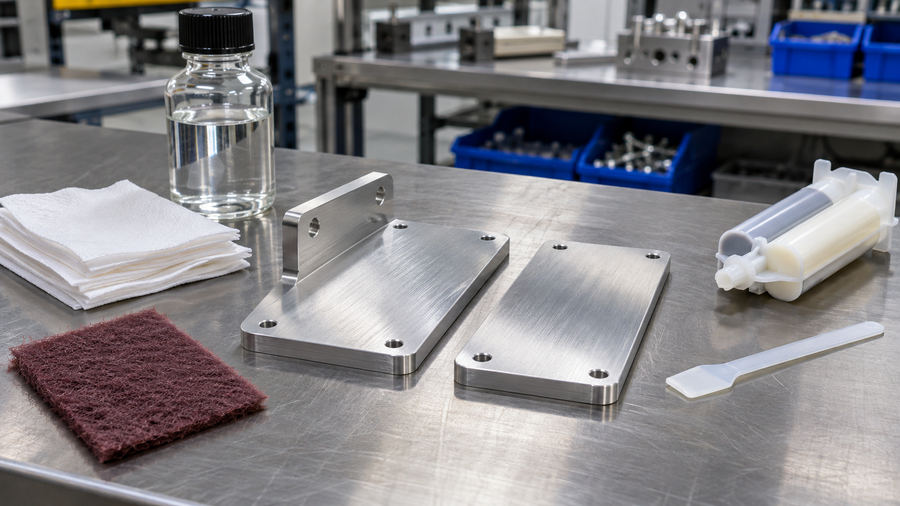
Imagine two clean samples that seem to bond well at a desk. Now add a production coating, a mold-release residue, a longer dispensing delay and a hot operating enclosure. Suddenly the “same” joint is not the same. Surface and process are part of material selection.
Check both substrates and their finishes
PU formulations can bond selected metals, composites, wood, glass, plastics and foams. Suitability still depends on the exact surfaces. Bare aluminum is not the same as anodized or painted aluminum. A strong adhesive attached to a weak powder coat can pull the coating away from the metal. Some plastics need cleaning, a primer or another surface treatment. Polyethylene and polypropylene are particularly challenging for many ordinary adhesive grades.
Test the finished surfaces supplied to production. Include the cleaner, abrasion or pretreatment actually planned for the line. Record whether a failed sample separates at the adhesive-to-surface interface, tears within the adhesive, or breaks the coating or substrate. Each points to a different fix.
Give the bond a sensible shape
Joint area, overlap, fillets and bond-line thickness change how stress is shared. A thin, even layer may be right for one rigid assembly. Another joint needs a thicker, more compliant layer to handle differential expansion. Too much adhesive can change stiffness, squeeze into an unwanted area or trap voids. Too little can leave dry spots.
The sensor housing example is a good reminder. The plastic and aluminum may expand at different rates. A cured adhesive that is stiff at the working temperature could concentrate stress at the corner. Ask for modulus and aged adhesion data relevant to the temperature range, then cycle a representative joint. The highest room-temperature strength number is not necessarily the winner.
Define the environment in real terms
“Outdoor” and “waterproof” are vague briefs. Is the bond exposed to standing water, salt mist, cleaning fluid, oil, fuel, direct sunlight or daily temperature swings? A PU grade may handle one exposure well and another poorly. UV stability, hydrolysis resistance and solvent compatibility vary with the formulation and protection offered by the enclosure.
Where electrical insulation is needed, request dielectric data for the specific product and thickness. Where the joint also needs heat transfer, ask about the filled grade’s thermal properties and the final bond line. PU chemistry alone provides no promise of thermal conductivity. HAKTAK’s thermally conductive adhesive range is relevant when fixation and heat flow must share the same interface.
Where PU Adhesives Work in Electronics and Industry
Electronics and controls. A suitable PU can fix a component, cushion vibration or help seal an enclosure. It may also be used in formulated potting systems, but a bonding bead and a cavity fill are different products and processes. In dense PCB assemblies, consider cure byproducts, moisture access, component stress, dielectric behavior and any rework need. HAKTAK’s semiconductor and electronics assembly materials page maps several of these distinct functions.
Vehicles and machinery. Trim, coated panels, sensors and other dissimilar-material joints may benefit from a specified flexible or structural PU. An EV module adds thermal cycling, vibration and service constraints. “Used in automotive” is not a qualification for every model or position. Test the product against the actual substrate finishes, loads and environmental profile.
Panels, wood and packaging. Other PU grades appear in building panels, woodworking and film lamination. These uses explain the family’s breadth but should not be borrowed as evidence for an electronics adhesive. Food-contact packaging, in particular, needs its own formulation, cure and compliance review. A carton glue, a reactive film laminating adhesive and a sensor-housing adhesive are not interchangeable because they share two letters.
If a board or module needs its entire cavity protected, compare the bonding task with a thermally conductive potting compound guide. If the job is only to bridge a serviceable thermal gap, a nonbonding interface may be more practical. Make the function clear before choosing the chemistry.
Polyurethane vs. Epoxy, Silicone, Acrylic and MS Polymer
Comparisons are useful only when the task stays in view. Each family includes many grades, and a toughened epoxy can be quite different from a rigid one. The table is a shortlist, not a ranking.
| Material family | Often considered when… | Check before committing |
|---|---|---|
| Polyurethane | The joint needs a balance of adhesion and movement | Cure access, substrate treatment, heat/solvent exposure, sustained load |
| Epoxy | High stiffness or structural strength is central | Peel and cycling loads, cure temperature, repair strategy |
| Silicone | A flexible environmental seal or wider movement is central | Adhesion, cure byproducts, paintability, migration near sensitive parts |
| Acrylic | Fast fixture or adhesion to a particular substrate is valuable | Odor, process window, stress and environmental aging |
| MS polymer hybrid | A paintable flexible seal is needed on suitable surfaces | Actual adhesion, cure depth, movement and chemical exposure |
For a permanent rigid attachment, epoxy adhesive fundamentals may be the more useful next read. If the assembly mainly needs a flexible seal, see what silicone sealant does. For a paintable perimeter seal, MS polymer sealants deserve a separate look. Each comparison is a starting point; the actual grade and joint still decide.
How to Apply PU Adhesive Without Common Failures
Build the application method alongside the material choice. For prototypes, write down the cleaning step, surface condition, room humidity, adhesive lot, deposit pattern, time before mating, fixture pressure and cure period. It sounds fussy. It also helps when one prototype passes and the next one peels off.
Surface preparation and dispensing
Remove oil, dust and weak surface layers with a method compatible with the part. Test whether a primer is needed rather than assuming PU bonds every finish without one. For 2K, confirm meter ratio, mixer type and purge procedure. For 1K, limit the open package’s exposure to humidity as instructed. Avoid long delays that leave a skin before mating.
Place enough material to wet the intended area, with no unplanned squeeze-out into connectors, contacts or optical paths. A bead that looks tidy from above may have a void underneath. HAKTAK’s adhesive dispensing process support covers repeatable bead geometry, mating and cure controls.
Handling strength is not full cure
Some assemblies can be moved before they are ready for service. Keep fixture time, handling strength and full cure as separate milestones. Follow the product’s schedule at the bond-line temperature and humidity, not a generic “overnight” rule. A cold metal block, a sealed joint or a large mix can behave differently from a thin test bead.
| What you see | Possible cause | First check |
|---|---|---|
| Bond lifts cleanly from coating | Poor wetting or weak coating attachment | Coating adhesion and representative surface prep |
| Soft core under a firm skin | Moisture has not reached the center | 1K bead depth, joint enclosure, cure time and humidity |
| Bubbles or foamy voids | Moisture reaction, contamination or process conditions | Grade instructions, water exposure, mix and cross-section |
| Mixed 2K bead has soft streaks | Off-ratio dispense or poor mixing | Metering, mixer and first-shot purge |
| Joint cracks after cycling | Expansion mismatch or unsuitable stiffness | Substrates, bond line, modulus and aged samples |
| Parts move after fixture release | Handling strength below the applied load | Fixture time and actual line temperature |
Foam can fill space in some products designed for that purpose. It is not evidence of a better structural bond. In an electrical module, bubbles may create a leak path or a weak area. Inspect the failure before changing the recipe.
Many uncured reactive PU systems contain isocyanate functionality. Consult the exact safety data sheet and workplace controls for storage, skin contact and ventilation. Low odor or a “solvent-free” label does not by itself settle handling hazards.
How to Qualify a Supplier and the Finished Joint
Send the supplier a short assembly brief: both substrate grades and finishes, the drawing and gap range, load direction, working temperature, fluids, UV exposure, humidity, electrical and heat-transfer requirements, cure equipment, line speed and repair plan. Ask for the exact grade’s TDS and SDS, not a family brochure alone.
Read performance numbers with their method, cure and substrate attached. ISO 4587 describes tensile lap-shear testing of specified rigid-to-rigid bonded assemblies. A coupon result is useful for comparison; it is not the allowable load for every joint. If the adhesive seals an electrical enclosure, IEC 60529 concerns the protection of the finished enclosure. The sealant tube does not carry the assembled box’s IP rating by itself.
For critical work, run representative samples through the expected thermal cycles, moisture, vibration or chemical exposure. Test mechanical strength after aging, inspect the failure mode and check electrical or thermal function where it matters. If a grade is described as flame-rated, compliant or approved for a regulated use, request a document for that specific product and condition. HAKTAK’s prototype sample service can support a discussion around the actual assembly before production sign-off.
Conclusion
Polyurethane adhesive is a flexible toolkit, not a one-size-fits-all glue. A 1K moisture-cure bead, a mixed 2K structural PU and a reactive hot melt each ask for a different process. Start with what the joint must hold, seal or protect. Check the real surfaces and cure path. Then test the finished bond after the conditions it will see in service. That small bit of discipline is usually cheaper than discovering a soft center or peeling edge in the field.
FAQs
1. What is polyurethane adhesive made of?
PU adhesives are formulated from polyurethane chemistry, commonly involving isocyanates and polyols or an isocyanate-terminated prepolymer. Fillers, catalysts and modifiers change the final behavior. Check the product TDS and SDS for the actual grade.
2. Is urethane adhesive the same as polyurethane adhesive?
The terms are often used for the same broad adhesive family. “Urethane” on a label does not tell you whether the product is a one-part sealant, a two-part structural adhesive or a reactive hot melt.
3. Is every PU adhesive a PUR hot melt?
No. PUR hot melt is a particular reactive format applied warm. Cooling gives initial hold, followed by a moisture-curing step. Other PU adhesives are dispensed at ambient temperature or mixed from two components.
4. How do one-part and two-part PU adhesives cure?
Many reactive 1K grades cure using moisture from air or a substrate. Common 2K systems start reacting when their components are mixed. Specialized systems use other activation methods. Always follow the specific grade’s instructions.
5. Can PU adhesive bond metal to plastic?
Often, with the right grade and surface preparation. The plastic type, metal finish and joint loads matter. Test production-representative parts rather than assuming any metal-to-plastic pairing works.
6. Does polyurethane glue expand or foam during cure?
Some moisture-reactive products can foam, and some are designed to expand. Many precision structural products are not selected for that behavior. Foam is not proof of good contact or bond strength.
7. Is PU adhesive waterproof enough for outdoor use?
Some grades are suitable for wet or outdoor service, but performance depends on the product, joint design, cure and exposure. Check UV, water, hydrolysis and chemical resistance for the exact conditions.
8. Is polyurethane adhesive electrically insulating or thermally conductive?
Those properties are formulation dependent. Ask for dielectric data when insulation is required. A thermally conductive grade needs appropriate fillers and test data at the intended bond-line thickness.
9. Should I choose polyurethane, epoxy or silicone?
Choose by the joint’s load, movement, heat, sealing task, cure access and rework needs. PU may balance adhesion and flexibility; an epoxy may suit a stiffer attachment; silicone may better fit a flexible seal. Specific grades can cross those rough boundaries.
10. How long does polyurethane adhesive take to cure fully?
There is no universal time. A 1K moisture-cure bead depends on moisture access and depth. A 2K product depends on ratio, temperature and formulation. A PUR hot melt may have handling strength before final cure. Use the grade’s full-cure schedule and validate the joint.