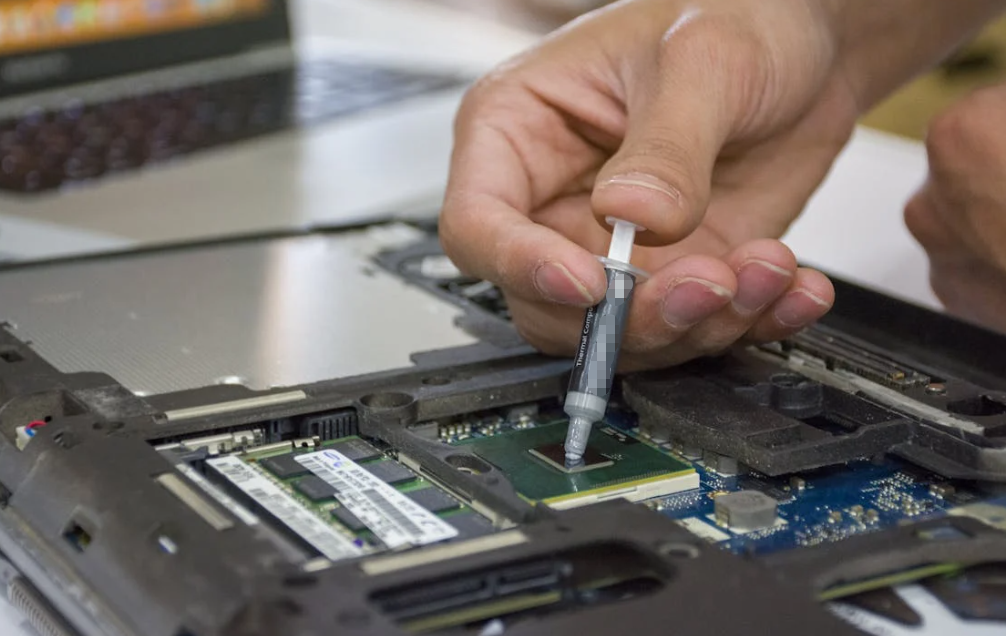
Thermal management is no longer a secondary consideration in electronics—it’s the backbone of performance, reliability, and product lifespan. As power densities rise in everything from smartphones to EV power modules, the choice of thermal interface material (TIM) becomes increasingly consequential.

Among the many TIM options available today, carbon fiber thermal pads and silicone thermal pads stand out as two widely used—but fundamentally different—solutions. On paper, they often seem interchangeable. In practice, they behave quite differently.
This article takes a grounded, engineering-focused look at both materials. Not just specs—but how they actually perform in real-world conditions.
What Are Thermal Pads?
Thermal pads are soft, solid TIMs designed to fill microscopic air gaps between heat-generating components (like CPUs, GPUs, or power ICs) and heat sinks.
Air, as it turns out, is a terrible conductor of heat. Thermal pads eliminate these air pockets, improving heat transfer efficiency.
Unlike thermal paste, pads are:
- Pre-formed
- Easy to apply
- Clean and consistent
But not all pads are created equal.
Material Foundations: Carbon Fiber vs Silicone

Carbon Fiber Thermal Pads
Carbon fiber pads are composite materials built around carbon-based conductive networks, often aligned to enhance directional heat transfer.
Their structure allows for:
- High thermal conductivity
- Low thermal resistance
- Strong mechanical compliance
Typical conductivity ranges from 5 to 20 W/m·K, with premium variants reaching 15–45 W/m·K .
These pads are increasingly used in:
- High-performance computing
- Automotive electronics
- Power modules and inverters
Silicone Thermal Pads
Silicone pads are based on silicone elastomers filled with thermally conductive particles such as aluminum oxide or boron nitride.
They are known for:
- Stability across wide temperatures
- Ease of manufacturing
- Cost efficiency
Typical conductivity ranges:
- Entry-level: 1–6 W/m·K
- Advanced grades: up to ~15 W/m·K
They remain the industry default for general-purpose applications.
Thermal Performance: The Real Deciding Factor
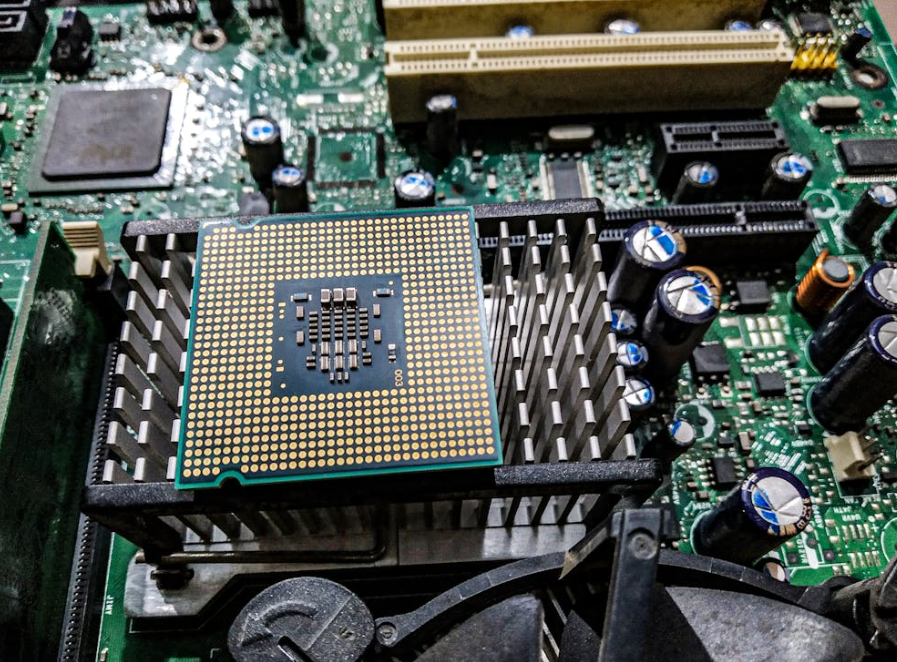
Let’s be direct: carbon fiber pads generally outperform silicone pads in heat transfer efficiency.
Why?
- Higher Thermal Conductivity Carbon fiber pads can exceed 20 W/m·K, significantly higher than most silicone pads
- Lower Thermal Resistance Studies show non-silicone pads consistently exhibit lower thermal resistance under pressure, meaning heat flows more easily through them
- Better Contact Behavior Carbon-based materials tend to conform more permanently, reducing micro air gaps over time.
But There’s Nuance
Silicone pads:
- Improve with pressure due to compression
- Offer stable performance even under varying conditions
In fact, at higher pressures (~40 psi and above), the performance gap between silicone and non-silicone pads can narrow significantly .
Takeaway: Carbon fiber wins in peak performance. Silicone remains competitive in controlled environments.
Mechanical Properties and Compressibility
This is where things get interesting.
Carbon Fiber Pads
- Highly compressible and soft
- Excellent gap-filling for uneven surfaces
- Maintain contact under low pressure
Their structure allows them to “settle” into surface irregularities more effectively.
Silicone Pads
- Elastic and resilient (they bounce back)
- Easier to handle and reposition
- Slightly less conforming over time
Silicone pads deform under pressure but tend to recover their original shape, which can reintroduce micro-gaps in some cases.
Electrical Insulation
Both materials generally offer electrical insulation, but:
- Silicone pads: inherently strong dielectric properties
- Carbon fiber pads: engineered to provide insulation, though performance depends on formulation
In high-voltage or sensitive electronics, silicone still holds a slight trust advantage due to its long track record.
Temperature Resistance
Silicone pads are the clear winner here.
- Operating range: -50°C to 200°C
- Excellent resistance to:
- UV
- Ozone
- Moisture
Carbon fiber pads:
- Also stable, but performance depends on binder materials
- Typically optimized for high-performance electronics rather than extreme environments
Thickness and Gap-Filling Ability
Thickness plays a subtle but critical role.
- Thicker pads = better gap filling but higher thermal resistance
- Thinner pads = better heat transfer but less tolerance
Carbon fiber pads:
- Maintain strong performance even at lower thickness
- Suitable for tight, high-density designs
Silicone pads:
- Better for large gaps or uneven assemblies
- More forgiving during installation
Reliability and Long-Term Stability
Silicone Pads
- Proven track record
- Potential issues:
- Oil bleed-out
- Outgassing over time
Carbon Fiber Pads
- Lower risk of oil migration
- More stable contact interface over long periods
For long-life, high-load applications, carbon fiber materials often age more gracefully.
Cost Considerations
Let’s not ignore reality—budget matters.
- Silicone pads: Lower cost, mass-produced, widely available
- Carbon fiber pads: Higher cost due to advanced materials and processing
For large-scale production, silicone often wins purely on economics.
Application Scenarios
Choose Carbon Fiber Thermal Pads When:
- Heat density is extremely high
- Space is limited
- Long-term stability is critical
- Performance outweighs cost
Typical use cases:
- GPUs / CPUs
- Power electronics
- EV systems
Choose Silicone Thermal Pads When:
- Cost efficiency is important
- Operating temperatures vary widely
- Assembly simplicity is needed
- Applications are less thermally demanding
Typical use cases:
- Consumer electronics
- LED lighting
- General PCB cooling
Side-by-Side Comparison
| Feature | Carbon Fiber Thermal Pad | Silicone Thermal Pad |
| Thermal Conductivity | 5–45 W/m·K | 1–15 W/m·K |
| Thermal Resistance | Lower | Higher |
| Compressibility | Excellent | Good |
| Electrical Insulation | Good | Excellent |
| Temperature Range | Moderate–High | Very Wide |
| Cost | Higher | Lower |
| Stability | High | Moderate (possible bleed) |
A Practical Insight (From Real Use Cases)
In field applications—especially in high-performance computing—engineers often report noticeable thermal improvements when switching from silicone to non-silicone pads.
One user in a hardware forum described non-silicone pads as making a “huge difference in thermals” when upgrading a laptop cooling system .
While anecdotal, it aligns with lab data: lower resistance translates to real temperature drops.
Conclusion
There’s no universal “better” material—only better choices for specific scenarios.
- Carbon fiber thermal pads deliver superior thermal performance, lower resistance, and better long-term stability.
- Silicone thermal pads remain the go-to for cost-effective, reliable, and versatile thermal management.
If your application pushes thermal limits, carbon fiber is worth the investment.
If you need dependable, scalable performance, silicone still gets the job done.
FAQs
Are carbon fiber thermal pads always better than silicone pads?
Not always. They perform better thermally, but silicone pads are more cost-effective and versatile.
Which pad lasts longer?
Carbon fiber pads generally offer better long-term stability with less material degradation.
Can I replace silicone pads with carbon fiber pads directly?
Yes, in most cases—but ensure thickness and pressure requirements are matched.
Do carbon fiber pads conduct electricity?
Most are designed to be electrically insulating, but specifications should always be verified.
Which is better for high temperatures?
Silicone pads handle extreme temperature ranges better, especially above 150°C.