
Yes, thermal pads have a shelf life. But they do not suddenly stop transferring heat the morning after an expiration date.
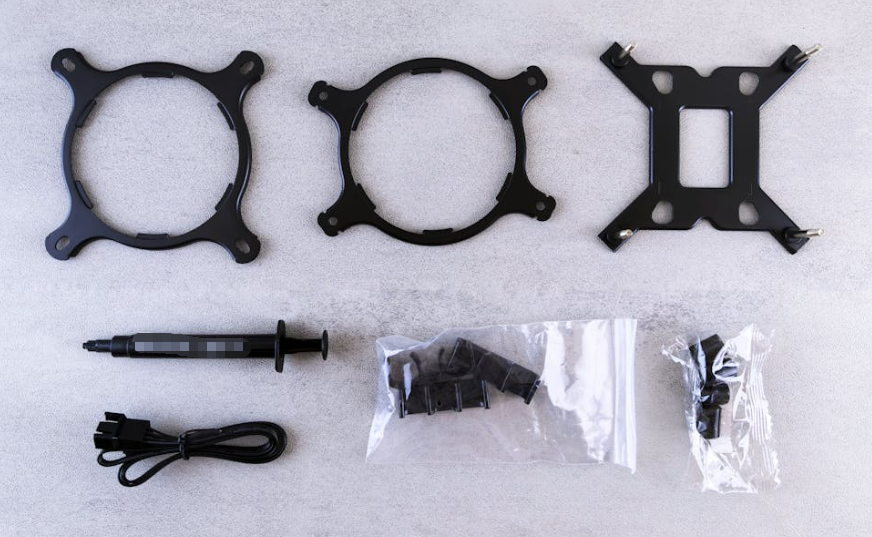
A shelf-life date marks the period during which the manufacturer guarantees that a product will meet its published requirements when stored under specified conditions. Once that period ends, the pad may still look and feel normal. Its liner, adhesive, thickness, surface condition or compression behavior, however, may no longer be guaranteed.
There is no universal shelf life for every thermal pad. The correct period depends on the material, adhesive construction, liner, packaging and supplier. Some published product examples specify six months. Others state 12 months, 24 months or longer.
That is why the right question is not simply, “How many years do thermal pads last?”
A better question is:
Has this exact thermal pad been stored correctly, and is it still suitable for the risk level of the intended application?
That question leads to a much more useful answer.
What Thermal Pad Shelf Life Actually Means
Thermal pad shelf life is the time during which unused material can be stored under defined conditions while remaining within the supplier’s specification.
The word “unused” matters. Shelf life normally applies before the pad is installed in an assembly. Once compressed between a component and a heat sink, it enters a different stage of life.
Shelf Life Is Not the Same as Service Life
Several related terms are often mixed together:
| Term | What It Means | When It Applies |
| Shelf life | The supplier-supported storage period for unused material | Before installation |
| Service life | The period a pad can perform inside an operating device | After installation |
| Opened-package life | The usable period after the original package has been opened | During warehouse or production handling |
| Working life | The time available to place or process a material | More relevant to liquid or curing TIMs |
| Warranty period | The commercial period covered by the supplier | Defined by sales and quality documents |
A thermal pad stored for 18 months and a pad installed in an inverter for 18 months have experienced completely different conditions. The stored pad may have seen little heat but more exposure to air, dust and packaging pressure. The installed pad may have experienced compression, vibration, electrical stress and thousands of thermal cycles.
These two timelines should not be treated as interchangeable.
For a wider explanation of pads, grease, putty, phase-change materials and gap fillers, HAKTAK’s guide to thermal interface materials provides the basic material context.
When Does the Shelf-Life Clock Start?
Shelf life often begins from the date of manufacture, not the delivery date. That small detail can create a surprisingly large inventory problem.
Imagine a product with a 12-month shelf life:
- It remains at the manufacturer for one month.
- International shipping and customs take another two months.
- A distributor holds it for three months.
- The customer receives it with only six months of stated shelf life remaining.
Starting the clock again at receipt would add time that the manufacturer never approved.
Before accepting material, check:
- Date of manufacture
- Expiration or retest date
- Batch or lot number
- Product code and revision
- Certificate of conformance
- Required storage conditions
- Minimum remaining shelf life specified by purchasing
If only a shipping date appears on the paperwork, ask the supplier what that date represents. Guessing is not a quality system.
How Long Do Thermal Pads Last in Storage?
There is no single answer for all thermal pads. A common published period is around 12 months, but that is only a rough market observation. It is not an industry-wide rule.
The formulation may remain physically stable for much longer than its stated shelf life. Meanwhile, a pressure-sensitive adhesive or release liner attached to the same pad may become difficult to process much sooner.
For example, Henkel’s BERGQUIST GAP PAD guidance states that most GAP PAD materials have a one-year shelf life after manufacture, while adhesive versions have a six-month shelf life. Henkel also explains that the shorter limit relates to tack and adhesion to the liner rather than the long-term stability of the bulk pad.
That is an important distinction. A thermal pad is not always one material. It can be a small layered system.
| Thermal Pad Construction | Possible Shelf-Life Limiter | What to Verify |
| Plain silicone gap pad | Surface condition, liner release or packaging | Thickness, flatness and compression |
| Adhesive-backed pad | Pressure-sensitive adhesive | Tack, peel and adhesive transfer |
| Fiberglass-reinforced pad | Binder, reinforcement and surface layers | Delamination and edge condition |
| Graphite laminate | Protective film and adhesive | Creases, edge damage and electrical isolation |
| Phase-change pad | Coating and carrier stability | Surface uniformity and phase-change response |
| Kiss-cut pad array | Liner, matrix and part release | Clean pickup and dimensional stability |
The product datasheet, package label and certificate for the exact lot should always override a general article or rule of thumb.
Why Thermal Pads Age While Sitting on a Shelf
A thermal pad may spend months doing absolutely nothing, yet changes can still occur. Materials continue interacting with heat, oxygen, moisture, liners and packaging even when no electricity is flowing.
It is a bit like a spare tire. It has not traveled a single kilometer, but time and storage conditions still matter.
The Pad Body May Not Be the First Part to Fail
A typical thermal gap pad can contain:
- A silicone, acrylic or other polymer matrix
- Aluminum oxide, boron nitride or another conductive filler
- Fiberglass or film reinforcement
- One-sided or two-sided tack
- A pressure-sensitive adhesive
- PET, paper or polymer release liners
- A protective bag and carton
The main elastomer may remain soft and thermally functional. At the same time, the liner may become difficult to remove or the adhesive may transfer onto the wrong surface.
This is why appearance alone cannot confirm usability.
Release Liners and Adhesives Can Change
A release liner has a quiet job. It protects the pad and then lets go cleanly at the right moment. When it ages poorly, production becomes awkward fast.
Possible symptoms include:
- The pad lifting with the wrong liner
- Corners stretching during liner removal
- Adhesive remaining on the liner
- Uneven surface tack
- Parts sticking together
- Kiss-cut pieces failing to stay on the carrier
- Liner paper tearing or absorbing moisture
These issues may not change the initial W/mK value. They can still cause placement errors, trapped air, contamination and lower assembly yield.
Heat Speeds Up Material Aging
Storage near an oven, heater, sunlit window or hot warehouse roof can accelerate chemical and physical changes.
High temperature may affect:
- Adhesive tack
- Liner release
- Polymer hardness
- Oil migration
- Surface blocking
- Dimensional stability
- Packaging films
A short temperature excursion does not automatically ruin a pad. Still, undocumented excursions create uncertainty. Quality teams then have to decide whether to test the lot, request supplier approval or scrap it.
Humidity Can Affect More Than the Pad
Many silicone elastomers tolerate humid conditions reasonably well. The full product construction may not.
Humidity can affect:
- Paper liners
- Adhesive layers
- Printed identification
- Cartons and protective packaging
- Reinforcement layers
- Surface cleanliness
- Electrical insulation after contamination
Condensation is a bigger concern. Moving cold material into a warm, humid production area may allow moisture to form on the pad or liner. The package should normally reach room conditions before it is opened, following the supplier’s instructions.
Light, Oxygen and Ozone Also Matter
Direct sunlight can heat the package and expose polymers to ultraviolet radiation. Ozone may attack certain elastomers. It can be produced around some electrical equipment, motors and high-voltage devices.
Thermal pads should therefore be kept away from:
- Direct sunlight
- UV lamps
- Open windows with strong sun exposure
- Ozone-generating equipment
- Reactive chemicals
- Solvent vapor
- Unapproved cleaning agents
Long-Term Pressure Can Deform Soft Pads
Soft thermal pads should not be stored under heavy cartons, tooling or metal parts. Long-term load may change thickness or produce edge deformation.
Think of a soft pad as a loaf of sliced bread at the bottom of a shopping bag. It may still be bread at the end of the trip, but the shape is no longer quite what was purchased.
Potential effects include:
- Permanent thickness reduction
- Uneven surfaces
- Edge extrusion
- Sheets sticking together
- Local dents
- Roll telescoping
- Difficulty separating die-cut parts
This matters because the final thermal result depends on compressed thickness and contact pressure, not only bulk conductivity. The relationship is explained in more detail in HAKTAK’s guide to thermal pad compression ratio.
How to Store Thermal Pads Correctly
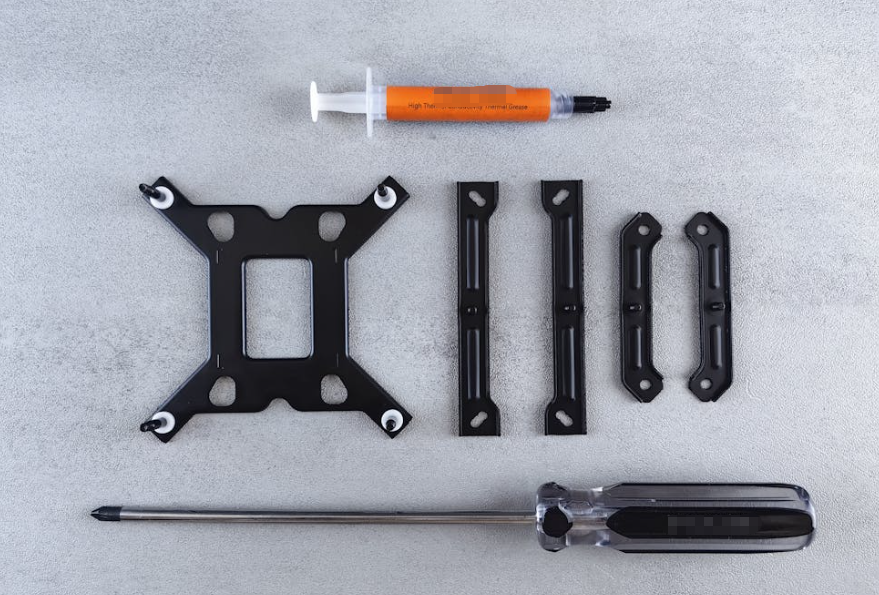
The safest storage instructions are the ones provided for the exact product. If the supplier specifies a temperature range, humidity limit, package orientation or maximum stacking load, follow those values.
Where no special instruction is provided, the following controls form a practical baseline.
Keep Thermal Pads in Their Original Packaging
Original packaging protects the material from dust, moisture, light, handling damage and accidental mixing.
Do not remove the release liners until assembly. The liner is not just packing waste. It is part of the product’s handling system.
If material must be repacked:
- Use a clean bag or container compatible with the pad.
- Keep the original product and lot labels.
- Prevent the pad surface from contacting dirty cardboard.
- Avoid folding or bending sheets.
- Reseal the package promptly.
- Record the date the original package was opened.
Store Sheets Flat and Without Extra Weight
Flat sheets should remain supported across their full area. Do not let them hang over a shelf edge or sit under heavy inventory.
Roll material may require a core, horizontal support or a defined winding orientation. Follow the supplier’s instructions because soft laminates can telescope or take a set when stored incorrectly.
Kiss-cut sheets need extra care. Their thin connecting matrix and release liner control how parts feed into manual or automated assembly. A bent carrier sheet can turn an easy pickup operation into a frustrating little battle.
Custom shapes also need packaging designed around their geometry. Thin tabs, narrow bridges and holes near an edge can deform during shipping or storage. HAKTAK’s article on thermal pad die-cutting for custom shapes explains how liner choice, geometry and delivery format affect production handling.
Use a Stable, Cool and Dry Storage Area
Avoid large temperature swings. Stability is often as important as the room’s average temperature.
A controlled storage area should be:
- Clean
- Dry
- Protected from sunlight
- Away from heaters and exterior hot walls
- Free from chemical vapor
- Monitored where the application requires traceability
- Organized so older lots can be used first
Do not invent a universal storage temperature such as “always below 25°C” unless the supplier specifies it. Different products carry different limits.
Protect the Surface from Contamination
Thermal performance depends on intimate surface contact. Dust, hair, fibers, oil and fingerprints can interfere with that contact.
Operators should handle pads by the liner or edges where possible. Gloves or clean handling tools may be appropriate for optical, automotive, medical or high-reliability assemblies.
Avoid writing directly on a pad or placing loose labels against its functional surface.
Label Opened Packages
Every opened package should show:
- Product name and code
- Lot number
- Original expiration date
- Date opened
- Remaining quantity
- Operator or department
- Storage location
- Any approved extension or deviation number
A handwritten note is better than no record, but a scannable inventory system is more reliable at production scale.
Thermal Pad Storage Requirements by Material Type
Different pad families do not age in exactly the same way. The material name alone still does not define the shelf life, but it helps identify likely risks.
Silicone Thermal Pad Storage
Silicone thermal pads are widely used because they are soft, stable over a broad temperature range and available with useful dielectric properties.
Storage concerns commonly include:
- Dust attracted by a tacky surface
- Liner release changes
- Oil or low-molecular-weight siloxane migration
- Deformation under load
- Damage to very soft grades
- Mixing pads with different hardness or thickness
A properly packaged silicone thermal pad should remain flat, identified and protected until placement. For silicone-sensitive optical contacts, relays or coatings, contamination requirements may be stricter than ordinary warehouse controls.
Silicone-Free Thermal Pads
Silicone-free does not mean aging-free.
These pads may use acrylic, urethane or another polymer system. Their storage risks can include adhesive aging, moisture interaction, surface tack changes and mechanical deformation.
Silicone-free materials are often selected to reduce siloxane migration or contamination. That benefit can be lost if they are stored beside unsealed silicone products or handled with shared contaminated tools.
Fluorosilicone Thermal Pads
Fluorosilicone pads may be chosen for better resistance to oils, fuels or aggressive fluids during service. They are useful in automotive, industrial and sealed-module environments.
That chemical resistance does not remove the need for controlled storage. Liners, adhesives and packaging may still have their own limits. The actual exposure fluid and storage conditions should be considered when choosing a fluorosilicone thermal pad.
Graphite Thermal Pads and Heat Spreaders
Graphite materials behave differently from soft silicone gap pads. They are often thin and designed to spread heat laterally.
Storage risks include:
- Creases
- Tears
- Edge flaking
- Punctures
- Delamination
- Protective-film damage
- Adhesive deterioration
- Loss of electrical insulation at a damaged edge
Graphite may also be electrically conductive. A visually small tear in a laminate can create an electrical risk near exposed circuitry. Store a graphite thermal pad flat and protect thin edges from handling damage.
Phase-Change Thermal Pads
Phase-change materials soften or flow at a defined operating temperature to improve surface contact. Before installation, many are dry or solid enough for clean handling.
High storage temperatures may affect the coating, carrier or release liner. A phase-change pad should not be left in a hot vehicle, next to a curing oven or in direct sunlight.
An intact room-temperature appearance does not prove that its phase-change behavior remains unchanged. Suspect lots may require thermal cycling and impedance evaluation.
Adhesive-Backed Thermal Pads
With adhesive-backed products, the adhesive can set the practical shelf-life limit.
Checks should include:
- Liner removal force
- Adhesive transfer
- Initial tack
- Peel strength
- Edge lifting
- Residue after rework
- Bonding after heat and humidity exposure
Do not add a generic adhesive to a plain thermal pad without testing. The new layer changes thickness, contact resistance, dielectric behavior and long-term reliability.
How to Store Opened Packages and Cut Parts
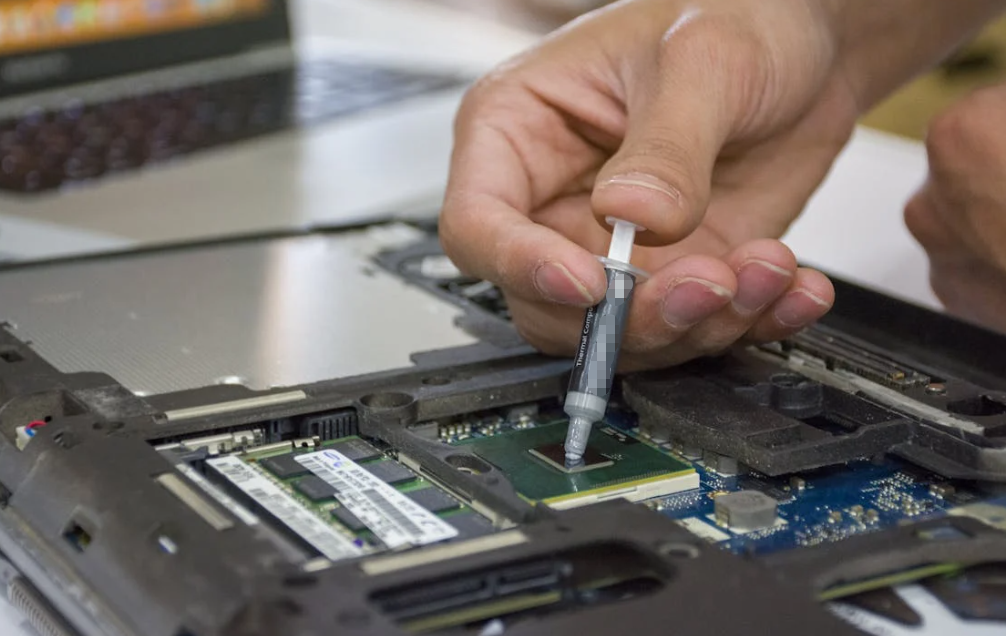
An opened package is not automatically damaged. It has simply lost part of its controlled barrier.
Unused material should be returned to storage quickly. Leaving a sheet uncovered on a workbench overnight creates unnecessary exposure to dust, fibers, cleaning chemicals and accidental pressure.
A Practical Resealing Process
- Confirm the product and lot number.
- Check that both protective liners remain in place.
- Inspect the package and pad for contamination.
- Place unused material back into a clean protective bag.
- Avoid tight vacuum pressure unless the supplier approves it.
- Reseal the package.
- Add the opened date and remaining quantity.
- Return it to the correct storage location.
Cut scraps can be kept only when their identity is preserved. A small blue rectangle without a label could be 1.0 mm, 1.5 mm, 3 W/mK or 8 W/mK. Human memory is not a dependable measurement tool.
Should Thermal Pads Be Refrigerated?
Usually, not unless the manufacturer says so.
Refrigeration can introduce condensation, temperature cycling and handling delays. It may also cause liners or adhesives to behave differently until the package returns to room temperature.
If refrigerated storage is specified, keep the package sealed while it warms to the required opening temperature. This reduces moisture condensation on the material.
Can Expired Thermal Pads Still Be Used?
Possibly, but expiration should trigger a controlled decision rather than an automatic yes or no.
An expired pad might still pass all required tests. Another pad stored badly for only three months might already be unusable. Time matters, but storage history matters too.
Match the Decision to Application Risk
| Application | Reasonable Approach | Main Concern |
| Early engineering prototype | Inspect and use for limited evaluation if appropriate | Results may not represent production material |
| Consumer repair | Replacement is often simpler | Storage history and prior compression are unknown |
| Industrial control equipment | Supplier review and defined requalification | Long operating life |
| AI server or GPU assembly | Verify thermal and handling performance | High heat flux and costly downtime |
| Automotive or EV electronics | Use formal deviation or approved recertification | Traceability, vibration and long service life |
| Medical or aerospace electronics | Replace unless an approved process permits extension | High consequence of failure |
The current ASTM D5470 test method measures steady-state thermal impedance and can be used to calculate apparent thermal conductivity under defined conditions. It is useful for comparing material performance, but it is not a thermal pad shelf-life standard. Passing one thermal test does not automatically reapprove every other property.
Standards and Documents for Thermal Pad Storage
No single standard provides a universal expiration date for all thermal pads.
The order of authority should normally be:
- Product-specific datasheet
- Package label
- Certificate of conformance
- Supplier storage specification
- Approved drawing or material specification
- Internal quality procedure
- Relevant general standards
ISO 2230 for General Rubber-Product Storage
ISO 2230:2026 provides guidance for inspecting, recording, packaging and storing vulcanized or thermoplastic rubber products before use.
It is relevant to many elastomer-based products, and its emphasis on controlled packaging and identification fits thermal pad inventory management well. Still, it does not replace a thermal pad manufacturer’s product-specific instructions.
A silicone gap pad with an adhesive and PET liner is not simply a generic piece of rubber. The complete construction must be considered.
Customer and Industry Requirements May Be Stricter
Automotive, medical, aerospace and other controlled industries may require:
- Approved suppliers
- Lot traceability
- Minimum remaining shelf life at receipt
- Environmental storage records
- Change notifications
- Quarantine procedures
- Deviation approval
- Retention samples
- Requalification after expiry
A material can be physically usable and still be unacceptable under the project’s quality rules. Both conditions matter.
Thermal Pad Storage by Industry and Application
Automotive Electronics and EV Batteries
Automotive pads may operate near inverters, onboard chargers, BMS boards, cameras, sensors and battery modules.
Storage controls should support long service life and traceability. An informal shelf-life extension is a weak fit for a part expected to survive years of vibration, humidity and thermal cycling.
AI Servers and High-Power GPUs
Server and accelerator assemblies place pads around GPUs, memory, power stages, network processors and chassis heat spreaders.
A slightly deformed pad can create uneven contact across multiple components. The result may be a local hot spot that only appears under sustained workload. Old inventory should therefore be checked for thickness, liner handling and assembled thermal performance.
Industrial Power Electronics
Converters, drives, power supplies and IGBT assemblies may remain in service for many years. Electrical isolation and compression behavior can be as important as thermal conductivity.
Medical and Aerospace Electronics
These industries place greater weight on controlled materials and documented decisions. Unknown storage history is normally a strong reason to reject a lot.
LED Modules
LED boards often use thin pads or insulating interface sheets. Liner damage, contamination and thickness variation can affect both assembly flatness and junction temperature.
Repair and Maintenance
A replacement pad kept loose in a toolbox has an uncertain history. Dust, oil and mechanical damage are common. For low-cost repairs, using a new correctly specified pad is usually more sensible than testing an unknown one.
Common Thermal Pad Storage Mistakes
Assuming Every Thermal Pad Lasts 12 Months
Twelve months appears often in product literature, but it is not a universal standard. Check the exact product.
Starting Shelf Life from the Delivery Date
The supplier may define shelf life from manufacture. Confirm the start point before calculating remaining life.
Removing Liners in Advance
This exposes the functional surface and makes soft pads harder to handle. Remove liners only when the assembly process requires it.
Stacking Heavy Material on Soft Sheets
Long-term pressure can change thickness and flatness. Give pads a supported shelf location.
Mixing Different Lots
Mixed lots make traceability and expiration control difficult. Even visually identical pads may come from different material revisions.
Leaving Opened Bags Unsealed
Dust and humidity exposure are easy to prevent and annoying to investigate later. Reseal the package.
Using Appearance as the Only Acceptance Test
A clean-looking pad may still have changed compression, adhesive or dielectric behavior.
Reusing a Removed Thermal Pad
A removed pad may be permanently compressed, torn or contaminated. It may also return to a different thickness unevenly. Reuse should not be the default for production or reliability-critical equipment.
A Simple FEFO System for Thermal Pad Inventory
FIFO means first in, first out. FEFO means first expired, first out.
FEFO is usually more useful for thermal interface materials because two lots received on the same day may have different manufacture and expiration dates.
A practical system should include:
- Lot-level identification
- Expiration-date alerts
- Minimum remaining shelf life at receiving
- Open-package labels
- Defined storage locations
- Temperature or humidity records where required
- A quarantine area for questionable lots
- Authorized personnel for shelf-life extensions
- Regular inventory review
- Clear disposal records
When production begins, operators should verify the product, thickness and lot instead of selecting a pad by color. Color is not a controlled specification unless the supplier explicitly makes it one.
When Replacement Is Better Than Retesting
Testing is useful, but it is not always economical.
Replacement is usually the cleaner decision when:
- The product code is unknown.
- The lot number is missing.
- Storage history is unavailable.
- The pad was removed from an old assembly.
- The surface is contaminated.
- The liner or packaging is badly damaged.
- The sheet has permanent dents or wrinkles.
- The quantity is small and replacement cost is low.
- The application is safety-critical.
- The supplier does not allow shelf-life extension.
- The full requalification cost exceeds the material value.
The expensive part is rarely the pad itself. It is the labor, delayed production, investigation and field risk around it.
Conclusion
Thermal pads do expire, but no universal expiration period applies to every product. Shelf life depends on the pad body, adhesive, reinforcement, release liner, packaging and manufacturer specification.
The expiration date is also not a switch that turns thermal conductivity off. It is the boundary of the supplier’s guaranteed storage period. After that point, the material needs a documented decision.
Good storage keeps pads sealed, flat, clean, identified and free from uncontrolled heat, light, moisture and pressure. Good inventory management tracks manufacture dates, opened packages and remaining shelf life. When a lot becomes questionable, application risk should determine whether it is inspected, requalified, returned or replaced.
So, yes, the humble thermal pad deserves a proper shelf. It is cheaper than finding out later that a small piece of material has stopped an entire production line.
Frequently Asked Questions
Do thermal pads expire?
Yes. Thermal pads normally have a manufacturer-defined shelf life. The exact period depends on the formulation, adhesive, liner, packaging and storage conditions. Expiration means the supplier no longer guarantees the original specification without further review.
How long can unused thermal pads be stored?
Many products list periods around 12 months, but shorter and longer periods also exist. Use the datasheet, package label or certificate for the exact product and lot. Do not apply one manufacturer’s shelf life to another product.
Does thermal pad shelf life start from manufacture or delivery?
It often starts from the date of manufacture, although some suppliers may define it differently. Confirm the starting date in the product documentation instead of assuming it begins at delivery.
Should thermal pads be refrigerated?
Not unless the supplier requires refrigerated storage. Unnecessary refrigeration can introduce condensation and temperature-cycling problems. When refrigeration is specified, let the sealed package reach the required opening temperature before use.
How should thermal pads be stored after opening?
Keep both liners in place, return the material to a clean protective bag, reseal it and label the package with the opened date. Store it flat under the same controlled conditions required for unopened material.
Can expired thermal pads still transfer heat?
Possibly. Expiration does not mean heat transfer stops immediately. However, thermal impedance, compression, adhesion, dielectric performance and handling may no longer be guaranteed. The lot may require inspection or requalification.
Can expired thermal pads be recertified?
Some products and suppliers allow recertification or a controlled shelf-life extension. Others do not. Contact the supplier with the product number, lot, expiration date and storage history before extending the material internally.
Why do thermal pads stick to the release liner after storage?
Liner release and adhesive behavior can change with time, heat, humidity and pressure. The pad may lift with the wrong liner, stretch during removal or leave adhesive residue. This is a common reason adhesive-backed pads have shorter shelf-life limits.
Can a removed thermal pad be stored and reused?
Reuse is risky because the pad may be compressed, torn, contaminated or permanently deformed. A removed pad should generally be replaced in production, high-power or reliability-critical equipment.
Do graphite and silicone thermal pads have the same shelf life?
Not necessarily. Silicone pads, graphite laminates, adhesives and protective films age differently. Each product needs its own storage specification and expiration period.