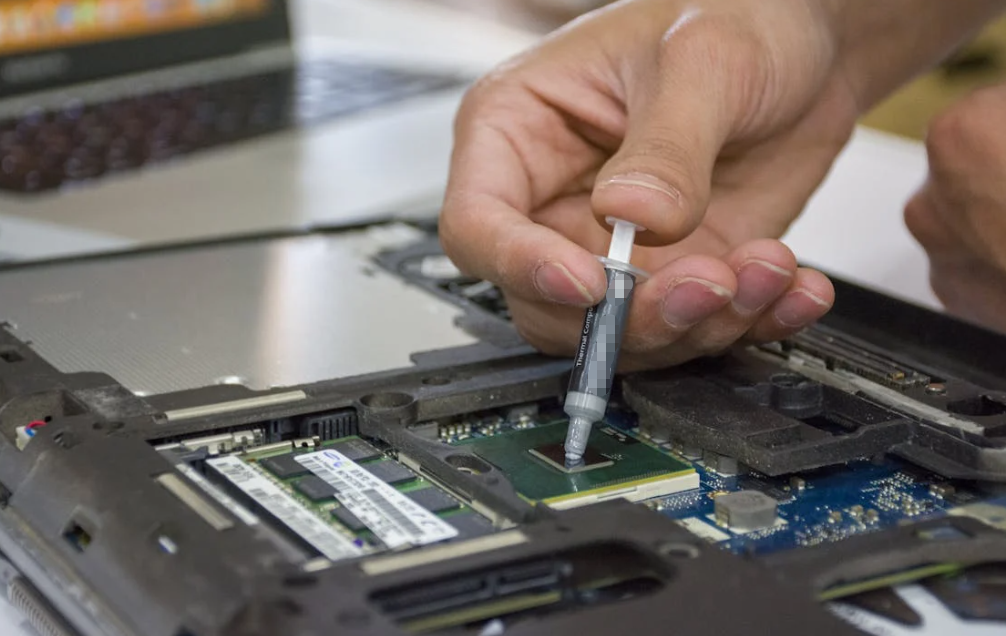
An electrical joint starts acting up. Maybe a rotating contact wears quickly. Maybe a ground connection faces moisture and vibration. Someone suggests electrically conductive grease. What, exactly, would that tube do?
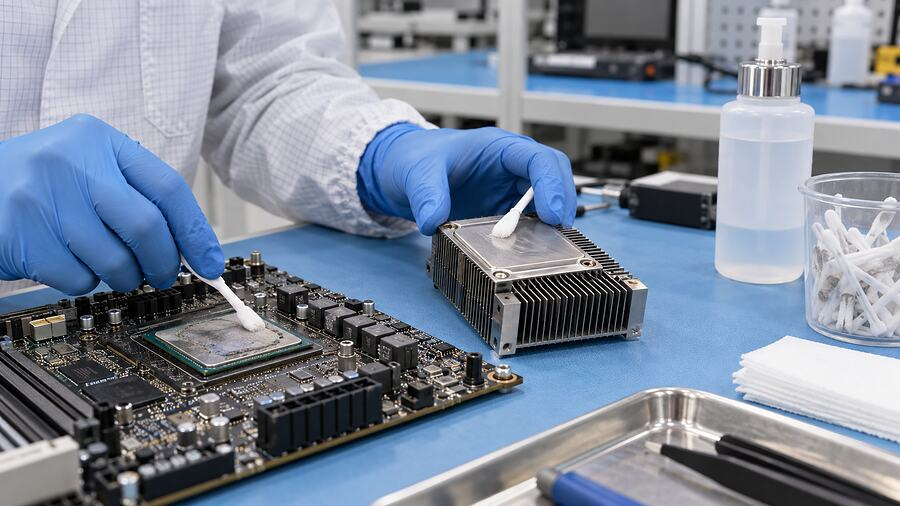
Electrically conductive grease is a formulated lubricant or paste that can conduct current while serving a specified electrical interface. It may also reduce wear or help protect that interface, depending on the product. Carbon or metal particles give certain grades their conductive behavior.
The catch is the word specified. Conductive grease is useful in some contacts and a bad idea in others. A close-spaced connector can turn a little excess material into a bridge between pins. And a grease sold for moving heat out of a processor may not conduct electricity at all.
Here is how to tell those jobs apart.
What Electrically Conductive Grease Actually Does
The whole joint matters
A contact grease combines a carrier, such as an oil-based system, with additives and often conductive filler. The carrier helps it stay workable and, for a lubricating grade, reduces friction between moving surfaces. The filler is chosen so the formulated material has a measurable electrical property.
Picture a pair of metal parts pressed together. To the eye, each face looks flat. Up close, it is more like two rough sidewalks. The highest points touch; the hollows between them remain. A suitable grease may occupy those spaces and help protect the joint. A conductive formulation may also provide a path through some of the material. Which path actually carries current depends on the surfaces, pressure and grease formulation.
That is why the word on the label is not a repair method. Loose screws, a worn spring or badly corroded contacts still need attention. A grease cannot restore a connector’s original contact force. It cannot turn a damaged terminal into a sound one by magic. Well, that would be convenient.
Some products are made for moving interfaces, such as selected slip rings. Others are pastes intended for relatively static joints. The difference matters: a paste that conducts well but does not lubricate is a poor choice for a moving contact.
Contact resistance is not the same as grease resistivity
A data sheet may give volume resistivity in Ω·cm. This describes the bulk material under its stated test conditions. Lower resistivity generally means the tested material offers less opposition to current through it.
An assembled electrical joint has contact resistance, often discussed in milliohms. That value includes more than the grease: both metal surfaces, their plating, contact force, contamination and the path through the assembly. You cannot convert an Ω·cm number straight into a promised milliohm value for your connector.
The practical concern is heat as well as continuity. An unwanted rise in resistance at a current-carrying joint can raise its temperature. The real test belongs on the assembled connection at relevant operating conditions, not on a dab squeezed onto a bench.
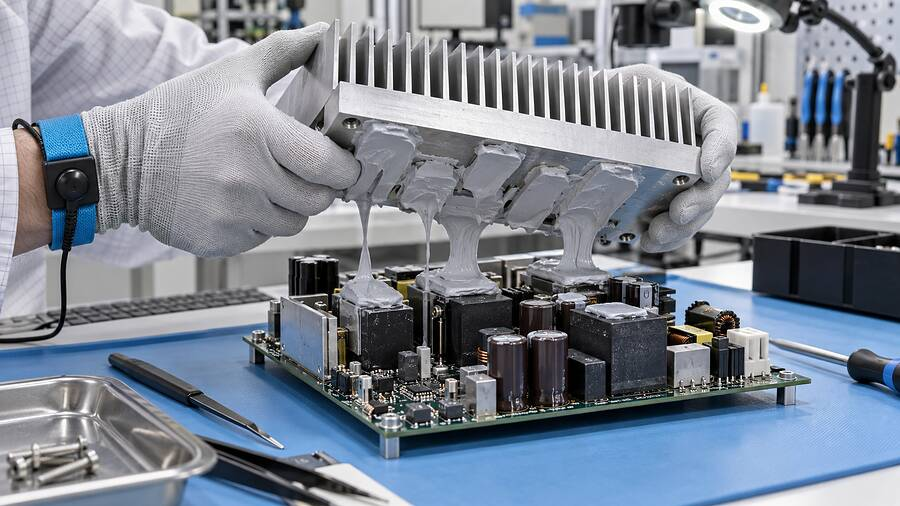
Carbon, Silver and Other Conductive Greases
Carbon-filled grease and metal-filled grease are both real categories. Some products use silicone-based carriers; others use silicone-free systems. Neither carrier label alone says how well the finished compound conducts electricity.
Silver, silver-coated metal and carbon do not behave as a single interchangeable family. Filler concentration, particle shape, binder, wetting and movement all affect the finished material. The same goes for appearance. A gray grease is not automatically a silver grease, and a copper-colored anti-seize product is not automatically qualified for electrical contacts.
For a concrete example, the MG Chemicals 8463A technical data sheet describes a silicone-oil lubricant with silver-coated aluminum flake. It reports resistivity below 0.2 Ω·cm and thermal conductivity of 1.0 W/(m·K) at 25°C. Those figures belong to 8463A under the supplier’s test conditions. They do not describe all conductive greases or predict the resistance of a mounted joint.
The supplier lists ground connections, rotating connections, rotary switches, slip rings, slide connectors and potentiometers among its intended uses. That does not mean every switch or potentiometer is compatible. The contact design and equipment maker still set the limits.
Carbon-based grades can offer another balance of electrical behavior, lubrication and cost. MG Chemicals, for instance, distinguishes its lubricating carbon greases from a non-lubricating assembly paste. This is a useful reminder: grease and conductive paste may both conduct, but their mechanical jobs can differ.
The right material is the one with evidence for your movement, current, geometry and environment. Filler alone is a lousy shopping list.
Where Conductive Grease Can Be Used—and Where It Can Cause Trouble

Selected ground and static contacts
A specified conductive compound may suit a ground interface or another approved joint where electrical continuity is intended. Its ability to coat exposed surfaces can be useful in the right design. But the ground path should first be mechanically sound.
Take a bolted connection in an industrial enclosure. If a screw is loose or the mating faces are damaged, adding grease does not establish a reliable connection. Clean and prepare the surfaces according to the equipment instructions, use the specified fasteners and tightening method, then evaluate any approved contact compound.
Material compatibility deserves attention. Mixing dissimilar metals and conductive particles in a wet environment can introduce corrosion concerns. A marine joint, for example, has different exposure from a dry factory cabinet. Do not read “corrosion protection” on a product page as a guarantee in every environment.
Slip rings, switches and other moving contacts
Some contacts move while carrying current. A slip ring rotates; a sliding contact rubs along another surface. Here a suitably selected lubricating conductive grease may serve two needs: maintain an intended electrical path and reduce mechanical wear.
Those needs compete. Too little lubricant may leave wear uncontrolled. Too much may travel beyond the contact zone or affect operation. Current, speed, load, plating and service interval matter. So do the surrounding plastics and elastomers.
A product listing “rotary switch” as an application is a starting point, not permission to fill every switch. Tiny signal contacts, sealed assemblies and contacts with special surface treatments can have their own rules. Look up the component maker’s guidance and test the assembly.
Multipin connectors and close-spaced circuitry
Now imagine two neighboring connector pins, like two lanes separated by a narrow strip. A conductive smear that crosses the strip may connect circuits that were meant to stay apart. The risk depends on the grease’s properties, the spacing and where the material can move during mating and service.
This is why conductive grease is usually a poor casual fix for an intermittent multipin connector. The fault might come from a bent pin, lost spring force, damaged plating or corrosion. Diagnose that cause. Use the connector maker’s approved lubricant, if one is specified.
| Interface | Potential reason to consider grease | Main concern | First check |
|---|---|---|---|
| Approved single ground joint | Continuity plus surface protection | Poor mechanical contact or corrosion | Joint design and material compatibility |
| Specified slip ring | Lubrication during electrical motion | Wear, migration or wrong viscosity | Component and grease approval |
| Multipin connector | Protection may be needed | Conductive bridge between pins | Connector maker’s lubricant guidance |
| Damaged or loose terminal | None as a stand-alone repair | Unreliable connection remains | Inspect, clean or replace the hardware |
Industrial controls, vehicles and telecom equipment can contain all four kinds of interface in one system. An industry name does not tell you which grease belongs at which spot.
Conductive Grease vs Dielectric Grease vs Thermal Grease
These terms sound similar because all three products can be supplied in a syringe and appear near electronics. Their jobs are different.
| Material | Intended job | Does the material itself conduct electricity? | Typical caution |
|---|---|---|---|
| Electrically conductive grease | Serve a specified electrical interface, often with lubrication | Yes, for a documented conductive grade | Can bridge contacts that must stay separate |
| Dielectric connector grease | Protect and sometimes lubricate an approved mated connector | No, by design | Use the proper type and dose; it does not repair worn contacts |
| Conventional thermal grease | Move heat across a thin cooling interface | Depends on the exact formulation; many grades resist electrical current | Never assume an insulation rating from the word “thermal” |
| Dual electrical/thermal TIM | Serve a deliberately designed interface requiring both properties | Yes, if the specific product says so | Check both electrical path and thermal assembly |
The counterintuitive one is dielectric grease. How can an insulating grease protect a working electrical connection? In a suitably designed connector, the metal contact points meet under mating force. The grease occupies other spaces and helps exclude moisture or reduce fretting. Current need not pass through the grease itself. Application still depends on that connector’s design and instructions.
A thermal grease asks a different question: how does heat get from a component into a heat sink? Many such compounds are formulated to conduct heat without providing an electrical path. Some specialist thermal interface materials do both. You have to read the exact specifications.
HAKTAK’s thermal grease for electronics concerns heat-transfer interfaces. Its product category should not be read as a catalog of electrical contact lubricants. If your goal is a working slip ring, start with an approved contact lubricant. If your goal is a cooler power module, start with the module’s thermal and electrical interface requirements.
An electrically conductive adhesive is another distinct material: it forms a bond after its specified cure. Ordinary conductive grease remains a grease. It should not be substituted for solder, structural bonding or a designed electrical termination.

How to Choose an Electrically Conductive Grease
Begin by drawing the intended electrical path. Which two pieces should connect? Which nearby pieces must remain separate? This little sketch can prevent a surprisingly expensive mistake.
Next, identify whether the interface moves. A sliding contact may need controlled lubrication and wear behavior. A fixed ground joint needs a different review. Ask about load, speed, vibration, contact force and how often the assembly is opened.
Then read the exact grade’s TDS and application instructions. Useful questions include:
- What is its electrical behavior? Look for a specified resistivity value and the supplier’s test conditions. Ask for assembled-contact evidence when your decision depends on contact resistance.
- Where may it be applied? Check approved contact metals, plating, plastics, elastomers, spacing and any restrictions on migration.
- Will it remain suitable? Review the service temperature, oil separation, wear and environmental exposure relevant to the joint.
- What will the operator do? A specified dose, placement and inspection method are more useful than “apply a thin coat” in a crowded connector.
- How will you know it worked? Set contact-resistance, temperature and visual acceptance criteria for the assembled product.
Those checks are more valuable than shopping by filler color. Some grades emphasize electrical contact; others prioritize lubrication. A high reported bulk conductivity may not compensate for a product that damages the contact finish or moves into adjacent circuits.
Consider a hypothetical industrial controller with a designated ground contact and a nearby multipin signal connector. The approved compound for the ground contact may be conductive. The connector could require a dielectric lubricant or no added material. One technician may see “electrical contacts” on the tube and want to use it in both places. The drawing and product instructions say otherwise.
Also check the ambient environment. Salt spray, condensation and cleaning chemicals can change corrosion behavior. Product claims made in one test environment should not be borrowed for another. Where a joint is critical, compare alternatives on representative parts, then repeat after relevant aging or cycling.

Applying and Validating the Joint
Follow the equipment and grease manufacturers’ procedures. If the original contact has failed, identify the cause first. A coating can hide corrosion in a photo while leaving the electrical problem right where it was.
Prepare the surfaces using an approved method. Control the amount and placement of grease. Keep it away from insulating spaces and neighboring conductors. Document the product grade and process so the next technician knows what is there.
Measure the assembled contact, not merely a lump of compound. The official IEC 60512-2-1 contact-resistance method describes a millivolt-level test across mated connector contacts. It is one possible reference for relevant connector validation. It does not certify a grease, set a universal pass limit or replace the component’s own specification.
A low-level resistance check also cannot describe everything that happens under normal load. Where appropriate, check temperature rise at the intended current and repeat after mating cycles, vibration or environmental exposure. A four-wire measurement can help resolve small contact resistances when the test setup supports it. Define the fixture and method before comparing samples.
On a production line, inspection matters as much as the reading. Look for overflow, missing coverage, displaced grease and damaged contacts. If a different syringe, dispenser or process changes the amount delivered, review the qualification rather than assuming the label guarantees the same result.
When Heat Transfer or Electrical Insulation Is the Real Requirement
Electronics often place an electrical connection close to a cooling joint, but they are not the same joint. A power semiconductor may have an exposed, electrically live mounting surface near its heat sink. An LED driver or telecom power device can raise a similar question. First find the designed electrical path and the intended heat path.
If the goal is thermal contact across a clamped, thin interface, choose a TIM on its installed thermal performance and compatibility. If the heat sink must be electrically isolated, the assembly may need a defined insulation structure. HAKTAK’s guide to electrically insulating thermal pads explains that separate selection problem.
A conductive contact grease is not a shortcut to a better heat sink joint. Likewise, a thermal paste that happens to be electrically non-conductive does not automatically replace an engineered insulating pad. Pick a material for the job the joint actually has.
Conclusion
Electrically conductive grease is a specialized material for selected electrical interfaces. Some grades also lubricate, protect or transfer heat, but those properties must be documented for the exact formulation.
Start with the contact design. Confirm which parts should carry current, how they touch, whether they move, and what conditions they face. Then check the product data and test the assembled joint. A reliable connection still begins with sound hardware.
FAQs
Is electrically conductive grease really conductive?
A product specifically formulated and documented as electrically conductive can carry current through the material under its stated conditions. The amount of current and the resistance of an actual joint depend on geometry, mating force and application. Check the exact product data. The words “electrical grease” or “contact grease” alone do not prove that the grease itself conducts.
Does conductive grease improve a poor electrical connection?
It cannot restore a loose fastener, bent pin or worn spring. Some approved formulations can help a properly designed contact perform and resist certain environmental problems. Repair or replace damaged parts first, then use a compound only if the component and process allow it. Measure the finished joint rather than assuming the grease fixed the fault.
What is the difference between conductive and dielectric grease?
Conductive grease is formulated to provide an electrical path through the material. Dielectric grease resists current and can protect an approved metal-to-metal connection from moisture or fretting. The connector’s contact force makes that connection. Each product needs its own application instructions. A dielectric grease is not a failed version of a conductive one; it does a different job.
Can I use conductive grease on a multipin connector?
Only when the connector and grease makers explicitly support that application and placement. Material between neighboring pins can create an unwanted path. Many multipin connectors require a specified dielectric lubricant or no added grease. Check the original design, pin spacing and service instructions. Do not use conductive grease as a general remedy for an intermittent connector.
Is copper grease always electrically conductive?
No assumption is safe from a name or color. “Copper grease” may refer to an anti-seize compound intended for mechanical fasteners. Even if a product contains metal, its electrical behavior and suitability for a contact need their own data. Use a grade explicitly specified for the electrical application, with compatible contact metals and service conditions.
Is conductive grease the same as thermal grease?
No. Conductive contact grease focuses on an intended electrical interface, often with lubrication. Thermal grease focuses on heat transfer across a cooling joint. Some specialty products provide both functions, but many conventional thermal greases do not conduct electricity. Compare product specifications and assembly requirements. A TIM label alone does not qualify a contact lubricant.
Can silver conductive grease be used on a CPU?
Do not substitute electrical contact lubricant for processor thermal paste on the strength of its silver content. A CPU joint needs the thermal interface material, mounting procedure and surface compatibility specified for that cooler. Electrically conductive material near exposed electronics also introduces a placement risk. Use only a product approved for the exact thermal application and device.
Where is carbon conductive grease used?
Suppliers offer carbon-filled grades for selected ground and moving contacts, including some slip rings, rotary switches and sliding interfaces. Those are product-specific use cases, not universal instructions for every device of that type. Confirm the contact finish, movement, current, nearby spacing and grease maker’s directions before using it in an actual assembly.
Does conductive grease prevent corrosion?
Some products are formulated to protect contacts, but results depend on materials and environment. A wet joint with dissimilar metals may behave differently from a dry one. Grease cannot compensate for damaged plating or an open seal. For an important application, test a representative assembly under the relevant moisture, temperature and cycling conditions.
How do I test a greased electrical contact?
Measure the mated joint using a method and acceptance criteria suited to the connector or device. Compare contact resistance before and after treatment, and after relevant cycling or exposure. Check temperature rise under expected load where appropriate. A continuity beep only shows a path under that meter’s conditions; it does not establish long-term performance or safety.