In today’s era of rapid electrification and high-performance electronics, managing heat efficiently is no longer an option — it’s a requirement. With devices becoming more compact and power densities rising, engineers confront heat-related challenges in everything from consumer gadgets to automotive battery packs. One solution that has emerged as both practical and high performance is thermally conductive structural adhesive — a specialized material that not only bonds components mechanically but also facilitates heat transfer across interfaces.

In this comprehensive guide, we’ll explore what thermally conductive structural adhesive is, how it differs from traditional adhesives, its key performance parameters, material formulations, real-world applications, and how to choose the right adhesive for demanding thermal management needs.
1. What Is Thermally Conductive Structural Adhesive?
At its core, a thermally conductive structural adhesive is a bonding material designed to mechanically join parts while also conducting heat away from critical areas. Unlike ordinary adhesives that simply hold two surfaces together, structural adhesives are engineered to provide high bond strength, durability under stress, and thermal conductivity to efficiently transfer heat.
Thermally conductive adhesives are typically polymer matrices — such as epoxies, silicones, or polyurethanes — loaded with thermally conductive fillers. These fillers improve the base polymer’s ability to conduct heat, transforming a normally insulating adhesive into a material that bridges heat pathways between components.
What sets structural adhesives apart is their ability to bear mechanical loads while dissipating heat — a crucial requirement for high-stress environments like automotive assemblies, power electronics modules, or battery pack structures.
2. Why Heat Management Matters

As electronics and high-power systems push into higher performance territories, heat becomes a limiting factor in reliability and service life. Excessive temperatures accelerate material degradation, reduce efficiency, and can lead to catastrophic failures.
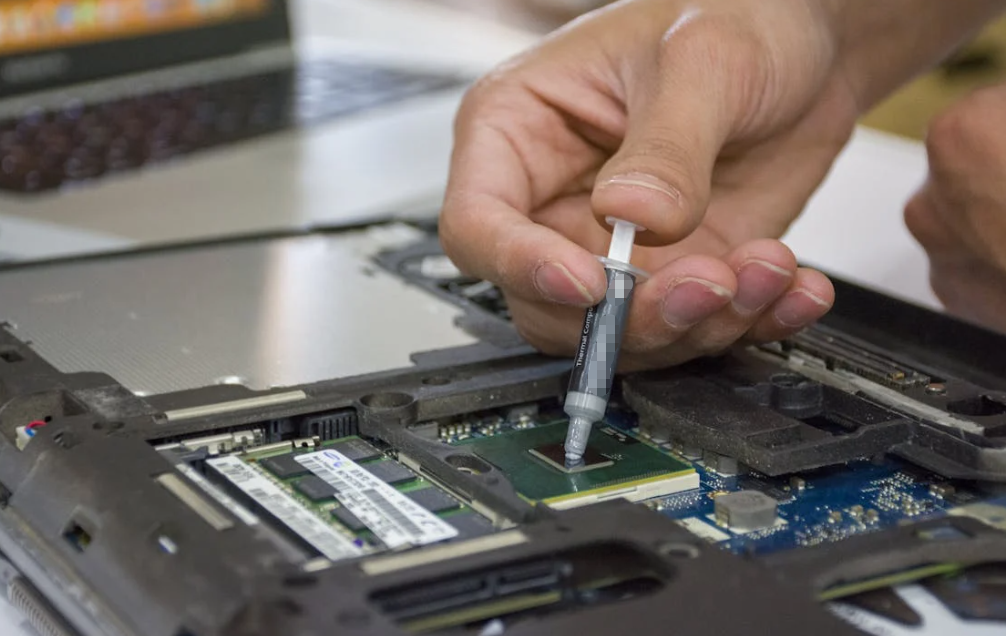
Traditional methods of heat management, such as heat sinks and thermal pastes, handle heat movement but don’t contribute to mechanical integrity. Conversely, thermally conductive structural adhesives serve dual functions: they bond and conduct heat — enabling more compact designs without sacrificing durability.
Thermal conductivity in these materials typically ranges from about 0.5 to 3 W/m·K for structurally capable adhesives, depending on formulation and filler loading.
For comparison, standard plastics without fillers often sit at 0.2–0.3 W/m·K, making thermally conductive adhesives significantly more effective at heat transfer than base polymers.
3. The Chemistry Behind Thermal Conductivity
To understand how these adhesives work, it helps to look at what happens inside the chemical structure. Polymers, by themselves, have inherently low thermal conductivity because their disordered molecular chains limit heat transfer.
Filling these polymers with high-conductivity materials — such as ceramic or metal particles — creates pathways for heat to travel more efficiently. Common fillers include:
- Aluminum oxide (Al₂O₃) – widely used, effective, and electrically insulating.
- Boron nitride – excellent thermal transfer and maintains electrical insulation.
- Aluminum nitride – good conductivity with electrical insulation.
- Silver or metal particles – greatly boost thermal conductivity but often introduce electrical conductivity, which isn’t suitable for all applications.
Designers carefully balance filler type and loading to achieve the right combination of thermal performance, electrical insulation, and mechanical properties suitable for their specific application.
4. Key Properties of Thermally Conductive Structural Adhesives
When evaluating thermally conductive structural adhesives, several performance metrics matter. They define not just thermal performance, but also durability and suitability for a project:

Thermal Conductivity
This measures how much heat the material can transfer — expressed in watts per meter-Kelvin (W/m·K). Typical structural adhesives fall in the range of 0.5–3 W/m·K, with some advanced or metal-filled systems reaching even higher values.
Higher conductivity means better heat dissipation. For many high-power applications, this is a critical factor.
Bond Strength
Measured often in megapascals (MPa), bond strength determines how well the adhesive holds structural parts together under load. Values like 8–20 MPa are common for structural grades.
Good bond strength ensures that the adhesive doesn’t fail mechanically during thermal cycling or under load.
Temperature Resistance
Adhesives must maintain performance under temperature extremes — often from below -50°C to above 100°C or more, depending on the system. Some adhesives are also rated for more extreme thermal environments.
Coefficient of Thermal Expansion (CTE)
CTE compatibility with the materials being bonded prevents stress and cracking during heating and cooling cycles.
Electrical Properties
Some applications require electrical insulation, while others may benefit from electrical conductivity in addition to thermal. Formulations vary depending on need.
5. Types of Structural Thermally Conductive Adhesives
These materials fall into several categories depending on their base polymer and curing mechanism:

Epoxy-Based Adhesives
Epoxy adhesives are among the most popular structural adhesives due to their strong mechanical properties, excellent chemical resistance, and ability to incorporate high filler loadings. Many thermally conductive epoxies balance thermal transfer with structural integrity.
Examples in the market often have thermal conductivities near 1–3 W/m·K while maintaining high bond strength.
Polyurethane Adhesives
Polyurethane systems provide flexibility and are generally more impact-resistant. Thermally conductive versions work well for bonding materials with differing expansion rates. Polyurethane thermal structural adhesives can reach conductivities over 1.2–2.0 W/m·K and offer flame retardant ratings.
Silicone-Based Adhesives
Silicone adhesives are valued for temperature stability and flexibility. Thermally conductive silicone adhesives serve well in environments where significant mechanical movement may occur.
6. How These Adhesives Are Used in the Real World
Thermally conductive structural adhesives show up in a wide spectrum of applications — from tiny microelectronic assemblies to large EV battery systems:
Electronics & PCBs
Small devices generate heat that must be removed before component failure. Thermally conductive structural adhesives bond heat sinks to chips or power modules, offering both mechanical support and thermal transfer.
Electric Vehicles (EVs)
Battery packs, power electronics, and motor assemblies require robust thermal management solutions. These adhesives bond cells to cooling plates and structural components, balancing strength with thermal performance.
Power Electronics & Semiconductors
High-power transistors, IGBTs, and modules all benefit from adhesives that conduct heat while holding the components stable during vibration and thermal cycling.
Automotive Electronics
Motor controllers, LED lighting systems, and sensing modules all produce heat that needs to be drawn out efficiently without compromising structural integrity.
Industrial Machinery
Heat exchangers, sensors, and large assemblies benefit from adhesives that support both heat transfer and mechanical loads.
7. Structural Adhesive vs. Traditional Thermal Interfaces
It’s important to differentiate thermally conductive structural adhesives from other thermal interface materials:
| Feature | Thermal Paste/Grease | Thermal Pad | Structural Adhesive |
| Heat Transfer | Good | Very good | Moderate to good |
| Mechanical Support | No | No | Yes |
| Permanence | Non-permanent | Semi-permanent | Permanent |
| Ease of Replacement | Easy | Easy | Difficult |
| Gap Filling | Moderate | Good | Good |
Thermal pastes and pads excel at heat transfer but don’t bond parts. Structural adhesives add mechanical integrity, crucial for load-bearing or vibration-sensitive applications — albeit with a permanent bond.
8. Designing with Thermally Conductive Structural Adhesives
When integrating these adhesives into a design, engineers must consider multiple factors:
Surface Preparation
Clean and prepare surfaces to promote adhesion. Contaminants like oils, oxides, or dust reduce bond strength.
Cure Conditions
Some adhesives cure at room temperature, others require heat or pressure. Accurate control of cure parameters ensures optimal performance.
Filler Loading
Higher filler content usually increases thermal conductivity but can make the adhesive more viscous and harder to process.
Joint Design
Adhesive thickness affects both mechanical properties and heat transfer. Keeping joints thin can improve thermal conduction but may complicate processing.
9. Challenges and Limitations
Despite their advantages, thermally conductive structural adhesives are not without drawbacks:
Lower Conductivity Than Metals
Even the best thermally conductive structural adhesives usually don’t match the thermal performance of metals or metal alloys. In extreme high-power applications, alternative materials or additional cooling solutions may still be required.
Permanent Bonding
Once cured, structural adhesives create permanent joints. Disassembly requires mechanical force or heat, so engineers must plan for repair or recycling.
10. Innovations & Future Directions
Material science continues to push the boundaries of thermal conductivity in polymers. Research into aligned filler networks, nanostructures (like graphene or boron nitride nanosheets), and molecular-level enhancement techniques aims to dramatically improve heat transfer while preserving mechanical characteristics.
Meanwhile, demand from electric vehicles, renewable energy systems, and advanced computing will continue to drive innovation in this space.
11. Choosing the Right Adhesive for Your Project
Here are a few practical points to guide selection:
Define thermal performance targets (e.g., desired watt per meter-Kelvin).
Determine mechanical requirements (bond strength, flexibility).
Evaluate operating temperature ranges.
Decide if electrical conductivity or insulation is required.
Consider processing and curing conditions.
Talking to adhesive manufacturers or materials scientists early in the design phase can save costly redesigns later.
12. Conclusion
Thermally conductive structural adhesives solve two key challenges in modern engineering — effective heat dissipation and strong mechanical bonding. With careful material selection and design, these advanced polymers enable more reliable, compact, and high-performance products across industries. Whether you work in electronics, automotive, or industrial systems, understanding the fundamentals of these adhesives unlocks new design possibilities in thermal management.
13. FAQs (Short & Simple Answers)
What is thermally conductive structural adhesive?
A bond-forming material that also conducts heat between joined parts.
How does it differ from regular thermal paste?
It provides mechanical bonding in addition to heat transfer.
What materials are used to make it thermally conductive?
Polymers filled with ceramic or metal particles like alumina or boron nitride.
Can it replace welding or soldering?
In many cases, yes — particularly when both thermal transfer and strong bonding are needed.
Is the bond permanent?
Yes — once cured, it creates a permanent structural joint.