
Thermal Management Materials for Electronics
Thermal Interface Materials for Electronics and Custom Thermal Management
Thermal interface materials fill microscopic air gaps between a heat source and a heat sink, cold plate or enclosure. Haktak supports engineers with thermal pads, grease, liquid gap fillers, phase change TIMs, thermal putty and conductive adhesives—from material screening and samples to custom formats and production support.
The Short Answer
What Are Thermal Interface Materials?
A thermal interface material, commonly shortened to TIM, is a compliant or flowable material inserted between two mating surfaces to improve thermal coupling. Even polished metal, ceramic and semiconductor surfaces touch only at microscopic high points. The remaining valleys contain air, contamination and surface films that resist heat flow. A suitable TIM conforms to those features, replaces much of the trapped air and increases the real contact area available for conduction.
Thermal interface materials are not one chemistry or one product form. The category includes preformed thermal pads, non-curing grease and paste, dispensable gap filler gels, putties, phase-change films, thermally conductive adhesives, tapes, graphite-based spreaders and electrically insulating constructions. Each type solves a different combination of gap, pressure, assembly, electrical and service requirements.
Final device temperature depends on heat load, contact area, spreading resistance, TIM thickness, contact resistance, cooler performance, airflow or coolant, mounting pressure and changes over time. Selecting the highest W/m·K value without controlling the joint can produce a worse result than a lower-conductivity material used at the correct thickness and pressure.
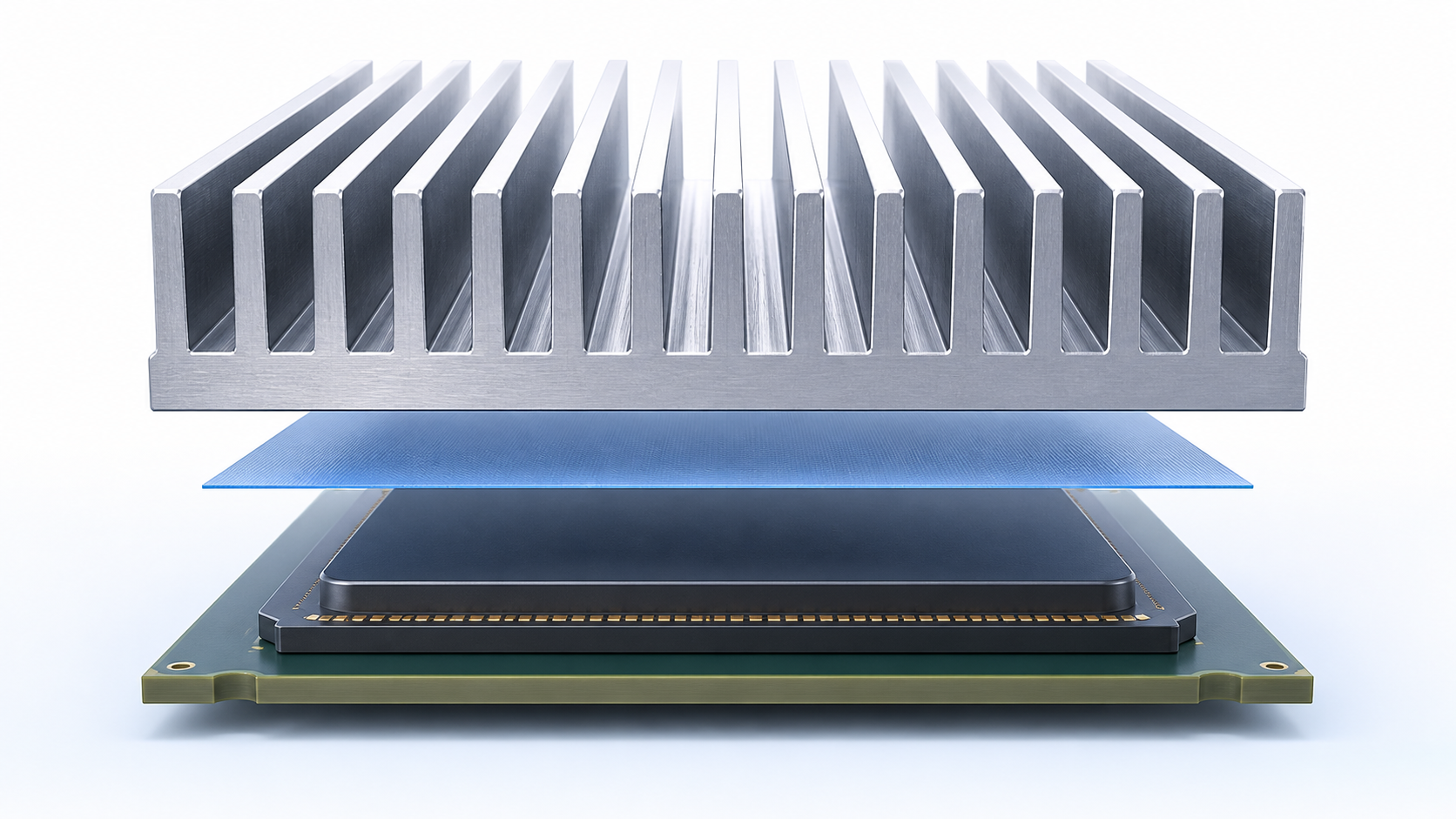
Where a TIM sits in the thermal path
At a thin, flat interface, TIM may sit directly between a processor lid or power package and a heat sink. This is often called a TIM1.5-style external package interface. Inside advanced packages, other interface layers may be called TIM1 or TIM2 depending on location and industry convention. In larger electronics, a TIM may bridge component-to-enclosure gaps, fill the space between a battery module and cold plate, isolate a power semiconductor from a grounded heat sink, or couple an LED board to a housing.
The correct product family depends first on what the joint must physically do. Grease and phase-change films are strong candidates for controlled thin bond lines. Pads tolerate moderate gaps and simplify handling. Liquid gap fillers accommodate uneven, multi-level assemblies with low mechanical stress. Adhesives add structural retention. Graphite helps spread heat in-plane but may be electrically conductive. The sections below turn those distinctions into a practical selection process.
Interface Physics
How Thermal Interface Materials Reduce Contact Resistance
Useful TIM performance comes from the material body and its two contact boundaries. Thickness, wetting and pressure determine how those elements combine inside the real assembly.
Surface Roughness Creates Air Gaps
Machined, stamped, molded and plated surfaces contain peaks and valleys at multiple scales. When two parts are clamped together, the peaks carry load while much of the apparent area remains separated. Air has low thermal conductivity, so these voids cause a sharp temperature drop across the interface.
The TIM Conforms or Flows
A soft pad deforms, grease wets, gel flows, or phase-change material softens. The mechanism differs, but the goal is similar: occupy surface valleys without creating an unnecessarily thick layer. Compliance also helps accommodate tolerance, warpage and thermal expansion.
Pressure Builds Real Contact
Clamp load improves contact until the material has substantially conformed. Beyond that point, more pressure may yield little thermal gain while increasing package, board or dielectric stress. A production design needs a controlled minimum, nominal and maximum pressure window.
The Joint Stabilizes Over Time
Temperature cycling, vibration and power transients continually change expansion and load. A qualified TIM must keep acceptable coverage and resistance without excessive pump-out, bleed, dry-out, cracking, compression set or electrical cut-through.
BLT is bond line thickness, k is through-plane thermal conductivity and A is effective heat-transfer area.
Why thermal conductivity alone cannot predict cooling
The complete joint includes the bulk material term plus contact resistance at both boundaries. A high-conductivity pad may still have more total resistance than a lower-conductivity paste if the pad is much thicker or contacts poorly. Conversely, a soft gap pad can outperform a very thin compound when the assembly has a large or variable gap that the compound cannot safely bridge.
Compare thermal impedance or resistance only when test area, thickness, pressure, temperature and interface count are known. For a deeper engineering explanation, see thermal conductivity versus thermal impedance in TIM selection.
Product Families
Types of Thermal Interface Materials
No single TIM type wins every interface. These eight families represent different combinations of thickness control, gap tolerance, mechanical stress, electrical behavior, manufacturability and rework.

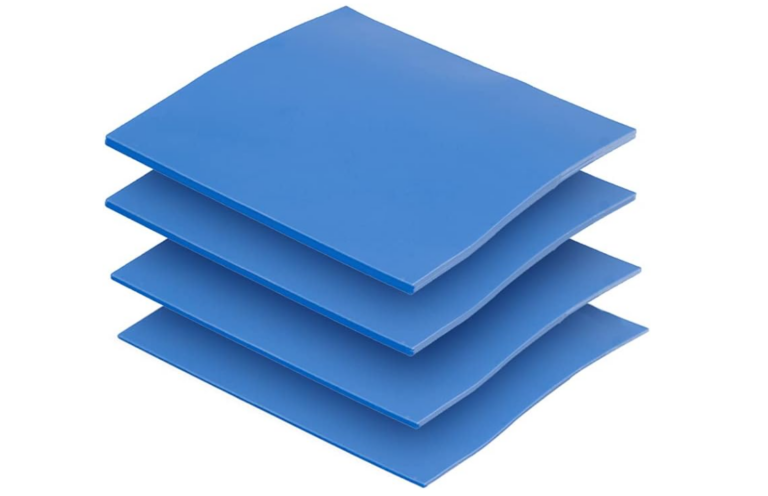
Thermal Pads and Gap Pads
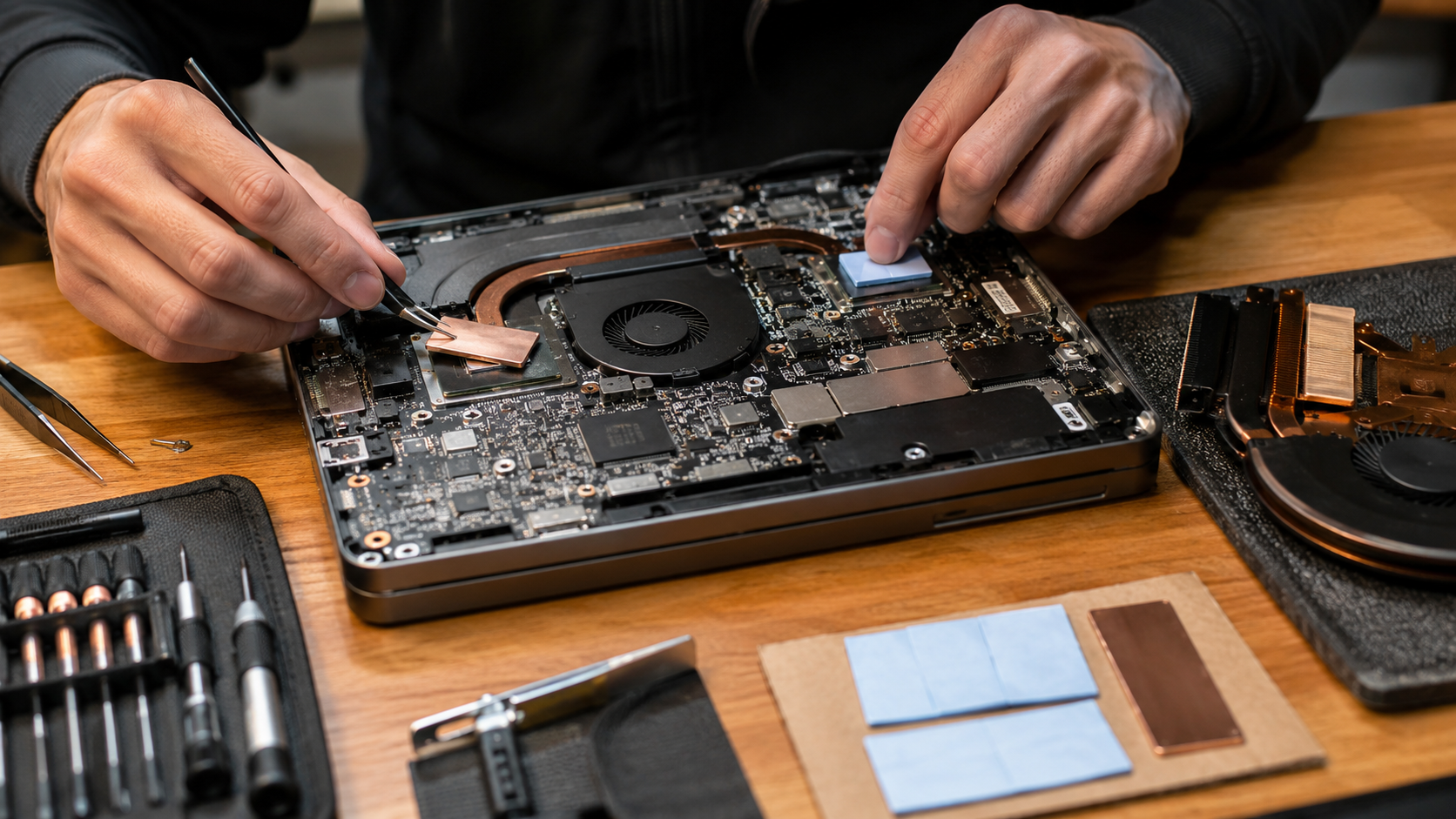
Preformed pads provide clean placement, controlled area and moderate-to-large gap accommodation. Their softness and compression help follow tolerance and component height variation.
- Strong for manual or automated placement
- Can provide electrical isolation
- Compression and thickness drive final performance

Thermal Grease and Paste
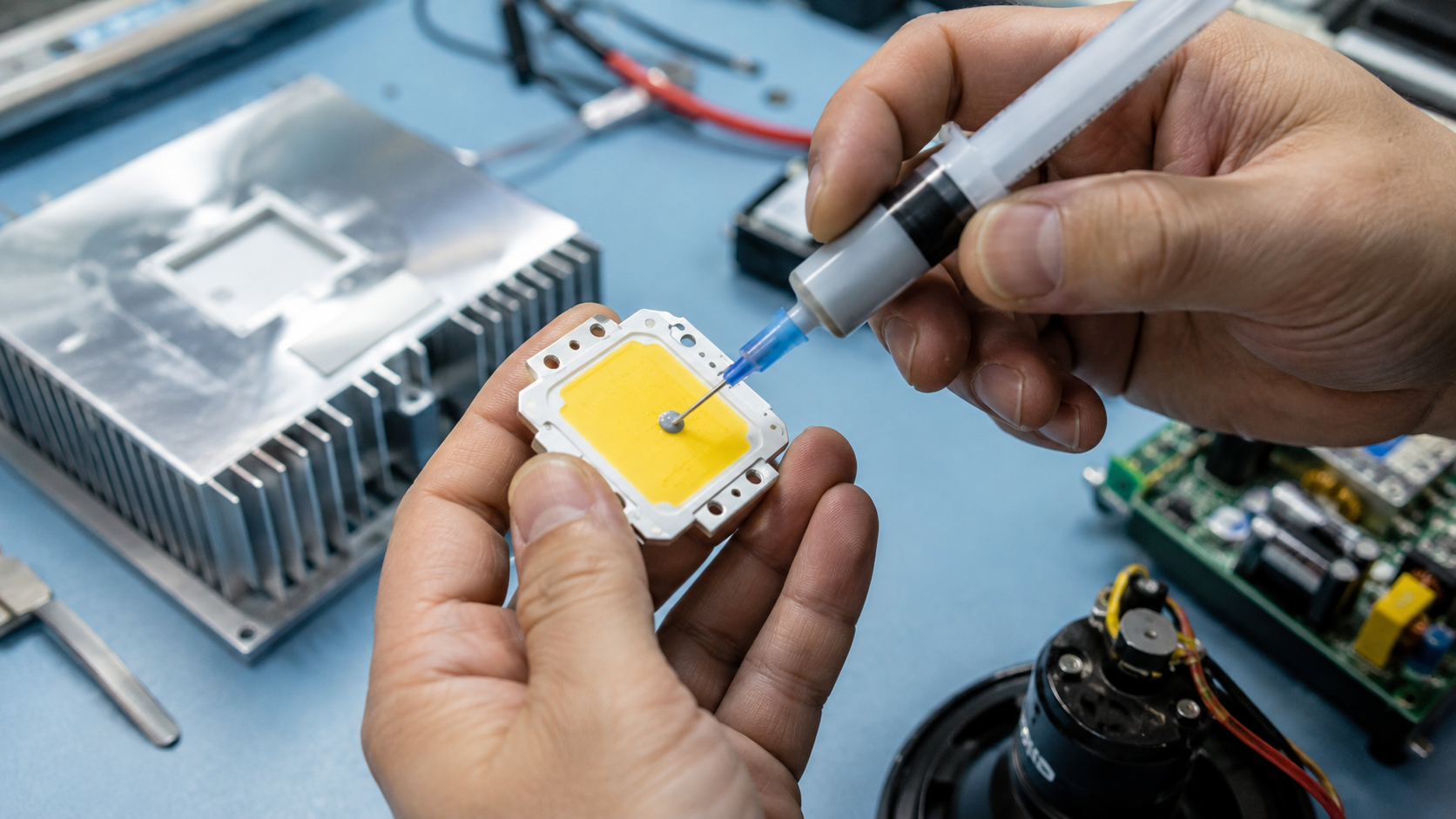
Non-curing grease can form a very thin bond line and wet surface roughness efficiently. It requires controlled application volume, containment and long-term pump-out review.
- Low contact resistance potential
- Easy rework in many assemblies
- Dispensing process must be repeatable
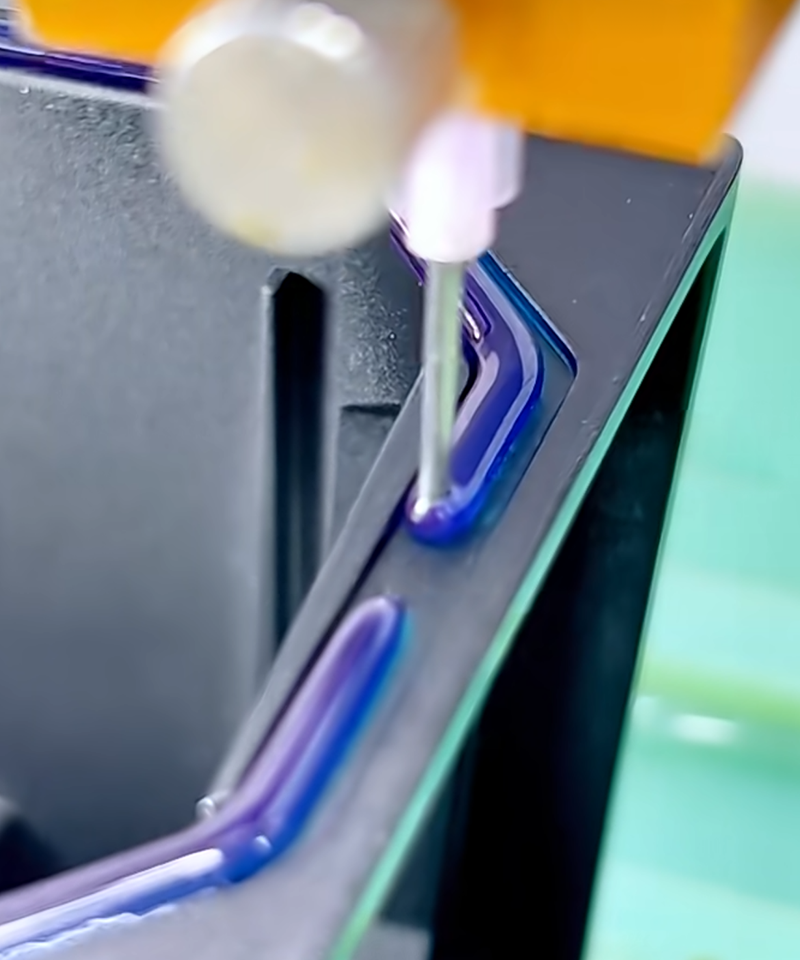
Liquid Gap Fillers and Thermal Gels
One- or two-component dispensable materials conform to multi-level surfaces and larger variable gaps with low assembly stress. They can support automated bead, dot or pattern dispensing.
- Excellent tolerance accommodation
- Low stress for fragile components
- Mixing, curing and dispense control may apply
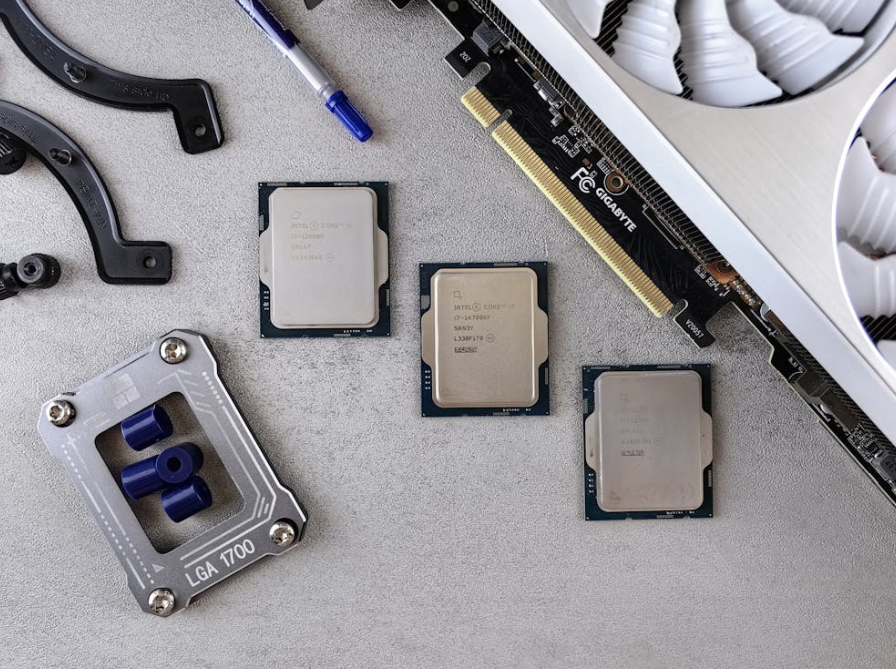
Thermal Putty
Putty is highly conformable and can fill irregular component fields without the spring force of a conventional pad. Retention, migration, residue and automated handling require application-specific review.
- Useful for uneven or reworkable gaps
- Conforms at relatively low pressure
- Volume control and service cleanliness matter
Phase Change Thermal Interface Materials
PCM films remain dry during handling, then soften near a designed temperature to wet the interface. They combine preformed placement with a thin activated bond line.
- Clean high-volume placement
- Strong pump-out resistance potential
- Needs activation temperature and clamp pressure

Thermally Conductive Adhesives
Conductive adhesives transfer heat while bonding components, spreaders or housings. They can reduce mechanical hardware but introduce cure, bond strength and rework considerations.
- Thermal and structural functions combined
- One- and two-component options
- Surface preparation and cure control are critical

Graphite Thermal Materials
Graphite sheets and pads can provide strong in-plane heat spreading with thin, lightweight construction. Through-plane performance, edge conductivity and electrical isolation need careful interpretation.
- Excellent heat spreading potential
- Thin and lightweight formats
- May require dielectric films or edge controls

Electrically Insulating TIMs
Insulating pads, coated fabrics and reinforced composites provide a thermal path while separating a live device from a heat sink or chassis. The complete cut part must resist puncture and edge flashover.
- Thermal and dielectric functions combined
- Carrier improves handling and cut-through resistance
- Validate dielectric strength after assembly and aging
Fast Comparison
Compare Thermal Interface Material Types
Use this matrix to narrow the family before reviewing individual formulations. Ratings are general tendencies, not product specifications; actual behavior depends on chemistry, thickness and test conditions.
| Material type | Typical interface | Pressure / stress | Handling | Main advantage | Watch item |
|---|---|---|---|---|---|
| Thermal pad | Moderate or variable gap | Needs controlled compression | Clean preformed part | Gap tolerance and electrical options | Compression, thickness and rebound |
| Grease / paste | Very thin controlled bond line | Low to moderate | Dispensed or printed | Wetting and low contact resistance | Pump-out, dry-out and mess |
| Liquid gap filler | Large, uneven or multi-level gap | Very low assembly stress | Dispense; cure may apply | Conformability and automation | Mix ratio, cure, flow and rework |
| Thermal putty | Irregular or serviceable gap | Low | Manual or controlled dispense | Soft gap filling and rework | Migration, residue and volume |
| Phase change TIM | Thin, flat clamped joint | Sustained preload | Dry film or pre-applied | Clean placement and thin hot bond line | Activation and gap limitation |
| Thermal adhesive | Bonded interface | Fixture during cure | Dispense, film or tape | Heat transfer plus attachment | Bond stress and difficult rework |
| Graphite | Thin spreading layer | Design-specific | Sheet or die-cut | In-plane heat spreading | Electrical conductivity and anisotropy |
| Insulating composite | Power device to grounded cooler | Controlled compression | Preformed die-cut | Thermal path plus isolation | Puncture, cut-through and edge clearance |
Paste and pads are not direct substitutes when the physical gap is different. A detailed breakdown of handling, thickness and service tradeoffs is available in thermal paste versus thermal pads.
Engineering Data
Thermal Interface Material Specifications That Matter
A useful data sheet defines the method and condition behind every number. Compare candidate materials at the expected gap, pressure, temperature and aging state rather than ranking one isolated property.

Thermal Conductivity
Conductivity in W/m·K describes heat flow through the material body under a stated test method. It is valuable for screening, especially across thicker gaps, but it does not include every contact boundary or assembly effect.
Thermal Resistance and Impedance
Resistance in °C/W relates temperature drop to heat flow for a defined geometry. Impedance is often area-normalized. Confirm sample thickness, contact pressure, temperature, conditioning and whether one or two interfaces are included.
Bond Line Thickness and Gap Range
Supplied thickness is not always final BLT. Soft materials compress; grease flows; PCM activates; liquid filler follows stops and volume. Define minimum, nominal and maximum assembled conditions rather than one ideal gap.
Hardness, Modulus and Compression
Mechanical behavior determines component stress and real contact. For pads, review compression-deflection data at the relevant thickness and area. For gels and adhesives, consider cured modulus and thermal-expansion mismatch.
Operating Temperature Range
Continuous, peak and low-temperature limits have different meanings. Check dwell time, thermal cycling, power cycling and whether the material repeatedly crosses a softening or cure-related transition.
Electrical Properties
Dielectric strength, volume resistivity, dielectric constant and cut-through behavior matter when the cooling surface must be isolated. Test the final die-cut and assembled construction, not only a pristine laboratory sheet.
Flow, Pump-Out, Bleed and Outgassing
Non-curing materials can move under cycling and pressure gradients. Cleanliness-sensitive products may also require low volatile loss, controlled siloxanes or specific contamination testing.
Format, Tolerance and Shelf Life
Record sheet or roll size, thickness tolerance, die-cut geometry, liner, tab, tack, cartridge size, mix ratio, storage temperature and usable life. Production data belongs beside thermal data.
Selection Workflow
How to Select the Right Thermal Interface Material
Begin with the real mechanical and thermal system. A six-gate workflow prevents a promising data-sheet value from becoming an unreliable assembly.
Define the Interface
Identify heat source, cooling surface, contact area, holes, keep-outs, surface finish and orientation. Record minimum, nominal and maximum gaps, including tolerance stack and warpage.
Set the Thermal Target
Estimate power, heat flux, ambient or coolant conditions, cooler resistance and device limit. Convert these into a realistic allowance for the interface rather than demanding a conductivity value without context.
Map Pressure and Stress
Define fasteners, torque, springs, clips, stops and component load limits. Include flatness and load distribution. Fragile dies, boards and solder joints may make a soft gel preferable to a compressed pad.
Confirm Electrical and Environmental Needs
State insulation, voltage, creepage, flammability, restricted substances, outgassing, silicone sensitivity, fluids, humidity and operating temperature. Do not infer isolation from color or filler type.
Match Manufacturing
Decide whether production needs die-cut placement, roll-fed automation, manual grease application, one-part dispensing, two-part metering, printing or pre-application. Define takt time, inspection and rework.
Prototype and Validate
Test material coupons for screening, then build production-representative joints. Measure initial and aged thermal response, inspect coverage, verify electrical safety and confirm a repeatable process window.
Haktak can review drawings, operating conditions and process requirements before samples are cut or dispensed.
Mechanical Fit First
Choose a TIM by Gap, Pressure and Bond Line Thickness
The physical joint narrows the material family faster than a conductivity target. Use these starting zones, then validate the selected formulation inside the real tolerance window.
Flat, Clamped Contact
For a processor lid, power package or machined spreader with a tightly controlled thin bond line, grease or phase-change TIM can provide strong wetting and low contact resistance.
- Control application volume
- Confirm minimum safe pressure
- Review pump-out or activation
Clean Preformed Placement
A thin pad or carrier-supported PCM can simplify placement when grease handling is undesirable. The pad must remain thin enough and compliant enough to avoid unnecessary resistance.
- Check flatness and tolerance
- Validate compression or final BLT
- Use tabs/liners for handling
Soft Gap Accommodation
Thermal gap pads are useful where component height and enclosure tolerance require a resilient layer. Select thickness from the worst-case gap and evaluate pressure across the full contact area.
- Avoid excessive compression stress
- Check rebound and compression set
- Do not stack pads to solve uncertainty
Low-Stress Conformability
Liquid gap filler, gel or putty can follow complex surfaces and multiple component heights with low assembly force. Deposition volume, flow, cure and rework become the primary manufacturing controls.
- Map keep-outs and flow paths
- Define bead or shot geometry
- Inspect voids and coverage
For irregular interfaces, compare the handling and retention differences in thermal putty versus thermal pads for uneven gaps.
Design Examples
Thermal Interface Material Selection Scenarios
These scenarios show how the same conductivity target can lead to different material families once gap, load, process and reliability are included. They are decision examples, not product guarantees.
 SCENARIO 01
GPU Package to Liquid Cold Plate
Interface: a high-heat-flux package with a relatively flat lid, thin joint and defined mounting hardware. Cooler flatness and package coplanarity must be measured over the active area.
Likely candidates: controlled grease, thin phase-change film or another low-BLT compound. A conventional thick gap pad would usually add unnecessary bulk resistance unless tolerance requires it.
Critical questions: Does the assembly retain preload through service? Can manufacturing control deposit volume? Is field removal expected? How does resistance change after burn-in, power cycling and repeated cooler removal?
Validation focus: pressure mapping, hot-spot temperature, coverage, pump-out or edge migration, fastener torque and long-duration power operation.
 SCENARIO 02
IGBT or MOSFET Module to Heat Sink
Interface: a module baseplate may be broad and slightly warped, with high power cycling and a strict device temperature limit. Electrical isolation may be inside the module or may need to be supplied by the interface.
Likely candidates: grease or PCM for a grounded, thin, clamped baseplate joint; reinforced insulating pad when the heat sink must be electrically isolated. The required insulation architecture changes the comparison completely.
Critical questions: What are baseplate flatness, screw pattern and torque sequence? Is the thermal result sensitive to mounting orientation? What dielectric edge distance remains after compression?
Validation focus: thermal impedance versus pressure, power cycling, pump-out, baseplate witness pattern, dielectric withstand and mechanical stress around fasteners.
 SCENARIO 03
Battery Module to Cold Plate
Interface: a large area with cell or module height variation, enclosure tolerance and possible service gaps. Very high total compression force can develop even when local pad pressure appears modest.
Likely candidates: soft gap pad for controlled placement or a low-modulus liquid gap filler for low assembly stress and better tolerance accommodation. Putty may help in limited service or irregular regions but needs retention review.
Critical questions: How wide is the true gap distribution? Can liquid material be contained during assembly and vehicle orientation? What flame, coolant, humidity and repair requirements apply?
Validation focus: full-area force, dispense mass and voids, thermal mapping, vibration, thermal shock, coolant compatibility, compression set and pack-level service procedures.
 SCENARIO 04
5G Radio Board to Outdoor Enclosure
Interface: multiple components at different heights transfer heat to a cast housing while the radio experiences solar load, cold start, vibration and sealed-enclosure temperatures.
Likely candidates: thermal gap pads for individually controlled components, or dispensable gel for a complex multi-level field. A hybrid design may use thin compound at a power amplifier and pads elsewhere.
Critical questions: Will the housing slide across the material during assembly? Are rework and board replacement required? How do casting flatness and board deflection change contact at temperature?
Validation focus: component stress, compression distribution, outdoor cycling, vibration, enclosure sealing, residue, pad retention and repeatability after repair.
 SCENARIO 05
LED Board to Metal Housing
Interface: a metal-core or FR-4 LED board transfers distributed heat to an extruded or cast housing. Cost and line speed are important, but optical contamination and long high-temperature dwell can dominate reliability.
Likely candidates: thin grease, pad, adhesive film or dispensable adhesive depending on flatness and whether fasteners are available. Adhesive can combine attachment and heat transfer but makes rework harder.
Critical questions: Is the board mechanically fastened? How flat is the housing? Are silicone volatiles, yellowing or optical deposits a concern? Does cure time fit takt?
Validation focus: LED junction temperature, lumen maintenance, thermal aging, optical cleanliness, bond stress, cure completeness and production deposition.
 SCENARIO 06
Compact Consumer Device Heat Spreader
Interface: a thin enclosure with local hot spots, limited z-height and possible shock or flex. The thermal solution may need both through-plane coupling and in-plane spreading.
Likely candidates: thin pad or PCM at the heat source, graphite for spreading, and dielectric film where conductive edges create risk. Combining layers should be justified because every extra boundary adds contact resistance.
Critical questions: Can the enclosure provide stable pressure? Will drop or torsion disturb the joint? Is graphite edge conductivity acceptable near antennas or contacts? Can operators place thin parts accurately?
Validation focus: touch temperature, device throttling, drop, bend, graphite edge control, placement yield and thermal performance at minimum enclosure pressure.
Application Engineering
Thermal Interface Materials by Application
Application labels do not select a material by themselves, but they reveal common power density, reliability, electrical and production constraints that should shape the test plan.
 AI Servers & Data Centers
High heat flux, large packages, cold-plate flatness, serviceability and long-duration operation.
 Power Electronics
Power cycling, electrical isolation, clamp load, baseplate flatness and low interface resistance.
 EV Batteries & Energy Storage
Large areas, gap tolerance, low stress, flame requirements, automated dispensing and service life.
 Automotive Electronics
Temperature extremes, vibration, contamination, long qualification cycles and stable supply.
 Telecom & 5G
Outdoor temperature, power amplifiers, sealed housings, compression stability and repair logistics.
 LED Lighting
Board-to-housing contact, optical cleanliness, long dwell, low pump-out and cost-controlled assembly.
 Semiconductor Assembly
Thin interfaces, delicate packages, precise deposition, electrical control and process traceability.
 Industrial Electronics
Long service life, dust and fluids, repairability, power cycling and broad operating conditions.
 Consumer Electronics
Thin construction, rapid assembly, drop reliability, cosmetic cleanliness and high production volume.
Beyond Initial Performance
Electrical, Environmental and Reliability Requirements for TIMs
A candidate is useful only when it preserves the required thermal path, insulation and cleanliness through assembly, storage and service.
 01
01Electrical Isolation
Define working voltage, dielectric withstand, creepage and clearance, grounded surfaces and consequences of a pinhole. Filled materials that look insulating may be electrically conductive. Dielectric performance can also fall after die cutting, compression, thermal aging or contamination.
 02
02Silicone and Cleanliness
Silicone-based TIMs are widely used because they combine stability and compliance, but optics, relays, contacts, some coatings and high-vacuum systems may need tighter volatile or residue control. “Silicone-free” should be linked to a measurable application requirement, not treated as automatically superior. Review silicone-free thermal solutions for sensitive assemblies.
 03
03Outgassing and Vacuum
Volatile loss can contaminate optics, sensors and vacuum surfaces. Confirm whether a reported result uses an appropriate method, sample conditioning and temperature. A low-outgassing requirement may change the matrix, cure state, packaging and handling plan. See the guide to low-outgassing thermal materials.
 04
04Thermal and Power Cycling
Different coefficients of thermal expansion create shear and normal motion during each cycle. Grease can pump, pads can take compression set, cured gels can fatigue, adhesives can transfer stress and phase-change films can migrate if volume or pressure is uncontrolled. Trend thermal resistance during the test rather than checking only the final pass/fail state.
 05
05Fluids, Humidity and Corrosion
Coolants, oils, cleaners, salt mist, humidity and enclosure contaminants can swell, soften or chemically attack a TIM. Metal fillers and conductive alloys may also introduce galvanic or material-compatibility concerns. Evaluate the complete stack, including plated surfaces, liners, adhesives and cleaning residue.
 06
06Flame and Regulatory Needs
State the required standard, thickness and construction rather than requesting “flame retardant” generally. Restricted-substance, halogen, PFAS, recycling and regional documentation needs should be confirmed early because formulation changes can affect thermal, dielectric and processing behavior.
 07
07Vibration and Mechanical Shock
Fastener relaxation, enclosure flex and vibration can redistribute pressure across a large interface. A resilient pad may preserve contact better than a thin compound in one design, while a low-modulus gel may reduce component stress in another. Test the real mounting system with production torque tolerances.
 08
08Serviceability and Rework
Decide whether the cooler will be removed in field service. Non-curing materials may be cleanable but can contaminate adjacent areas; cured adhesives may prevent non-destructive access; pads may tear or take a permanent set. Define replacement, approved cleaners, residue inspection and disposal in the service plan.
From Material to Production Part
Custom Thermal Interface Material Formats
The same base material can behave very differently in production depending on geometry, liner, package, deposition and tolerance. Conversion design should begin while the material is being screened.
Die-Cut Parts
Custom outlines place material only where heat transfer is needed and protect holes, connectors and keep-outs. Part drawings should define datums, tolerance, orientation and whether internal waste is removed.
Sheets and Rolls
Sheet or roll supply can support customer converting, prototyping or automated placement. Record usable width, roll length, splice rules, core, winding direction, packaging and storage conditions.
Liners, Tabs and Carriers
Release behavior influences placement accuracy and cycle time. A tab can help an operator remove the correct liner; a carrier can control stretch, cut-through or electrical behavior but adds its own resistance.
Cartridges and Syringes
Dispensable products may ship in syringes, cartridges or pails. Match packaging to equipment, shot size, mix ratio, degassing, usable life and waste targets.
Pre-Applied Patterns
Grease, PCM or adhesive can sometimes be printed or deposited on a heat sink before final assembly. Pattern thickness, storage stability, protective packaging and placement inspection must be qualified.
Custom Formulations
When standard products cannot meet thermal, rheological, dielectric, outgassing or cure needs, formulation work may adjust filler, matrix, softness and process behavior. Every change requires renewed validation.
Custom formulation starts with measurable requirements
Share the thermal target, mechanical window, environment, manufacturing method and annual demand. Haktak can then determine whether an existing grade, format change or a new formulation is the most efficient route.
Manufacturing Control
TIM Installation and Process Control
Material selection and manufacturing process are inseparable. A stable material can still fail when surfaces are contaminated, liners are removed incorrectly, dispense volume drifts, fasteners are tightened unevenly or cure conditions are not reached.
- 01
Inspect and Prepare Surfaces
Confirm flatness, finish, damage, oxidation and cleanliness. Use an approved cleaning process compatible with plastics, coatings and plating. Prevent fingerprints, dust and old TIM residue from entering the joint.
- 02
Control Material Condition
Follow storage, thaw, mixing, equilibration and usable-life instructions. Record lot, date and environmental exposure. For two-part materials, verify ratio and mixer condition; for films, inspect liner and tack.
- 03
Apply a Defined Amount and Pattern
Use a die-cut datum, placement fixture, stencil, programmed bead or shot specification. The pattern should cover the active interface after assembly without starving hot spots or flooding keep-outs.
- 04
Assemble With a Controlled Load
Set torque sequence, fastener tolerance, clip force or spring height. Mechanical stops can stabilize final gap. Avoid sliding that wrinkles a pad or scrapes compound away from the interface.
- 05
Cure or Activate When Required
Define time, temperature and pressure at the actual joint. Oven air temperature does not prove interface temperature. PCM needs controlled activation; adhesives and gels may need full cure before performance or handling tests.
- 06
Inspect and Record
Use weight, vision, height, squeeze-out, torque, cure records or witness builds as appropriate. Set acceptance limits that correlate with thermal and reliability results rather than relying on appearance alone.
Qualification Plan
How to Test and Qualify Thermal Interface Materials
This module is a practical validation sequence: it shows which evidence should be collected before a material is released into production. Coupon data screens candidates; assembled-device testing proves the joint.
Test the complete thermal joint
A coupon can compare bulk material behavior, but it cannot reproduce package flatness, fastener distribution, actual heat flux, cooler spreading, enclosure flex or electrical edge conditions. Build representative samples with production-intent hardware and process settings.

Incoming and Dimensional Checks
Verify thickness, area, liner, surface condition, mass where relevant, storage history and lot traceability before building test assemblies.
Baseline Thermal Test
Measure a controlled initial condition with recorded power, temperatures, pressure, area and environment. Use the same setup for all candidates.
Pre- and Post-Conditioning
For PCM, include activation; for gels or adhesives, complete cure; for pads, allow defined compression dwell. Separate material conditioning from measurement noise.
Pressure Sensitivity
Test minimum, nominal and maximum allowable load. Include torque tolerance, spring relaxation and flatness extremes.
Thermal and Power Cycling
Cycle through realistic temperatures and power transients. Trend thermal resistance at intervals instead of checking only final pass/fail.
High-Temperature and Humidity Aging
Use application-relevant dwell, humidity and bias. Inspect hardening, softening, corrosion, bleed, delamination and electrical change.
Vibration and Mechanical Shock
Test the mounted assembly. Monitor fastener relaxation, component movement, cracking and interface displacement.
Pump-Out, Bleed and Edge Inspection
Document perimeter condition, witness patterns, residue and dry regions before and after cycling. Review why thermal grease pump-out occurs.
Electrical Safety
For insulating systems, test dielectric withstand, insulation resistance and edge clearance after mechanical and environmental conditioning.
Process Capability and Pilot Run
Run production-intent equipment, operators, takt time and inspection. Evaluate placement, shot weight, cure, liner removal, scrap and rework.
When conductivity data is part of screening, confirm the method, sample preparation and uncertainty. See how to test thermal conductivity of thermal interface materials.
Plan Prototype SamplesReliability Review
Common Thermal Interface Material Failure Modes
Most TIM failures come from a mismatch among material, geometry, pressure, temperature and process. The symptom often appears far from the original cause.
High Initial Thermal Resistance
Likely causes: wrong thickness, low pressure, contamination, trapped air, incomplete PCM activation or inadequate wetting.
Prevention: map the joint, verify BLT and load, inspect witness coverage and measure interface temperature during conditioning.
Compression Set or Loss of Contact
Likely causes: excessive pad compression, high-temperature aging, fastener relaxation or tolerance outside the design window.
Prevention: select thickness from min/max gap, use compression-deflection data and test long dwell. Review why thermal pads fail.
Pump-Out, Bleed or Migration
Likely causes: cyclic expansion, excessive volume, low-viscosity matrix, orientation, pressure gradients or insufficient edge containment.
Prevention: control volume and geometry, test representative power cycles and inspect edges at intervals.
Dry-Out, Hardening or Cracking
Likely causes: volatile loss, oxidation, temperature beyond material range, incompatible chemicals or repeated mechanical strain.
Prevention: use realistic aging conditions, measure resistance through time and inspect mechanical condition after teardown.
Incomplete Coverage or Voids
Likely causes: poor dispense path, trapped air, insufficient shot, warped surfaces, pad wrinkles or debris.
Prevention: design the pattern around air escape, control mass/height, improve placement fixtures and use witness assemblies.
Dielectric Breakdown or Shorting
Likely causes: conductive filler, pad puncture, excessive squeeze-out, burrs, inadequate edge distance or contamination.
Prevention: specify isolation explicitly and test the final cut part after pressure, temperature, humidity and vibration.
Package, Solder or Board Damage
Likely causes: pad too hard, area too large, uneven torque, high spot, cured adhesive stress or thermal expansion mismatch.
Prevention: map force and deflection, use stops or springs and qualify low-modulus materials where appropriate.
Lot or Line Variation
Likely causes: storage exposure, inconsistent mixing, liner confusion, shot drift, incomplete cure, unrecorded substitutions or poor traceability.
Prevention: define incoming checks, material life, equipment controls, visual standards and pilot-run capability.
Uncontrolled Rework
Likely causes: reused pad, disturbed PCM, contaminated grease, cured bond removal or incompatible cleaner.
Prevention: define whether the TIM is single-use, create a replacement kit and specify approved cleaning and inspection steps.

RFQ Preparation
Information Haktak Needs to Recommend a Thermal Interface Material
A complete engineering brief shortens material screening and produces more useful samples. Estimated values are acceptable early in development when assumptions and unknowns are clearly marked.
Development Support
Why Work With Haktak for Thermal Interface Materials?
The goal is not simply to ship a material. It is to help translate a thermal joint into a manufacturable format and a validation plan that can move from early samples to stable production.
Multiple TIM Families
Screen pads, grease, gels, putty, PCM and adhesives against the same interface requirements instead of forcing every application into one material form.
Custom Formats
Develop die-cut geometry, liner and tab configurations, sheets, rolls, cartridges or pre-applied patterns around the intended assembly process.
Prototype Samples
Start with controlled sample quantities and production-representative shapes so thermal, mechanical and handling risks can be found early.
Process Support
Review placement, dispensing, mixing, cure, activation, torque and inspection inputs alongside material selection.
Application-Focused Review
Consider power density, gap range, stress, electrical safety, environment, reliability and service needs as a connected system.
Production Transition
Define part specifications, packaging, traceability, incoming controls and change management before scaling annual demand.
Final material approval remains the responsibility of the customer’s engineering and quality teams. Recommendations should always be verified in the actual assembly and operating profile.
Supply Readiness
Thermal Interface Material Supplier Qualification
Material performance is only one part of supplier approval. A production program also needs stable specifications, conversion controls, traceability, documentation and a defined response to change.
Separate Screening Data From Release Data
Early data sheets help narrow candidates, but a released drawing or material specification should identify the exact grade, thickness, color where relevant, liner, format, tolerance, storage and acceptance criteria. Avoid approving a broad family name that permits uncontrolled substitutions.
Ask which values are typical and which are guaranteed, how often they are measured, and whether the test method is appropriate for the thickness and softness of the product. If the final thermal requirement is assembly-specific, define a device or fixture test rather than expecting incoming conductivity alone to predict performance.
Qualify the Converted Part
Die cutting, slitting, lamination and packaging can alter dimensional, surface and electrical behavior. A supplier qualification should therefore cover the finished part number, not only the parent roll. Review edge quality, burrs, dust, missing internal waste, liner release, orientation and part count.
For electrically insulating products, conversion can expose conductive edges or damage a carrier. For very soft pads, measurement pressure can distort thickness. Agree on inspection fixtures and methods that reproduce the function without compressing the part unpredictably.
Define Lot Traceability and Shelf-Life Control
Traceability should connect finished parts to raw-material lots, conversion records and inspection results. Labels should identify part, lot, quantity, manufacture or expiration information, storage condition and handling precautions appropriate to the product.
Confirm how partial rolls, opened cartridges, frozen materials or moisture-sensitive packages are controlled. The customer process should record thaw time, open time and remaining life. A material that meets shelf life in a sealed package may not remain usable after repeated line exposure.
Review Process Capability
Tolerance should be supported by a capable and repeatable process. Critical dimensions may include thickness, outside profile, hole position, liner offset, tab location, roll width, shot mass, mix ratio or cured height. Choose measurements that correlate with assembly fit and thermal performance.
Pilot lots should represent the proposed equipment, tooling, packaging and inspection flow. Evaluate not only average performance but variation, yield, operator handling and failure containment. Sampling plans should reflect the risk of the feature and the ability to detect a defect later.
Control Changes and Equivalents
Changes to filler source, polymer matrix, carrier, liner, pigment, release coating, cure package, mixing site or conversion tool can affect performance even when the public product name is unchanged. Agree which changes require notification, sample approval or full requalification.
If an alternate material is desired for continuity, qualify it intentionally. “Same W/m·K” does not mean equivalent because softness, contact, dielectric behavior, outgassing, flow and processing may differ. Keep approved alternates as separate controlled part numbers with their own validation record.
Plan Packaging, Logistics and Continuity
Packaging should prevent curl, compression set, liner damage, contamination, leakage and temperature exposure. Large die-cut pads may need rigid trays; tacky films may need controlled stacking; cartridges may need temperature-managed transport. Validate packaging through the actual route and storage duration.
For volume production, discuss forecast, minimum order, standard lead time, tooling maintenance, safety stock, end-of-life notice and recovery after disruption. The best thermal material is not a successful solution if it cannot arrive in the required format, condition and schedule.
Controlled drawing or specification, current data sheet and safety documentation, lot identification, incoming test plan, converted-part inspection criteria, pilot-run result, assembled thermal/reliability report, packaging standard, approved change process and named production contacts.
Continue the Engineering Review
Related Thermal Interface Material Guides
Use these deeper guides after the category and preliminary material family have been selected.
Thermal Conductivity vs Thermal Resistance
Understand why material conductivity and complete-joint resistance answer different questions.
MECHANICALThermal Pad Compression Ratio
Set a practical compression window without creating avoidable component stress.
COMPARISONPhase Change Material vs Thermal Paste
Compare activation, handling, bond line, reliability and service tradeoffs.
Frequently Asked Questions
Thermal Interface Materials FAQ
These answers are general engineering guidance. A specific product must be checked against the final geometry, load, electrical and reliability requirements.
What is the purpose of a thermal interface material?
A TIM replaces thermally resistive air in the microscopic gaps between two mating surfaces. By increasing real contact area and providing a conductive path, it reduces the temperature drop between a heat-generating device and its heat sink, cold plate or enclosure.
What are the main types of thermal interface materials?
Common families include thermal pads, grease or paste, liquid gap fillers and gels, putty, phase-change films, conductive adhesives and tapes, graphite sheets, and electrically insulating composites. Each family suits a different gap, pressure and manufacturing condition.
Is thermal conductivity the most important TIM specification?
No. Conductivity is important, but final bond line thickness, contact resistance, pressure, area, surface condition and aging can dominate the assembled result. Thermal impedance under matched conditions and device-level testing are often more useful for final selection.
What is the difference between thermal resistance and thermal impedance?
Thermal resistance expresses temperature rise per unit heat flow for a defined geometry, typically °C/W. Thermal impedance is often area-normalized and may include interface effects under specified test conditions. Always check how the supplier defines and measures the value.
How does bond line thickness affect thermal performance?
For a uniform material layer, bulk resistance increases approximately in proportion to thickness. Thinner is therefore usually better when continuous contact can be maintained, but a joint that is too thin for its gap can become starved or lose coverage.
Should I use thermal paste or a thermal pad?
Use paste when the interface is thin, flat and controlled and very low contact resistance is needed. Use a pad when a moderate gap, tolerance, clean placement or electrical insulation is more important. The physical interface should decide the family before conductivity is compared.
What TIM works best for an uneven or variable gap?
Soft gap pads, liquid gap fillers, gels and thermal putty are common starting points. The best choice depends on gap range, component stress, orientation, volume control, cure needs, automation and rework.
Are all thermal interface materials electrically insulating?
No. Some greases, graphite products, metal-filled compounds and liquid-metal materials can conduct electricity. Even an insulating product can fail if punctured, cut incorrectly or squeezed beyond safe edge clearances. Specify and test electrical isolation explicitly.
What causes thermal grease pump-out or dry-out?
Pump-out is driven by repeated expansion, contraction and pressure gradients that move material from the active interface. Dry-out can result from volatile loss, oxidation or matrix separation. Geometry, volume, formulation and temperature cycling all affect the risk.
How much should a thermal pad be compressed?
There is no universal percentage. Use the product’s compression-deflection data and calculate pressure across the actual area at minimum, nominal and maximum gaps. The window must create contact without overstressing components or reaching compression stops unpredictably.
When should phase change TIM be used?
PCM is most suitable for a thin, relatively flat and continuously clamped interface that benefits from clean preformed handling and grease-like wetting after activation. It is generally not intended to fill large millimeter-scale gaps.
Are silicone-free and low-outgassing TIMs available?
Yes, but these labels should be tied to an application-specific cleanliness or contamination goal. Confirm the exact test method, detection limit, conditioning and compatibility with optics, contacts, coatings, vacuum surfaces or other sensitive parts.
How should a TIM be tested in an assembled device?
Record power, interface temperatures, pressure, gap and environment, then measure the initial condition and repeat through activation or cure, thermal cycling, power cycling, vibration and aging. Inspect coverage, edges and electrical isolation after teardown.
Can Haktak provide custom parts and prototype samples?
Haktak can support material screening, die-cut shapes, sheets or rolls, dispensing formats, custom formulations and prototype samples. Share the drawing, gap, power, pressure, temperature, electrical, reliability and volume requirements to begin.
Start With the Interface
Request a Thermal Interface Material Recommendation
Send your drawing, gap range, thermal target, pressure window, electrical requirement, operating profile and production method. Haktak can help narrow the material family and plan useful prototype samples.