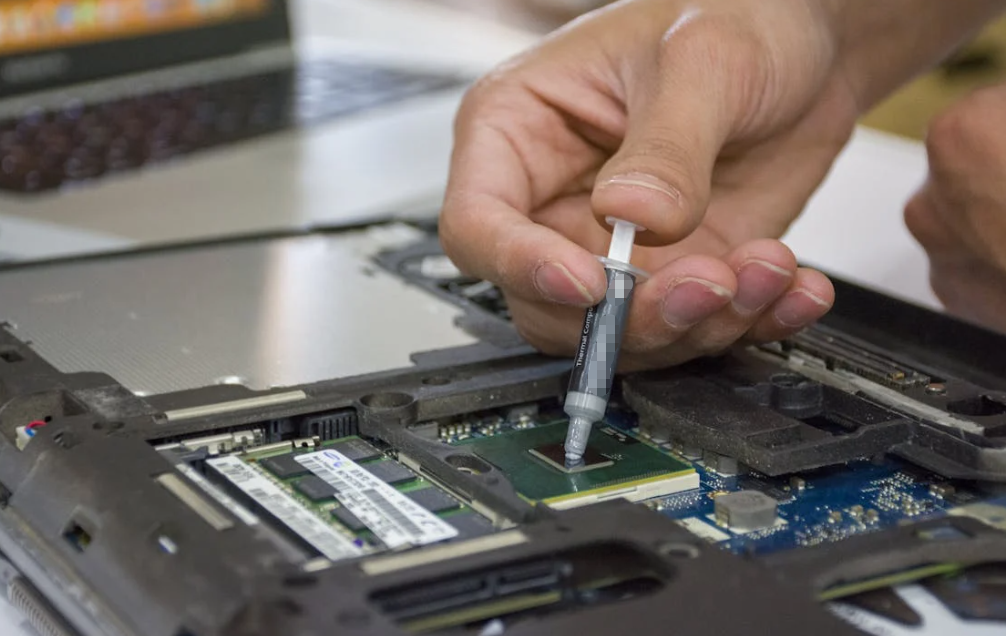
Thermal tape, also called thermally conductive adhesive tape or thermal transfer tape, is a pressure-sensitive adhesive material designed to bond components while helping heat move from a heat source to a heat sink, metal housing, chassis, or other cooling surface. It is commonly used when engineers need both heat transfer and attachment in one thin, clean, easy-to-apply material.

In simple terms: thermal tape is a thermal interface material with adhesive function.
Thermal tape is useful for LEDs, heat sinks, sensors, small power modules, battery electronics, displays, telecom devices, and compact electronics where screws, clips, or liquid adhesives are not ideal. However, it is not always the best thermal interface material. Engineers should compare thermal conductivity, thermal impedance, tape thickness, peel adhesion, shear strength, dielectric properties, surface preparation, operating temperature, and rework needs before choosing thermal tape.
What Is Thermal Tape?
Thermal tape is a tape-like thermal interface material that provides heat transfer and bonding. It usually consists of a thermally conductive adhesive layer, a carrier film or reinforcement layer, and a release liner. Some products are double-sided adhesive tapes, while others may have a single adhesive side depending on the application.
Thermal tape is designed to:
- Transfer heat across an interface
- Attach a heat sink, module, or component
- Fill small surface irregularities
- Provide cleaner assembly than paste or liquid adhesive
- Reduce the need for screws, clips, or clamps
It is commonly used between:
- LED modules and metal housings
- Heat sinks and chips
- Power devices and heat spreaders
- Sensors and metal brackets
- Battery electronics and cooling plates
- Displays and metal frames
- Telecom modules and enclosures
Thermal tape is part of the broader thermal interface material family. HakTak’s Thermal Interface Materials category page is designed to compare pads, grease, PCM materials, putty, adhesives, potting compounds, and custom TIM solutions.
How Does Thermal Tape Work?
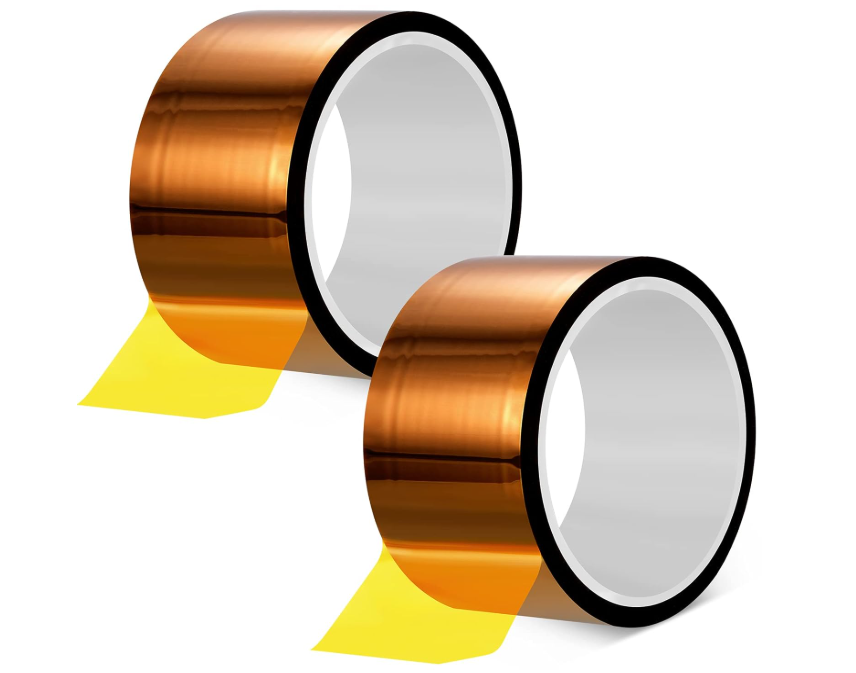
Thermal tape works by combining two functions:
- Thermal transfer: It replaces air gaps between surfaces with a material that conducts heat better than air.
- Adhesion: It bonds the two surfaces together through pressure-sensitive adhesive or adhesive layers.
Air has very low thermal conductivity. When a component and heat sink are placed together, microscopic gaps remain between the surfaces. Those gaps trap air and increase thermal resistance. Thermal tape fills part of that interface and creates a more conductive path.
At the same time, the adhesive allows the tape to hold the component or heat sink in place. This makes thermal tape useful when mechanical fasteners are not practical.
Thermal tape is usually applied by:
- Cleaning the surfaces
- Applying tape to one surface
- Removing the release liner
- Pressing the second surface into place
- Applying pressure for proper wetting and adhesion
The pressure-sensitive adhesive needs contact pressure to wet the surface and build bond strength. ASTM D1000, which covers pressure-sensitive adhesive-coated tapes for electrical and electronic applications, includes tests for properties such as adhesion, thickness, dielectric breakdown voltage, aging, flammability, and related tape characteristics.
Thermal Tape vs Thermal Pad
Thermal tape and thermal pads may look similar, but they solve different problems.
Thermal pads are usually selected for gap filling, compression, electrical insulation, and clean assembly. Thermal tape is selected when bonding is also required.
| Feature | Thermal Tape | Thermal Pad |
| Main function | Heat transfer plus bonding | Heat transfer and gap filling |
| Adhesive strength | Usually important | Optional, often tacky but not structural |
| Gap filling | Best for thin or small gaps | Better for medium gaps |
| Compression | Usually limited | Often designed for compression |
| Rework | Can be harder due to adhesive bond | Often easier, depending on tack |
| Best use | Attaching heat sinks or thin modules | Filling controlled gaps between surfaces |
| Thickness range | Usually thin | Wider thickness range |
Use thermal tape when the interface needs adhesive attachment. Use thermal pads when the interface needs controlled thickness, compression, or larger gap filling.
For thermal pad selection, see HakTak’s article How to Select Thermal Pad Thickness for Electronics.
Thermal Tape vs Thermal Grease
Thermal grease can create a very thin thermal interface and strong surface wetting. It is often used when screws, clips, or other mechanical force hold the assembly together.
Thermal tape provides bonding, while grease does not.
| Feature | Thermal Tape | Thermal Grease |
| Provides bonding | Yes | No |
| Bond line thickness | Controlled by tape thickness | Depends on application amount and pressure |
| Surface wetting | Good when pressure is applied | Very good when applied correctly |
| Mess | Clean | Can be messy |
| Rework | Adhesive may be difficult to remove | Requires cleaning old grease |
| Best use | Heat sink attachment without fasteners | Thin flat interface with mechanical clamping |
Use thermal grease when the main goal is low bond line thickness and the assembly already has mechanical retention. Use thermal tape when the assembly needs both heat transfer and adhesive attachment.
HakTak’s guide Tips for Applying Thermal Grease and How It Works explains why application amount and surface preparation matter for grease.
Thermal Tape vs Thermal Adhesive
Thermal tape and thermally conductive adhesive both provide heat transfer and bonding. The difference is mainly form and process.
Thermal tape is pre-formed and usually pressure-sensitive. It is clean, fast, and easy to apply. Thermally conductive adhesive is usually liquid, paste-like, or two-part, and may require curing.
| Feature | Thermal Tape | Thermally Conductive Adhesive |
| Form | Pre-formed tape | Liquid, paste, or two-part adhesive |
| Application | Peel and press | Dispense, mix, cure, or UV/heat activate |
| Thickness control | Controlled by tape | Depends on dispense and bond line control |
| Bond strength | Moderate to strong depending on tape | Often stronger after curing |
| Rework | Can be difficult | Often very difficult after cure |
| Production speed | Fast | Depends on cure process |
Use thermal tape for clean, fast assembly when adhesive strength requirements are moderate. Use thermally conductive adhesive when stronger bonding, special geometry, or curing-based performance is required.
HakTak’s article Thermal Adhesive vs Thermal Paste: When Bonding Is Required is a useful related topic for this decision.
Common Types of Thermal Tape
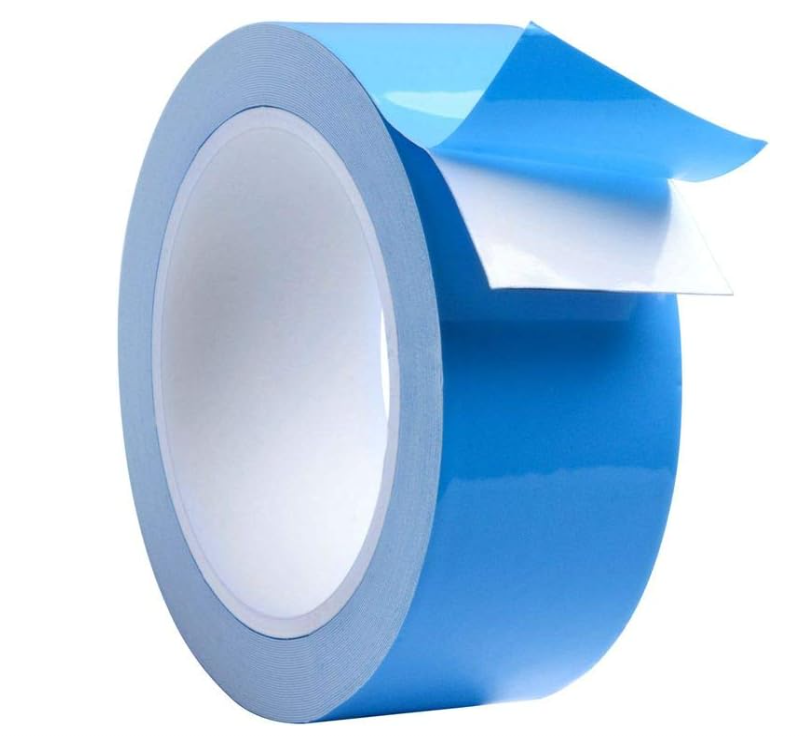
Thermal tape is not one single product. It includes several material types.
Double-Sided Thermal Tape
Double-sided thermal tape has adhesive on both sides. It is used to bond two surfaces while transferring heat between them.
Common uses:
- Attaching small heat sinks
- Bonding LED strips or modules
- Mounting sensors
- Attaching heat spreaders
- Assembly of compact electronic modules
Thermally Conductive Transfer Tape
Transfer tape is a thin adhesive film without a thick carrier. It can create a thin bond line and is useful when the surfaces are relatively flat.
Common uses:
- Thin heat spreader bonding
- Display modules
- Lightweight heat sink attachment
- Small electronics where thickness matters
Thermally Conductive Foam Tape
Foam-based thermal tapes provide more conformability and gap filling than very thin transfer tapes. They can accommodate slight surface variation.
Common uses:
- Enclosure-to-PCB heat transfer
- Uneven surfaces
- Vibration damping
- Lightweight electronic assemblies
Electrically Insulating Thermal Tape
Some thermal tapes are designed to be electrically insulating. These are useful when heat must transfer to a metal structure without creating an electrical path.
For more on insulation requirements, see HakTak’s article Electrically Insulating Thermal Pads: When Do You Need Them?.
High-Temperature Thermal Tape
High-temperature thermal tapes are designed for environments where ordinary adhesives may soften, creep, or lose bond strength.
Common uses:
- Power electronics
- LED lighting
- Automotive electronics
- Industrial sensors
- High-temperature housings
When Should You Use Thermal Tape?
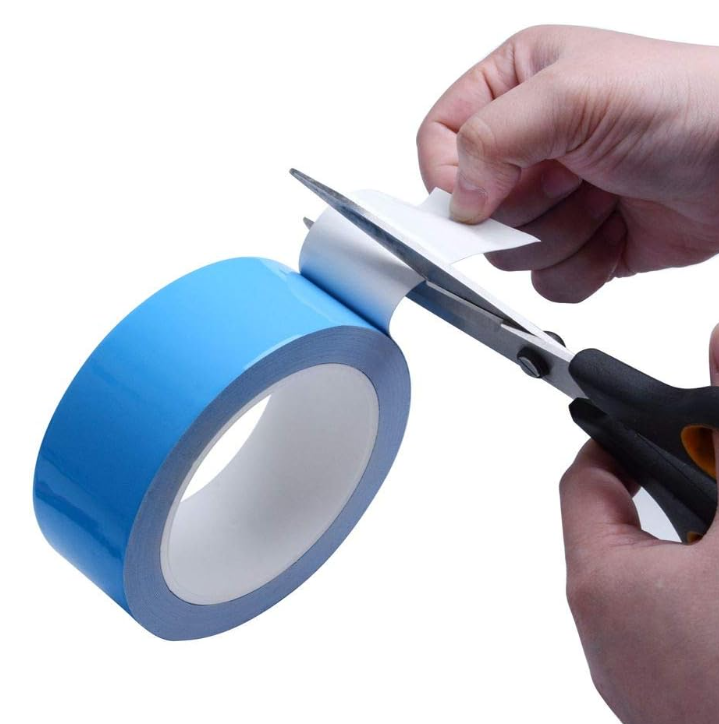
Thermal tape is useful when heat transfer and bonding are both required.
Use Thermal Tape When Mechanical Fasteners Are Not Practical
Small heat sinks, compact modules, and thin housings may not have enough space for screws or clips. Thermal tape can simplify assembly.
Use Thermal Tape for Clean and Fast Production
Thermal tape is pre-formed. Operators can apply it quickly without dispensing, curing, or cleanup. This makes it attractive for high-volume production.
Use Thermal Tape for Lightweight Heat Sink Attachment
Small heat sinks used on ICs, LEDs, communication modules, or controllers may not need heavy mechanical retention. Thermal tape can provide enough attachment and heat transfer.
Use Thermal Tape When Thickness Must Be Controlled
Because tape is supplied at a defined thickness, it can provide more consistent bond line thickness than manually dispensed adhesive.
Use Thermal Tape When Rework Is Limited
If the product is not expected to be disassembled frequently, adhesive bonding may be acceptable. If frequent rework is required, thermal pads or grease may be easier to service.
When Thermal Tape Is Not the Best Choice
Thermal tape is useful, but it has limits.
Large Gaps
Thermal tape is usually not the best choice for large gaps. Thermal pads, gap fillers, or thermal putty are often better for larger or uneven spaces.
HakTak’s article Thermal Putty vs Thermal Pad: How to Choose for Uneven Gaps explains this tradeoff.
Very High Heat Loads
For very high heat flux, tape thickness and adhesive thermal resistance may limit performance. A thinner grease layer, PCM material, or mechanically clamped TIM may perform better.
Frequent Rework
Thermal tape can leave residue or damage components during removal. If the assembly must be serviced often, grease, pads, or removable PCM materials may be preferable.
Poor Surface Preparation
Thermal tape depends on surface adhesion. Oil, dust, oxidation, moisture, and rough surfaces can reduce bond strength.
Heavy Components
If the heat sink or component is heavy, tape alone may not provide enough mechanical retention. Screws, clips, or structural adhesive may be required.
Key Properties to Compare
Thermal tape should be evaluated by both thermal and adhesive properties.
| Property | Why It Matters | Thermally Conductive Adhesive |
| Thermal conductivity | Screens heat transfer capability | Liquid, paste, or two-part adhesive |
| Thermal impedance | Better reflects real interface performance | Dispense, mix, cure, or UV/heat activate |
| Thickness | Controls bond line thickness and thermal resistance | Depends on dispense and bond line control |
| Peel adhesion | Shows how strongly tape adheres under peel loading | Often stronger after curing |
| Shear strength | Important for sustained load and vertical mounting | Often very difficult after cure |
| Dielectric strength | Required when electrical insulation is needed | Depends on cure process |
| Operating temperature | Determines adhesive stability under heat | Wider thickness range |
| Compression or conformability | Helps contact rough or uneven surfaces | |
| Aging resistance | Shows long-term stability | |
| Rework behavior | Affects service and repair |
Peel adhesion is a key test for pressure-sensitive tape. ASTM D3330/D3330M is an official ASTM test method for peel adhesion of pressure-sensitive tape.
Thermal Conductivity vs Adhesion Strength
Thermal tape selection is a balance between heat transfer and bonding.
A tape with high thermal conductivity may not be best if the adhesive bond is weak, too thick, or unstable at temperature. A tape with strong adhesion may not be best if its thermal resistance is too high.
Engineers should ask:
- Does the tape transfer enough heat?
- Does it hold the component securely?
- Does it maintain adhesion at operating temperature?
- Does it survive thermal cycling?
- Does the bond line thickness increase thermal resistance?
- Does the adhesive creep under load?
- Is electrical insulation required?
The correct tape is the one that meets both thermal and mechanical requirements.
Thickness and Bond Line Control
Thermal tape thickness directly affects thermal resistance.
For a simplified heat path:
R = t / (k × A)
Where:
- R is thermal resistance
- t is tape thickness
- k is thermal conductivity
- A is contact area
Thicker tape may improve conformability or bond strength, but it usually increases thermal resistance. Thinner tape may improve heat transfer, but it requires flatter surfaces and better contact.
For more detail on thickness, see HakTak’s guide How Bond Line Thickness Affects Thermal Performance.
Pressure and Surface Wetting
Pressure-sensitive thermal tape needs pressure during application. Pressure helps the adhesive wet the surface and create better contact.
Important application factors include:
- Surface cleanliness
- Surface energy
- Application pressure
- Dwell time
- Temperature during application
- Surface roughness
- Tape thickness
- Adhesive chemistry
If pressure is too low, the tape may not fully contact the surface. This can reduce both thermal transfer and bond strength.
If the surface is contaminated, adhesion may fail even if the tape itself has strong specifications.
Electrical Insulation
Some thermal tapes are electrically insulating. Others may be electrically conductive depending on fillers and construction.
Electrically insulating thermal tape is useful when:
- The heat sink is metal
- The component tab is electrically live
- Multiple devices share a heat sink
- The housing is conductive
- High voltage is present
- Safety isolation is required
Engineers should check:
- Dielectric strength
- Breakdown voltage
- Volume resistivity
- Surface resistivity
- Final thickness
- Aging after heat and humidity
ASTM D1000 includes dielectric breakdown voltage among the tests listed for pressure-sensitive adhesive-coated tapes used in electrical and electronic applications. For pad-specific insulation decisions, HakTak’s guide Electrically Insulating Thermal Pads: When Do You Need Them? is closely related.
Thermal Tape Applications
LED Lighting
Thermal tape is often used to attach LED strips, LED modules, or metal-core boards to heat sinks or housings. It provides clean bonding and heat transfer.
Key selection factors:
- Thermal impedance
- Adhesion to aluminum
- Long-term heat resistance
- Thickness
- Electrical insulation if needed
Small Heat Sinks
Thermal tape can attach lightweight heat sinks to ICs, communication chips, power regulators, or control modules.
Key selection factors:
- Peel adhesion
- Shear strength
- Operating temperature
- Rework needs
- Heat sink weight
Displays and Consumer Electronics
Thin thermal tapes may help transfer heat to frames or heat spreaders while maintaining slim form factors.
Key selection factors:
- Thin bond line
- Clean assembly
- Surface compatibility
- Low residue
- Die-cut precision
Automotive Electronics
Thermal tape can be used in lightweight modules, sensors, displays, and control electronics. However, automotive use requires careful reliability validation.
Key selection factors:
- Temperature cycling
- Vibration
- Adhesion aging
- Humidity resistance
- Die-cut repeatability
Telecom Equipment
Telecom devices may use thermal tape for modules, heat spreaders, or housing contact where continuous operation and stable adhesion are required.
Key selection factors:
- Long-term heat exposure
- Outdoor temperature range
- Adhesion to coated metals
- Thermal impedance
- Electrical isolation
How to Choose Thermal Tape
Step 1: Define the Thermal Target
Start with heat load, contact area, and maximum allowed temperature rise. This helps determine whether tape can meet the thermal requirement.
Step 2: Define the Mechanical Requirement
Ask whether the tape must hold a heat sink, attach a lightweight part, resist shear, survive vibration, or support a component during production.
Step 3: Check the Gap and Surface Flatness
Thermal tape works best for thin, flat interfaces. For larger gaps or uneven surfaces, thermal pads, putty, or foam tape may be better.
Step 4: Compare Thermal Impedance
Thermal conductivity alone is not enough. Thermal impedance at the actual thickness and pressure is more useful.
ASTM D5470 is commonly referenced for thermal transmission properties of thermally conductive electrical insulation materials.
Step 5: Check Adhesion Data
Review peel adhesion, shear strength, surface compatibility, and temperature aging. ASTM D3330/D3330M is relevant for peel adhesion of pressure-sensitive tape.
Step 6: Check Electrical Requirements
If insulation is required, review dielectric properties and validate the final assembly.
Step 7: Validate Aging and Reliability
Test thermal cycling, humidity, vibration, high-temperature exposure, and rework behavior.
Thermal Tape vs Other TIMs: Quick Selection Table
| Interface Problem | Recommended Starting Material |
| Thin interface with mechanical clamping | Thermal grease or PCM |
| Need bonding and heat transfer | Thermal tape or thermal adhesive |
| Controlled medium gap | Thermal pad |
| Uneven or large gap | Thermal putty or gap filler |
| Permanent encapsulation and protection | Thermally conductive potting compound |
| Electrical insulation plus gap filling | Insulating thermal pad |
For broader TIM comparison, see HakTak’s Thermal Interface Materials page.
Testing and Standards
Thermal tape should be tested as both a thermal material and an adhesive tape.
Useful test areas include:
- Thermal conductivity
- Thermal impedance
- Peel adhesion
- Shear strength
- Thickness
- Dielectric breakdown voltage
- Insulation resistance
- Aging after heat and humidity
- Flammability where required
- Rework and residue
ASTM D1000 covers pressure-sensitive adhesive-coated tapes for electrical and electronic applications and includes many tape property tests. ASTM D3330/D3330M covers peel adhesion of pressure-sensitive tape. ASTM D5470 is relevant for thermal transmission properties of thermally conductive electrical insulation materials.
For polymer thermal conductivity and diffusivity testing, ISO 22007-2 covers the transient plane heat source method.
Common Mistakes Engineers Should Avoid
The first mistake is choosing thermal tape only by W/mK. Adhesion, thickness, pressure, and reliability also determine success.
The second mistake is using thermal tape for a gap that is too large. Tape is usually best for thin interfaces.
The third mistake is ignoring surface preparation. Contaminated surfaces can cause weak adhesion and poor heat transfer.
The fourth mistake is assuming strong initial tack means long-term reliability. Heat, humidity, load, and cycling can change adhesion.
The fifth mistake is ignoring shear load. A tape may show good peel adhesion but still creep under sustained weight or heat.
The sixth mistake is using electrically conductive tape where electrical isolation is required.
The seventh mistake is treating thermal tape as a structural adhesive. If the component is heavy or safety-critical, additional mechanical retention may be needed.
HakTak Perspective
At HakTak, thermal tape is treated as a thermal interface material with bonding function. It should be selected by both thermal and adhesive performance, not only conductivity.
For accurate selection, engineers should provide:
- Heat source type and power
- Contact area
- Surface materials
- Gap or flatness condition
- Required tape thickness
- Whether electrical insulation is required
- Heat sink or component weight
- Operating temperature range
- Humidity or outdoor exposure
- Vibration and thermal cycling conditions
- Rework requirements
- Die-cut shape or roll format needs
With this information, a supplier can recommend whether thermal tape, thermal pad, grease, PCM, putty, adhesive, or potting compound is the better solution.
The best thermal tape is not simply the tape with the highest thermal conductivity. It is the tape that provides enough heat transfer, stable adhesion, proper thickness, and reliable performance in the final assembly.
Conclusion
Thermal tape is a thermally conductive adhesive material used when electronics need both heat transfer and bonding. It is especially useful for attaching heat sinks, LED modules, sensors, displays, and compact electronic components where clean assembly and controlled thickness matter.
Thermal tape is not a universal replacement for thermal pads, grease, putty, or adhesives. It works best in thin, relatively flat interfaces where adhesive bonding is required. For larger gaps, high heat loads, frequent rework, or uneven surfaces, another thermal interface material may be better.
Engineers should evaluate thermal tape by thermal conductivity, thermal impedance, thickness, peel adhesion, shear strength, dielectric properties, surface preparation, temperature range, and reliability testing.
The right thermal tape should solve both sides of the problem: move heat and hold the assembly together.
FAQs
What is thermal tape?
Thermal tape is a thermally conductive adhesive tape used to transfer heat while bonding two surfaces together.
Is thermal tape the same as thermal pad?
No. Thermal tape provides adhesive bonding, while thermal pads are mainly used for gap filling and thermal transfer.
Is thermal tape better than thermal paste?
Thermal tape is better when bonding is required. Thermal paste may perform better in thin, flat interfaces with mechanical clamping.
Can thermal tape attach a heat sink?
Yes, thermal tape is often used to attach lightweight heat sinks. Heavy heat sinks may require additional mechanical support.
Is thermal tape electrically insulating?
Some thermal tapes are electrically insulating, but not all. Engineers should check dielectric strength and resistivity data.
Does thermal tape conduct electricity?
It depends on the formulation. Some tapes are insulating, while others may be electrically conductive.
How do you apply thermal tape?
Clean both surfaces, apply the tape, remove the liner, position the second surface, and apply pressure to improve wetting and adhesion.
Can thermal tape be removed?
Some tapes can be removed, but many leave residue or lose performance after rework. Rework behavior should be tested.
What is the difference between thermal tape and thermal adhesive?
Thermal tape is pre-formed and pressure-sensitive. Thermal adhesive is often liquid or paste-like and may require curing.
What data should I provide to choose thermal tape?
Provide heat load, contact area, surface materials, required adhesion, thickness limit, operating temperature, electrical insulation needs, and reliability conditions.