
Thermal management is one of those topics that seems simple—until it isn’t. At first glance, thermal paste and thermal gel look almost identical: gray, viscous materials designed to sit between a heat source and a heat sink. But in practice, the differences run deeper, and choosing the wrong one can quietly sabotage performance, reliability, and even product lifespan.

If you’re sourcing thermal interface materials (TIMs) for electronics, industrial equipment, or consumer devices, this guide breaks things down in a practical, decision-first way—without the fluff.
What Are Thermal Interface Materials (TIMs)?
Before comparing paste and gel, it helps to understand their shared purpose.
Thermal interface materials are used to eliminate microscopic air gaps between two surfaces—typically a heat-generating component (like a CPU, LED, or power module) and a heat sink. Air is a poor heat conductor, so even tiny gaps can dramatically reduce heat transfer efficiency.
TIMs solve this by filling those gaps and creating a continuous thermal pathway.
What Is Thermal Paste?
Thermal paste (also called thermal grease) is the most widely used TIM in electronics.
Key Characteristics:
- Thick, semi-fluid consistency
- Typically made of silicone oil + thermally conductive fillers (e.g., aluminum oxide, silver)
- Designed for ultra-thin bond lines
- High initial thermal performance
In most cases, thermal paste delivers excellent heat transfer because it can spread into extremely thin layers, minimizing thermal resistance.
Typical Thermal Conductivity:
- ~3 to 8 W/m·K (higher for premium or liquid metal variants)
Where It Excels:
- CPUs and GPUs
- High-performance electronics
- Situations requiring minimal thermal resistance
What Is Thermal Gel?
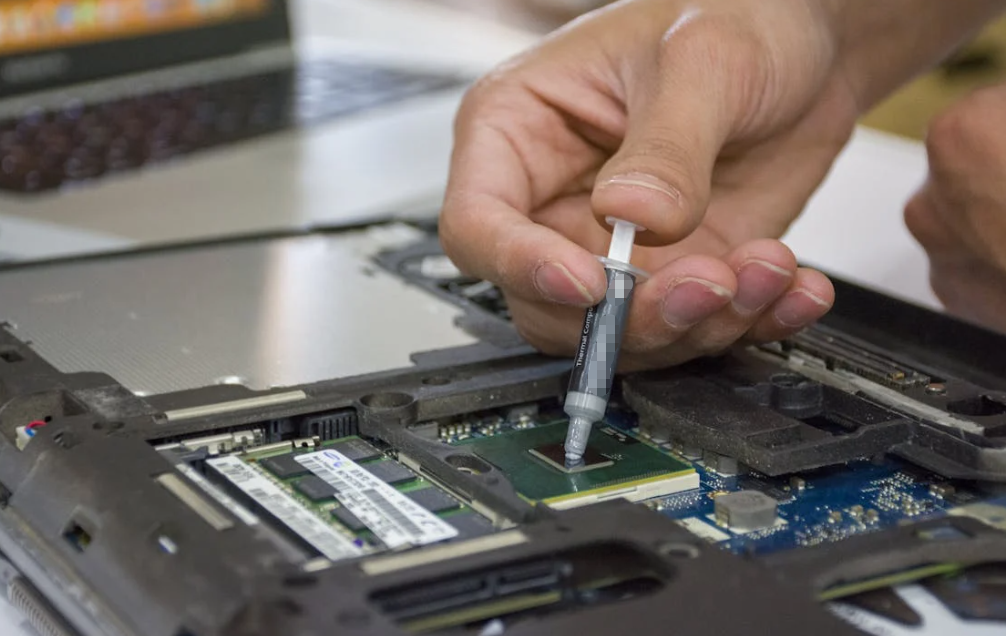
Thermal gel is a newer, more application-friendly TIM that prioritizes stability and adaptability.
Key Characteristics:
- Soft, elastic, and often self-leveling
- Cross-linked silicone structure with conductive fillers
- Designed for larger or uneven gaps
- Strong resistance to drying and movement
Unlike paste, thermal gel doesn’t rely on ultra-thin layers to perform well. It can maintain effectiveness even in thicker applications.
Typical Thermal Conductivity:
- ~4 to 10 W/m·K (varies by formulation)
Where It Excels:
- Battery systems (EV, energy storage)
- Power electronics
- Applications with vibration or thermal cycling
Thermal Paste vs. Thermal Gel: Core Differences
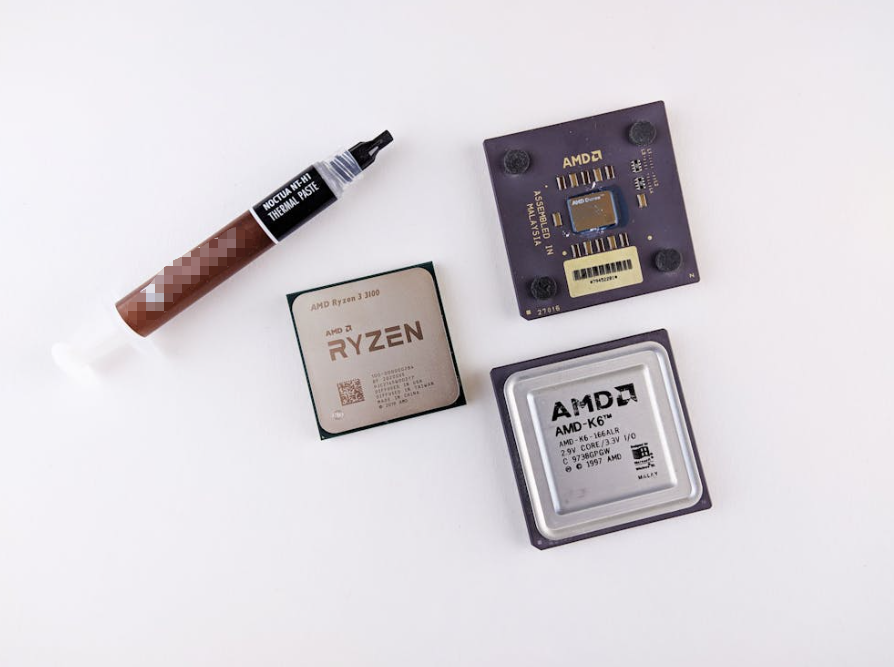
Let’s move beyond definitions and look at what actually matters in real-world decision-making.
Thermal Conductivity vs. Real-World Performance
At first glance, thermal paste often wins on paper.
- Paste: Higher peak conductivity
- Gel: Slightly lower—but more consistent over time
However, performance isn’t just about numbers.
Thermal paste performs best when applied in an extremely thin layer. If applied too thickly, its effectiveness drops sharply. Thermal gel, on the other hand, maintains stable conductivity even across larger gaps.
Insight: In controlled environments → paste wins In real-world, imperfect conditions → gel often catches up
Gap-Filling Capability
This is one of the most decisive differences.
- Thermal paste: Best for microscopic gaps (<0.1 mm)
- Thermal gel: Works well for larger gaps (0.1–2 mm)
If your surfaces are perfectly flat and tightly mounted, paste is ideal.
If there’s unevenness, tolerance variation, or design constraints, gel is far more forgiving.
Application Process
Let’s be honest—application errors are common.
Thermal Paste:
Manual application (pea-sized method, spreading, etc.)
Risk of:
- Uneven coverage
- Air pockets
- Over-application
Thermal Gel:
- Can be dispensed automatically
- Self-leveling behavior
- More consistent in mass production
Human factor matters. In production lines, gel significantly reduces variability.
Longevity and Stability
This is where thermal gel quietly dominates.
Thermal Paste:
Can suffer from:
- Drying out
- Pump-out effect (material displacement under heat cycles)
Typical replacement: every 1–3 years
Thermal Gel:
Resistant to:
- Drying
- Vibration
- Thermal cycling
Often designed for long-term, maintenance-free use
Bottom line: Paste = performance upfront Gel = performance over time
Mechanical Stability
Thermal paste has no structural strength—it relies entirely on mounting pressure.
Thermal gel, however:
- Stays in place better
- Handles vibration more effectively
- Maintains contact under stress
This makes gel ideal for:
- Automotive electronics
- Industrial environments
- Portable devices
Cost Considerations
- Thermal paste: Lower upfront cost
- Thermal gel: Higher material cost but lower lifecycle cost
Why?
Because gel:
- Reduces rework
- Minimizes maintenance
- Improves long-term reliability
In large-scale manufacturing, this often offsets the higher unit price.
Application Scenarios: Which Should You Choose?

Choose Thermal Paste If:
- You need maximum thermal conductivity
- Surfaces are flat and tightly bonded
- Application is manual and controlled
- Product is serviceable (can be reapplied)
Typical use cases:
- CPUs / GPUs
- Gaming PCs
- High-performance computing
Choose Thermal Gel If:
- You need long-term stability
- There are larger or uneven gaps
- Your system faces vibration or thermal cycling
- You want automation-friendly application
Typical use cases:
- EV battery packs
- Power modules
- Telecom equipment
- Industrial electronics
A Practical Decision Framework
Instead of overthinking specs, ask these five questions:
How flat are your surfaces?
Very flat → paste
- Uneven → gel
What’s the gap size?
- Tiny → paste
- Larger → gel
Is long-term maintenance possible?
- Yes → paste
- No → gel
Is your environment stable?
- Controlled → paste
- Harsh/vibration → gel
Manual or automated production?
- Manual → paste
- Automated → gel
If you answer “gel” to 3+ of these, it’s probably the better choice.
Industry Trend: Why Thermal Gel Is Growing Fast
Over the past few years, thermal gel has gained traction—especially in:
- Electric vehicles
- Renewable energy systems
- High-density electronics
Why?
Because modern devices:
- Run hotter
- Have tighter tolerances
- Require longer lifespans
Thermal gel aligns better with these demands, even if paste still dominates in traditional computing.
Common Mistakes to Avoid
Using Paste for Large Gaps
Paste loses efficiency when applied thickly. This is a frequent design mistake.
Over-Applying Paste
More is not better—it can actually insulate rather than conduct heat.
Ignoring Long-Term Degradation
Initial performance ≠ sustained performance.
Choosing Based Only on Conductivity Numbers
Real-world conditions matter more than datasheet values.
HakTak Insight: Matching Material to Application
At HakTak, we’ve seen a recurring pattern:
Customers initially choose thermal paste for its higher conductivity, but switch to thermal gel after facing issues like drying, pump-out, or inconsistent assembly results.
The smarter approach is not asking:
“Which is better?”
But instead: “Which is better for this exact design?”
Conclusion
Thermal paste and thermal gel are not competitors—they’re tools designed for different conditions.
- Thermal paste delivers peak performance in controlled, precision applications.
- Thermal gel offers stability, flexibility, and long-term reliability in real-world environments.
If your priority is raw performance, go with paste.
If your priority is durability and consistency, gel is often the better investment.
In modern electronics, the trend is clear: performance still matters—but reliability wins contracts.
FAQs
Is thermal gel better than thermal paste?
Not universally. Gel is better for stability and large gaps; paste is better for peak conductivity.
Does thermal paste dry out?
Yes, over time it can dry or degrade, especially under thermal cycling.
Can thermal gel replace thermal paste?
In many applications, yes—especially where gap size or longevity is a concern.
Which lasts longer?
Thermal gel generally lasts longer due to better resistance to drying and movement.
Is thermal gel more expensive?
Yes upfront—but often cheaper over the product lifecycle due to reduced maintenance.